dailynewsnblog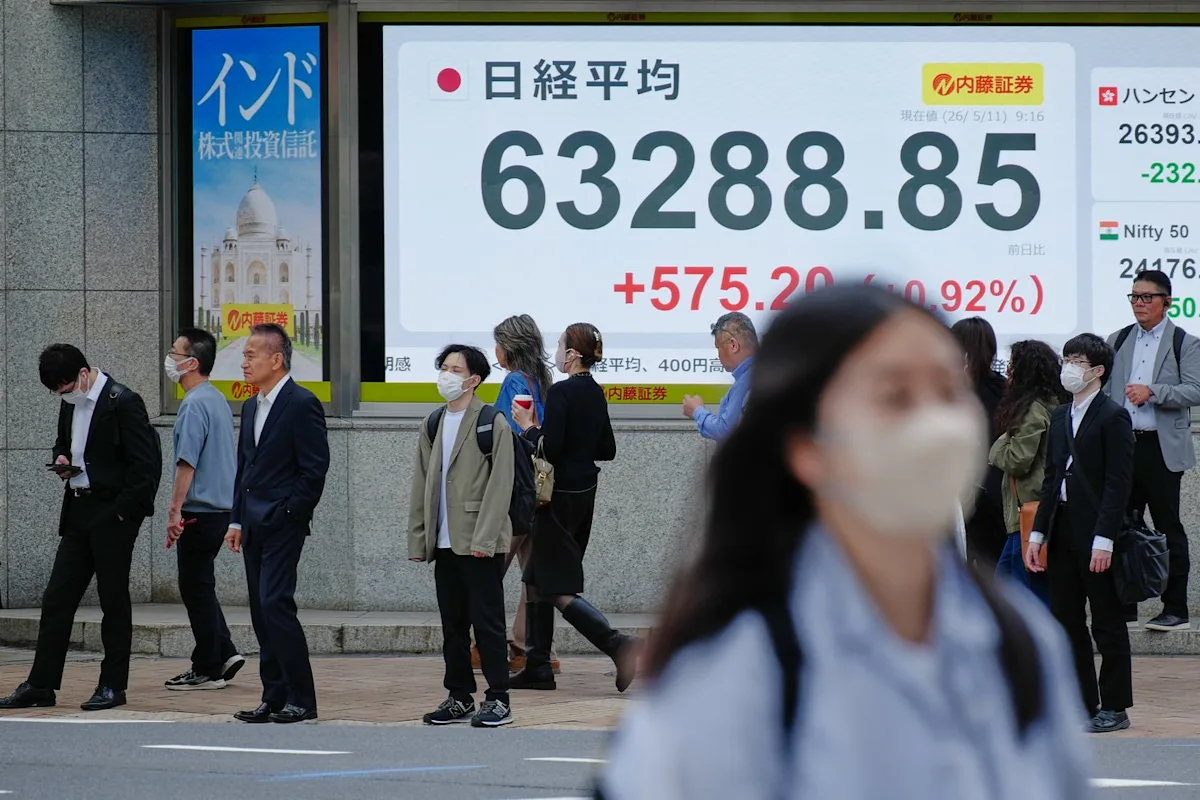
HONG KONG (AP) — Asian stocks were mixed Monday after Wall Street set more records, and oil surged more than 4% following U.S. President Donald Trump’s rejection of Tehran’s response to the latest U.S. proposal on ending the war in Iran.
U.S. futures edged lower.
Tokyo’s Nikkei 225 fell 0.4% to 62,486.84 after briefing reaching another record high in intraday trading at above 63,300. Technology-focused investment holding company SoftBank Group, one of Japan’s largest stocks, fell more than 5%.
South Korea’s Kospi gained 4.1% to 7,804.71. It also hit an all-time intraday high, led by gains from tech-related stocks including Samsung Electronics and memory chip maker SK Hynix.
Technology-related stocks and growing artificial intelligence-related interest have supported markets in Japan and South Korea despite the Iran war, with the Nikkei 225 and Kospi rising more than 10% and 30%, respectively, over the past month.
Hong Kong’s Hang Seng fell 0.3% to 26,319.93. The Shanghai Composite index climbed 0.9% to 4,219.13, following official data Monday that showed China’s factory gate prices rose 2.8% in April from a year ago, the highest since 2022, as well as better-than-expected export figures released over the weekend.
Australia’s S&P/ASX 200 lost 0.6%. Taiwan’s Taiex traded 0.9% higher, and India’s Sensex fell 1.3%.
Oil prices jumped early Monday over Iran war uncertainties, after Trump wrote in a social media post that Iran’s response on Sunday to the U.S.’s latest proposal was “TOTALLY UNACCEPTABLE!”
Brent crude, the international standard, gained 4.2% to $105.57 per barrel. It was roughly $70 per barrel before the war began in late February. Benchmark U.S. crude was 4.7% higher at $99.89 a barrel.
With the Strait of Hormuz, a crucial waterway for global oil and gas transport, still largely closed and as the U.S. is continuing its sea blockade of Iranian ports, analysts believe oil prices are likely to remain higher for longer.
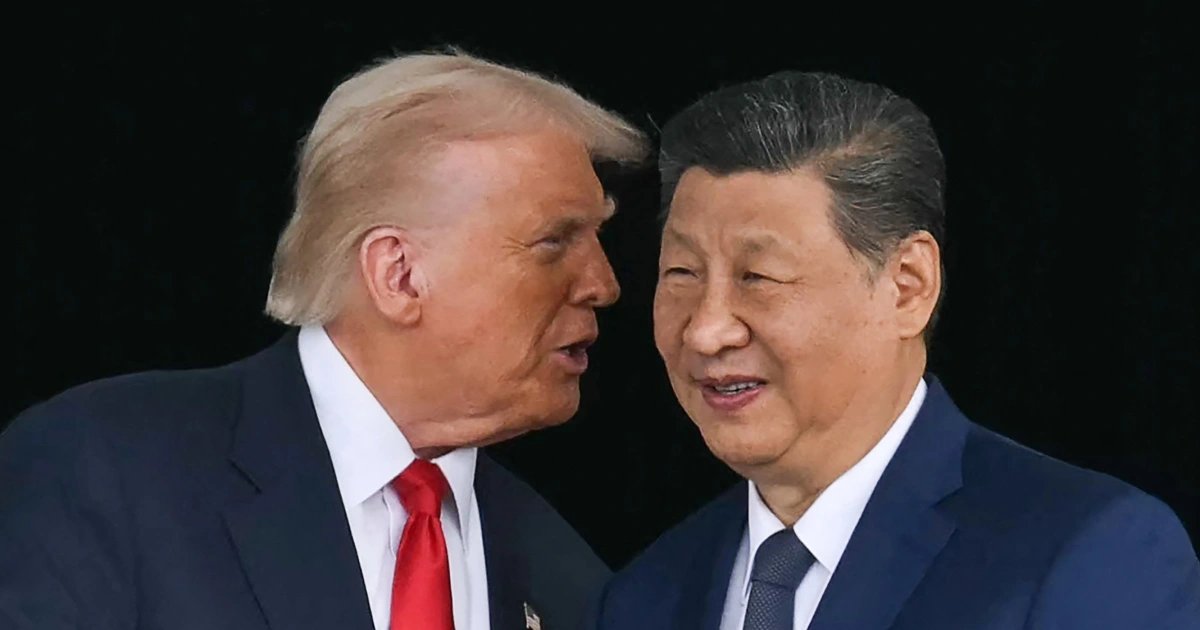
The Iran war was also set to be part of the discussion agenda when Trump meets with Chinese leader Xi Jinping later this week. China has close economic links with Iran and the U.S. has been pressing Beijing to leverage its influence to help reopen the Strait of Hormuz.
“There remains a glimmer of hope that talks between Trump and Chinese President Xi later this week could yield positive results on Iran,” ING commodities analysts Warren Patterson and Ewa Manthey wrote in a note on Monday.
“The hope is that China can use its influence over Iran to push it closer towards a peace deal,” they said. “Clearly, this is easier said than done.” The oil market is still very much “heavily headline-driven,” the pair added.