dailynewsnblog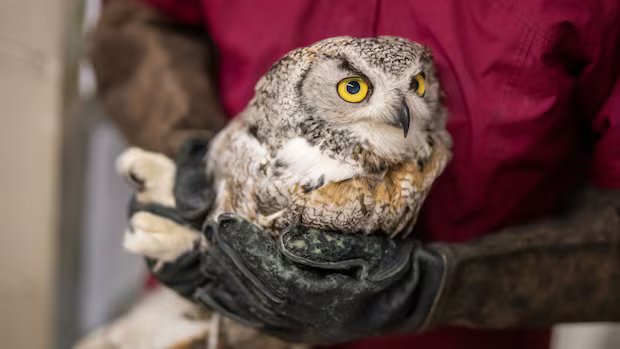

Listen to this article
Estimated 3 minutes
The audio version of this article is generated by AI-based technology. Mispronunciations can occur. We are working with our partners to continually review and improve the results.
She’s a strong, independent, single mother with over 500 kids.
Great horned owl Casper has taken that many owlets under her wing during her 26 years at the Orphaned Wildlife Rehabilitation Society in Delta.
And nothing comes between Casper and her babies.
“She’s got a little edge to her, let’s say that,” said Rob Hope, manager of the society.
Casper’s maternal instincts are strong, and her aversion to humans is even stronger — an important trait for the babies to learn, according to Hope.
She is currently fostering four fledglings, all rescued from different circumstances and all around the same age — between six and seven weeks.

Hope said she demonstrates important skills that will be crucial for when they are released, like flying, catching prey like mice, and fearing humans.
“They look up to her, they follow her, they mimic her,” said Hope.
“That’s what we want so that when those babies are in the wild, we know that they’ve got a good chance of survival.”

The society rescues, rehabilitates, and releases various raptors like eagles, falcons, and owls.
Casper came to the society in 1999, after getting caught in a leg-hold trap in Prince George.
With missing talons, Hope said she would not do well hunting in the wild. But she proved to have other talents.
Her inner mom kicked in the first time she was around a baby owlet, according to Hope.
He said she immediately tried to get in the baby’s cage, and once volunteers removed the cage, she was feeding the baby within an hour.
“She’s our trusted mom for the last 26 years, and hopefully she gets another 26 years,” said Hope.

The society said she was already an adult when they found her, and estimates she is in her late 20s.
According to the Northwest Wildlife Preservation Society, based in Vancouver, great horned owls can live well into their 30s in captivity.
Hope said the matriarch takes the lead in raising the babies, allowing volunteers to minimize contact with them.
“That allows us to just throw food in, and mom does the rest,” he said.
He said her current fledglings will stay with her for about another month before moving on.