dailynewsnblog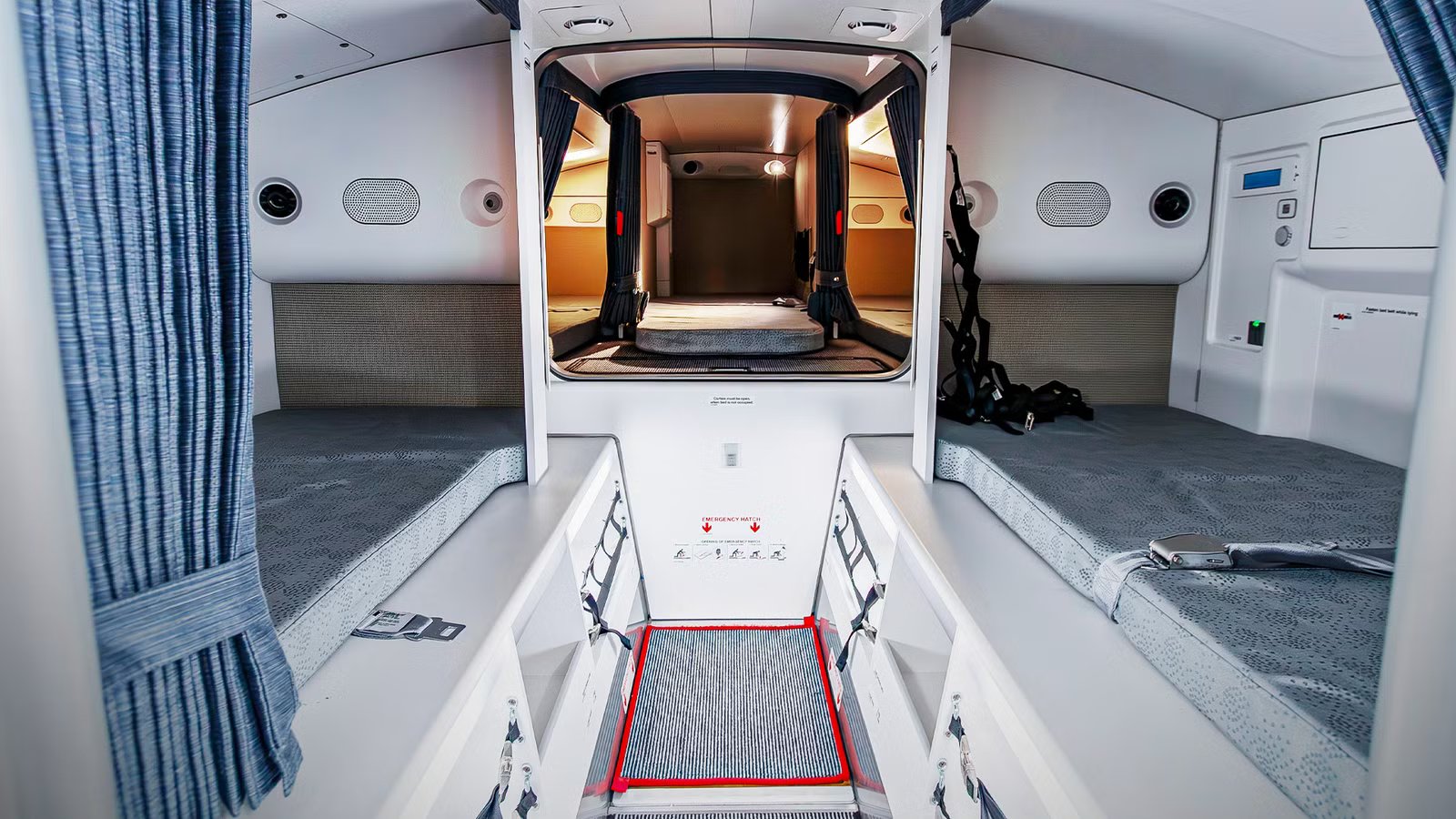
Airlines and commercial aviation are defined by precision, discipline, and constant vigilance, especially when it comes to the responsibilities of pilots. Passengers frequently assume that pilots remain at the controls for the entire duration of a flight, particularly on long international routes that can stretch well beyond 10 hours. However, this assumption does not reflect operational reality. In fact, on long-haul flights, pilots are not only allowed to sleep during the journey, but are required to do so under regulated conditions designed to ensure safety.
The concept of pilots resting mid-flight may initially sound surprising or even concerning to those unfamiliar with aviation procedures. Yet it is a carefully managed practice governed by strict international regulations. Modern aircraft are equipped with dedicated crew rest facilities, often hidden from passenger view, where pilots can sleep during designated rest periods. These systems exist because fatigue is recognized as a risk factor in aviation, and managing it effectively is critical to maintaining safety standards. This article explores the truth behind pilot sleep during long-haul flights, explaining how rest systems are designed, regulated, and implemented. It also examines how evolving aircraft technology is reshaping these practices and what challenges lie ahead.
Why Pilot Rest Is Necessary On Long-Haul Flights

Long-haul flights can last anywhere from eight to 16 hours or more, depending on the route and aircraft type. It is neither practical nor safe for a single crew of two pilots to remain continuously alert for such extended periods. Human performance naturally declines with fatigue, affecting reaction time, decision-making, and situational awareness. In aviation, even small lapses in attention can have serious consequences.
To address this, aviation authorities such as the Federal Aviation Administration (FAA) and the European Union Aviation Safety Agency mandate strict limits on duty time and require rest periods for flight crews. These regulations are based on extensive research into human circadian rhythms and fatigue management. While crew rest outside of the airport is a large part of the strategy, for long-haul trips that extend beyond the hours of a typical workday, controlled inflight rest is a key component of these fatigue mitigation strategies.
On long-haul routes, airlines use an augmented crew. This means that instead of the standard two pilots, there may be three or four pilots onboard. The additional crew members allow for a rotation system in which pilots can take scheduled breaks while others remain on duty. Importantly, at least two qualified pilots are always present on the flight deck during cruise. This structured approach ensures that pilots are well-rested during critical phases of flight, particularly descent and landing, when workload and complexity increase significantly.
|
Top 5 Longest Commercial Flights In the World |
||||
|---|---|---|---|---|
|
Route |
Airline |
Distance (nautical miles) |
Scheduled Duration |
Aircraft |
|
New York-JFK – Singapore |
Singapore Airlines |
8,288 |
18 hours, 55 minutes |
Airbus A350-900ULR |
|
Newark – Singapore |
Singapore Airlines |
8,285 |
19 hours, 10 minutes |
Airbus A350-900ULR |
|
Auckland – Doha |
Qatar Airways |
7,848 |
17 hours, 10 minutes |
Boeing 777-200LR |
|
Perth – London |
Qantas |
7,829 |
17 hours, 30 minutes |
Boeing 787-9 Dreamliner |
|
Dallas – Melbourne |
Qantas |
7,814 |
17 hours, 40 minutes |
Boeing 787-9 Dreamliner |
Typical Design & Location Of Pilot Rest Compartments

One of the lesser-known features of modern widebody aircraft is the presence of dedicated crew rest compartments. These areas are intentionally hidden from passengers for security and cabin-space preservation. Access is typically restricted through a locked door, often secured with a keypad or code, and reached via a ladder or narrow staircase. Pilot rest areas are usually located above the cockpit or within an upper fuselage section. These compartments are compact yet purpose-built, designed to provide a quiet, controlled environment conducive to sleep.
A typical setup includes two bunk beds and sometimes a reclining seat. Each bunk is equipped with a padded mattress, reading light, ventilation controls, and privacy curtains. Safety features are also integrated into the design. Pilots use seatbelts while resting to remain secure during turbulence, and each bunk includes access to oxygen masks in case of cabin depressurization. An intercom system allows resting crew members to be contacted immediately if needed.
Descriptions of these compartments often compare them to capsule-style sleeping arrangements, similar in concept to Japanese capsule hotels. While not luxurious, they are functional and effective in allowing pilots to achieve meaningful rest during flight. Separate rest areas are typically provided for cabin crew, often located above the rear galley or in the lower cargo deck, with more bunks to accommodate larger teams.

How Do Flight Crews Prepare For Some Of The World’s Longest Flights?
An inside look at how flight crew prepare for some of the world’s longest flights.
How Rest Periods Are Scheduled

The process of scheduling pilot rest is carefully coordinated and begins before the flight even departs. Airlines develop detailed rest plans based on flight duration, departure time, and regulatory requirements. These plans are designed to align as closely as possible with natural sleep cycles, helping to minimize fatigue. On a typical long-haul flight of around 10 hours, a three-pilot crew might divide rest periods so that each pilot receives approximately 2.5 to 3 hours of sleep. The exact timing of these breaks varies, but they generally occur during the cruise phase, which is the least demanding portion of the flight.
Industry practice often requires all pilots to remain fully alert for 30 to 45 minutes prior to landing. Thus, rest periods usually begin after the aircraft has reached cruising altitude and stabilized, and they end well before descent begins. The order of rest breaks is often determined by seniority, with the most senior pilot, typically the captain, having discretion over scheduling decisions. The cabin manager may also assist in coordinating timing to ensure smooth operations across the entire crew.
Throughout the flight, strict rules ensure that at least two pilots remain on the flight deck at all times. These pilots monitor the aircraft’s systems, communicate with air traffic control, and manage any unexpected situations. This redundancy is a fundamental safety principle in aviation, and while sleeping pilots may seem counterintuitive to some, it is an essential part of the greater safety infrastructure.
Regulations Governing Inflight Pilot Sleep

Wikimedia Commons | Simple Flying
The practice of inflight pilot rest is not informal or discretionary. It is governed by detailed regulations that vary slightly by region but share common principles. Authorities such as the FAA in the US and the EASA in Europe establish limits on flight duty periods and minimum rest requirements. These rules are based on scientific research into fatigue and human performance. They specify how long pilots can be on duty, how many hours they must rest between flights, and how rest should be managed during long-haul operations. Airlines are required to comply with these standards and are subject to regular audits and oversight.
In addition to regulatory requirements, many airlines implement their own fatigue risk management systems. These systems use data and predictive modeling to optimize crew schedules and minimize fatigue-related risks. They may incorporate factors such as time zone changes, workload, and individual sleep patterns. The emphasis on fatigue management reflects a broader shift in aviation safety philosophy. Rather than relying solely on strict rules, the industry increasingly uses data-driven approaches to proactively identify and mitigate risks. Companies such as Safran Group, a major aerospace manufacturer, work closely with regulators when designing crew rest areas on aircraft, as seen in their new Lower Deck Mobile Crew Rest design.
|
FAA Flight Time Limitations & Rest Requirements (14 CFR 91.1059) |
||
|---|---|---|
|
Normal duty |
Extension of flight time |
|
|
(1) Minimum Rest Immediately Before Duty |
10 Hours |
10 Hours |
|
(2) Duty Period |
Up to 14 Hours |
Up to 14 Hours |
|
(3) Flight Time For 1 Pilot |
Up to 8 Hours |
Exceeding 8 Hours up to 9 Hours |
|
(4) Flight Time For 2 Pilots |
Up to 10 Hours |
Exceeding 10 Hours up to 12 Hours |
|
(5) Minimum After Duty Rest |
10 Hours |
12 Hours |
|
(6) Minimum After Duty Rest Period for Multi-Time Zone Flights |
14 Hours |
18 Hours |
Inside The Airbus A350-1000’s Secret Crew Rest Areas
From overhead bunks to cockpit rest areas, here is how the A350-1000 supports its long-haul crews.
Emerging Challenges With New Aircraft Designs

As aircraft technology advances, new challenges are emerging in crew rest. One notable example is the development of long-range narrowbody aircraft capable of flights traditionally operated by larger widebody jets. Aircraft like the Airbus A321XLR can fly routes of up to 11 hours, significantly extending the range of single-aisle planes. However, unlike widebody aircraft, these planes do not have the same internal space to accommodate traditional crew rest compartments.
This has prompted manufacturers and airlines to explore innovative solutions. One proposed design involves creating compact rest areas within the passenger cabin, such as specially configured compartments near the aircraft’s front. These spaces must balance the need for pilot rest with the commercial imperative to maximize passenger seating. While this challenge is growing due to the rise of more efficient narrowbody aircraft, it is not new. Many airlines have operated the Boeing 757 on long-haul routes, especially across the Atlantic, and have found alternative ways to ensure crew rest within the smaller, narrowbody cabin.
The challenge is not only technical but also regulatory. Existing rules were largely developed with widebody aircraft in mind, and adapting them to new configurations requires careful consideration. Regulators must ensure that any new solutions provide an equivalent level of safety and rest quality. What remains constant is the requirement that pilots receive adequate rest, regardless of aircraft type.
In Conclusion: Yes Pilots Do Bunk During Flight

The idea that long-haul pilots sleep during flights is not only true but essential to the safe operation of modern aviation. Far from being a casual or unregulated practice, in-flight rest is a carefully structured process supported by dedicated facilities, strict regulations, and advanced fatigue management systems.
Hidden crew rest compartments provide pilots with a controlled environment to sleep during long journeys, ensuring they remain alert and capable during critical phases of flight. The use of augmented crews enables continuous aircraft monitoring while others rest, maintaining a high level of operational safety at all times.
As aviation continues to evolve, particularly with the introduction of long-range narrowbody aircraft, new challenges will arise in providing adequate rest facilities. Understanding these practices offers valuable insight into the complexity and professionalism of airline operations. It also reassures passengers that even when pilots are resting, the system as a whole is designed to maintain constant vigilance and ensure a safe journey from departure to arrival.