dailynewsnblog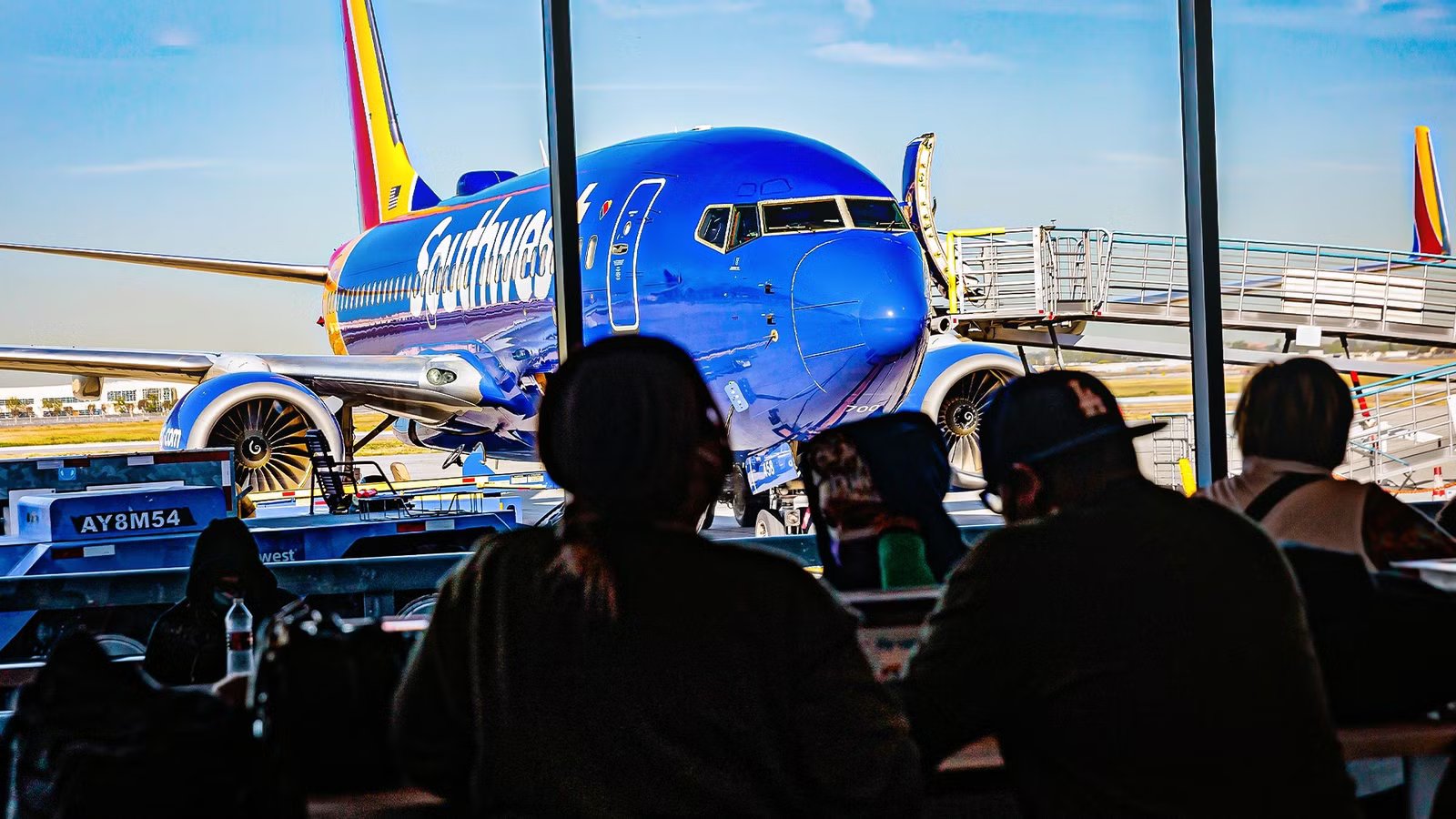
For more than 50 years, the boarding process at  Southwest Airlines was one of the most recognizable rituals in US aviation. Passengers checked in, received an A, B, or C boarding position, lined up at the gate, and then chose any open seat once onboard. It was unusual, sometimes stressful, and deeply tied to the low-cost carrier identity that Southwest had at the time. It also had a major operational advantage: passengers had a reason to keep moving quickly, because the best available seats were disappearing in real time.
That changed on January 27, when Southwest officially launched assigned seating and an eight-group boarding process. The move was supposed to modernize the airline, support new paid seat products, and respond to customer research showing that most travelers preferred assigned seats. Instead, the first version of the system quickly revealed a more complicated problem, and within days, the airline was facing public backlash.
That’s because Southwest had not just changed boarding. It also introduced new fare tiers, seat categories, loyalty benefits, credit card privileges, baggage fees, and premium bin expectations, almost all at once. Within weeks, the airline was already making refinements. By late April, it had made another loyalty-focused adjustment. The result is a boarding system that is clearer than the chaotic first version, but still reveals how difficult it is to replace a 50-year habit overnight.
Southwest Didn’t Just Change Boarding — It Changed The Whole System

The end of open seating was not a narrow operational tweak. It was part of one of the biggest commercial changes in Southwest’s history. The airline moved to assigned seating, introduced an eight-group boarding system, created Extra Legroom, Preferred, and Standard seating zones, and updated its fare bundles and loyalty benefits for flights departing from January 27, 2026.
|
Old Southwest |
New Southwest |
|---|---|
|
Open seating |
Assigned seating |
|
A/B/C boarding positions |
Eight numbered boarding groups |
|
Seat choice decided onboard |
Seat assigned before travel |
|
Early boarding mainly meant better seat choice |
Early boarding now helps protect bin space |
|
Simpler cabin structure |
Extra Legroom, Preferred, and Standard seats |
|
“Bags fly free” reduced cabin-bag pressure |
Checked-bag fees push more bags onboard |
|
Less visible onboard hierarchy |
More visible fare, seat, loyalty, and card hierarchy |
The old system had its flaws, but it was internally consistent. Boarding early mattered because passengers were competing for seats. Once onboard, the seat and the overhead bin were usually chosen together. A traveler who wanted a window seat near the front would take one if available. If the bins were full, that same passenger could keep walking and choose a different row. Open seating created gate anxiety, but it also led to self-sorting inside the aircraft.
Assigned seating changed that equation. Now the seat is fixed before the passenger boards, but overhead bin space is still a scarce, first-come, first-served resource. That means early boarding no longer primarily protects the seat. It protects the carry-on. This is the central reason the new system ran into trouble so quickly: Southwest removed the seat-selection race, but replaced it with a bin-space race.

Southwest Airlines’ Big Shift: All The Changes At The World’s Largest Low-Cost Carrier
The Dallas-based airline has announced a raft of changes that are causing an uproar with its most loyal customers.
A Quick Guide To Southwest’s New Customer Hierarchy

To understand the new dynamic, you need to understand how passengers have different levels of status at Southwest. And for passengers who do not fly Southwest regularly, the new system can be hard to decode. Rapid Rewards is the airline’s loyalty program. Those earning status via Rapid Rewards can reach A-List, Southwest’s lower elite tier, while A-List Preferred is its higher elite tier.
Southwest also has co-branded Rapid Rewards credit cards, that now offer meaningful day-of-travel benefits, especially when it comes to boarding. And then, if that isn’t complicated enough, the airline also has four relatively new fare bundles — Basic, Choice, Choice Preferred, and Choice Extra — while the cabin itself has three new seating options: Standard, Preferred, and Extra Legroom.
|
Category |
What It Means |
Why It Matters |
|---|---|---|
|
Rapid Rewards |
Southwest’s loyalty program |
Base of the frequent-flyer system |
|
A-List |
Lower elite loyalty tier |
Early boarding and seat-selection perks |
|
A-List Preferred |
Higher elite loyalty tier |
Boards before Group 1 under the new rules |
|
Rapid Rewards credit card member |
Holder of a Southwest co-branded card |
Boards no later than Group 5 if not otherwise earlier |
|
Choice Extra |
Higher fare bundle |
Stronger boarding and seat benefits |
|
Choice Preferred |
Mid/high fare bundle |
Earlier boarding, depending on seat and benefits |
|
Choice |
Mainstream fare |
Can board across middle groups |
|
Basic |
Lowest fare |
Usually most exposed to late boarding |
|
Extra Legroom |
Roomier paid seat category |
Creates premium-bin expectations |
|
Preferred / Standard |
Regular-legroom seating zones |
Boarding depends more on fare, status, and card benefits |
All of that creates a multitude of different ways for a passenger to be “valuable” to Southwest. One traveler might be valuable because they fly often and hold A-List status. Another might be valuable because they bought a higher fare. Another might be valuable because they paid for extra legroom. A fourth might be valuable because they hold a Southwest credit card. Those categories do not always overlap neatly, which creates tension in the boarding order.
For example, an A-List member on a cheaper fare may board ahead of a non-elite passenger who paid more for a specific seat. A credit card member in a standard seat may board ahead of some travelers who do not have a credit card or status. A passenger who paid more for Extra Legroom will justifiably expect nearby overhead bin space, even if frequent flyers boarded first and placed bags in the same area. Southwest’s new boarding system has to rank all of those interests.
The Eight-Group Boarding Plan Looked Logical On Paper

Southwest’s original assigned-seating boarding order appeared logical when it launched in January. Pre-boarding remained separate for eligible passengers, while the new numbered groups were designed to reward a mix of fare type, seat type, seat location, loyalty status, and credit card benefits. The idea was to replace the old A/B/C line with something more familiar to passengers who had flown other major US airlines.
|
Original Structure |
Who Boarded |
Why It Created Tension |
|---|---|---|
|
Groups 1–2 |
Heavily weighted toward premium fares, Extra Legroom passengers, and high-value loyalty customers |
Risked crowding the earliest boarding waves |
|
Groups 3–4 |
Higher fare passengers |
Often found the bin space at their seat was already taken |
|
Group 5 |
Rapid Rewards credit card members if not otherwise assigned earlier |
Became an important carry-on protection threshold |
|
Groups 6–8 |
Later standard-seat passengers depending on fare, seat, and other factors. |
Most exposed to overhead bin pressure / gate-checking |
But it also created a more complicated operational question: what happens when too many passengers with priority are sent into the cabin at once, especially if many are heading for the same forward or exit-row seating zones? Within days, Southwest was finding out: While its stock surged, so did the frustration and anger of its passengers.
Assigned Seats And Bag Fees Changed The Psychology Of Boarding

The first major problem was psychological as much as procedural. In the open-seating era, passengers boarded to find both a seat and a bin. In the assigned-seating era, the seat is already known. The passenger’s remaining uncertainty is the bag. That makes the overhead bin the new battleground.
Early reports from the rollout described exactly that problem. Passengers with assigned seats could find the bins near their rows already full, forcing them to hunt for space elsewhere. That can mean walking backward, placing a bag far from the assigned seat, or stopping in the aisle while other passengers wait behind them. As the new policy went into effect, thousands of passengers took to social media, describing boarding as messy, with aisle bottlenecks and bin-space confusion becoming immediate pain points.
|
Old Behavior |
New Behavior |
Result |
|---|---|---|
|
Find an open seat and bin together |
Walk to an assigned seat, then search for bin space |
More aisle stoppages |
|
Keep moving if front rows are full |
Stop near assigned row even if bins are full |
More backtracking |
|
Board early to get a better seat |
Board early to protect carry-on space |
Greater pressure on early groups |
|
Bins functioned as a shared resource |
Some bins now sit above paid premium seats |
More disputes over who should use them |
|
Free bags reduced onboard pressure |
Bag fees may make carry-ons more attractive |
More competition for overhead space |
This is why the new process could feel paradoxical. Assigned seating may reduce gate anxiety because passengers know where they will sit. But it increases cabin anxiety because passengers no longer know whether they will have space for their bag nearby. For an airline built around fast turns and efficient boarding, that is not a small issue. It affects the entire aircraft flow.
Southwest’s baggage policy change also made all of this more complicated. For years, “bags fly free” was one of the airline’s clearest brand promises. It was also operationally useful. When customers could check bags without an extra fee, many had less reason to drag a roller bag into the cabin. Once checked-bag fees enter the equation, the incentive changes. More passengers try to carry bags onboard to avoid paying, compounding the boarding problems.
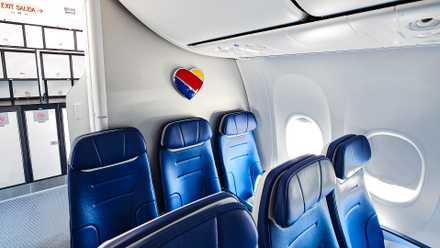
Customer Uproar Forces Southwest To Rethink Assigned Seating Policy: Here’s What’s Changing
Southwest tweaks its policy after a rough rollout.
The March Fix Was About Flow, Bins, And Premium Protection

The first wave of fixes came in late February and early March. Southwest acknowledged that the new system needed refinement and identified three broad areas of improvement:
- Better-balanced boarding groups
- More overhead bin space
- Designated bin space for Extra Legroom customers.
The “better balanced boarding groups” point is especially important. The first version of the new boarding system created uneven boarding flows as certain types of passengers were concentrated in early groups. That may work as a rewards structure, but it can create jet bridge and aisle congestion if too many people board at once or cluster in the same part of the cabin. Southwest’s fix was to refine how groups are assigned, so overhead bin availability near seats would improve while preserving the fast boarding and deplaning process customers expect.
|
Problem |
March Response |
Why It Mattered |
|---|---|---|
|
Uneven group sizes |
Better-balanced boarding groups |
Reduces jet bridge and aisle clumping |
|
Passengers searching for bins |
Refined group logic |
Improves odds of bin space near assigned seats |
|
Extra Legroom bins being used by others |
Dedicated bin signage |
Protects the paid premium product |
|
Carry-on pressure |
Larger overhead bins |
Adds physical storage capacity |
|
Customer confusion |
More communication and refinement |
Helps passengers learn the new process |
The signage fix was just as revealing. Southwest added signs on the bins above Extra Legroom seats so that bin space would be reserved for customers sitting there. That is a major cultural shift for Southwest. It turns the overhead bins above certain rows into part of the premium product, much like the practices passengers see on legacy carriers such as  American Airlines,
  Delta Air Lines, and
  United Airlines, where premium cabins usually receive more protected storage.
Southwest is not only trying to solve the problem with boarding logic. It is also changing the aircraft interior. The airline is upgrading cabins with larger overhead bins that can hold up to 50% more bags. The Points Guy reported at the time that Southwest expects at least 70% of its fleet to have the larger bins installed by the end of this year.
That is a crucial part of the story, because boarding rules can only do so much. If there is not enough physical storage space, passengers will still stop in the aisle, gate agents will still check bags earlier than customers expect, and flight attendants will still be pulled into disputes about where bags belong. Larger bins do not eliminate the need for a better boarding sequence, but they raise the capacity ceiling and make the system more forgiving.
The April Fix Was About Loyalty: Who Gets Protected First?

The second wave of changes came in late April, and are more loyalty-focused. As before, all travelers are assigned a boarding group between 1 and 8, but now A-List and A-List Preferred members receive earlier access to the cabin and overhead bin space every time they fly.
|
Boarding Group |
Who Boards |
|---|---|
|
Pre-Board |
Passengers with disabilities or those needing extra time to board; unaccompanied minors |
|
Priority Boarding |
Customers who purchase Priority Boarding ; active-duty US military with valid ID |
|
Before Group 1 |
Rapid Rewards A-List Preferred members |
|
Group 1 |
Rapid Rewards A-List members; Choice Extra fare customers |
|
Group 2 |
Extra Legroom seat customers on Choice or Choice Preferred fares |
|
Groups 3–4 |
Choice Preferred fare customers in Standard or Preferred seats |
|
Group 5 |
Rapid Rewards credit card members, unless already assigned an earlier group |
|
Groups 3–7 |
Choice fare customers in Standard or Preferred seats; Basic fare customers in Extra Legroom seats |
|
Group 8 |
Basic fare customers in Standard or Preferred seats |
Notably, A-List and A-List Preferred members will extend their benefits to up to eight passengers on the same reservation. This goes for Rapid Rewards Primary credit card members as well. Companion Pass holders and their accompanying companions will get the highest applicable board benefit, subject to their current Rapid Rewards tier status.
The April change suggests that loyalty needed stronger protection. That is not surprising. For an airline changing so much of its identity at once, retaining frequent flyers is critical. If A-List and A-List Preferred members feel they have lost the practical benefits of loyalty — especially access to bins and a smoother boarding experience — Southwest risks alienating the very passengers most likely to fly it repeatedly.

A-List Preferred Behind Priority? Southwest Airlines Launches Updated Boarding Process
The new changes were implemented on Thursday.
What Passengers Need To Know Now

For passengers, the practical lesson is simple: boarding still matters on Southwest, but for a different reason. In the open-seating era, boarding early was mostly about getting a better seat. In the assigned-seating era, the seat is already assigned, but the bag is not guaranteed a convenient place onboard.
The safest passengers are now those with status, higher fare bundles, premium seats, or the right credit card. A-List Preferred boards before Group 1. A-List and Choice Extra passengers board in Group 1. Many Extra Legroom passengers board early. Rapid Rewards credit card members board no later than Group 5 if they are not otherwise assigned earlier. This is crucial, as it is often the point where carry-on bags begin to be gate-checked.
That is the real story behind Southwest’s quick rewrite. The airline discovered that a more traditional airline model creates more traditional airline problems: priority groups, premium-seat protection, carry-on scarcity, credit card privileges, elite expectations, and aircraft-bin limitations. Southwest may eventually make the system work smoothly, especially as more Boeing 737s receive larger bins. But the first few months showed how hard it is to replace one of aviation’s most famous boarding systems. The seat may now be assigned, but the fight for overhead bin space is still very real.