dailynewsnblog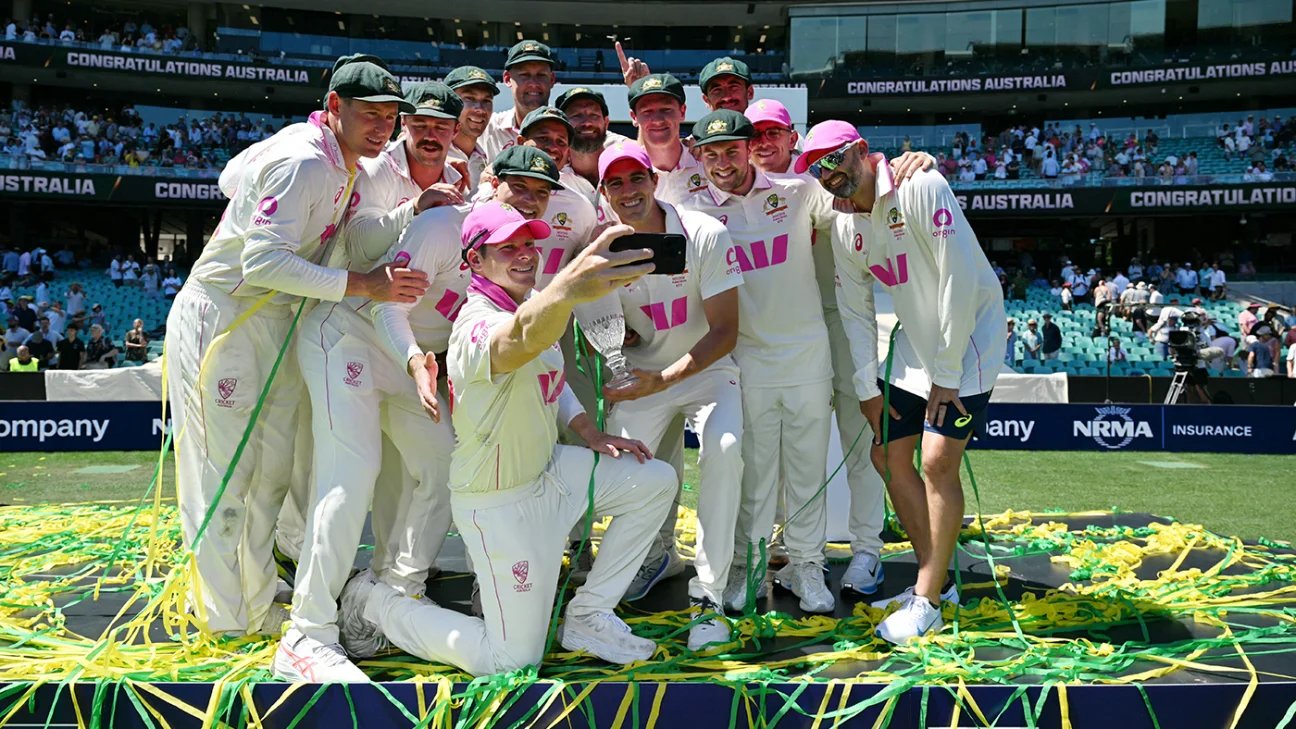
First reported by Code Sports on Saturday, ESPNcricinfo understands a handful of Australian players were unimpressed by the initial CA contract offers that were tabled to them in the last week.
Under the current MoU (Australian players pay deal between CA and the Australian Cricketers Association), which runs until mid-2028, up to 24 national contracts are given out by national selectors for the 2026-27 financial year (July 1, 2026 to June 30, 2027) and those players share A$21,916,257 in the year in base salaries.
Players are ranked and receive contracts based on importance and the number of games they are likely to play in the cycle, with the lowest player earning a base of $360,645. In addition, players also earn nearly A$19,000 per Test appearance, nearly $8000 per ODI and nearly $5000 per T20I in match payments on top of the base. There are win bonuses on top, with a Test win worth roughly $30,000 per player in total. There is also a CA marketing pool, which contracted players share depending on appearances with commercial partners.
Player pay was already an issue in Australia and at the heart of the BBL privatisation debate. The rising money on offer in the franchise world has led players to consider whether locking themselves into a 12-month CA deal would cost them money over the year.
Players like Marcus Stoinis and Tim David have not had CA deals in recent years, knowing they would qualify for a base upgrade by playing the minimum number of T20Is in a year (six), whilst being able to sign franchise deals freely without the need for NOCs, to maximise earnings elsewhere.
But the priority of paying Test players has been a source of tension for the white-ball players, who feel they can earn more than the offered CA deal if they went freelance. Meanwhile, there are three-format players concerned about what they are missing out on if they have to rest from certain series, or if more minor bilateral series are being played while lucrative franchise tournaments are on.
How the issue gets resolved in the short term remains unclear. Australia have two white-ball tours of Pakistan and Bangladesh coming up but they fall in the previous contract cycle. The first games of the 2026-27 cycle are the home Bangladesh Tests in August.
Several BBL players unhappy over stalled BBL privatisation proposal
Meanwhile, a group of a dozen high-profile Australian BBL players are understood to be furious over the stalled privatisation proposal. The players had set up a WhatsApp group last October to discuss their long-term options after spending three years frustrated at CA over the pay disparity between them and overseas players. The introduction of the draft and the platinum signing of A$420,000 meant the likes of Luke Wood and Mohammad Rizwan were paid significantly more than Australian players with significantly better T20 records, who were on $200,000-$300,000.
The BBL stars are now considering their options. It is a unique season coming with the ILT20 moving to November before the BBL. There are Australian players who have been offered A$500,000 to play in the UAE.
Meanwhile, the SA20, which is seen as the major threat to the BBL, is rumoured to start on January 17.
The BBL is likely to run from mid-December until the last weekend in January, as it did last year. It does mean Australian players could play both but would need an NOC to go and would miss the first week of the SA20. It would lead to the farcical situation that happened a couple of years ago when several Australian players benefited from their BBL teams not making finals, which meant they could get to South Africa earlier and earn more money, as contracts are generally prorated on a games played basis. Australia’s Test players, however, would not be available for either as they have a five-Test tour of India that runs from mid-January to early March that immediately follows a four-Test home series against New Zealand in December and early January.
Australian players were furious when Dewald Brevis and Aiden Markram were bought for R16.5 million (A$1.3 million or US$940,000 approximately) at the SA20 auction last year, four to five times more than some of the top Australian contracts in the BBL.
It is understood that the senior BBL stars do not expect that type of money in the BBL in the short term but were hoping to close the gap significantly this year before privatisation redressed the situation in 2027-28.
It is understood that part of CA’s proposal to the states was to increase the salary cap by up to A$1.5 million. The issue for Australia’s players is that the bottom-end players in the BBL earn a minimum of A$52,000, whereas it is only roughly A$17,000 in the SA20, with the two salary caps reasonably similar at around A$3.2 million.
Alex Malcolm is an associate editor at ESPNcricinfo