dailynewsnblog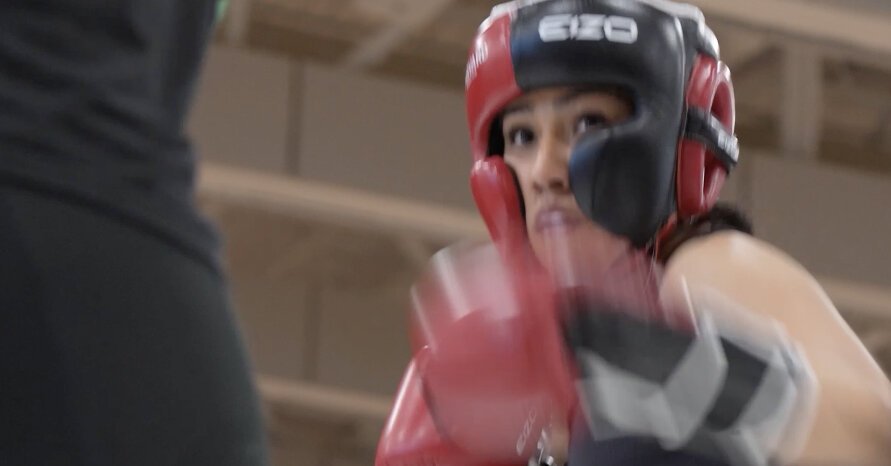
Her opponent at the Babson fight night was her Harvard teammate Muskaan Sandhu, 18, a freshman, who had sparred before. No one likes getting hit, Ms. Sandhu said, but she liked learning that she could take a punch.
It made her feel she could do anything. “After the fight, I never felt so capable in my life,” she said.
Modern life — lived on screens or amid the constant distraction of screens — can feel isolating. She sees boxing as a way to engage with people. “You feel really human,” she said. “You feel a connection with the person you’re fighting. Like we’re in this together.”
Mr. Lake said he intended for Harvard’s club to join the National Collegiate Boxing Association, a nonprofit that provides structure and safety rules. The N.C.B.A. represents about 840 athletes, an 18 percent increase from a year ago, said the group’s president, George Chamberlain, who coaches the University of Iowa’s boxing club.
The well-attended fight night at Babson, which also included boxers from Brandeis University, reflected the growing interest.
Before it began, a volunteer passed out waiver documents. Most of the boxers immediately flipped to the end and signed. Mr. Jiang, of Harvard, appeared to be the only one who read it.
He was a mixed martial arts fan who resolved to try a combat sport in college. “I like the technique side of it,” Mr. Jiang said of boxing, “the science behind the sport.”
His fight plan, he explained, was to control the action with his jab and occasionally throw the right hand, to maintain good defense and try to tire out his opponent.
It seemed a solid strategy — though, as the heavyweight Mike Tyson famously noted, everyone has a plan until they get punched in the face.