dailynewsnblog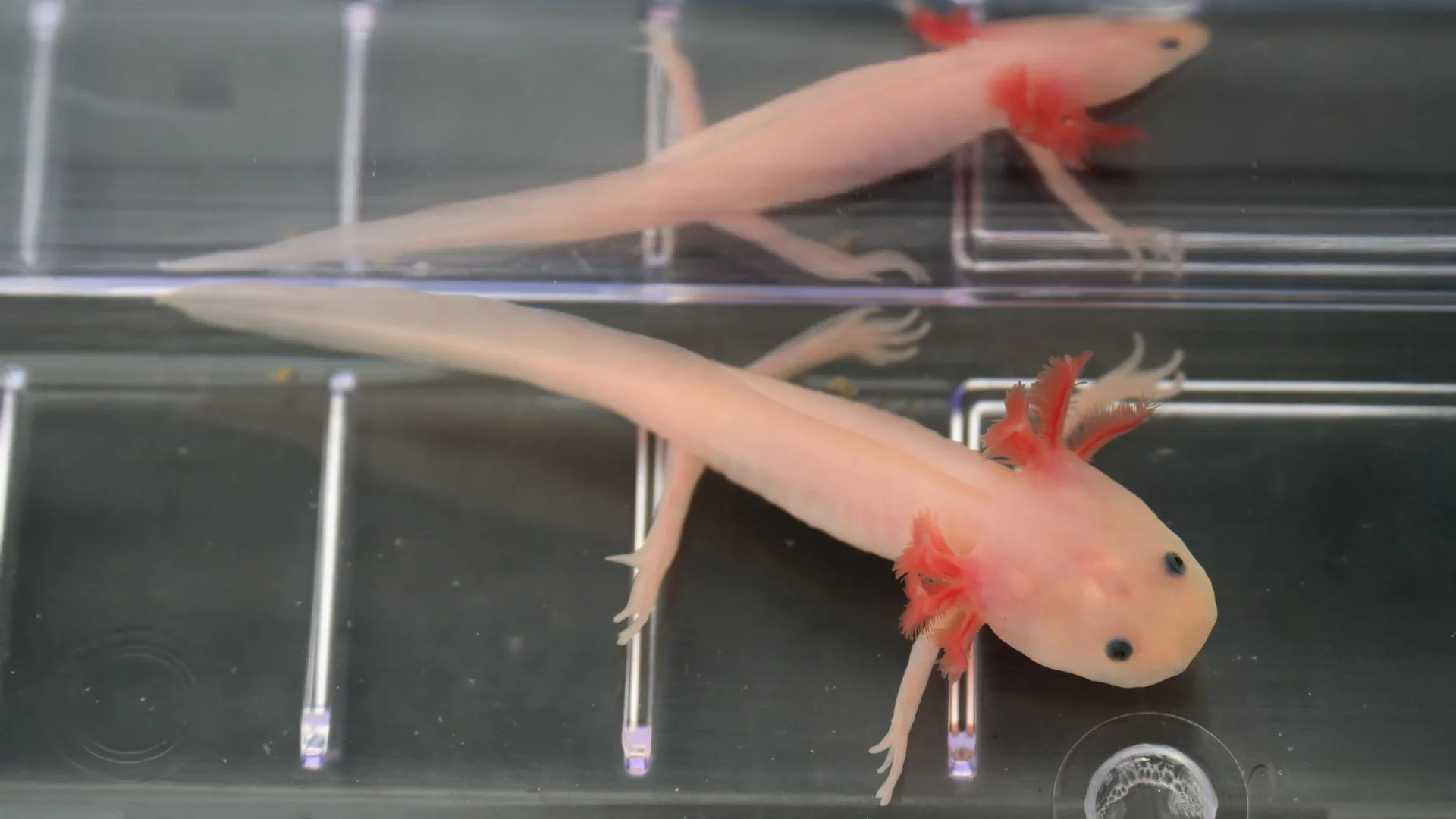
Scientists studying axolotls, zebrafish, and mice have uncovered a shared set of genes that could someday help researchers develop therapies for regrowing human limbs. The findings, published in the Proceedings of the National Academy of Sciences, point to a possible new direction for regenerative medicine and gene therapy.
“This significant research brought together three labs, working across three organisms to compare regeneration,” said Wake Forest Assistant Professor of Biology Josh Currie, whose lab studies the Mexican axolotl salamander. “It showed us that there are universal, unifying genetic programs that are driving regeneration in very different types of organisms, salamanders, zebrafish and mice.”
The project also included Duke University plastic surgeon David A. Brown, who studies digit regeneration in mice, and Kenneth D. Poss of the University of Wisconsin-Madison, whose research focuses on fin regeneration in zebrafish.
Shared Regeneration Genes Across Species
Around the world, more than 1 million amputations occur every year due to diabetes-related vascular disease, traumatic injuries, infections, and cancer, according to Global Burden of Disease statistics. Researchers expect that number to climb as populations age and diabetes becomes more common.
For years, scientists have searched for ways to move beyond prosthetic limbs and toward treatments capable of restoring natural movement, sensation, and function. This new study suggests that a group of genes known as SP genes may play a central role in that effort.
Researchers selected axolotls, zebrafish, and mice because each species offers unique insights into regeneration.
Axolotls are famous for their extraordinary ability to regrow entire limbs along with tails, spinal cord tissue, and parts of organs including the heart, brain, lungs, liver, and jaw.
Zebrafish are another powerful regeneration model because they can repeatedly regrow damaged tail fins. They are also capable of repairing the heart, brain, spinal cord, kidneys, retinas, and pancreas.
Mice were included because, like humans, they are mammals. Mice can regenerate the tips of their digits, and humans can sometimes regrow fingertips if the nailbed remains intact after injury, allowing skin, flesh, and bone to regenerate.
Currie said the team discovered that the regenerating epidermis, or skin tissue, in all three species activated two genes called SP6 and SP8. Researchers then began investigating exactly how those genes contribute to regeneration.
Biology Ph.D. student Tim Curtis Jr. participated in the work in Currie’s lab, along with undergraduate Elena Singer-Freeman, a Goldwater Scholar and 2025 Wake Forest graduate in biochemistry and molecular biology.
CRISPR Experiments Reveal Key Limb Regrowth Role
The researchers found that SP8 is especially important for limb regeneration in salamanders. Using CRISPR gene-editing technology, Currie’s team removed SP8 from the axolotl genome.
Without the gene, axolotls were unable to properly regenerate limb bones. Scientists observed similar problems in mice when SP6 and SP8 were missing from regenerating digits.
Using those findings, Brown’s lab designed a viral gene therapy based on a tissue regeneration enhancer previously identified in zebrafish.
The therapy delivered a signaling molecule called FGF8, which is normally activated by SP8. In mice, the treatment encouraged bone regrowth in damaged digits and partially restored some regenerative abilities lost when the SP genes were absent.
Human limbs cannot naturally regenerate the way salamander limbs do, but researchers believe future therapies could potentially imitate some of the biological mechanisms controlled by SP genes.
“We can use this as a kind of proof of principle that we might be able to deliver therapies to substitute for this regenerative style of epidermis in regrowing tissue in humans,” Currie explained.
Building Toward Future Human Limb Regeneration
Researchers caution that the work is still at an early stage, and far more studies will be needed before discoveries in mice could translate into therapies for humans. Even so, Currie described the research as an important foundation for future regenerative treatments.
“Scientists are pursuing many solutions for replacing limbs, including bioengineered scaffolds and stem cell therapies,” Currie explained. “The gene-therapy approach in this study is a new avenue that can complement and potentially augment what will surely be a multi-disciplinary solution to one day regenerate human limbs.”
Currie also emphasized the importance of collaboration between scientists working on very different animals and biological systems.
“Many times, scientists work in their silos: we’re just working in axolotl, or we’re just working in mouse, or just working in fish,” Currie said. “A real standout feature of this research is that we work across all these different organisms. That is really powerful, and it’s something that I hope we’ll see more of in the field.”