dailynewsnblog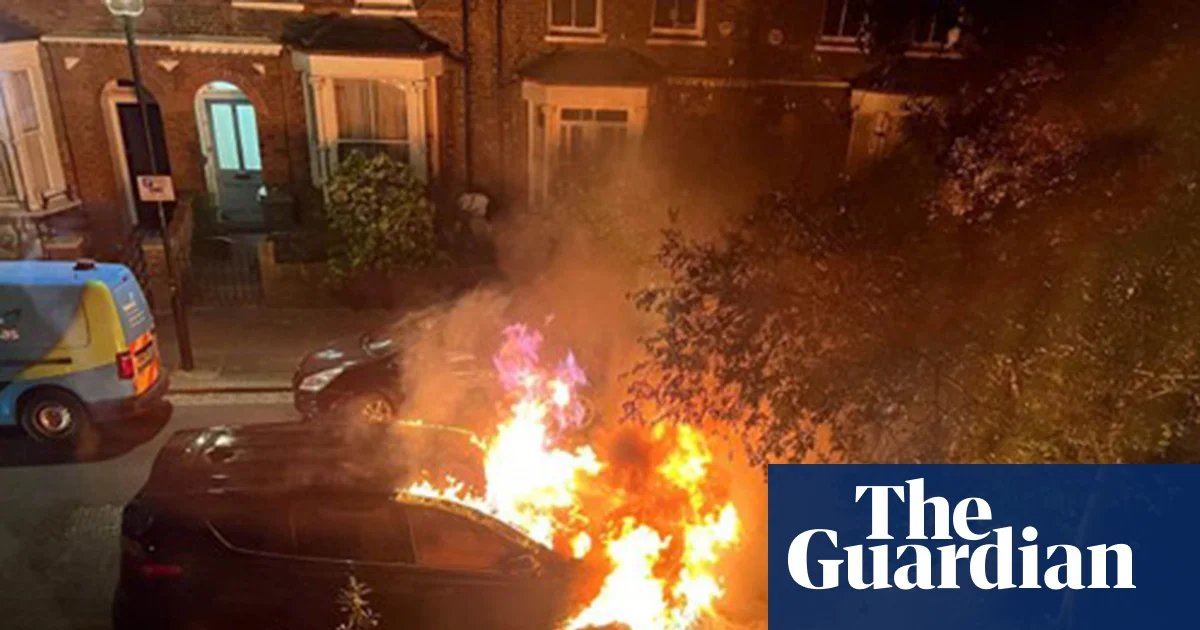
A Ukrainian man has admitted setting fire to a car that once belonged to Keir Starmer for £3,000, after telling a court he had been being threatened by a “powerful” Russian-speaking man using the pseudonym El Money.
Roman Lavrynovych, 22, is accused, along with Stanislav Carpiuc, 27, and Petro Pochynok, 35, of arson attacks on a vehicle and two houses in north London linked to the prime minister.
A Toyota Rav4 that once belonged to Starmer was burnt out in Kentish Town in the early hours of 8 May last year. The blaze was treated as suspicious after two more attacks on property connected to the prime minister days later.
Giving evidence at the Old Bailey in London, Lavrynovych said he had initially refused El Money’s offer of £3,000 in cryptocurrency because he was scared of getting caught by police.
The court heard El Money became threatening and told Lavrynovych, who was living with his grandmother in Sydenham, south-east London, that he had “better do this job” because he knew where he lived and it “might be dangerous” for him.
Lavrynovych told jurors he agreed “because I felt that there is a threat towards myself and my family. My fear was genuine”.
Asked by James Scobie KC, defending, what made him conclude that he meant business, he said: “He told me he is a high-profile person. Maybe he had some connections, maybe he is connected to politics. He said he is like a person with a high status. He just told me he is a person in power.”
The deal Lavrynovych struck with El Money was for him to set fire to the vehicle, film it and provide proof, the court heard. Lavrynovych said: “[El Money] told me that I didn’t do the job properly because it was not on the news and he wanted it broadcasted.”
Lavrynovych said he had asked one of his co-accused, Carpiuc, to help, but he had suggested Pochynok instead. The construction worker said he was having financial difficulties at the time and payment was “essential” to why he agreed to do the job.
The defendant said he had been instructed to break a side window on the car and throw in a bottle of flammable liquid to start a fire. Fearing the sound of breaking glass might alert residents, he opted to pour liquid on the front of the Toyota and set light to it using paper and his lighter, he said.
Lavrynovych told jurors he had agreed to do other jobs for El Money because he was in desperate need of funds. He said he sprayed graffiti on an Islamic community centre in south London for the cost of materials and £20 in December 2024. When Scobie asked if it had been the kind of “offensive, racist, unpleasant graffiti” jurors had seen on a similar building, the defendant replied: “Yes, something like that.”
In April 2025, El Money asked Lavrynovych to put up posters on a road in Southall, west London, with a message connecting mosques with crime, the court heard. But he did not go through with the job because he thought it was “propaganda” and he “might be caught”, jurors heard.
Up until that point, there were no issues if he chose not to do the jobs he was given, the defendant said. But when it came to setting the car alight, El Money talked in a “different way” and changed tactics, Lavrynovych added.
Lavrynovych, Pochynok and Carpiuc, all from London, deny conspiracy to damage property by fire between 1 April and 13 May last year. Lavrynovych also denies damaging two properties by fire with intent to endanger life or being reckless as to whether life was endangered on 11 and 12 May last year.
The trial continues.