dailynewsnblog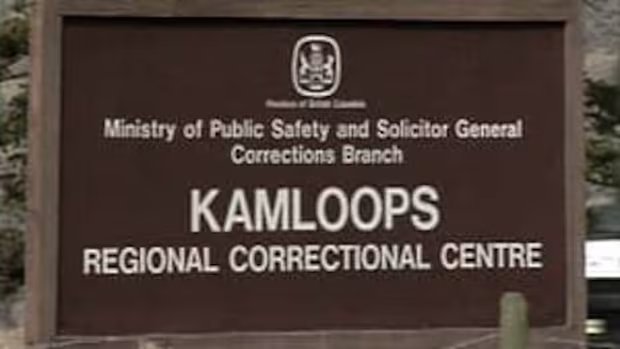
B.C. taxpayers have spent nearly $300,000 in the last five months to fly inmates to and from court in rural and remote parts of the province.
Since December 2025, the B.C. Sheriff Service has chartered 31 flights to transport people accused of crimes back and forth from the detention centre where they’re being held and the courthouse where they’re being tried, according to figures provided to CBC News by the Ministry of Attorney General.
That figure is drawing criticism from some Crown prosecutors and defence lawyers, and the Official Opposition.
Daybreak South5:54 Some court cases in B.C. may be delayed because of prisoner transportation issues
Andrew Duncan, a director with the BC’s Crown Council Association, says when it’s difficult to get accused who are in custody to trial in rural communities, justice may not always be served
“That’s a staggering amount of money that could go towards other things, like hiring more sheriffs, hiring community corrections workers, hiring additional prosecutors that we say are desperately needed,” said Andrew Duncan, a Crown prosecutor in Kamloops and a director for the B.C. Crown Counsel Association’s Southern Interior region.
“If we spend a million dollars or $1.2 million on Con Air kind of flights in a year, that’s four-plus prosecutors we could hire.”
B.C. Supreme Court Associate Chief Justice Heather Holmes warned in a notice posted to the court’s website that the situation is no longer tenable, since in some cases charter flights are not available.
As a result, some criminal trials in rural and remote communities could have to be rescheduled or moved, or the suspects released from custody, Holmes said.
“It may not be possible for criminal trials to proceed as scheduled if the accused person is in custody and the courthouse is distant from the nearest pre-trial correctional centre,” she wrote.
Concerns about delays
It all stems from an RCMP directive in January 2025.
The RCMP determined they no longer had the resources to hold suspects in police cells in the community where the accused is facing trial.
There are only two correctional centres in the B.C. Interior and the North, in Kamloops and Prince George respectively. The RCMP policy change meant that the accused might have to travel hundreds of kilometres between those two communities and small courthouses in places like Williams Lake, Terrace or Fort St. John, for example.
In some cases, that journey is happening by private plane, at a cost of about $1,000 per flight.
Holmes said the communities that could be impacted by court delays are: Cranbrook, Dawson Creek, Fort St. John, Nelson, Powell River, Prince Rupert, Revelstoke, Rossland, Smithers, Terrace and Williams Lake.

B.C. Minister of Public Safety Nina Krieger said a working group made up of provincial government officials and police representatives is trying to find solutions, such as relying on virtual bail hearings, to reduce the burden on the courts.
“Wherever possible and appropriate, we are using those virtual options to keep costs down and keep inmates in communities. But where needed we’ll need to – whether it’s flights or ground transportation – use those tools to ensure the swift access to justice,” Krieger said.
B.C. RCMP spokesperson Staff Sgt. Kris Clark told CBC News the RCMP only hold people during active investigations or when they’ve been arrested by police and are awaiting their next court date.
If the accused is denied bail, the responsibility transfers to B.C. Corrections or Correctional Service Canada.
Despite this, it had become common practice for the RCMP to hold prisoners during their trial.
“Due to the significant liability this places upon the RCMP, the practice of holding those prisoners can no longer be supported except in very exigent circumstances,” Clark said.
Conservative MLA Steve Kooner, the Opposition attorney general critic, accused the attorney general’s ministry of “gross mismanagement” of the province’s criminal justice system.
“We’re seeing criminal trials are going to be delayed,” Kooner said. “This is directly at the feet of this provincial government.”
Jay Michi, a Kamloops-based defence lawyer, said he’d like to see the courts allow the accused to appear by video link during the trial, to limit the amount of travel to and from court – especially if the only option is a private plane.

Vancouver-based criminal defence lawyer Kyla Lee said the public should be concerned about the prospect of charges being stayed or accused being released after they were denied bail.
“The cases that are affected by this are not minor charges,” she said. “These are serious Supreme Court trials with typically, you know, murder, sexual assault, those types of offences, the ones the public has the greatest interest in seeing prosecuted.”
Duncan, the Crown prosecutor, shared those worries.
“This is about safety for the communities that these courthouses serve. I’m concerned that the next step will be people being released from custody.”
Krieger insisted that won’t happen.
“The measures that we’re taking using a number of innovative and collaborative solutions are in place to make sure that inmates are not released and that there are no delays to trials,” she said.