dailynewsnblog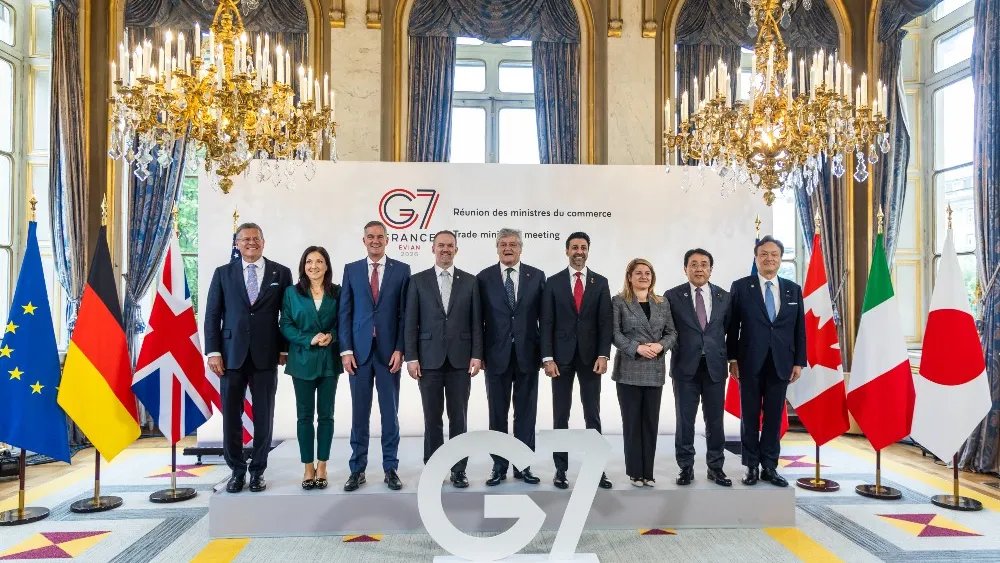
The handshake trade pact brokered last July by President Donald Trump and European Commission President Ursula von der Leyen is beginning to seem like a distant memory as tensions between the European Union and the United States ratchet up again with new tariff threats.
Officials from EU Parliament, the European Commission and individual European governments came together Wednesday in Paris at a meeting of the G7 to discuss how to move forward with the Turnberry agreement. The ratification of the deal was paused when Trump’s International Emergency Economic Powers Act (IEEPA) tariffs were deemed unlawful by the Supreme Court in February, raising questions about its viability and benefits for EU member states.
This week, Trump vowed to impose new, 25 percent duties on the EU’s automotive sector because, he said, the EU has not complied with the terms of the deal, augmenting the 15 percent auto tariff that was agreed upon. He also called out European nations for breaching the terms of the agreement by declining to send military backup to the Strait of Hormuz to aid the U.S. Navy.
While it might be tempting to view the president’s threats as bluster, U.S. Trade Representative Ambassador Jamieson Greer told CNBC on Monday that the administration is indeed “moving forward with this action.”
Given the mercurial nature of American trade policy, EU Parliamentary officials want to see the Turnberry deal strengthened with protections for European markets, including a provision that would suspend the trade agreement if Washington imposes new duties and an expiration date of March 31, 2028. Officials from Germany and Italy would like to see the deal move forward swiftly to ratification without changes, while Spain and France are reportedly backing the Parliamentary approach.
In a meeting with Greer, EU Trade Commissioner Maroš Šefčovič on Tuesday pushed for Washington to uphold its side of the deal, which entailed a 15 percent across-the-board tariff rate. Šefčovič said later that he and Greer “both clearly concluded that it’s important to respect the deal from Turnberry from both sides, so we have to deliver on what was promised in Scotland,” according to Reuters.
Just one month ago, it looked like the Turnberry agreement’s finalization could be imminent as Trump revised duties on key import categories like pharmaceuticals to give European producers lower tariff rates.
In addition to discussing the future of the EU-U.S. trade deal, trade ministers spoke about China’s industrial overcapacity—the subject of Section 301 hearings in Washington on Tuesday and Wednesday—as well as reforming the World Trade Organization.