dailynewsnblog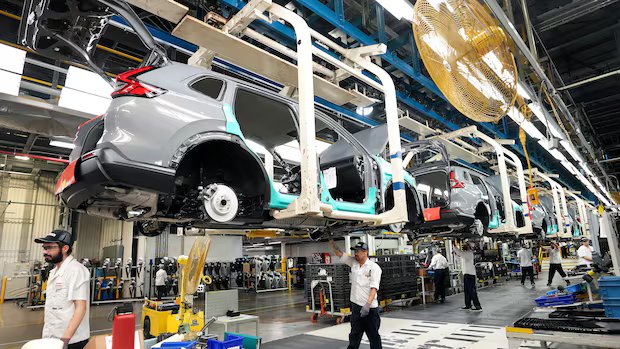

Listen to this article
Estimated 4 minutes
The audio version of this article is generated by AI-based technology. Mispronunciations can occur. We are working with our partners to continually review and improve the results.
Honda Motor plans to more definitively halt development on its $15-billion electric vehicle complex in Canada, according to multiple news reports by Japanese media.
The Japanese automaker paused development of the Alliston, Ont., project in May last year, saying at the time that the company would review where the EV market was in two years before deciding the future of the project.
Sluggish U.S. demand for EVs is leading the automaker to freeze the Canadian EV investment and make hybrids the centre of its North American strategy, according to the reports.
Asked to confirm the news, Honda Canada said in a statement that it had nothing to report at this time.
Provincial and federal officials say they’re in regular contact with Honda, but did not say whether they had been told such a decision had been made.
Announced in 2024, the project would have included a vehicle assembly plant as well as battery production facilities. It was set to receive upwards of $5 billion in federal and provincial funding.
Ontario Economic Development Minister Vic Fedeli said no public funds would go to Honda unless it went ahead with the project. Speaking after question period in Toronto, he said Honda has given assurances of its commitment to Canada.
“They’ve been very clear that there are challenges ahead in the auto sector, especially because of the tariffs and of the global uncertainty, but that they’re here to stay.”

Japanese automaker Honda says it’s pausing a $15-billion investment plan that would have seen four new electric vehicle factories built in Ontario. Honda says it’s because of slow market growth in the EV sector due to Trump’s trade war.
Fedeli said Honda has a 40-year legacy of producing vehicles in Ontario and that the province is committed to working with the company or any other automaker to bring more well-paying jobs to Ontario.
Prime Minister Mark Carney said Wednesday morning that the industry was facing headwinds, but did not specifically speak about Honda.
“Obviously there are challenges with the U.S. tariffs, unjustified tariffs in the auto sector. We continue to work with companies in the sector, helping them reposition, reinvest, supporting workers there,” he said.
“We will continue to do what’s necessary, including getting the right deal that’s in Canada’s interest.”
Gabrielle Landry, spokesperson for federal Industry Minister Mélanie Joly, said in a statement that the automotive sector both in North America and globally is experiencing significant change.
“American tariffs and changes to U.S. domestic policies are creating real pressures for automakers, prompting some to delay or scale back investments in electric vehicle and battery projects,” Landry said.
Major U.S. policy shifts, including announced plans to weaken fuel efficiency standards and removing financial supports for EV adoption, have reduced expected uptake of the zero emission vehicles.
Landry said Canada’s auto strategy, launched in February, aims to transform Canada’s vehicle industry to benefit from electrification, while the government continues to support and protect existing automotive facilities.
Honda’s reported decision to halt development is just one of many EV projects that have fizzled out in Canada.
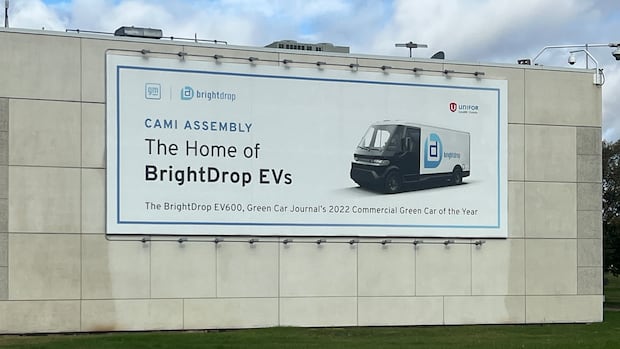
Hear CBC London’s full interview with Kristian Aquilina, president and managing director of GM Canada, about plans to end the BrightDrop electric van production at its CAMI plant in Ingersoll, Ont. Aquilina took questions about the decision, its implications for local workers, and what this change means for auto production in the province.
General Motors ended production of its BrightDrop electric delivery van last year, Ford Motor Co. has pivoted from EVs to pickup truck plans at its Oakville, Ont., plant and several battery-related plants have been shelved.
Conservative MP Adam Chambers said the latest Honda decision shows the Liberal government’s bet on EVs hasn’t worked.
“Broadly speaking, I think it’s an indictment of the government’s auto policy,” he said in Ottawa on Wednesday.
“Instead of rethinking their entire policy, they are doubling down.”
He said the government needs to focus on securing access to the U.S. vehicle market to ensure there’s a Canadian auto industry going forward.
Honda produced just over 400,000 vehicles in Canada last year, making it the second-largest producer behind Toyota.
Production included both conventional gas and hybrid versions of its Civic and CR-V vehicles.