dailynewsnblog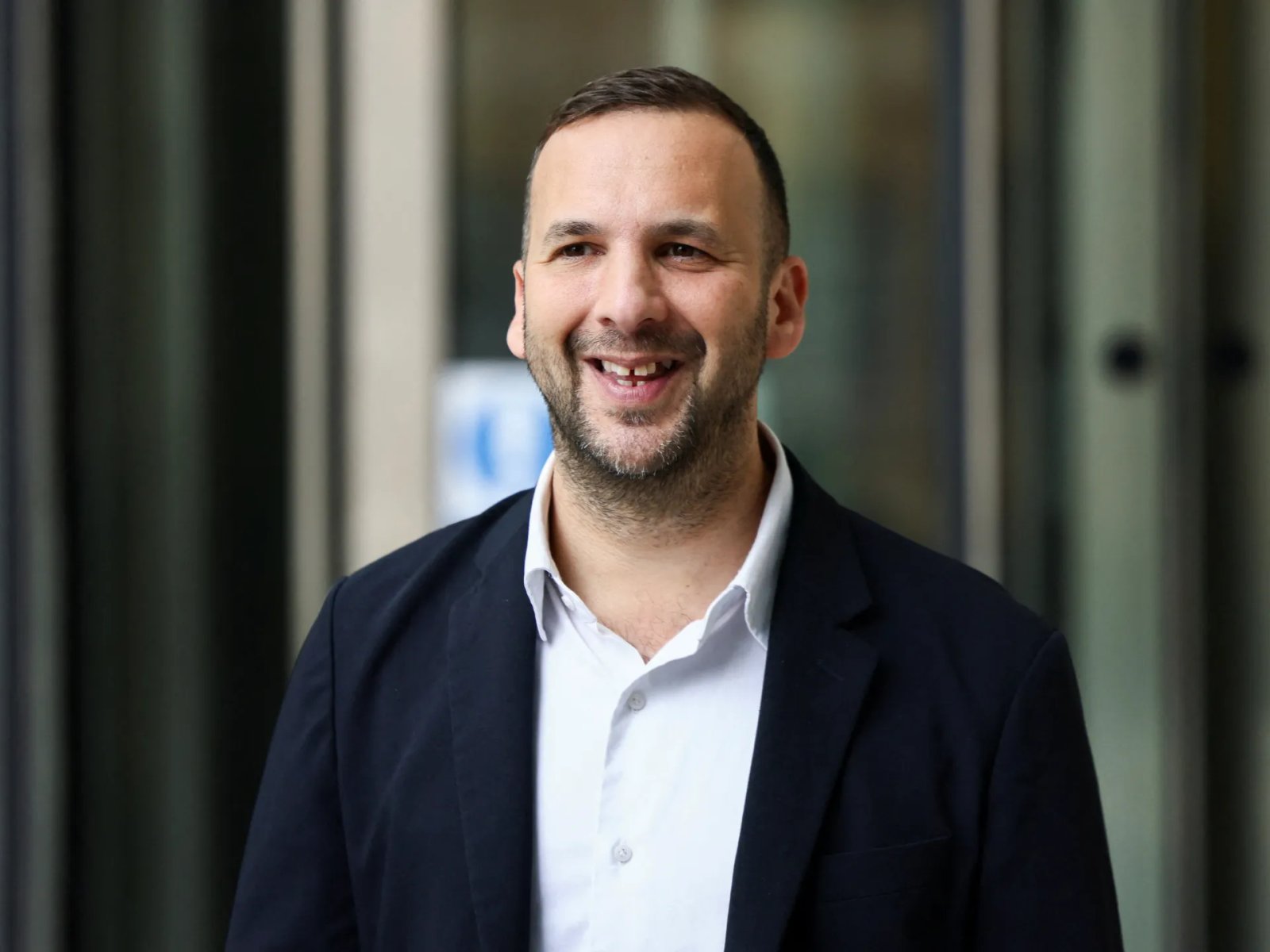
The United Kingdom’s Green Party leader Zack Polanski, a 43-year-old self-styled “eco-populist” presenting himself as a progressive alternative to Keir Starmer’s governing Labour Party, is banking on a political breakthrough in British local elections this week.
More than 5,000 council seats will be up for grabs on Thursday as voters in 136 local authorities head to the polls, including in London and other major UK cities.
Recommended Stories
list of 3 itemsend of list
According to polling group YouGov, the Green Party appears set to make major gains in the capital and could come first in as many as eight of London’s 32 councils.
The party’s ratings have steadily improved since Polanski was elected leader in a landslide victory in September last year. In February, the Green Party won its first-ever parliamentary by-election, taking Gorton and Denton, a constituency in Greater Manchester which had been held by the governing Labour party for nearly a century.
Polanski is viewed by political observers in the UK as a media-savvy representative of a green socialist movement which seeks to inspire younger generations for change, along the lines of New York’s Zohran Mamdani.
To achieve this, the Green Party has expanded beyond its core environmental mission, experts say. Tim Bale, professor of politics at Queen Mary University of London, said that under Polanski’s leadership, the Greens have become “far more left-liberal and pro-Gaza focused than environmentally concerned”.
“The reason the party’s poll ratings have increased lies partly in the visibility his considerable communication skills have given them, partly in Israel’s wars on Gaza and Lebanon, and partly in widespread frustration among left-liberal voters at the Starmer government’s hardline rhetoric on immigration,” Bale told Al Jazeera.
“The Greens have elected a headline-grabbing leader at the same time as they’re facing off against a terribly unpopular PM and government that has disillusioned many of its 2024 voter coalition.”
If the polls are accurate, the upcoming local vote could consolidate the Green Party’s position as an alternative to Starmer’s Labour party – traditionally associated with the working class in the UK.
Who is Zack Polanski?
The Green Party leader grew up as David Paulden in a Jewish community in Salford, Greater Manchester. At the age of 18, he changed his anglicised name to a version of his original family name to recognise his Jewish heritage, he said.
He studied drama at Aberystwyth University in Wales and began a career in community theatre, before switching to become a hypnotherapist and mental health counsellor.
Polanski, who is openly homosexual and “proudly vegan”, began his political career with the Liberal Democrats, standing for the party as a councillor in north London in 2015 and as a London Assembly candidate in 2016.
He joined the Green Party the following year and was elected to the London Assembly in 2021 and as deputy leader of the Green Party in 2022.
He was nominated as party leader in September last year, winning the vote with 20,411 votes against 3,705 ballots cast for his rivals Adrian Ramsay and Ellie Chowns, who ran on a joint ticket.
What are some of Polanski’s key positions?
Following his election as party leader, Polanski promised to “work every single day to deliver environmental, social, racial and economic justice”.
He professes a brand of “eco-populism” that links environmental policies with socialist ones, including a wealth tax on billionaires, stronger workers’ rights in cases of unfair dismissal and a 15-pound ($20.41) per hour minimum wage for workers of all ages.
In an interview with the podcast The Rest Is Politics, hosted by former Labour spin doctor Alastair Campbell and former Conservative leadership contender Rory Stewart in November last year, Polanski argued it was necessary to take back the term “populism”, arguing it should represent those who support the interests of the 99 percent of people rather than the wealthy 1 percent majority.
In the UK, as in other Western countries, the term “populism” has become associated with the far-right, driven by concerns over immigration and declining trust in governance as expressed by political parties such as Reform UK, led by Nigel Farage.
Going by his definition, Polanski told the podcast, “I am a populist, Farage is not.”
Why is the Green Party facing accusations of antisemitism?
Polanski has called on Starmer’s government to take action over Israel’s genocide in Gaza. “We have to be clear and say this loud – our government is not just complicit but active participants,” he told crowds of protesters gathered at a march for Palestine in London last year.
“This is not self-defence [by Israel], this is collective punishment. The UK must immediately end arms sales to Israel, support an urgent and permanent ceasefire, and back a full international investigation into war crimes and crimes against humanity.”
But Polanski’s popularity has taken a hit in the run-up to the local elections this week in the wake of a row with the chief of the Metropolitan Police after two Jewish men were stabbed in Golders Green, a residential area of north London with a large Jewish community, on April 29.
Both victims suffered serious injuries in the attack, which the Metropolitan Police declared a terrorist incident. Polanski later apologised for sharing an “inaccurate” post on social media in which he criticised police officers for “violently kicking a mentally ill man in the head” during their intervention.
He claimed he had found the whole incident “very traumatic, especially as a Jewish person”.
Despite his heritage, Polanski and other Green Party candidates have also faced accusations of anti-Semitism over a series of social media posts.
One post by Philip Brookes, a Green candidate for Newcastle City Council, described Israel as “a bunch of Polish, Russian, Hungarian terrorists killing Palestinian people for 76 years”. Brookes also published an image of an Israeli flag being torn up to reveal a Nazi swastika flag on his Facebook page, and wrote that it “takes serious effort not to be a tiny bit antisemitic” when considering the situation in Gaza.
Mohammed Suleman, a candidate for the same council elections, reposted a TikTok video claiming that Jewish prisoners of war were willing to follow Nazi instructions to bury Soviet prisoners alive during World War II.
Although Polanski has assured voters that “antisemitism, Islamophobia, any form of hatred or hate crime, is not welcome in the Green Party”, last-minute polls nevertheless suggest the accusations could lose votes on the day.
Bale, at Queen Mary University of London, said support for the party will probably remain strong before Thursday’s vote in multicultural, inner-city London and “some ‘artsy’ towns”.
“The Greens will win plenty of councillors from Labour, even if that won’t give them control of many – if any – councils,” he said.