dailynewsnblog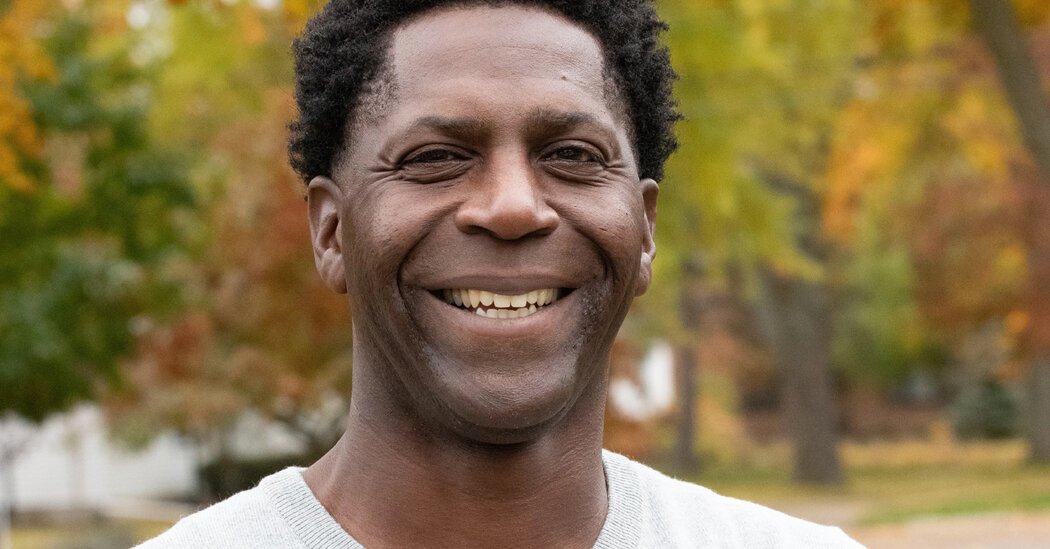
Democrats held onto a narrow majority in the Michigan Senate on Tuesday by winning a special election in a closely divided district, The Associated Press said.
The victory by Chedrick Greene, a Saginaw firefighter, carried practical and symbolic importance for Michigan Democrats ahead of November’s midterm elections, which include competitive races for governor and U.S. Senate.
Mr. Greene will take a seat vacated more than a year ago by Kristen McDonald Rivet, a Democrat who was elected to the U.S. House in 2024. The State Senate seat will be up for election again in November.
Gov. Gretchen Whitmer, a Democrat, waited until last August to call the special election to replace Ms. McDonald Rivet, a delay that was criticized by Republicans and many political observers. The vacancy kept in place a one-seat Democratic majority in the State Senate, but also left residents of Bay City, Midland and Saginaw without representation.
Had the Republican nominee, Jason Tunney, won on Tuesday, the State Senate would have been locked in an even split, with the Democratic lieutenant governor carrying a tiebreaking vote. That deadlock would have had a limited effect, with control of state government already divided between a Democratic governor and a Republican House majority.
Still, both parties were eager to demonstrate strength in a district, northwest of Detroit, that includes some of the most closely fought territory in statewide and presidential elections. Ms. McDonald Rivet won the district by 7 percentage points in 2022, a strong electoral year for Michigan Democrats, but Republicans have built political momentum in that region during the Trump era.
The district is home to blue-collar workers, who both parties covet, but who have drifted toward Republicans in recent elections. The district includes portions of three counties, all of which President Trump carried in 2024 as he narrowly won Michigan’s electoral votes.
Outside the polls, voters from both parties expressed disappointment about the state of the political discourse and deep distrust of the opposition.
Matt Mitchell, a professor from Midland, said he voted for Mr. Greene mostly because he did not want a Republican in office.
“The Republicans are destroying the country,” said Mr. Mitchell, a Democrat who said he wanted to protect education and L.G.B.T.Q. rights.
Nelson Niederer, a Republican from Bay County, said after casting his ballot for Mr. Tunney that
“Republicans need to take control of the State Senate.” Mr. Niederer, a retired boat builder, added, “I realize I’m just one vote, but every vote counts, and we’ve got to stop Gretchen Whitmer in the last of her term here.”
Though Midland, home to the chemical company Dow, has steadily grown in recent decades, the cities of Saginaw and Bay City have suffered from manufacturing declines and shrinking populations. Saginaw, which grew up with the auto industry, had around 44,000 residents in the last census, down from about 78,000 in 1980.
Ms. Whitmer celebrated the result in a statement, saying that “voters put a check on Republican policies.”
“Michiganders need real relief right now,” she said, “and they know that Chedrick Greene will help get the job done.”
Across the country, Democrats have performed well in special elections since Mr. Trump’s second term began, flipping several seats that were previously held by Republicans. Those elections often have relatively low turnouts that draw heavily from the most engaged voters, and it is not yet clear whether those showings will translate in the November elections.
With Ms. Whitmer term-limited, Democrats will have to beat both a Republican and an independent candidate, the former Detroit mayor Mike Duggan, in order to hold the governorship. Secretary of State Jocelyn Benson is seen as the likeliest Democratic nominee, while Representative John James has led in Republican primary polling.
Both parties are also preparing for a competitive race for the U.S. Senate seat being vacated by Senator Gary Peters, a Democrat.