dailynewsnblog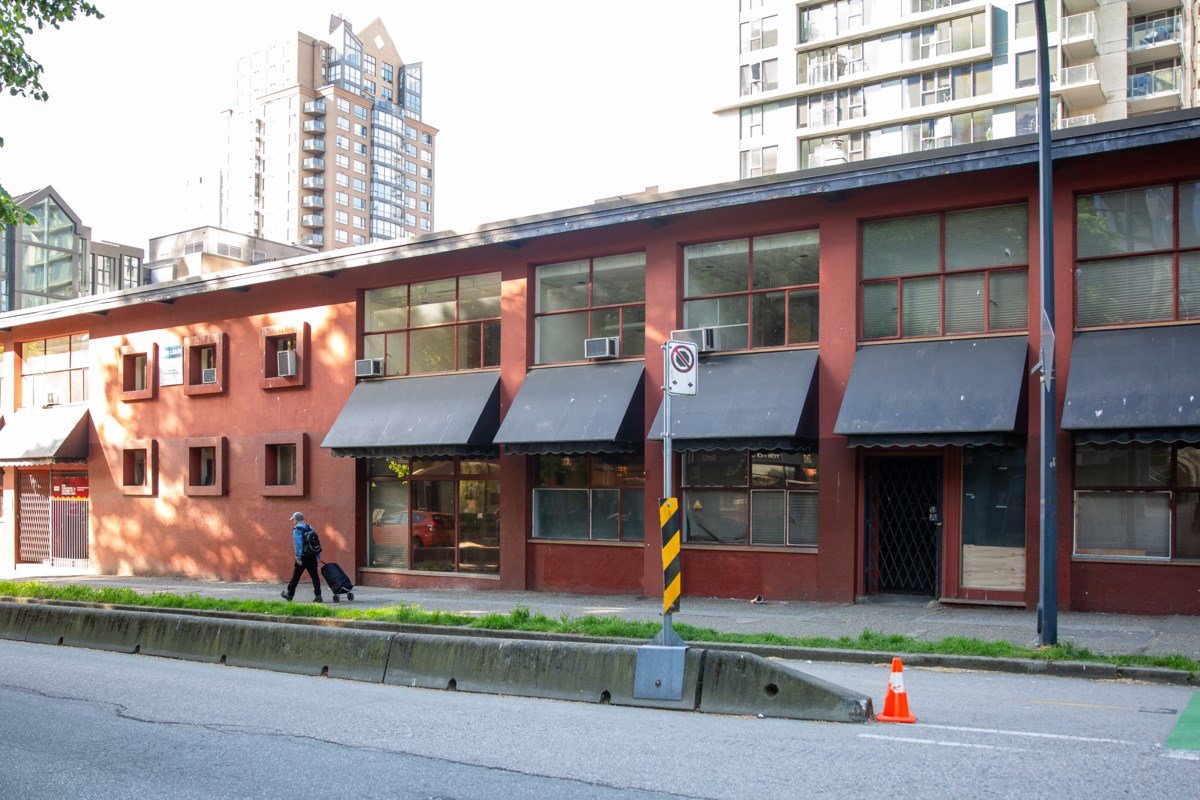
Vancouver Coastal Health plans to open site in June in building at 900 Helmcken Street
Vancouver Mayor Ken Sim planned to introduce a motion Tuesday at city hall that aims to prevent a proposed overdose prevention site from opening its doors in June.
Vancouver Coastal Health has signed a lease with a property owner at 900 Helmcken St. to begin offering injection and inhalation services for drug users in June. The lease term begins June 1, and the health authority anticipates that services will be available soon afterwards.
Prior to Tuesday’s council meeting, Sim announced at an early morning news conference that he wanted to explore “every available tool available to us to pause or prevent the opening of this site, or any site like it, until a more comprehensive plan is in place.”
“That includes reviewing permitting, business licensing and past agreements, and ensuring that any proposal moving forward includes meaningful consultation, a clear public safety strategy, defined recovery pathways and transparent accountability measures,” he said.
‘Real treatment and real recovery’
Sim said he only learned last week from the health authority of its decision to open an overdose prevention site on Helmcken Street. The site will include injection services inside the building and inhalation space in the adjacent parking lot.
“Since word got out, I’ve been hearing a lot of real concerns about what this new OPS means for residents’ safety and for businesses’ ability to continue operating in this neighbourhood,” said the mayor, standing on a sidewalk across from the proposed site.
“Opening another safe place to use illicit drugs in the middle of downtown Vancouver one block away from Granville Street isn’t an answer to the addiction and mental health crisis that is destroying people’s lives across this great country of ours.”
Sim suggested the site should be located at St. Paul’s Hospital.
“People need real treatment and real recovery options,” the mayor said. “And that’s not what this place is. This same neighbourhood has already been home to previous failed OPS sites that created street disorder, safety concerns, open drug use, significant challenges and concerns for residents and businesses.”
Sim also expressed frustration with the provincial government, saying Vancouver has not seen any promised mandatory care beds opened in the city for people living with a mental illness, addiction, or both.
The mayor reiterated his disappointment that the provincial government has yet to close three supportive housing buildings on Granville Street, which have been connected to street disorder.

‘Serious public health crisis’
Jane Talbot, president and CEO of the Downtown Vancouver Business Improvement Association, said safety remains the association’s top concern “and we’ve been sounding the alarm for years.”
“Over the past year alone, within our district, we’ve seen a 33 per cent increase in open drug use and a 24 per cent rise in requests for our SafeWalk services, despite the presence of an overdose prevention site in our district,” Talbot said.
“Business owners understand that we are in the midst of a serious public health crisis. They want people facing mental health and addiction challenges to get the support they need. But too often that support remains out of reach.”
As conditions persist and street disorder intensifies, many are reaching a breaking point, running low on compassion and struggling to operate their businesses, said Talbot, adding that the interconnected challenges of mental health, addiction and housing affordability cannot be solved by business associations or municipalities alone.
“They require co-ordinated provincial leadership, and it’s critical that we work together to hold our government accountable,” she said. “Downtowns matter, and until we improve the day-to-day street conditions, downtown Vancouver—and I would argue the city as a whole—cannot fully realize its potential.”
Second highest rate of overdose death
Dr. Patricia Daly, chief medical health officer for Vancouver Coastal Health, said in an interview that although the proposed site will be new, the service is not. Daly pointed out the service operated as the Thomus Donaghy facility in a city building in the 1100-block of Seymour Street between March 2021 and March 2024.
The facility saw 149,603 visits and staff responded to 480 overdoses before the City of Vancouver declined to renew the lease.
At the time, the site was the subject of two lawsuits and numerous complaints related to drug activity, street disorder and concerns over public safety. Others in the harm reduction community rallied to keep the site open, noting its value in an area popular for drug use.
Then in April 2024, VCH opened a new facility in a parking lot behind a social housing building in the 1000-block of Howe Street, a couple of blocks from the Seymour location. The facility was set up outdoors in large white tents, where users could inject or smoke their drugs.

St. Paul’s Hospital
The owner of the site forced the closure of the site in January, leaving VCH to operate a mobile service out of a van. Daly said the mobile service is not adequate to meet the needs of the people in the neighbourhood who require addiction services.
“So this [site at Helmcken] is desperately needed,” Daly said.
“This neighbourhood has the second-highest rate of overdose death in our region. Only the Downtown Eastside neighbourhood is higher. It’s one of the highest rates in the province. There were 94 deaths last year. So we need to find a location for this service, and we think this is a good one.”
Daly noted VCH’s Three Bridges Community Health Centre on Hornby Street is located across the street from the proposed site. Daly said the health authority suggested several other locations that were met with opposition.
The building is located down the block from St. Paul’s Hospital, but Daly said there was no room to operate a service at the hospital. She also noted St. Paul’s will close in February 2027 because a new hospital will open in the Main and Terminal neighbourhood.
“The mayor said the only acceptable location was on the grounds of St. Paul’s Hospital, which we looked at, but there’s not a lot of room on that campus,” she said.
“If you think of St. Paul’s, it’s not like VGH. And that hospital is moving in February of next year. So to invest thousands of dollars in infrastructure for something—even if we could have found a spot, which we couldn’t—wouldn’t make a lot of sense given it’s leaving.”
‘It’s inhumane’
During the news conference, about a dozen people were gathered on a sidewalk outside the proposed site. Many were using drugs and equipped with drug paraphernalia, including a man identifying himself as Kyrel, who said he’s been addicted to hard drugs for two years.
He wasn’t aware of VCH’s plan to open an overdose prevention site in the building.
“That’s great because this is a perfect area—I mean, the hospital’s right there,” Kryel said, pointing up the street. “And Three Bridges is right over there. A lot of drug users congregate within this area.”
Told of Sim’s move to prevent the site from opening, Kyrel said drug use predates the mayor’s time in office, and suggested Sim has no knowledge or expertise when it comes to overdose prevention sites and drug use.
“We need safe areas where people can go use away from the rest of the community,” he said, noting if the site was open today, he would use it.
“It would avoid us doing drugs in public, doing drugs around children, around elderly folks, just around people who don’t want to be around drugs. Right now, we’re on the street corners, we’re on the sidewalk, and it’s inhumane.”
[email protected]
X/@Howellings