dailynewsnblog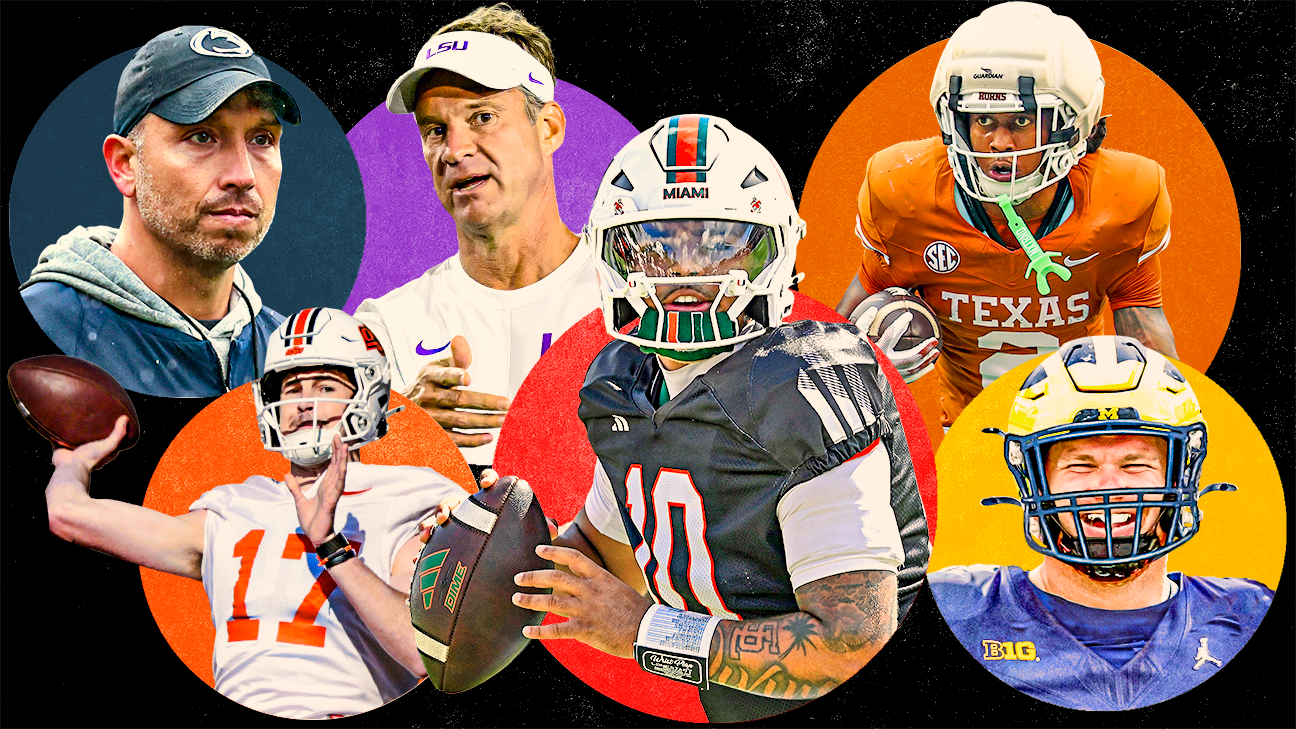
Ahead of a College Football Playoff semifinal matchup against Oregon, Indiana coach Curt Cignetti took time out of his weekend prep to secure the most impressive transfer group for the 2026 season.
As Miami got ready to face Cignetti’s Hoosiers in the national title game, news broke that the team was set to poach quarterback Darian Mensah from Duke. That all came around the same time that USC was signing the top 2026 recruiting class.
No sport has a blurrier line between its season and its offseason than college football. Even as coaches and teams prepare for the biggest games, they are always focused on what’s next. The alternative is falling behind and perhaps never catching up.
Offseasons matter more than ever, which is why schools are hiring — and paying for — more-accomplished general managers and building out NFL-style personnel departments to support their on-field coaching staffs. Rosters are reshaped almost every offseason as transfer movement hasn’t slowed down and teams replace stars bound for the NFL.
There are other factors shaping the offseason, including full-scale coaching changes and the departures and arrivals of coordinators and other assistants. Continuity still matters in college football, but not at the expense of upgrading certain positions or units. Just look at Indiana’s work after the 2025 season.
Our task is to rank the offseasons among Power 4 teams, prioritizing three areas:
Roster additions through the portal and the high school ranks
Retention of top players who could leave for the NFL draft or the portal
Coaching staff continuity or key additions/upgrades
All three elements go into the overall ranking. Teams that kill it with portal additions but let several star players or coaches walk out the door don’t project as well overall. Similarly, teams that run it back with players and coaches but don’t look to improve clear deficiencies, with on-field ability and scheme, will fall short in these rankings. We’re looking at the total picture.
To be transparent, our initial offseason rankings in 2025 missed the mark in several spots, namely LSU at No. 1 overall, Penn State at No. 3 and Clemson at No. 5. But we had some foresight with No. 2 Texas Tech (Big 12 champion, first CFP appearance), No. 6 Oklahoma (first CFP appearance since 2019) and No. 8 Miami (first CFP appearance, national runner-up).
Here are our conference-by-conference rankings and team breakdowns, as well as our national list of the 10 best offseasons.
Jump to a conference:
ACC | Big 12
Big Ten | Notre Dame | SEC | Overall top 10

ACC
Biggest coaching move: Mario Cristobal opted, not surprisingly, for staff continuity after the team’s run to the national title game, as primary coordinators Shannon Dawson (offense), Corey Hetherman (defense) and Danny Kalter (special teams) will return. Running backs coach Matt Merritt (Arizona Cardinals) and tight ends coach Cody Woodiel (Ole Miss) left for other roles. Cristobal hired Favian Upshaw, who played quarterback for him at Florida International, to oversee the backs, and brought in longtime Army assistant Mike Viti to coach tight ends. Viti spent the past decade with Jeff Monken at Army.
What went wrong: There’s not much to point to this category for the Hurricanes following their run to the CFP championship game. Sure, there’s big-time talent to replace with two first-rounders on the D-line and nine total NFL draft picks moving on. Miami’s search for its next impact quarterback in the portal had a few twists and turns and wasn’t cheap, but it eventually worked out. The staff lost depth among the 18 scholarship portal departures, including backup QB Emory Williams (ECU), receiver Joshisa Trader (NC State), linebacker Popo Aguirre (NC State) and cornerback Jadais Richard (Tennessee).
What went right: The Hurricanes were hunting for another elite passer to succeed Cam Ward and Carson Beck and managed to get a last-minute deal done with Mensah at the portal deadline. The All-ACC performer threw for nearly 4,000 yards with 34 TDs while leading Duke to a conference title last season. He brought Barkate, his 1,100-yard receiver, with him from Durham, and Miami added more complementary options at receiver around Malachi Toney with Cam Vaughn (West Virginia) and Vandrevius Jacobs (South Carolina). Miami also won the battle for one of the top pass rushers in the portal in Wilson, and it won’t be surprising if he plays his way into first-round hype this fall. Star running back Mark Fletcher Jr., linebacker Mohamed Toure and several more key starters staying in school for another year was a big boost, as was a top-10 recruiting class led by Cantwell, the No. 1-ranked offensive tackle prospect, and a dozen more ESPN 300 signees.

Biggest coaching move: Rhett Lashlee lost both of his coordinators, as Casey Woods left to oversee Missouri State and Scott Symons joined the Dallas Cowboys’ staff. Lashlee looked within the program for replacements, as the Mustangs will now have three co-offensive coordinators: Rob Likens (wide receivers), Garin Justice (offensive line) and D’Eriq King (quarterbacks). Linebackers coach Maurice Crum Jr., who held a co-defensive coordinator title with Symons, will handle defensive playcalling while sharing coordinator duties with secondary coach Rickey Hunley Jr.
What went wrong: SMU has quickly fashioned itself into a perennial ACC contender, but Lashlee and the Mustangs were left with substantial holes to fill this offseason. The departures of Woods and Symons removed an element of stability that had helped carry through the program’s smooth transition into the ACC, and although running back Chris Johnson Jr. (Clemson transfer) marked one of SMU’s only major portal exits, the program lost plenty of talent from last fall’s veteran-heavy roster to graduation. Leading rusher T.J. Harden is gone, as are two of the two of the Mustangs’ top three receivers from a year ago in Hudson and Romello Brinson. Defensively, the program must replace all four starters from a line that totaled 24 sacks last fall and seven of its 10 leading tacklers, including captains Ahmaad Moses and Isaiah Nwokobia in the secondary.
What went right: Given all the turnover elsewhere on the roster and coaching staff, the return of third-year starting quarterback Kevin Jennings provides SMU with crucial continuity under center. The Mustangs secured a dependable producer to fill their backfield role in Raphael, a Cal transfer who logged 232 carries (11th most nationally) and ran for 943 yards and 13 touchdowns last fall. Transfer defensive tackles Malcolm Alcorn-Crowder (Kansas State) and Christian Davis (Louisiana Tech) are set to anchor the defensive line in front of an intact linebacker unit led by returners Brandon Booker and Alexander Kilgore, with defensive back transfers Jarvis Lee (South Florida) and Jimmy Wyrick (UTSA) poised to fill holes. SMU added a 2026 recruiting class headlined by more SC Next ESPN 300 signees — four — than any previous group in program history.
Biggest coaching move: Tosh Lupoi’s return as coach could represent a shift in how Cal operates, as his pedal-down recruiting approach and experience with elite programs such as Oregon and Alabama will influence the strategy. Lupoi, a former Cal defensive lineman, looked to the NFL for coordinators Jordan Somerville (offense) and Michael Hutchings (defense), as well as co-OC/wide receivers coach Ike Hilliard. Much of the staff is new to Cal, but there are some key holdovers, including quarterbacks coach Nick Rolovich and inside linebackers coach Bob Gregory, the Bears’ defensive coordinator from 2002 to 2009 who returned to the staff in 2025.
What went wrong: A high-attrition offseason was to be expected with Lupoi coming in to remake the roster for Year 1. The Bears had eight senior starters graduate and lost six more to the transfer portal, most notably on defense with the departures of linebackers Cade Uluave (BYU) and Luke Ferrelli (Ole Miss) and edge TJ Bush Jr. (Minnesota). Three offensive linemen who started games last season moved on to other Power 4 programs, and running back Kendrick Raphael headed to SMU after putting up more than 1,100 yards from scrimmage in his lone season in Berkeley.
What went right: The No. 1 objective for Lupoi upon accepting the job was flying to Hawai’i and ensuring the Bears’ rising star at QB, Jaron-Keawe Sagapolutele, re-upped for his sophomore season. Then the new coach went out and assembled a 32-man portal class that could set him up to succeed. There’s no shortage of offensive firepower with the arrival of Mohammed (Washington) at running back; Hendricks (Ohio), Ian Strong (Rutgers) and Cooper Perry (Oregon) at receiver; and Dorian Thomas (New Mexico) at tight end. Lupoi brought in three more former Ducks on defense and good experience in the secondary, including Ricky Fletcher (Ole Miss), Daniel Harris (Georgia) and Marquis Groves-Killebrew (Arizona).
Biggest coaching move: The Cardinals will have new leadership over the defense, although both co-coordinators, Steve Ellis and Mark Ivey, come from within the staff. Ellis spent the past three seasons working with Louisville’s cornerbacks, including former standout Quincy Riley, while Ivey has coached linebackers and defensive line under Jeff Brohm and will continue working with the defensive front. Previous defensive coordinators Ron English and Mark Hagen are no longer with the staff. Paul Petrino, brother of former Louisville coach Bobby Petrino, begins his third stint on staff and will coach the tight ends.
What went wrong: Louisville had some obvious roster needs to address entering the portal window. This team is replacing five of its top six offensive linemen, with four graduating and guard Jordan Church transferring to Texas Tech. The Cardinals’ top four wideouts in terms of targets all graduated, and tight end Nate Kurisky transferred to Duke. On defense, Louisville needed to add a ton of talent on the line and in the secondary with just four full-time starters returning in pass rusher Clev Lubin, linebackers Antonio Watts and T.J. Capers, and corner Tayon Holloway. But Brohm and his staff have been restocking through the portal year after year, so that challenge was nothing new.
What went right: The Cardinals were extremely active in the portal as usual, but arguably their biggest win of all was getting star running back Isaac Brown locked in with a new deal that kept him from transferring. Brohm and his staff brought in another big portal class with more than 30 newcomers, replenishing their depth at receiver, at defensive back and along both lines. The coaches are making a big bet on Kienholz, an unproven starter who played 131 snaps over three seasons as a backup at Ohio State, and supporting him with a bunch of new playmakers, including the speedy Richardson (Vanderbilt), receiver Lawayne McCoy (Florida State) and All-AAC tight end Foley (Tulsa). The Cardinals also inked five transfer offensive linemen with starting experience, got Lubin and AJ Green to come back and lead their D-line, and reloaded on the back end with experienced DBs, including Koen Entringer (Iowa) and DJ Waller Jr. (Kentucky).

Biggest coaching move: After firing coach Brent Pry on Sept. 14, Virginia Tech hired James Franklin barely two months later, a proactive move celebrated around the industry. Franklin has won 68% of his career games and has given the program a significant jolt. His first staff includes, of all people, Pry, who has returned as defensive coordinator, a role he held under Franklin at Penn State and Vanderbilt. Franklin also brought over Ty Howle, who was part of his Penn State staff the past five years, as offensive coordinator. He retained several Virginia Tech assistants and reunited with defensive line coach Sean Spencer, who held the same role on Franklin’s Vanderbilt and Penn State teams from 2011 to 2019.
What went wrong: In terms of scale, Virginia Tech underwent one of the most impressive offseason transformations of any FBS program after the school landed Franklin last November, but the Hokies have plenty to prove in 2026 before hovering anywhere close to ACC contention. That conversation begins at the line of scrimmage, where the program added limited Power 4 offensive line experience via the portal between Logan Howland (Oklahoma), Justin Terry (Ohio State) and Michael Troutman III (Penn State) to a returning unit that struggled mightily in pass protection a year ago. On defense, the retention of tackle Kemari Copeland, the program’s 2025 leader, was significant, but Virginia Tech is lacking in proven experience on the edge, particularly after Baylor transfer Kamauryn Morgan’s spring exit.
What went right: Pry was one of the nation’s most respected defensive coordinators before he took over the head coaching job at Virginia Tech in 2021, and his improbable return to lead the Hokies’ defense was an early highlight of the Franklin era. Another: Virginia Tech’s scorching run at the end of the 2026 recruiting cycle, when the Hokies landed 17 pledges in 12 days — including 11 ex-Penn State commits — to secure the nation’s 21st-ranked class. Elsewhere, Virginia Tech rebuilt its quarterbacks room with Penn State transfer Grunkemeyer, who made seven starts for the Nittany Lions last fall, and former top-300 prospect Bryce Baker (North Carolina). Linebacker additions Curtis Jones Jr. (West Virginia) and Keon Wylie (Penn State) add veteran experience alongside the returning Noah Chambers, and there are reinforcements in the secondary between transfer Jaquez White (Troy) and Kenny Woseley Jr. (Penn State).
2:26
How James Franklin is a different coach since his last game at PSU
Virginia Tech coach James Franklin explains how he’s a different coach now than he was in his last game at Penn State.

Biggest coaching move: Tony Elliott’s staff stayed largely intact after the team’s run to the ACC title game. He filled two vacancies with promotions as Joey Orck, an analyst throughout Elliott’s tenure, is taking over the offensive line, while ShaDon Brown will coach cornerbacks with Curome Cox now focused on safeties. Brown has coached defensive backs at West Virginia, Louisville and Colorado, among other stops.
What went wrong: Virginia is banking on another offseason of aggressive portal investment to carry forward the momentum of last season’s ACC title game appearance, particularly after key portal departures, including Harris (Oklahoma) and defensive backs Emmanuel Karnley (Washington) and Ja’son Prevard (Kansas State). After Chandler Morris failed to gain an extra year of eligibility, one of the transfer quarterbacks, Eli Holstein (Pitt) or Pribula (Missouri), will be the program’s Week 1 starter, and it’s difficult to imagine either will be quite as dynamic as Morris was a year ago. Virginia faces a similar concern in the backfield, where the Cavaliers brought in transfers Solomon Beebe (UAB), Lewis (Tennessee) and Jekail Middlebrook (Middle Tennessee) to replace the production of Harrison Waylee and Taylor, the ACC’s third-leading rusher in 2025. The graduation of safety Devin Neal leaves another hole to fill.
What went right: The surest thing about Virginia’s offense is a line that brings back three 14-game starters: left tackle McKale Boley, left guard Noah Josey and guard/center Drake Metcalf. That unit will be the key to elevating the Cavaliers’ new starting quarterback and unleashing the potential of the program’s new running back trio. Virginia also retained several key figures from the nation’s second-ranked third-down defense, including defensive end Fisher Camac, linebacker Kam Robinson, and defensive backs Donavon Platt and Ethan Minter. East Carolina transfer Zion Wilson adds heft alongside returning defensive tackle Jason Hammond and Anthony Britton, and Michigan safety transfer Brandyn Hillman, one of eight new defensive backs on the roster, is expected to provide immediate help within a refurbished secondary.
Biggest coaching move: The retirement of longtime defensive coordinator Randy Bates set up a smooth transition to Cory Sanders, who coached Pitt’s safeties the past eight seasons and now will take over the unit. Sanders coached several All-ACC selections as well as future NFL players including Donovan McMillon and Damar Hamlin. Offensive coordinator Kade Bell will continue in his role, but Pat Narduzzi brought in veteran NFL special teams coordinator Mike Priefer, who spent last season at North Carolina. Priefer coached special teams for six pro teams from 2002 to 2022.
What went wrong: Pitt lost one of the top linebacker duos anywhere in college football with Biles’ transfer to Texas and Louis’ early jump to the NFL draft, where the 2024 All-American became a fourth-round selection of the Miami Dolphins. The Panthers are also down their top two pass catchers from a year ago between the departures of Kenny Johnson (Texas Tech transfer) and Raphael Williams (graduation). The program’s lack of proven pass-catching depth lingers as a general worry as Pitt looks to platform another year of growth for quarterback Mason Heintschel after he broke out as a true freshman last fall. The Panthers must also replace veteran production at safety with Kavir Bains-Marquez and Javon McIntyre out of eligibility.
What went right: There’s continuity under center and in the backfield as Heintschel and reigning rushing leader Ja’Kyrian Turner return for a second year operating in Bell’s system. Pitt reinforced at running back with the addition of Western Kentucky transfer La’Vell Wright and brought in a potential playmaker in ex-Western Carolina wide receiver Knight, who caught 47 passes for 774 yards and seven touchdowns last fall. At linebacker, Sanford (Purdue) and DeMarco Ward (Memphis) carry production alongside returning starter Braylan Lovelace. Auburn transfer Strader, the MAC Cornerback of the Year in 2024, represents an intriguing addition to the mix with returnees Shadarian Harrison and Shawn Lee Jr.

Biggest coaching move: Coach Brent Key had yet another defensive coordinator change, this time bringing back former Georgia Tech staffer Jason Semore to oversee the unit in 2026. The more significant hire comes on offense, as Georgia Tech lost respected playcaller Buster Faulkner to Florida and replaced him with George Godsey, a Yellow Jackets quarterback from 1997 to 2001. Godsey spent the past 15 seasons coaching in the NFL, gaining coordinator experience with the Houston Texans and Miami Dolphins, and spending the past four years coaching the Baltimore Ravens’ tight ends. How he installs his system with a reshaped offense will be a key offseason storyline.
What went wrong: Faulkner’s move to Florida had ripple effects for the roster, with quarterback Aaron Philo, receiver Bailey Stockton, tight end Luke Harpring and center Harrison Moore opting to follow him to Gainesville. Isiah Canion was in line to become the Yellow Jackets’ top receiver in 2026 but transferred to Georgia. Add in the six starters who graduated and that leaves offensive linemen Malachi Carney and Ethan Mackenny as Georgia Tech’s only returning offensive players who started seven or more games last year. That’s quite a reset, though it’s worth noting that Georgia Tech dealt with less transfer attrition than most of its ACC peers as just 17 scholarship players left.
What went right: Georgia Tech found exciting talent to build around on offense, starting with Haynes. The Michigan transfer looked like he was on his way to All-America honors in 2025 with 857 rushing yards and 10 TDs through his first seven games before a season-ending injury. If Haynes can stay healthy, he and Malachi Hosley will be a dynamic duo. Mendoza, a younger brother of Heisman Trophy winner Fernando Mendoza, is ready to prove himself after playing 106 snaps as a backup at Indiana. Key added three wideouts and two tight ends via the portal and an experienced tackle in Oklahoma State’s Markell Samuel. Carter, a former ESPN 300 recruit, is an intriguing get at edge rusher who could break out after two seasons as a reserve at Alabama.
Biggest coaching move: Gus Malzahn spent only one season as Florida State’s offensive coordinator before announcing his retirement in February. Coach Mike Norvell, who will return to calling plays, promoted Tim Harris, the team’s pass game coordinator and wide receivers coach, to help oversee the offense. Harris was UCF’s offensive coordinator under Malzahn in 2024 and also served as OC at Florida International in 2020. Norvell hired veteran special teams coordinator Adam Scheier to replace John Papuchis. FSU also made a significant off-field hire in general manager of player personnel John Garrett, who held the same role at Duke after working at FSU in scouting for the team’s successful run in 2022 and 2023.
What went wrong: Florida State avoided a coaching search by giving Norvell another year but still endured significant roster attrition this offseason. The Seminoles are returning only seven of the 24 players who started five-plus games in 2026 after losing eight starters to the portal and nine more to graduation. The secondary took a hit with the loss of Little (Ohio State) and Edwin Joseph (Ole Miss); linebacker Justin Cryer transferred to Texas; and two of Florida State’s top four pass catchers transferred within the conference, with receiver Lawayne McCoy going to Louisville and tight end Randy Pittman Jr. joining SMU. A total of 33 scholarship players exited via the portal this offseason. The Seminoles pursued a trio of transfer QBs in DJ Lagway, Anthony Colandrea and Daniels in January before signing Daniels, a former two-year starter at Stanford who made three starts at Auburn in 2025.
What went right: Norvell and his coaches put a bunch of promising freshmen on the field last season and were able to get them to re-up for 2026. Receiver Micahi Danzy, running back Ousmane Kromah and defensive tackle Kevin Wynn stayed put, and twin defensive linemen Mandrell Desir and Darryll Desir re-signed after briefly entering the portal. Keeping All-ACC wideout Duce Robinson out of the NFL draft also was a big win. The Seminoles added good experience around him with Texas’ Wisner and five new offensive linemen who bring 118 combined career starts. On defense, pass rusher Rylan Kennedy (Texas A&M), linebacker Chris Jones (Southern Miss) and several new defensive backs will have a chance to make an immediate impact.
Biggest coaching move: Dave Doeren kept coordinators DJ Eliot (defense) and Kurt Roper (offense) in place after an improved 2025 season. Veteran assistant Charley Wiles, the team’s defensive line coach the past six seasons, moved into an off-field role, and the D-line responsibilities will now be split. Former NC State three-time captain Isaiah Moore was promoted from a quality control position to oversee the inside linebackers.
What went wrong: The Wolfpack have won at least eight or more games in seven of their past nine seasons under Doeren. If they’re going to hit that win total — or exceed it — again in 2026, they’ll have to overcome a flood of key departures. Though NC State managed to retain quarterback CJ Bailey, it suffered a series of blows in the portal with the departures of Smothers (Texas), pass catchers Terrell Anderson (USC) and Noah Rogers (Alabama), left tackle Peak (South Carolina) and second-leading tackler Kenny Soares Jr. (Michigan State). Add in the graduations of Joly, a fifth-round selection of the Denver Broncos, along with defensive playmakers Brandon Cleveland, Caden Fordham and Sabastian Harsh, and the Wolfpack must account for a substantial talent drain to remain competitive with the top half of the ACC.
What went right: NC State kept Bailey on campus after the junior quarterback’s breakout 2025 campaign, and there’s confidence around the program that running back Duke Scott is ready for his star turn as he steps into Smothers’ place in the backfield this fall. Buffalo transfer Victor Snow and former top-25 recruit Trader (Miami) are two of the newest faces in Bailey’s wide receiver corps as the Wolfpack are preparing to slot another transfer, East Carolina offensive tackle McCrimon, into an offensive line returning three starters from a year ago. Tulane edge rush transfer Harvey Dyson fills a need on the defensive line after totaling eight sacks with the Green Wave a year ago while Aguirre (Miami) and Dakaari Nelson (Penn State) step into a renovated linebacker unit on Eliot’s defense.

Biggest coaching move: After things didn’t pan out with offensive coordinator Garrett Riley, coach Dabo Swinney selected a familiar name to reboot Clemson’s offense, as Chad Morris is back as coordinator/playcaller. Morris was instrumental in Clemson’s rise under Swinney, serving as the Tigers’ OC from 2011 to 2014. His career since has gone through quite a few bumps, and his only other coordinator stint — 2020 at Auburn — didn’t yield great results. But Morris, who spent 2023 as an offensive analyst at Clemson, knows some of the veteran personnel and how Swinney likes to operate.
What went wrong: This was inevitably going to be an intriguing offseason for the Tigers as they worked to replace a senior-heavy squad with 11 starters graduating or going pro, including nine NFL draft picks. The Luke Ferrelli saga generated a lot of attention and a memorable news conference from Swinney after the Cal transfer linebacker reentered the portal after a week in the program and flipped to Ole Miss. The Tigers had three other defensive starters depart via the portal before then in safeties Khalil Barnes (Georgia) and Ricardo Jones (Vanderbilt) and defensive tackle Stephiylan Green (LSU).
What went right: The Tigers were much more active in the portal after their disappointing 7-6 season and were able to go get what they needed to fill their starting lineup. Johnson put up 717 all-purpose yards last season at SMU and brings ACC experience as well as elite speed. The secondary added quite a bit of help with Washington, Jerome Carter III (Old Dominion), Corey Myrick (Southern Miss) and Donovan Starr (Auburn), and Clemson picked up some intriguing defensive line prospects as well in Colorado’s Merritt, Oklahoma’s Markus Strong and West Georgia’s Kourtney Kelly (he’s now out because of a torn ACL), who have multiple years of eligibility. The Tigers’ recruiting class, ranked 19th nationally by ESPN, might’ve already yielded their future QB1 as freshman Tait Reynolds continues to make a big first impression.

Biggest coaching move: Manny Diaz retained his primary coordinators following Duke’s surprise ACC title run and brought in Trent Harris, who played defensive end for Diaz at Miami, to coach the ends. Harris spent the past two years coaching outside linebackers at Illinois, which beat Duke last year in Durham. Diaz looked more regionally for running backs coach Rodney Freeman II, who comes from East Carolina to replace Chris Foster.
What went wrong: The defending ACC champs looked poised to run it back and chase a College Football Playoff bid in 2026 until disaster struck at the January portal deadline. Miami swooped in and made last-minute offers to Mensah and All-ACC wide receiver Cooper Barkate that they couldn’t refuse. The timing couldn’t have been any worse for Diaz and his staff’s ability to go get a comparable QB1. They sued Mensah to enforce his multiyear NIL contract and settled for an undisclosed sum, then added San José State’s Eget to compete with redshirt freshman Dan Mahan. The Blue Devils lost only four other players who transferred to Power 4 programs this offseason, most notably safety Terry Moore (Ohio State) and receiver Que’Sean Brown (Virginia Tech).
What went right: Eget getting cleared by the NCAA for a sixth year of eligibility was critically important. He was a two-year starter who threw for more than 5,500 yards in his time with the Spartans. Duke’s offense will run through All-ACC back Nate Sheppard and added an FCS All-American at wideout in Richardson from Penn, a new option at tight end in Louisville’s Nate Kurisky and a 35-game starter at tackle in Del Grande from Coastal Carolina. Diaz will need new starters to step up along the defensive line, and the Blue Devils brought in five transfer defensive backs with starting experience to replenish depth on the back end.

Biggest coaching move: Jake Dickert wisely didn’t do much after an excellent first season at Wake Forest, as most of the staff received contract extensions and/or promotions, including Freddie Banks, promoted to co-defensive coordinator alongside playcaller Scottie Hazelton. The only major addition came at wide receivers coach, as Dickert hired Dyrell Roberts from East Carolina. Roberts played at Virginia Tech and served as an offensive analyst there in 2022. He coached all-league receivers at Eastern Michigan and East Carolina.
What went wrong: Dickert and his Demon Deacons staff retained a lot from the program’s surprise 9-4 finish last fall, but still took hits in the portal with the departures of wide receivers Chris Barnes (Oklahoma State) and Sterling Berkhalter (Texas), offensive tackle Melvin Siani (Texas), and Ibirogba (Texas Tech). Wake Forest’s offense will look considerably different with Barnes and Berkhalter gone, and quarterback Robby Ashford and Clairborne, the program’s leading rusher last fall, both graduated, along with three more starters on the offensive line. There are more holes to fill on defense, where standouts Nuer Gatkuoth, who logged six sacks in 2025, linebackers Quincy Bryant and Dylan Hazen, and Andersen are each out of eligibility.
What went right: Dickert kept his staff intact and signed the nation’s 45th-ranked recruiting class — Wake Forest’s highest ranking since 2015 — following a successful debut season. To replace Ashford, the Demon Deacons landed Lopez, a UNC transfer who emerged as a breakout star at South Alabama in 2024 under Wake Forest offensive coordinator Rob Ezell. Lopez will play behind new-look blocking that added a seasoned veteran in New Hampshire transfer Tolu Olajide (27 career starts) and three other offensive transfers. Former top 300 running KD Daniels, a Florida transfer, steps into the running backs room alongside returners Ty Clark III and Jamar Searcy. Blades, coming from FIU, brings 36 career starts with him as one of five defensive back additions.

Biggest coaching move: Fran Brown shook up the staff following a 3-9 season, but the hire of defensive coordinator Vince Kehres could be most significant. Kehres, the son of College Football Hall of Fame coach Larry Kehres, oversaw the nation’s No. 2 defense and No. 4 scoring defense last season at Toledo. He takes over an Orange unit that ranked 128th nationally and last among Power 4 teams in points allowed per game (34.9) last season. Brown looked to the NFL for veterans Sean Ryan (quarterbacks coach/passing game coordinator) and Juan Castillo (offensive line coach).
What went wrong: Syracuse flushed a ton of talent from that 3-9 roster, shedding more than 25 players who played at least 100 snaps in 2025. Brown and the Orange are starting over entirely at the skill positions, where leading rushers Yasin Willis (Kansas transfer) and Will Nixon (NFL draft) departed along with the program’s top seven leaders in receiving yards from a year ago, including outgoing transfers Johntay Cook and Gill, both of whom landed at Ole Miss. The program’s efforts to rebuild its receiving corps in 2026 suffered an early blow when Russell, the program’s highest-ranked signee since at least 2006, sustained a noncontact lower-leg injury that will sideline him until at least October.
What went right: Kehres could end up being Syracuse’s most impactful addition of the offseason if he can recharge what was one of the nation’s most porous defenses a year ago. The return of young building blocks such as Javeion Cooper, Antoine Deslauriers and Demetres Samuel Jr. will help, and transfer defensive linemen Tunmise Adeleye (UNLV), Dillan Fontus (Maryland) and Keyshawn Johnson (UT Martin) bring intriguing talent to a renovated defensive line. After injuries forced Brown to hand multiple quarterback starts to a walk-on from the school’s lacrosse program last fall, the Orange didn’t mess around this offseason, adding depth behind Steve Angeli with former five-star recruit Malachi Nelson and Kennesaw State transfer Amari Odom. Transfers Elijah Moore (Florida State), Matt Outten (Penn State) and Cole Weaver (Miami Ohio) offer upside in a new-look wide receiver unit.

Biggest coaching move: Bobby Petrino is the offensive coordinator for a college team coached by Bill Belichick. What a time to be alive. Petrino spent the past two years as Arkansas’ offensive coordinator and served as interim coach last fall for the final seven games (all losses). He spent 2023 as Texas A&M’s offensive coordinator under coach Jimbo Fisher, so he has worked with big personalities before. Petrino, who won 137 games as a college head coach, will take over a unit that needs a jolt after finishing 118th in scoring and 120th in yards per play in 2025. He will be tasked with molding Edwards, who sat out almost all of last season at Wisconsin because of an injury but passed for 2,881 yards on a 65% completion rate at Maryland in 2024.
What went wrong: One of the few generally positive things from Belichick’s debut season was North Carolina’s defense, and the Tar Heels lost a lot of talent this offseason. All told, the program returns only three defenders who started eight-plus games last fall. A handful of those departures — such as front-seven standouts Smith Vilbert and Andrew Simpson, and four starters in the secondary — were due to graduation. But North Carolina had the opportunity to retain defensive linemen CJ Mims (Texas A&M transfer), D’Antre Robinson (Oregon) and Tyler Thompson (Louisville) and House, the program’s leading tackler in 2025, and simply couldn’t. Offensively, the Tar Heels’ hopes of turning around the nation’s 111th passing attack (183.5 YPG) hinge on a pair of relative question marks surrounding Edwards and FCS transfer Taron Dickens.
What went right: Petrino made for a gasp-inducing hire, but the 65-year-old coordinator knows how to move the football and has built a career on turning around offenses quickly. It wasn’t all bad for North Carolina on the retention front, either, as the Tar Heels held on to leading rusher Demon June, breakout wide receiver Jordan Shipp and star edge rusher Melkart Abou Jaoude, and Belichick and North Carolina general manager Michael Lombardi bet on potential over past production in the portal, adding Kekahuna, a Wisconsin transfer, plus four portal newcomers to an overhauled offensive line unit. Conversely, Richmond transfer defenders Donovan Hoilette and Peyton Seelmann — a pair of All-Patriot League selections last fall — bring loads of proven experience on defense. North Carolina’s early investment in high school recruiting under Belichick ultimately paid off with ESPN’s No. 14 class, one of the deepest in the 2026 cycle.
Biggest coaching move: Bill O’Brien hired a very experienced defensive coordinator in Ted Roof, tasked with upgrading a unit that slipped to 121st in points allowed last season. Roof had O’Brien on his staff at Duke in 2005 and 2006 and later served as O’Brien’s defensive coordinator at Penn State in 2012. His coordinator stops include Georgia Tech (twice), UCF (twice), Oklahoma, Vanderbilt, Auburn (national championship) and Minnesota. BC also hired Mike Hart, who set Michigan’s career rushing record as a player, to coach its running backs. O’Brien will handle offensive playcalls after Will Lawning left for the Chicago Bears.
What went wrong: After enduring a 10-game losing streak and a rough 2-10 season, the Eagles lost quite a few impact players during the January portal window. Starting QB Dylan Lonergan moved on to Rutgers after one year in the program. Wide receiver Reed Harris (Arizona State), running back Turbo Richard (Indiana), guard Eryx Daugherty (Louisville) and safety Omar Thornton (Miami) all ended up being coveted in the portal. In all, BC lost a dozen players to other Power 4 programs in addition to its graduating seniors and needed to reload at several positions for 2026.
What went right: The Eagles made an intriguing bet at quarterback in signing Saginaw Valley State’s McKenzie, a Division II transfer who put up 3,028 total yards and 27 TDs and earned conference player of the year in 2025. He’s competing with Grayson Wilson (Arkansas) and Babalola for the job. Whoever wins it will get a lot of help from Dickens, the third-leading rusher in FBS last season at Liberty, in an offense that added a few new options at receiver and four experienced starters on the offensive line. Linebackers Anthony Palano (Washington State) and Bodie Kahoun (Notre Dame) look poised to make a real impact for their defense along with Jones, a former ESPN 300 recruit who’s ready to break out after two seasons as a reserve at Georgia.

Biggest coaching move: General manager Andrew Luck went with familiarity in bringing back Tavita Pritchard, a former Stanford quarterback and assistant, as the team’s head coach. Pritchard worked on Stanford’s staff from 2011 to 2022 before spending the past three seasons as Washington Commanders quarterbacks coach. His first staff includes longtime NFL assistant Kris Richard as defensive coordinator, and Terry Heffernan, a longtime offensive line coach who worked at Stanford in 2021 and 2022, will oversee the offense. Longtime FBS offensive coordinator Brian Lindgren will work with the Cardinal quarterbacks.
What went wrong: Luck worked quickly to land Pritchard in November, but Stanford was slow with its coordinator moves, particularly Richard, who wasn’t hired until late February. The Cardinal underwent a nearly complete overhaul on offense, led by the graduations of leading pass catchers Williams and Roush and the portal departures of running back Cole Tabb (Cincinnati) and offensive guard Emeka Ugorji, who started eight games as a true freshman last fall before transferring to Florida. Stanford returns a number of key contributors on defense, but Richard takes over without fifth-leading tackler Mitch Leigber in the secondary and a pair of 12-game starters at defensive tackle in Anthony Franklin and Clay Patterson.
What went right: Michigan transfer Davis Warren, a nine-game starter for the Wolverines in 2024, brings needed experience to the Cardinal quarterbacks room. He’ll benefit from the return of leading rusher Micah Ford and the arrival of Brown, a Yale transfer who hauled in 71 passes for 1,085 yards and 11 touchdowns last fall. Stanford also dipped into the Ivy League ranks to replace Ugorji with Kilstrom, a Harvard transfer. All-ACC linebacker Matt Rose marked a critical piece of retention for Pritchard & Co. The redshirt junior leads a strong returning core that includes fellow linebackers Jahsiah Galvan and Tevarua Tafiti and safety Scotty Edwards. The Cardinal added three SC Next 300 signees in the 2026 class, headlined by four-stars Robinson and safety Jackson.
0:26
Avery Johnson takes it to the house for Kansas State
Avery Johnson takes it to the house for a 46-yard Kansas State touchdown vs. Texas Tech.
Big 12
Biggest coaching move: The Red Raiders needed no overhaul after winning their first Big 12 title. Coordinators Shiel Wood (defense) and Mack Leftwich (offense) are both back. There are some new faces on the defensive staff after a historic season. Joey McGuire looked to the NFL for defensive line coach Imarjaye Albury Sr. (Minnesota Vikings) and outside linebackers coach Jacquies Smith (Atlanta Falcons). Albury spent 2022 as a Vikings scout, and Smith was an All-Big 12 player at Missouri who played in the NFL before starting his coaching career at Texas.
What went wrong: Texas Tech’s offseason was looking ideal until about two weeks ago, when the school first learned that Sorsby, the QB transfer from Cincinnati, was under NCAA investigation for sports betting. Sorsby is now seeking treatment for a gambling addiction, and his eligibility for the upcoming season is in jeopardy. While that process continues to play out, Tech needs backup quarterback Will Hammond to recover from a torn ACL suffered last October and be ready to play early in the season. Beyond the uncertain quarterback situation, though, there’s not much to nitpick about where McGuire has this program entering 2026.
What went right: Texas Tech was a big spender yet again during portal season and reloaded with ESPN’s No. 2-ranked transfer class. The staff inked eight defensive linemen and edge rushers out of the portal to restock up front, led by San Diego State’s White and Miami (Ohio)’s Trick, and landed an All-Big 12 linebacker in Kansas State’s Austin Romaine to help take over for Rodriguez. They replaced two NFL draft picks at wide receiver with four new transfers, and former five-star recruit Micah Hudson looks poised for a breakout season. Combine those additions with the No. 13-ranked high school recruiting class and strong retention — including keeping tight end Terrance Carter Jr., cornerback Brice Pollock and tackle Howard Sampson out of the draft — and there are still a lot of reasons to believe the Red Raiders can remain the Big 12 front-runner regardless of Sorsby’s status.

Biggest coaching move: BYU’s Crumbl Cookies-backed retention of coach Kalani Sitake is massive, as it keeps the program on pace for CFP contention after 23 wins over the past two seasons. Sitake did lose defensive coordinator Jay Hill to Michigan, and promoted Kelly Poppinga, who coached special teams and defensive ends, as the replacement. Poppinga, a former BYU linebacker, is in his second stint at his alma mater and brings defensive coordinator experience from Virginia, where he held a shared role from 2018 to 2021. Justin Ena, who coached BYU’s linebackers the past three years, takes over as special teams coordinator.
What went wrong: The Cougars do have major contributors and All-Big 12 performers to replace entering 2026 with leaders such as Kelly, Roberts and Wall graduating. They dealt with minimal portal attrition, with 11 scholarship players departing in January and only one (linebacker Max Alford to Michigan) landing at another Power 4 program. Their leading receiver, Parker Kingston, left the school in February after he was arrested on a first-degree felony rape charge.
What went right: LJ Martin agreeing to return after rushing for 1,305 yards and earning Big 12 Offensive Player of the Year in 2025 was a major win for Sitake and his staff. They were selective with their transfer recruiting but won out for one of the top linebackers in the portal in Uluave, a first-team All-ACC performer at Cal. Finau proved in spring practice he can be the Cougars’ starting left tackle, and the duo of Lyons and Oregon transfer Roger Saleapaga should make an impact at tight end. The Cougars also assembled a top-20 recruiting class in ESPN’s rankings led by highly touted QB Ryder Lyons, who’s expected to enroll in 2027.
Biggest coaching move: Last year stabilized the futures for not only coach Brent Brennan but coordinators Danny Gonzales (defense) and Seth Doege (offense). After running backs coach Alonzo Carter left for the top job at Sacramento State, Brennan promoted Lyle Moevao, who assisted with the group last fall, as Carter’s replacement. Ronnie Palmer also was promoted to oversee the defensive ends. Arizona also hired longtime Washington staffer Aaron Knotts as its new GM after losing Gaizka Crowley to Arkansas.
What went wrong: The Wildcats have enjoyed a relatively smooth offseason since breaking through with a 9-4 run in Brennan’s second season. They knew they’d need to replace four NFL draft picks in the secondary in Stukes, Johnson, Smith and Michael Dansby, and 10 more starters who graduated, but there was enough trust in the depth they’re developing that this year’s team did not require a portal-heavy overhaul. In addition to the secondary, they’ll need new leaders to step up at wide receiver for Kris Hutson, Javin Whatley and Luke Wysong, and must replace the production of Ismail Mahdi after he put up 1,060 all-purpose yards last season.
What went right: Quarterback Noah Fifita returns for his fourth season as the Wildcats’ starter and is 829 yards away from becoming the program’s all-time leading passer. Brennan says he believes Fifita should be a Heisman contender this season. The Wildcats brought in more experienced pass catchers from the portal in Gallagher and Rusk to complement him. Gonzales is excited to build around several All-Big 12 caliber returning defenders in pass rusher Tre Smith, linebacker Taye Brown and cornerback Jay’Vion Cole. Arizona also added seven transfer defensive backs to help reload.
Biggest coaching move: Willie Fritz kept his core staff intact after a 10-win season. Primary coordinators Slade Nagle (offense), Austin Armstrong (defense) and Chris Crouch (special teams) are back. Houston adjusted responsibilities in the secondary, moving PJ Hall from safeties to cornerbacks, and hiring Marcus Trice from Stephen F. Austin to oversee the corners. Trice came up as a high school coach in Texas before coaching SFA’s defensive backs the past four seasons.
What went wrong: It has been a positive offseason for the Cougars to date, but they will have to find some answers for key contributors they’ve lost after their breakthrough season. They’re replacing a lot of offensive production between running back Dean Connors (1,232 total yards) and Koziol (727), the second-leading receiver among all FBS tight ends in 2025. The defensive line also will be a critical area for continued growth as they work to make up for what seniors Walls and Carlos Allen Jr. brought up front with their combined 51 pressures and 19 tackles for loss last season.
What went right: Fritz and his coaches get 12 starters back from last season’s squad and invaluable continuity on offense with quarterback Conner Weigman and star receiver Amare Thomas leading the way. They needed three new starting offensive linemen and put together a great portal haul with Hurst, a two-time All-AAC performer at Tulane, plus Toledo’s Anthony Boswell and Miami (Ohio)’s Drew Terrill. Hughes rushed for 1,378 yards as a true freshman in Fritz’s final season at Tulane and is ready to be a featured back again after his brief stint at Oregon. Six starters return on defense and there’s plenty of confidence that transfers Javion White, Jalen Mayo, De’Marion Thomas and Porter can provide what they lost. The future also certainly looks bright with the much-anticipated arrival of Henderson, their five-star QB and ESPN’s No. 4 overall recruit.
Biggest coaching move: A nosedive at the end of Mike Gundy’s distinguished tenure necessitated change, and Oklahoma State made a smart and sensible hire in North Texas’ Eric Morris. He has Big 12 roots from Texas Tech and has become the nation’s top identifier of under-the-radar quarterback talent. Morris brought many of his top North Texas aides to Stillwater, including offensive coordinator Sean Brophy, defensive coordinator Skyler Cassity, special teams coordinator Drew Svoboda and offensive line coach Cody Crill.
What went wrong: Oklahoma State is in the middle of one of the most ambitious roster flips we’ve ever seen in college football. Morris is taking over after a dreadful 1-11 season and building out a totally transformed roster for Year 1 with only 25 players returning from last year’s 115-player roster. Many of the 67 players who transferred were gone before the new staff even arrived, including 25 players who found spots at other Power 4 programs. There were a few players this staff would’ve liked to keep if possible, but they knew they were signing up for an extreme home makeover in Stillwater.
What went right: Morris and his coaches were able to persuade their offensive stars Mestemaker, Hawkins and Young to join them at Oklahoma State, a massive achievement given how coveted they were by other programs, and brought a total of 17 players from North Texas to help lead a turnaround. The staff recruited and signed more than 90 newcomers in their first months on the job and hope they’ve done enough to enjoy immediate success in the Big 12. The receiving corps should be a real strength for Mestemaker with Justin Bowick (Illinois) and Chris Barnes (Wake Forest) teaming up with Young and Miles Coleman, and they did a nice job of complementing the seven North Texas defenders they brought in with nine more Power 4 transfers who have starting experience.
Biggest coaching move: Coach Sonny Dykes is as Texas as it gets, but he looked to the Northeast for a new quarterback (Harvard’s Craig) and a new offensive coordinator in UConn’s Gordon Sammis. A former Virginia offensive lineman, Sammis has spent his career in the Northeast and Mid-Atlantic regions, and at UConn mentored quarterback Joe Fagnano, who had 28 touchdown passes and only one interception last fall. Dykes also hired quarterbacks coach Brad Robbins, who was with Sammis at UConn before joining Tulsa last season. The defensive staff is mostly the same but cornerbacks coach Benny Boyd joins from Wyoming.
What went wrong: TCU was expecting Hoover to return for his fourth year as the Horned Frogs’ starter and was working toward a new deal with the quarterback until he opted to enter the portal and join defending national champion Indiana. Hoover went 19-12 and put up 9,629 passing yards with 79 total touchdowns and 42 total turnovers in his time in Fort Worth. They didn’t land a proven difference-maker at receiver in the portal to replace McAlister and are hoping a trio of young wideouts in Jeremy Scott, Terry Shelton and Dozie Ezukanma will step up. It’ll also be interesting to see who at linebacker succeeds Elarms-Orr, the Big 12’s leading tackler with 130 stops last season.
What went right: Dykes wanted to shake things up on offense by hiring Sammis and moving toward a more pro-style offense that can reliably run the ball. Craig, a 24-game starter in the Ivy League and projected Day 3 draft pick had he gone pro, looks like the ideal operator for new direction. The Horned Frogs were successful in their efforts to retain players along the offensive and defensive lines and bring back one of the Big 12’s top returning tackles in Ben Taylor-Whitfield. If this team can put it all together, it could be Dykes’ best squad since 2022. They had minimal portal attrition beyond Hoover and needed to bring in only a dozen transfers. There’s enough talent returning to believe this could be Dykes’ best team since 2022.

Biggest coaching move: Arizona State retained coach Kenny Dillingham with an enhanced contract and further commitments to the program after he was linked to vacancies at LSU and Michigan. Dillingham again kept the core of his staff together, as coordinators Marcus Arroyo (offense) and Brian Ward (defense) are back. Demetrice Martin, who has extensive regional experience with stops at UCLA (twice), Arizona, Colorado and Oregon, joined the staff as a senior defensive assistant. Martin and Dillingham coached together at Oregon.
What went wrong: Arizona State returns only three of the 25 players who started six or more games last season. The program is working to replace 18 starters who graduated or declared for the draft plus four more — Leavitt (LSU), running back Raleek Brown (Texas), tackle Josh Atkins (Missouri) and defensive back Javan Robinson (Wisconsin) — who moved on via the transfer portal. This team dealt with numerous injuries last season that required young reserves to step in and gain valuable experience, but there’s no denying this squad lost a ton of players who helped Dillingham build the program into a Big 12 champion.
What went right: Leavitt isn’t an easy player to replace, but there’s a lot of optimism about the talent and future of Arizona State’s QB room with the additions of Kentucky transfer Cutter Boley and Fette, a top-150 recruit. The Sun Devils inked two of ESPN’s top 10 transfer receivers in Miller and Harris, plus Raiden Vines-Bright, to take over for Tyson and Malik McClain. The Sun Devils also brought in Long, who led FBS with 151 tackles at Colorado State last season, and a ton of experienced help on defense, including Jalen Thompson, Emar’rion Winston, Ashton Stamps and Lyrik Rawls. There’s a lot to like about this portal class and its chances of flipping ASU’s fortunes in 2026.

Biggest coaching move: The long-anticipated coaching transition from Kyle Whittingham to Morgan Scalley is complete, although not without some tension. Whittingham, who led Utah since 2005 and had been on staff since 1994, leaves an incredible legacy in Salt Lake City. Scalley, who played for Whittingham and developed under him, now charts his own path with a mostly new staff, as Whittingham took offensive coordinator Jason Beck and others to Michigan. Kevin McGiven arrived from Utah State as OC, and Scalley promoted linebackers coach Colton Swann to his former role as defensive coordinator. Scalley replaced successful offensive line coach Jim Harding with Jordan Gross, a former Outland Trophy finalist at Utah who made three Pro Bowls in the NFL and had been a high school head coach in Idaho.
What went wrong: The Utes’ roster took a hit during this transition after Whittingham took over Michigan and five key players — Daley, receiver JJ Buchanan, corner Smith Snowden, defensive tackle Jonah Lea’ea and prized receiver signee Salesi Moa — chose to join him in Ann Arbor. Utah also lost safety Tao Johnson, a three-year starter, to UCLA during the portal window and five more scholarship players who landed at Power 4 programs. New offensive line coach Jordan Gross needed to reload up front with two first-round picks gone and five new starters for 2026, and all four of their starting defensive linemen last season are gone as well.
What went right: Amid all those changes, Scalley was able to keep QBs Devon Dampier and Byrd Ficklin locked in for another year along with running back Wayshawn Parker. Obot, one of the highest-rated recruits in program history, stuck to his pledge and could start as a true freshman. They found potential upgrades for their receiving corps with Pegan (Utah State) and Shoels (San Jose State), two of the Mountain West’s most productive wideouts last season. They’re counting on reserves to rise up at several spots on defense but added help on the D-line with Day and Lucas Samsula (Wyoming) and experienced starters in the secondary in Elijah Reed (Akron) and James Chenault (USF).

Biggest coaching move: Deion Sanders ended up replacing both of his coordinators after a 3-9 season, although defensive coordinator Robert Livingston’s NFL return came late in the cycle. The splashier move came at OC, as Brennan Marion, who led Sacramento State in 2025, has arrived in Boulder to install his “Go-Go” offense. Marion had great success as UNLV’s offensive coordinator, setting a team scoring record (36.2 PPG) in 2024, and his Sacramento State squad averaged nearly 34 points last fall. He takes over a unit that backslid substantially without Shedeur Sanders and Travis Hunter, finishing 114th nationally in scoring. Sanders promoted Chris Marve, the former Vanderbilt defensive coordinator, to replace Livingston.
What went wrong: This was yet another high-attrition offseason for the Buffaloes’ roster with 35 scholarship players departing via the transfer portal, including 16 who earned starts in 2025. Seaton exiting after two seasons to join LSU was a tough blow, as was Miller moving on to Arizona State. The secondary needed to be rebuilt after starters Byard (Texas A&M), DJ McKinney (Notre Dame), Carter Stoutmire (Arkansas) and eight more scholarship players transferred. Colorado’s promising freshman class also took some big hits with London Merritt (Clemson), Alexander McPherson (Penn State) and Carde Smith (Memphis) departing after one season in Boulder.
What went right: It’s easy to get excited about what Marion is working with in his Julian Lewis-led offense. The Buffaloes reloaded at receiver with Scudero, Moore and Kam Perry coming in to complement Joseph Williams. They inked seven offensive linemen with starting experience to get things fixed up front. There are also a ton of multiyear starters among the 25 portal additions on defense. Hopper and Toby Anene (North Dakota State) are proven veterans on the line and All-MAC performer Gideon Lampron (Bowling Green) and Liona Lefau (Texas) are big upgrades at linebacker. If this staff can bring the best out of Tennessee transfer DB Boo Carter, he’ll be fun to watch alongside Justin Eaglin (James Madison), Randon Fontenette (Vanderbilt) and several more experienced additions in the secondary.

Biggest coaching move: When Collin Klein left Kansas State to become Texas A&M’s offensive coordinator, many expected him to eventually return and lead his alma mater. The homecoming came sooner than expected after Chris Klieman’s exit. Klein, a Heisman Trophy finalist as K-State’s quarterback and a Wildcats assistant from 2017 to 2023, is in charge now. He brought several assistants from Texas A&M, including defensive coordinator Jordan Peterson and quarterbacks coach Christian Ellsworth, retained defensive line coach Buddy Wyatt and hired special teams coordinator Stanton Weber from Toledo. Sean Gleeson, the former offensive coordinator at Rutgers and Oklahoma State, will serve as OC.
What went wrong: Is Year 1 going to be more win-now or rebuild? It’s an intriguing question during this transition. The Wildcats lost a number of prominent starters to the portal with Osunsanmi and fellow defensive lineman Chiddi Obiazor joining Indiana, Romaine transferring to Texas Tech, receiver Jayce Brown going to LSU and four defenders following their DC Joe Klanderman to Baylor. Klein and his new staff had a lot of work to do to reload along the offensive and defensive lines and ended up with only six returning players who started nine or more games for last season’s squad.
What went right: Klein is getting another chance to coach quarterback Avery Johnson, the Wildcats’ 26-game starter, and should have enough weapons on offense with the return of Joe Jackson and Jaron Tibbs plus the additions of new playmakers Manning, Izaiah Williams, Rodney Fields Jr. and Jay Harris. Gregory was the Big 12’s Defensive Freshman of the Year last season at Oklahoma State and Hill earned first-team All-Conference USA honors as a freshman at Kennesaw State. They give this defense two high-upside pass rushers to pair with Travis Bates and Jordan Allen, and their secondary does have some experience to build on with returning starters Zashon Rich, Donovan McIntosh and Wesley Fair as well as veteran additions Kaleb Patterson, Ja’Son Prevard and Adrian Maddox.
5:31
Texas’ Steve Sarkisian speaks on creating a more versatile offense
Sarkisian discusses the new additions to the Longhorns’ roster and how they are helping the offense become more dynamic and well-rounded.
Biggest coaching move: Baylor’s defensive playcalling shuffle continued this offseason as coach Dave Aranda, who handled the duties in 2025, turned things over to defensive coordinator Joe Klanderman, who came over from Kansas State. Klanderman served as K-State’s DC the past six seasons, helping the team to a Big 12 title in 2022. He will oversee new assistants at cornerback (Jeremy Modkins) and D-line (Jacori Greer). Austin Woods, who took over Baylor’s offensive line coaching duties on an interim basis midway through last season, was elevated to the permanent role. He has been on Aranda’s staff for the past three years.
What went wrong: Baylor leadership opted to bring back Aranda amid his third losing season in four years and invested in a significant roster overhaul with 31 outgoing transfers and 30 portal additions. Among the critical departures were Thomas (Ole Miss), running back Bryson Washington (Auburn), center Coleton Price (Kentucky), tackle Sean Thompkins (LSU), safety DJ Coleman (Florida) and five more players who landed on SEC rosters. The Bears also lost top pass rushers Matthew Fobbs-White and Emar’rion Winston to Virginia and Arizona State, respectively, and kicker Connor Hawkins to Ohio State.
What went right: It wasn’t easy, but Baylor eventually won the battle for Lagway and brought the former five-star recruit home. He’s hoping to get his promising career back on track and is playing behind a rebuilt offensive line with new options at receiver including Miller and Gavin Freeman. Aranda says they spent more on defense this offseason than ever before in collecting 18 portal additions. Klanderman brought three defenders with starting experience from Kansas State, Ponder had 11.5 tackles for loss last season at Southern Miss and Indiana transfer Hosea Wheeler, a 30-game starter, should make a major impact if he’s eligible this season.
Biggest coaching move: Scott Frost added several new position coaches in Year 2 of his second go-round at UCF. Veteran offensive line coach AJ Blazek arrives to replace the late Shawn Clark, while Will Johnson takes over the defensive backs. Johnson coached cornerbacks the past two seasons at North Dakota State, and previously worked under UCF defensive coordinator Alex Grinch as a graduate assistant at USC. Offensive coordinator Steve Cooper will no longer coach tight ends, as Frost brought in Oklahoma State’s Cooper Bassett.
What went wrong: After a tough 2-7 run through Big 12 play, the Knights continued their roster overhaul with another high-attrition offseason. UCF is working with a solid returning core on defense, but only four starters are back on offense after five graduated and three transferred. This staff didn’t lose too many starters among the 33 scholarship players who hit the portal but did have to replace defensive tackle John Walker (Ohio State), center Carter Miller (South Carolina) and wide receiver DJ Black (South Carolina).
What went right: Frost is moving forward with a much more exciting QB room for Year 2 with Barnett, the Sun Belt Player of the Year who helped lead James Madison to the College Football Playoff. Barnett sat out spring practice because of injury, but the Knights have a proven 33-game starter behind him in Florida International’s Keyone Jenkins. They added some intriguing playmakers in the portal, including Watson, Landen Chambers (Central Arkansas) and Josh Derry (Monmouth) and at least three new starters on the offensive line. Defensive tackle Horace Lockett withdrawing from the portal and staying was a big win, and the Knights added nine transfer defenders with starting experience to go along with their six returning starters.
Biggest coaching move: Andy Kotelnicki is back in Lawrence. Kotelnicki, who served as Lance Leipold’s offensive coordinator at three programs before spending the past two seasons at Penn State, returned to the staff and will call offensive plays. His title is associate head coach and he’ll work closely with Jim Zebrowski, last year’s OC, who returns as passing game coordinator. Kansas ranked 18th nationally in scoring during Kotelnicki’s final two years as offensive coordinator.
What went wrong: This was inevitably going to be a challenging offseason for the Jayhawks with 37 seniors graduating, including 22 who started games during the 2025 season. Gone is Daniels, their 45-game starter at quarterback over six seasons, and most of their offensive production from last season. Only two full-time starters — offensive linemen Calvin Clements and Amir Herring — are returning. Kansas is also replacing seven starters on defense between their departing seniors and safety Lyrik Rawls, who transferred to Arizona State. Given how many players they needed to sign in the portal, the staff opted to not seek out a starting QB, believing that a competition between Cole Ballard, Isaiah Marshall and Rice transfer Chase Jenkins was the right approach for 2026.
What went right: Getting Kansas’ inconsistent defense fixed was a big focus in January, and the Jayhawks feel as if they’ve added the right player, particularly up front. They brought in Tre’von McAlpine (Tulane) and Santiago (Michigan State) to complement edge rusher Leroy Harris III and defensive tackle Blake Herold for what should be a much-improved D-line while also adding several more fifth-year seniors with starting experience on defense. Their new running back group of Edwards (Kansas State), Yasin Willis (Syracuse), Jalen Dupree (Colorado State) and Amachree should be fun to watch, and whomever starts at QB should benefit from the additions of receivers McMillan (Buffalo) and Nahzae Cox (Middle Tennessee).
Biggest coaching move: Coach Scott Satterfield did not retain offensive coordinator Brad Glenn after the 2025 season, and promoted two position coaches — Pete Thomas (quarterbacks) and Nic Cardwell (offensive line) — to co-OC roles. Cardwell has helped Cincinnati become one of the Big 12’s top offensive line groups. The team also parted ways with defensive coordinator Tyson Veidt, who rejoined Matt Campbell at Penn State, and replaced him with veteran coordinator Nate Woody, who was most recently at Army. Satterfield added or shifted several defensive assistants, hiring Larry Murphy to coach cornerbacks. Vijay Stingley, who coached inside receivers in 2025, will oversee the entire wideout room this fall.
What went wrong: Sorsby was certainly a high-profile loss but not a shocking one given his options between the portal and the NFL draft. Seven more players hit the portal and landed at other Power 4 destinations, including defensive backs Jiquan Sanks (Indiana) and Christian Harrison (Arkansas), receivers Caleb Goodie (Missouri) and Noah Jennings (Minnesota) and running back Evan Pryor (Florida). Add in Cyrus Allen, Jeff Caldwell, Joe Royer and Tawee Walker heading off to the NFL and it’s clear Satterfield is moving forward with a new-look offense in a lot of ways for 2026.
What went right: The Bearcats have consistently done a great job of finding under-recruited quality players in the portal and reloaded with a highly experienced transfer class that has compiled more than 300 career starts. The rebuild on offense started with getting starting linemen Joe Cotton, Taran Tyo and Evan Tengesdahl re-signed for 2026. They inked two transfer QBs in French (Georgia State) and Liam O’Brien (Penn), three transfer backs and a bunch of intriguing options at wide receiver. They’re hoping their evaluations pay off on defense with a dozen transfers who are all moving up from the Group of 5, FCS or Division II, including five who bring multiple years of starting experience.

Biggest coaching move: Coach Rich Rodriguez twice had to fill his defensive ends assistant role, initially hiring Larry Knight, who left for a spot at Georgia, and then bringing in veteran Deke Adams, who most recently worked at Arkansas. Adams also has made stops at Ole Miss, Mississippi State, South Carolina and elsewhere. Rodriguez added running backs coach Jay Boulware, who spent the past three years at Kentucky with backs and as special teams coordinator. Boulware worked in the Big 12 at Texas, Oklahoma and Iowa State.
What went wrong: Rodriguez and his coaches are continuing one of the most ambitious roster flips in the sport. West Virginia had 28 players start four or more games last season. Only three of them — quarterback Scotty Fox Jr. and offensive linemen Nick Krahe and Landen Livingston — are still on the roster. Eighteen of the players who moved on were graduating seniors, and another seven exited via the portal, including top receivers Vaughn (Miami) and Rodney Gallagher III (Arizona). The Mountaineers parted ways with 43 scholarship transfers this offseason and are working with a 2026 that will feature more than 80 newcomers.
What went right: The Mountaineers again imported a ton of experience with their portal class. Cook was the leading rusher in FBS last season with 1,659 yards and 16 TDs at Jacksonville State. Hawkins started five games at Oklahoma and is competing with Fox for the starting job. The Mountaineers found good new options at receiver with Prince Strachan (USC) and DJ Epps (Troy) to go along with Jaden Bray, and they added four multiyear starters to their offensive line. On defense, Campbell should be an impact pass rusher after putting up the second-most pressures (39) in the Sun Belt last season, per ESPN Research. He’s one of 11 portal pickups coming in with starting experience, and eight junior college additions should help boost depth. The future looks brighter, too, after the Mountaineers inked a top-25 recruiting class in ESPN’s rankings.
Key additions: QB Jaylen Raynor, DE Isaac Terrell, DT Bryson Lamb
Key departures: QB Rocco Becht, DT Domonique Orange, RB Carson Hansen
Top incoming recruits: WR Jeffrey Roberts, WR Malcolm Watkins, OT Benji Makelela
Biggest coaching move: Matt Campbell’s historic ISU tenure ended on Dec. 5, and hours later the Cyclones had a new coach in Washington State’s Jimmy Rogers. The former South Dakota State player and coach brought over several of his assistants, including defensive coordinator Jesse Bobbit. He hired Tyler Roehl, who coached ISU’s running backs in 2024 and spent last season coaching tight ends for the Detroit Lions, as offensive coordinator. Roehl and Rogers opposed each other in the Dakotas rivalry as Roehl was OC for North Dakota State and Rogers the DC for South Dakota State.
What went wrong: Campbell took his coaches and 24 players with him to Happy Valley, including 14 starters. A total of 50 scholarship players moved on via the portal during the coaching transition, leaving Rogers and his coaches with a massive rebuilding project. Rogers and his staff had already experienced a similar roster flip last year in Pullman and did a nice job of adding to the roster in a short period, but ISU will still be undergoing a serious reset after a decade of consistency under Campbell.
What went right: Roehl was a key contributor to the Cyclones’ offensive success during its run to the Big 12 title game in 2024, so bringing him back to Ames was a smart move. Raynor, a three-year starter at Arkansas State who put up more than 9,800 total yards, gives this offense a proven QB1 who will be able to replace Becht. He’s coming in to lead a team that features more than 80 newcomers. The Cyclones’ rebuilt receiving corps has good talent and could prove to be a strength. Bobbit was able to bring in several starters from his Washington State defense between Terrell, Lamb, Sullivan Schlimgen and Max Baloun and held onto five Cyclones with starting experience.
Big Ten

Biggest coaching move: Coach Curt Cignetti’s ability to keep his staff intact amid historic success is almost as notable as Indiana’s on-field accomplishments. Defensive coordinator Bryant Haines, the Broyles Award winner, and others return, and Indiana filled its only on-field departure — quarterbacks coach Chandler Whitmer returned to the NFL — with Tino Sunseri, who held the same role at IU in 2024 and worked under Cignetti at James Madison. Indiana lost strength coach Derek Owings, who had worked under Cignetti since 2020, to Tennessee.
What went wrong: Good luck finding too many negative things around Cignetti and the IU program, as things are rolling. But Owings’ departure could sting because he played a significant role in the team’s championship run. Indiana’s list of NFL departures grew with Ponds leaving but could have been even longer. Indiana lost notable reserves to the portal in defensive lineman Hosea Wheeler (Baylor) and quarterback Alberto Mendoza (Georgia Tech), but kept its top underclassmen not bound for the NFL.
What went right: The staff continuity is staggering. Not long ago, teams such as Indiana would have multiple assistants being hired for other jobs after a breakthrough, but it hasn’t happened yet. The Hoosiers had an excellent portal haul, headlined by Hoover and Marsh but also featuring key line-of-scrimmage pickups, including Osunsanmi, edges Joshua Burnham (Notre Dame) and Chiddi Obiazor (Kansas State), and safety Preston Zachman and guard Joe Brunner from Wisconsin. Indiana also retained key linemen on both sides of the ball, including left tackle Carter Smith, defensive tackle Tyrique Tucker and guard Drew Evans. The team’s recruiting efforts aren’t elite but ascending, as the 2026 class included SC Next 300 defensive tackles Hill and McHaney.

Biggest coaching move: Dan Lanning, not surprisingly, looked within the staff to replace coordinators Tosh Lupoi and Will Stein, elevating Chris Hampton to the primary defensive role and Drew Mehringer, who had overseen tight ends, to OC. Hampton and Mehringer have previous primary coordinator experience. Lanning also elevated Koa Ka’ai to quarterbacks coach and Kamran Araghi to edges coach, and brought back veteran offensive line coach Mike Cavanaugh, a Ducks analyst in 2023 and 2024.
What went wrong: The Ducks lost a sizable group to the NFL draft, including first-rounders Sadiq and Thieneman, plus five more draft picks, but the overall total could have been much higher. Replacing both coordinators in the same year ahead of a season with national championship implications isn’t ideal, but Lanning was prepared for the departures and had successors in the building ready to go. The Ducks absorbed several depth hits in the portal, especially in the defensive front seven with Ashton Porter, Blake Purchase, Terrance Green, Jericho Johnson and others departing, as well as talented tight end Roger Saleapaga and wide receiver Kyler Kasper.
What went right: Oregon retained the core of a team set to challenge for the program’s first national title. Quarterback Dante Moore bypassed a lofty NFL draft spot for one more year in Eugene, and his patient career path helped the Ducks land his likely replacement in Nebraska transfer Raiola. Oregon once again did not lose a projected starter to the portal, while returning its entire starting defensive line, and wide receiver Evan Stewart, an NFL prospect who missed all of last season because of a knee injury, is also coming back. Perich, a two-time All-Big Ten selection at Minnesota, headlined a transfer group that includes Bennett, a Yale transfer, and Ohio State cornerback Aaron Scott Jr. Oregon signed the No. 2 recruiting class, featuring Iheanacho, Harrison and several key additions on the defensive front and secondary.

Biggest coaching move: Gary Patterson is back on a college sideline as a defensive coordinator for the first time since 2000, the year before he embarked on a Hall of Fame career leading TCU. Patterson is a fascinating hire for coach Lincoln Riley ahead of a pivotal season. USC also hired safeties coach Paul Gonzales, who worked under Patterson at TCU, and brought in Nebraska’s Mike Ekeler as special teams coordinator. Ekeler has also overseen special teams at Tennessee, Kansas and elsewhere.
What went wrong: USC’s defense had made some improvement under coordinator D’Anton Lynn, who left for fellow Big Ten competitor Penn State. Veteran defensive line coach Eric Henderson, the team’s co-DC, returned to the NFL. The Trojans had three underclassmen leave for the draft, including Lemon, the Biletnikoff Award winner, and Ramsey. They lost defensive tackle Devan Thompkins, who had 55 tackles and 4.5 sacks during the past two seasons, to Alabama. Other portal departures included tight end Walker Lyons (BYU), a top-120 recruit, and Husan Longstreet, a top-50 recruit and USC’s possible quarterback of the future, who transferred to LSU.
What went right: The offseason could push Riley’s program over the top. USC signed the nation’s top recruiting class, retained several of its top players and brought in several accomplished assistants, including Patterson and Ekeler. Quarterback Jayden Maiava will again lead the offense after an excellent 2025 season (3,711 passing yards, 65.8% completions). He will be joined by running backs Waymond Jordan and King Miller, and play behind a seasoned line. USC’s defense brought back several solid linemen, including Kameryn Crawford and Jahkeem Stewart. Unlike previous years with Riley, USC didn’t go super heavy into the portal but added Williams from Iowa State, who fills a clear need, as well as Anderson, Fisher and linebacker Deven Bryant.

Biggest coaching move: The Buckeyes will have a different offensive coordinator for the fourth consecutive season as Arthur Smith, the former Atlanta Falcons coach and NFL coordinator, will direct the unit this fall. Smith, who called plays for both the Tennessee Titans and Pittsburgh Steelers in between his Falcons stint, gives OSU coach Ryan Day the freedom to oversee the whole program. Smith has spent almost his entire career at the NFL level. The Buckeyes also hired new special teams coordinator Robby Disher from Illinois and Cortez Hankton, a longtime SEC assistant, to coach Jeremiah Smith and the wide receivers.
What went wrong: Ohio State is replacing the stars of its defense for the second straight year as Downs, Reese and Kayden McDonald all skipped their final seasons of college eligibility. The team also lost offensive coordinator Brian Hartline, who has overseen a historic stretch of elite wide receivers and been among the nation’s top recruiters, to a head coaching role at South Florida. Ohio State had several notable transfer departures on offense, from guard Tegra Tshabola (Kentucky) and running back James Peoples (Penn State) to emerging wide receivers Mylan Graham and Quincy Porter, both ESPN top-65 national recruits, joining Notre Dame. Tight end Max Klare declared early for the draft, and defensive backs Faheem Delane and Aaron Scott also transferred out.
What went right: Smith had his deep-pocketed suitors, but Ohio State retained the All-American, who will complete his college career in scarlet and gray. Day also retained his most valuable assistant in defensive coordinator Matt Patricia, who coordinated a historically stingy defense in 2025 and will log a second season in Columbus. Arthur Smith’s hiring should give Day comfort to step away from schematic minutia. Ohio State made several portal gains, including Smith and Russaw, both coming from Alabama, safeties Little (Florida State) and Terry Moore (Duke), Northwestern tight end Hunter Welcing, and productive UTSA receiver Devin McCuin. The Buckeyes retained Henry as the jewel of a recruiting class that ranked No. 9 nationally and included seven top-100 prospects.
Biggest coaching move: Last year’s midseason firing of James Franklin rocked college football, and after a drawn-out search, Penn State brought in Matt Campbell from Iowa State. Campbell, the winningest coach in ISU history, brought over several top assistants and staff members from Ames, including offensive coordinator Taylor Mouser and O-line coach Ryan Clanton. He also retained Terry Smith, who led PSU to a bowl championship last fall, as associate head coach/cornerbacks coach, and made a splashy outside hire in defensive coordinator D’Anton Lynn, the former Nittany Lions defensive back who oversaw USC’s defense the past two years after stops with UCLA and four NFL teams.
What went wrong: The aftershocks of Franklin’s firing impacted the staff, the roster and recruiting. Penn State had 47 players enter the portal in January, with several notables joining Franklin at Virginia Tech (quarterback Ethan Grunkemeyer, tight end Luke Reynolds) or Jim Knowles and other defensive assistants at Tennessee (edge Chaz Coleman, linebacker Amare Campbell, safety Dejuan Lane). Franklin also flipped several Penn State recruits to Virginia Tech, including running back Messiah Mickens, quarterback Troy Huhn and athlete Pierce Petersohn, all SC Next 300 prospects. Penn State’s recruiting class slipped to 63rd, an unthinkable position. The Lions knew they would lose a big NFL draft contingent with eight drafted players, including one underclassman in Olaivavega Ioane, a first-round pick.
What went right: Campbell brought the core of his Iowa State roster and staff to Penn State, giving the team a foundation for Year 1 and buying some time for the recruiting situation to settle down. The Lions added Becht, a three-year starter at ISU, Neal and other notables, including tight end Benjamin Brahmer, cornerback Jeremiah Cooper, linebacker Caleb Bacon and several experienced linemen. Although Campbell’s longtime defensive coordinator, Jon Heacock, retired after the 2025 season, his ability to get Lynn back to his alma mater and keep Smith on staff is encouraging. Penn State also retained linebacker Tony Rojas, offensive lineman Anthony Donkoh and others. Campbell had a nice addition late in the recruiting cycle with Elijah Reeder and retained Falzone.
Biggest coaching move: After Michigan fired Sherrone Moore, the program hired future Hall of Famer Kyle Whittingham, who is viewed as a likely upgrade at the top. Whittingham, 66, wants to chase a national title, and built a Utah-rooted staff that includes offensive coordinator Jason Beck, defensive coordinator Jay Hill, offensive line coach Jim Harding and quarterbacks coach Koy Detmer. Whittingham retained running backs coach Tony Alford, among others, from the previous Michigan staff.
What went wrong: Michigan might have emerged from the Moore scandal with an overall coaching upgrade, but the situation marked another stain on the program. The team lost several contributors to the portal, including running back Justice Haynes, who led the Big Ten in rushing before his foot injury, as well as key defenders in linebacker Cole Sullivan, cornerback Jayden Sanders and safety TJ Metcalf. Offensive lineman Kaden Strayhorn, a potential future building block, also transferred out. The team lost several recruits after Moore’s firing, including offensive lineman Bear McWhorter and tight end Matt Ludwig, both SC Next ESPN 300 selections.
What went right: Few programs can have their coach get arrested and fired, and emerge with a proven winner such as Whittingham. Michigan also avoided a mass player exodus that often accompanies a major scandal. The Wolverines sustained some NFL draft losses on defense, and tight end Marlin Klein skipped his final college season to turn pro, but the team retained quarterback Bryce Underwood, wide receiver Andrew Marsh, running back Jordan Marshall, defensive backs Zeke Berry and Jyaire Hill, and others. Whittingham and his Utah assistants brought in several impact transfers from the Utes, including Daley and Snowden on defense, and Buchanan, a promising young receiver/tight end. Michigan’s recruiting class didn’t splinter, as the team signed 10 SC Next 300 players, headlined by Meadows and Hiter.

Biggest coaching move: Longtime Iowa assistant and special teams ace LeVar Woods departed for Michigan State, leaving a significant hole on coach Kirk Ferentz’s staff. Ferentz promoted Chris Polizzi, who spent the past four years on Iowa’s staff and has special teams coordinator experience from Tennessee-Martin, to replace Woods. Former Colorado State and Nevada head coach Jay Norvell, a first-team All-Big Ten safety and team MVP at Iowa in the 1980s, is back as running backs coach, following Omar Young’s return to the NFL. Norvell has coached the other offensive positions, particularly wide receiver, but not running back.
What went wrong: The Hawkeyes knew they would be losing several talented offensive linemen, defensive backs and others, and had seven players selected in April’s NFL draft. Entringer is a significant transfer loss, as Iowa rarely sees established defensive starters leave coordinator Phil Parker’s unit. Iowa also lost punter Rhys Dakin, an honorable mention All-Big Ten selection, to Michigan State with Woods, who had been on staff since 2011 and working with the special teams since 2015. The team didn’t replace quarterback Mark Gronowski with an established starter, although the decision wasn’t a surprise. Iowa’s transfer haul is banking on potential, as the team didn’t add players from Power 4 teams and took eight from the FCS.
What went right: Iowa maintained continuity on both sides of the ball with lead assistants Parker, co-defensive coordinator Seth Wallace and offensive coordinator Tim Lester all returning. The non-senior offensive linemen from the Joe Moore Award-winning group in 2025 are back, as are key playmakers in linebacker Zach Lutmer, tight end DJ Vonnahme and running back Kamari Moulton. Iowa’s transfer group might not be flashy but contains substance, as Phillips had huge numbers at South Dakota (FCS-leading 1,921 rushing yards, 19 touchdowns), and the team filled needs at defensive line and at safety with Brown. The Hawkeyes’ recruiting class includes four four-star prospects, including in-state players in Nielsen and linebacker Julian Manson.

Biggest coaching move: Rob Aurich returns to the Midwest as Nebraska’s defensive coordinator after an impressive run at San Diego State, which last season held eight opponents to 10 points or fewer and finished sixth nationally in points allowed (15.4 ppg). Aurich, who began his coaching career in Minnesota and South Dakota, brought over edges coach Roy Manning and others from San Diego State, and reunited with defensive line coach Corey Brown, who joined the staff from Miami (Ohio). Coach Matt Rhule also promoted former Nebraska star kicker Brett Maher from an assistant role to special teams coordinator.
What went wrong: Nebraska ended up with only two low-level bowl appearances from teams quarterbacked by Raiola, who transferred to Oregon to back up Dante Moore this fall. The Huskers had much higher hopes when Raiola signed, but ultimately didn’t get the results. Their initial target for Raiola’s replacement, Kenny Minchey, flipped to Kentucky, an unthinkable choice not long ago. Other departures include defensive back Malcolm Hartzog, who missed most of last season because of injury, defensive end Keona Davis and All-Big Ten return specialist Kenneth Williams. Johnson, not surprisingly, declared for the NFL draft but leaves Nebraska with a big production hole to fill. In addition to the coaching staff changes on defense, Nebraska fired offensive line coach Donovan Raiola, who is Dylan’s uncle and a former Huskers All-American, and will enter the fall with some uncertainty.
What went right: The Huskers emerged from Minchey’s flip with an experienced and talented quarterback in UNLV’s Colandrea, the Mountain West Offensive Player of the Year, who brings 31 career starts, 7,542 passing yards and 49 touchdowns to Lincoln. They also bolstered their offensive line with transfers Mubenga (LSU), Brendan Black (Iowa State) and Tree Babalade (South Carolina). Chambliss, San Diego State’s leading tackler and a first-team all-league linebacker, followed Aurich to Lincoln. Nebraska needed a defensive reset and Aurich could turn out to be a great hire. The Huskers retained most of their non-senior starters, and many of their incoming transfers bring starting experience. Nebraska’s high school recruiting class is very small but features SC Next ESPN 300 prospects in Odem, Mpouma and defensive lineman Dylan Berymon.
Biggest coaching move: P.J. Fleck added special teams coordinator Daniel Da Prato from New Mexico and notable names elsewhere on the staff. Former Minnesota players Mohamed Ibrahim (running backs) and Isaac Fruechte (wide receivers) are coaching the positions they played for the Gophers, and former Minnesota offensive coordinator Matt Limegrover is back as assistant offensive line coach. Minnesota also added Mike Shula, the former Alabama coach and, most recently, South Carolina’s offensive coordinator, as a senior offensive assistant. Da Prato spent 2025 with UNM after stops overseeing special teams at Texas State, South Florida and Arkansas.
What went wrong: Koi Perich is a significant loss, especially to a Big Ten competitor, as the homegrown star and former top-175 recruit earned all-league honors in each of his first two seasons and was a factor on defense and returns. Similar to Purdue with Dillon Thieneman, Minnesota could struggle to watch Perich in a Ducks uniform. Other notable departures include cornerback Za’Quan Bryan, who started 10 games last season, and running back Fame Ijeboi, who showed some promise as a reserve. Minnesota kept its top assistants but lost running backs coach Jayden Everett to rival Wisconsin and cut ties with longtime assistant Matt Simon, who had been with Fleck since 2014. The transfer group, though solid, isn’t filled with guaranteed starters.
What went right: Minnesota brought back the core of a team that has been a consistent winner under Fleck, including several players who could have jumped to the NFL or cashed in as transfers. All-Big Ten defensive end Anthony Smith, who led the league with 12.5 sacks and finished second with 17.5 tackles for loss, returned for his final season, as did running back Darius Taylor, who can be productive when healthy. The team strengthened its defensive front through the portal with Bush (Cal) and others, while helping quarterback Drake Lindsey with Thompson from Auburn and several others. Minnesota’s 2026 recruiting class ranked No. 31 nationally, and is headlined by Johnson, Voss and Trout, all four-star prospects from the state.

Biggest coaching move: Aaron Henry developed as a player and coach under Bret Bielema, but the Illini defensive coordinator left in February for Notre Dame to work with the Irish’s defensive backs. Bielema hired an interesting replacement in Bobby Hauck, who had, days earlier, stepped down as Montana’s coach, citing frustration with the changes in the sport. Hauck, who had two stints at Montana and one at UNLV, has not been a defensive coordinator before but will install the Rocky Long-style 3-3-5 scheme in Champaign. The Illini hired several new position coaches, including former Morgan State coach Tyrone Wheatley, to work with the running backs, and former NFL player Ronnie Bradford to oversee the secondary.
What went wrong: Illinois knew it would be losing Altmyer, Jacas and several other potential NFL draft picks from a core that propelled the team to 19 wins during the past two seasons. The staff turnover came as a bit of a surprise, as Henry had played for Bielema and developed as a coordinator in Champaign. Illinois lost David Olano, one of the Big Ten’s most reliable kickers, to Texas A&M, and wide receiver Justin Bowick, who tied for the team lead in touchdown catches last season, to Oklahoma State. The team’s wide receiver transfer additions aren’t from Power 4 teams, so their impact will be closely watched. But Illinois has built its resource base to generally keep the players and coaches it wants.
What went right: The team found a replacement for Altmyer in Houser, an ECU transfer who started his career in the Big Ten at Michigan State and has a chance to prove himself again in the nation’s top conference. He’s a former four-star recruit. The Illini also picked up a notable offensive line transfer in Jake Renfro, who struggled with injuries at Wisconsin but is a former first-team All-AAC center with Cincinnati in 2021, and also addressed needs at cornerback, wide receiver and defensive line. Hauck is a fascinating defensive coordinator hire with upside, and Illinois secured offensive coordinator Barry Lunney Jr. with a lucrative new three-year contract. Illinois’ 2026 recruiting class includes three SC Next 300 prospects and seven who received four-star ratings.
Biggest coaching move: The DeShaun Foster era crumbled quickly last season, giving UCLA a head start on a coaching search that targeted and ultimately secured Bob Chesney as the program’s next leader. Chesney is a proven winner who guided James Madison to the CFP in 2025 but hasn’t worked in the Power 4 or on the West Coast. He brought several top JMU assistants to Westwood, including coordinators Dean Kennedy (offense) and Colin Hitschler (defense). Chesney retained running backs coach A.J. Steward, and brought in Vic So’oto, who has ample West Coast experience, as linebackers coach.
What went wrong: UCLA gained more than it lost in the portal during the coaching transition, but the team couldn’t retain defensive starters in cornerback Andre Carter Jr., edge Anthony Jones and tackle Keanu Williams, and several decent depth players, including defensive lineman Siale Taupaki and offensive lineman Oluwafunto Akinshilo. More than half of UCLA’s departing transfers landed at Power 4 programs, so there’s some talent to replace in Westwood. The bigger hits came in recruiting, immediately after Foster’s firing, as UCLA lost commitments from outside linebacker Anthony Jones, ESPN’s No. 34 overall recruit who flipped to Oregon, as well as SC Next ESPN 300 prospects Johnnie Jones and Carter Gooden. UCLA’s recruiting class fell out of ESPN’s top 75 national rankings.
What went right: Chesney is a coaching upgrade and brings in a staff that knows how to develop players. He stocked UCLA’s roster with several of James Madison’s best players, including West, Knight, nickel DJ Barksdale, offensive linemen Riley Robell and Carter Sweazie, key defenders Aiden Gobaira and Drew Spinogatti, and productive wide receiver Landon Ellis. The Bruins also have strong Power 4 portal pickups in Johnson (Utah), linebacker Samuel Omosigho (Oklahoma), and wide receivers Brian Rowe (South Carolina), Semaj Morgan (Michigan) and Aidan Mizell (Florida). UCLA retained quarterback Nico Iamaleava and his younger brother and backup Madden, as well as promising offensive lineman Eugene Brooks, linebacker Jalen Woods and several experienced defensive backs.
Biggest coaching move: Washington split with offensive coordinator Jimmie Dougherty, who had been on coach Jedd Fisch’s staff since 2021 and with Fisch as assistants at other stops. Fisch will continue calling offensive plays, and the team promoted JP Losman, the former NFL quarterback and first-round draft pick, to coach quarterbacks. Losman joined Washington’s staff in 2025 after stints at Oklahoma and Clemson. Fisch also hired former NFL coordinator Matt Cavanaugh as a senior offensive assistant.
What went wrong: Things could have been much worse had quarterback Demond Williams Jr. stayed in the portal, but Washington still must replace running back Adam Mohammed, who could have stepped in for Coleman but transferred to Cal. Other key portal exits include starting linebacker Deven Bryant, who transferred to USC, offensive linemen Paki Finau (BYU) and Zachary Henning (Arizona), and talented young receiver Raiden Vines-Bright, who landed at Arizona State. Boston was Washington’s lone underclassman to enter the draft, an expected yet significant loss. Washington’s only late decommitment is a notable one, as Dre Pollard, an SC Next ESPN 300 athlete, signed with Stanford. Dougherty’s departure from the offensive staff was a bit jarring, given his connection to Fisch at multiple programs.
What went right: The Huskies kept Williams, whose departure so late in the portal cycle could have been devastating. Washington focused on retention and was mostly successful, bringing back experienced linebacker Jacob Manu, safety Alex McLaughlin and an offensive line featuring several promising young players and also veterans Drew Azzopardi and Geirean Hatchett. The Huskies took only 14 transfers, headlined by Karnley, who started for Virginia last year, and Dieterich, who started at right tackle for Sam Houston State. Limar and journeyman Trey Cooley will have opportunities to contribute at running back. Fisch signed the nation’s No. 18 recruiting class, featuring eight SC Next 300 prospects and addressing both lines, wide receiver and cornerback.
Biggest coaching move: Northwestern has never made a coaching hire — head coach or assistant — quite like Chip Kelly, who will serve as offensive coordinator this season. Kelly, the former NFL and college head coach and OC, is charged with upgrading a unit that showed improvement last season but simply didn’t score enough (96th nationally). He brought in several notable assistants, including quarterbacks coach Jerry Neuheisel, who served as UCLA’s offensive playcaller for much of last season, and veteran offensive line coach Tim Drevno. Former Wisconsin player and assistant Ross Kolodziej will coach the defensive line.
What went wrong: The Wildcats took some hits along the defensive line, both with talented assistant coach Christian Smith leaving for Penn State and defensive end Anto Saka, a starter with NFL-level traits, transferring to Texas A&M. Northwestern also lost veteran secondary coach Harlon Barnett to Pitt. Other notable transfer departures included tight end Hunter Welcing (Ohio State) and kicker Jack Olsen (Miami), an honorable mention All-Big Ten selection. Despite some optimism within the team, starting center Jackson Carsello had his eligibility waiver denied by the NCAA, ending his college career. Northwestern signed a solid recruiting class, but it, once again, did not include ranked prospects.
What went right: Kelly’s arrival and a bold, fresh approach on offense is long overdue, as the unit’s inability to score has plagued Northwestern for more than a decade. Neuheisel and Drevno are also important additions, and Northwestern retained talented defensive coordinator Tim McGarigle despite overtures from others. General manager Christian Sarkisian retained 27 of 30 eligible players with more than 100 snaps, and the school has amplified its portal intake, landing notable transfers such as Chiles, McKinzie, offensive tackle Grant Seagren (Oklahoma State) and an intriguing tight end tandem in Dehnicke and UConn’s Alex Honig. Although Chiles struggled at the end with Michigan State, his talent is undeniable. Northwestern’s recruiting class lacks overall sizzle but includes two headliners in McDuffie and Fuchs.
Biggest coaching move: Ahead of a pivotal fourth season at Wisconsin, coach Luke Fickell raided rival Minnesota for special teams coordinator Bob Ligashesky and running backs coach Jayden Everett, who also has Big Ten experience from Michigan and has mentored productive rushers. Fickell also added new offensive assistants in wide receivers coach Ari Confesor from the Jacksonville Jaguars and offensive line coach Eric Mateos, who comes over from Arkansas after working with coordinator Jeff Grimes at both Baylor and BYU.
What went wrong: Wisconsin’s robust roster turnover every year hasn’t helped a program that for decades built its success on continuity and player development. The Badgers took some expected portal hits, including Brunner, a two-year starter at left guard bound for Indiana, as well as safety Preston Zachman (Indiana), running back Dilin Jones (LSU), wide receiver Trech Kekahuna (North Carolina) and veteran center Jake Renfro (Illinois). Wisconsin took more than 30 transfers, but its high school recruiting class ranked 65th, as the team lost four-star commit Amari Latimer. Although Fickell retained his offensive and defensive coordinators, the continued staff turnover could contribute to more uneven results on the field. The abrupt departure of athletic director Chris McIntosh, who boldly hired Fickell in late 2022, amplifies the significance of the season. Marcus Sedberry, who served as Wisconsin’s GM, has taken over as interim AD.
What went right: Joseph might finally be the quarterback to jump-start the Fickell era in Wisconsin, as he comes in from Old Dominion with excellent credentials — 2,624 passing yards, 1,007 rushing yards and 34 touchdowns in 2025. The Badgers also boosted their other backfield spot with Sama, who rushed for 1,933 yards in three seasons at Iowa State. They helped their secondary with Burks (Missouri) and cornerback Javan Robinson (Arizona State), and picked up interior linemen on both sides of the ball in center Austin Kawecki (Oklahoma State) and defensive tackle Junior Poyser (Buffalo). Wisconsin addressed its quarterback future in recruiting and signed four-star prospect Ryan Hopkins.
Biggest coaching move: For the second straight year, Maryland’s major moves came late in the cycle. Mike Locksley brought in Clint Trickett, who spent 2025 as Jacksonville State’s offensive coordinator, for the same job, as Pep Hamilton transitioned to an off-field role. The Terrapins also brought back Randy Starks, a two-time All-ACC selection at the school who then twice made the Pro Bowl with the Miami Dolphins, as defensive line coach. Starks previously worked with the defensive linemen at South Florida. Locksley promoted Chili Davis to the primary special teams coordinator role.
What went wrong: A second consecutive losing season didn’t result in a mass player exodus, but Maryland lost some notable reserves to the portal, including cornerbacks Braydon Lee and La’khi Roland to Arkansas, and Kevyn Humes to Rutgers. A Terrapins offensive line already losing Herron to the NFL draft took a hit as multiyear starter Aliou Bah transferred to LSU. The potential concern is who Maryland added to the roster, as the 2026 transfer class lacks many big names or surefire starters. Maryland also will go through yet another coordinator change as Locksley must deliver results and capitalize on quarterback Malik Washington’s talents.
What went right: Locksley has another chance to stabilize the program with high-level talent, which includes Washington, who delivered a record-setting freshman season at QB, and Elee, the defensive end from Baltimore who comes in as the nation’s No. 2 overall recruit. Elee headlined a recruiting class that, though not one of Locksley’s best, is filled with linemen. The Terps also retained Daniel Wingate, Zahir Mathis and other notable defenders, as well as tight end Dorian Fleming. Although the transfer group lacks headliners, Maryland added solid players in offensive lineman Tellek Lockette and cornerback Amari Jackson, as well as two bounce-backs in defensive lineman Lavon Johnson and tight end Preston Howard.
Biggest coaching move: Greg Schiano reset the defensive staff after the team tumbled to 115th nationally in points allowed (31.8 ppg). He looked to the FCS ranks for South Dakota head coach Travis Johansen, who led USD in 2025 after six years as defensive coordinator. Johansen brought over several assistants from South Dakota, and Rutgers also hired Drake head coach Joe Woodley to coach the rush ends. Rutgers hired new offensive line coach Jim Turner, who twice oversaw Texas A&M’s line and held roles with several pro teams.
What went wrong: Rutgers took a step back on the field last fall and absorbed notable transfer portal losses, including Strong, starting offensive tackle Taj White and defenders Bo Mascoe, Jacobie Henderson and Jordan Walker. The overall number of departing players isn’t massive, but the individual losses could sting. Although Rutgers’ defense received a much-needed reset, the changes stir doubts about whether Schiano will ever get both sides of the ball clicking in lockstep. The Scarlet Knights added 15 transfers, but only two from other Power 4 programs in Lonergan (Boston College) and Humes (Maryland). Safety recruit Chris Hewitt Jr. flipped to Georgia Tech.
What went right: The team avoided a mass exodus despite its first losing season since 2022. Rutgers lost Strong but retained top wide receiver KJ Duff, who had 1,084 receiving yards and seven touchdowns last fall. Standout running back Antwan Raymond is also returning after rushing for 1,241 yards and 13 touchdowns in 2025. Kwabena Asamoah and Tyler Needham will anchor the offensive line, and Rutgers addressed some of its needs through the portal at defensive line, cornerback and quarterback with Lonergan, a top-40 recruit who began his career at Alabama and started nine games at QB last season for BC. Edge rusher Malachi Davis could be especially significant as Johansen reshapes the defense. Rutgers also signed a top-40 recruiting class, hanging on to longtime commits Carter and Coke.

Biggest coaching move: After one year, Purdue split with defensive coordinator Mike Scherer, a longtime Barry Odom aide, and brought back Kevin Kane to West Lafayette as his replacement. Kane served as Boilers DC during the ill-fated Ryan Walters era, but had success elsewhere and knew Odom for many years. Odom also hired new offensive line coach Zach Crabtree from Fresno State. He worked with Boilers OC Josh Henson at USC. Cornell Ford shifts from receivers to running backs, while analyst Bilal Marshall takes over the receiver room.
What went wrong: Purdue predictably took some hits in the portal after a 2-10 season, including along the offensive line, where Bradyn Joiner (Florida State) and Hank Purvis (South Carolina) left for Power 4 programs. The Boilers also lost Harkless to Kentucky as well as productive players in wide receiver Nitro Tuggle (South Carolina) and linebacker Alex Sanford Jr. (Pitt). Quarterback Malachi Singleton also transferred out after backing up Ryan Browne last fall. Purdue had some recruits decommit, including three-star wide receiver Kymistrii Young.
What went right: Purdue had solid roster retention despite its poor record last fall. Browne is back to lead the offense, and linebacker Charles Correa, offensive tackle Joey Tanona and others are coming back for the 2026 season. The staff had only one surprise change with Scherer, and though Kane is attached to a difficult era for Purdue, his overall coaching profile resonates. Odom told ESPN that Kane helped retain several players whom he knew from his first go-round in West Lafayette. Purdue’s transfer haul includes SEC and Big Ten players such as Modozie (Georgia), Ijeboi (Minnesota), offensive lineman Boaz Stanley (South Carolina) and safety Jaden Mangham, who has made stops at Michigan State and Michigan.
Biggest coaching move: Pat Fitzgerald is back on a Big Ten sideline, not in the familiar purple of Northwestern but the green and white of Michigan State. Fitzgerald, who hasn’t coached games since 2022, retained defensive coordinator Joe Rossi from Jonathan Smith’s staff but also hired several notable assistants from the outside, including longtime Iowa special teams coordinator LeVar Woods and Max Bullough, the former Spartans star linebacker, who arrives from Notre Dame as co-DC and linebackers coach. Nick Sheridan, the former Indiana offensive coordinator who held the same role at Alabama, will handle offensive playcalling.
What went wrong: The coaching change brought some expected but significant departures, including Marsh, who had 100 receptions and 1,311 yards in two seasons, as well as other receivers, offensive linemen, defensive backs such as Aydan West, leading rusher Makhi Frazier and QB Aidan Chiles, who had lost his starting job late last fall but boasts undeniable talent. Michigan State’s transfer class is sizable (29) but also brings uncertainty, as it seemingly contains few plug-and-play starters other than cornerback, offensive tackle and linebacker. Fitzgerald and the new staff did a nice job of holding the recruiting class together, but the group contains only two four-star prospects and lags behind much of the Big Ten.
What went right: Despite being out of college football for the past three seasons, Fitzgerald quickly compiled a strong staff, headlined by Bullough, Sheridan and Rossi, a respected defensive playcaller with loads of Big Ten experience. The team retained quarterback Alessio Milivojevic, a bright spot late in a difficult 2025 season, as well as linebacker Jordan Hall, safety Nikai Martinez, offensive tackle Rustin Young and other potential contributors for Fitzgerald’s first team. MSU’s transfer group, though not flashy, should help fill spots at offensive tackle (Murawski), linebacker (NC State’s Kenny Soares Jr., who played for Fitzgerald at Northwestern), return specialist (Nebraska’s Kenneth Williams) and cornerback, where Charles Brantley returns to MSU after a season at Miami. The staff retained quarterback recruit Kayd Coffman, the lone SC Next ESPN 300 prospect in its 2026 class.
Biggest coaching move: Notre Dame’s defensive staff will have even more of a Wisconsin flavor after the NFL departures of line coach Al Washington (Miami) and secondary coach Mike Mickens (Baltimore). New line coach Charlie Partridge coached with coordinator Chris Ash at Wisconsin, and new secondary coach/co-defensive coordinator Aaron Henry finished his Wisconsin career playing for Ash, and later coached on his staff at Rutgers in 2016. Henry was Illinois’ defensive coordinator the past three seasons.
What went wrong: The staff departures on defense aren’t surprising, given the unit’s success, but still create a bit of uncertainty before a CFP-or-bust season, and put more pressure on Ash. Love and Price were expected to declare for the draft, but Notre Dame’s offensive line also lost two underclassmen in Billy Schrauth (fifth-round pick) and Aamil Wagner (undrafted). The Irish absorbed several portal blows, as defensive end Joshua Burnham (Indiana), backup quarterback Kenny Minchey (Kentucky), running back Gi’Bran Payne (Cincinnati) and others left. The team also missed out on coveted wide receiver transfer Nick Marsh, who picked Indiana.
What went right: NFL interest spiked for coach Marcus Freeman in late 2025, but he opted to return and chase Notre Dame’s first national title since 1988. Freeman retained all three coordinators and many top players, including quarterback CJ Carr, cornerbacks Leonard Moore and Christian Gray, safety Adon Shuler, and an offensive line that projects as one of the nation’s best. Notre Dame’s recruiting upgrade under Freeman is undeniable, and the team signed the nation’s No. 4 class, featuring elite prospects such as Dunham, Adams and tight end Ian Premer, while addressing running back, wide receiver and offensive line. Perhaps most impressive, Notre Dame did not have a single decommitment. After a slow portal start, the Irish added impact players on the defensive line, wide receiver and cornerback.
SEC
6:32
Trinidad Chambliss describes roller-coaster ride of a journey to Ole Miss
Chambliss discusses what his journey was like moving from Division II to the SEC and recaps how he has been able to make an impact with the Rebels as he returns for another season.

Biggest coaching move: Texas pulled off the rare surprise firing/hiring with a coordinator change by dismissing respected playcaller Pete Kwiatkowski and replacing him with Will Muschamp, the Longhorns’ onetime coach-in-waiting who had not held an on-field role since 2023 at Georgia. Muschamp, who was Texas’ defensive coordinator from 2008 to 2010 under Mack Brown, last held a primary DC role in 2015 with Auburn in between head coaching stops with Florida and South Carolina. Texas also brought back secondary coach Blake Gideon, who spent 2025 as Georgia Tech’s defensive coordinator.
What went wrong: Texas refreshed its roster and fashioned itself back into a bona fide national title contender with ESPN’s No. 4 portal class but still must account for the departures of 12 starters from a year ago. From that group, top running back Quintrevion Wisner (Florida State), second-leading receiver DeAndre Moore Jr. (Colorado) and fourth-leading tackler Liona Lefau (Colorado) left via the transfer portal. Running backs CJ Baxter and Christian Clark left, too, as did wide receiver Parker Livingstone, who looked likely to carve a bigger role in 2026 before his move to Red River rival Oklahoma. There’s also veteran experience to replace between defensive backs Taaffe and Jaylon Guilbeau, both out of eligibility, and early NFL draft entrants Hill and Muhammad. Even so, it’s hard to argue Texas did anything but improve across the board in 2026.
What went right: Arch Manning is back, and Texas invested heavily to surround its second-year starter with top talent. Coleman, ESPN’s No. 2 portal prospect, joined Emmett Mosley V and Ryan Wingo to form one of the nation’s most intriguing pass-catching trios. Running backs Smothers (NC State) and Raleek Brown (Arizona State) promise to give the Longhorns a more consistent run game than they had a year ago, and the additions of offensive guard Laurence Seymore (Western Kentucky) and tackle Melvin Siani (Wake Forest) solidify a seasoned offensive line. Muschamp takes over the Texas defense with a Hill replacement in Pitt transfer Biles, an All-ACC linebacker in 2025, and another big body in former Arkansas defensive tackle Ian Geffrard. Ex-Rutgers cornerback Bo Mascoe is poised to slot into a secondary that returns versatile safeties Jelani McDonald and Graceson Littleton.
Biggest coaching move: Perhaps you heard that Lane Kiffin is now LSU’s coach after one of the wildest and most expensive courtships in recent college football history. Kiffin, who guided Ole Miss to its first CFP appearance but didn’t coach the Rebels in the postseason, is back at a blueblood program. He brought several Ole Miss assistants to Baton Rouge, including offensive coordinator Charlie Weis Jr., co-OC Joe Cox and his younger brother Chris, who will serve as co-defensive coordinator and linebackers coach. Lane Kiffin’s biggest move might have been a retention, as he kept defensive coordinator Blake Baker in place for a third season.
What went wrong: There’s only so many nits to pick from Kiffin’s debut offseason at LSU, which included the Tigers landing ESPN’s No. 1 transfer portal class. From Nussmeier and leading receivers Barion Brown and Zavion Thomas on offense to defensive stars Delane, Haulcy, Jack Pyburn and West Weeks, LSU is missing plenty of its previous core. Offensive tackle Carius Curne’s transfer to Ole Miss was a blow, too. But the Tigers did more than enough to fill their roster holes. Decommitments from top-300 prospects Kenny Darby and Dylan Purter were a pair of late-cycle losses in the 2026 class, but Kiffin still managed to hold on to Brown, the No. 1 overall recruit, and the bulk of ESPN’s 12th-ranked signing class.
What went right: Kiffin not only landed a successor to Nussmeier by luring Leavitt to LSU, but he also secured a potential heir apparent in USC transfer Husan Longstreet. LSU loaded up at wide receiver with transfers Jayce Brown (Kansas State), Tre’ Brown III (Old Dominion), Winston Watkins (Ole Miss) and Eugene Wilson III (Florida) and addressed a pressing need on the offensive line by landing Seaton from Colorado and guards Aliou Bah (Maryland) and Devin Harper (Ole Miss). The retention of Baker was significant on its own, and Baker returns with an infusion of talent at every level of his defense. Umanmielen and SEC tackles leader TJ Dottery each followed Kiffin from Ole Miss. Defensive backs Ty Benefield (Boise State) and Faheem Delane (Ohio State) join a secondary that returns both starting cornerbacks in 2026.
Biggest coaching move: Pete Golding retained several key assistants from Lane Kiffin’s staff, including Joe Judge (head coach of offense/quarterbacks) and defensive coordinator Bryan Brown, who previously shared coordinator duties with Golding. His group of outside hires includes offensive coordinator John David Baker from East Carolina, veteran SEC assistant Marcus Woodson as co-defensive coordinator and senior associate head coach Frank Wilson, who took the reverse Kiffin path and went from LSU to Ole Miss and will coach running backs.
What went wrong: Ole Miss lost a lot of talent from a roster that came within a few plays of reaching the national title game a year ago. Sack leader Umanmielen, tackle machine Dottery, breakout freshman receiver Winston Watkins and offensive lineman Devin Harper all followed Kiffin to LSU. Between those moves, additional portal exits and NFL draft departures, the Rebels are down five of their top seven pass catchers from a year ago, including standouts Stribling and Harrison Wallace III. They’re also missing seven players who started eight-plus games on Golding’s defense last fall. Baker has big shoes to fill taking over for Charlie Weis Jr., who coordinated back-to-back top-10 scoring offenses at Ole Miss before joining Kiffin at LSU.
What went right: Trinidad Chambliss returns as one of the SEC’s top quarterbacks following his February courtroom victory, and the Rebels added a potential successor in Auburn transfer Deuce Knight, ESPN’s No. 40 overall recruit in the 2025 class. Despite some high-profile departures, the Rebels were still broadly successful on the retention front — star rusher Kewan Lacy, center Brycen Sanders and defenders Will Echoles and Suntarine Perkins are all back — and few programs retooled on defense more aggressively than the Rebels. Maldonado, who logged five sacks at Nevada last fall, is one of five defensive line additions, and transfers Ferrelli (Cal) and Thomas (Baylor) join Perkins to form one of the SEC’s most formidable linebacker corps. Ole Miss also beefed up its secondary with transfer cornerbacks Jay Crawford (Auburn) and Sharif Denson (Florida) and safeties Joenel Aguero (Georgia) and Edwin Joseph (Florida State).
Biggest coaching move: Coach Kirby Smart’s staff remains remarkably consistent, as defensive coordinator Glenn Schumann and others are back for 2026. Smart had to replace two position coaches, bringing in offensive line coach Phil Rauscher and outside linebackers coach Larry Knight. Rauscher was an analyst at Georgia last season after a decade in the NFL. Knight has made stops at Arkansas State, Temple, Georgia Tech and Georgia State.
What went wrong: Quarterback Gunner Stockton is back, but the redshirt senior passer returns without any of his top five pass catchers from a year ago, including All-SEC second-teamer Zachariah Branch and his 81 receptions last season. That lost production places significant pressure on Canion, a Georgia Tech transfer, and young pass catchers Thomas Blackshear, Talyn Taylor and CJ Wiley. Williams, who transferred from Auburn, was expected to deliver much-needed pass-rushing punch before he suffered a potential season-ending knee injury in spring camp. The Bulldogs’ 2026 recruiting class and the program’s future at the quarterback position took a significant hit with five-star passer Jared Curtis’ late flip to Vanderbilt in December.
What went right: Retention remained the story for Georgia, which signed the fewest transfers of any SEC program and lost only one 2025 starter with remaining eligibility — safety Joenel Aguero — to the transfer portal. The Bulldogs replaced Aguero with a 30-game starter in Barnes, who arrived from Clemson to join a potentially elite secondary led by fellow safety KJ Bolden and cornerbacks Demello Jones and Ellis Robinson IV. Linebackers Raylen Wilson and Chris Cole and defensive tackle Elijah Griffin make up the playmaking core of a strong returning front seven. On offense, Georgia brings back four offensive linemen who played at least 400 snaps for the program a year ago to block for running back Nate Frazier, whose decision to return after leading the Bulldogs with 947 rushing yards in 2025 represented one of Smart’s biggest offseason wins.
Biggest coaching move: The Aggies lost both of their primary coordinators following the team’s first CFP appearance, and coach Mike Elko looked within the staff for replacements. Holmon Wiggins, who served as co-offensive coordinator with playcaller Collin Klein the past two seasons, moves into the primary OC role for the first time in his career. After defensive coordinator Jay Bateman left for Kentucky, Elko promoted senior assistant Lyle Hemphill, a former DC at James Madison and Wake Forest, who served as a co-DC with Elko at Duke.
What went wrong: After leading Texas A&M to its first playoff appearance, Elko reloaded a roster that should have the Aggies in postseason contention once again in 2026. There will be immediate pressure on both Wiggins and Hemphill, and the pair of internally promoted playcallers will be tested early with a Week 2 visit from Arizona State and a late-September trip to LSU. No FBS program had more NFL combine invites than the Aggies’ 13, a sign of the caliber of talent Elko has cultivated in College Station and also an indication of how much the program lost this offseason. Replacing the production voids left by Concepcion, four offensive line starters and defensive stars such as Howell, Will Lee III and Taurean York will be imperative.
What went right: Quarterback Marcel Reed has the opportunity to make another jump in his second full season as the Aggies’ starter, and he’ll once again be surrounded by a talented supporting cast. Center Mark Nabou Jr. represents the only returning starter on the offensive line, but Texas A&M loaded up on SEC experience with four transfers who started at least eight games a year ago, led by tackles Formby (Alabama) and Tyree Adams (LSU). Edwards, a four-star in-state signee, is an addition to watch in the backfield with returning running backs Rueben Owens II and Jamarion Morrow, and the Aggies secured a much-needed replacement for Concepcion in Horton. Northwestern edge rusher Anto Saka, Tulsa linebacker Ray Coney and Gibson, from Tennessee, lead a group of defensive transfers Texas A&M is hoping can plug holes within another otherwise solidified defensive unit.

Biggest coaching move: The Sooners hired several position coaches after their first playoff appearance under Brent Venables, but the biggest name is Jason Witten, the All-Pro tight end who will work with the Sooners’ tight ends. Witten spent the past five seasons as a high school head coach in Texas, winning two state championships. OU also hired accomplished running backs coach Deland McCullough, who spent last season in the NFL after a successful run as the running backs/associate head coach at Notre Dame.
What went wrong: Oklahoma returned to the College Football Playoff for the first time since 2019 last fall behind one of the nation’s most ferocious defensive units. Venables’ defense should be plenty stout again in 2026, especially in the secondary, where the program returns All-SEC safety Peyton Bowen and starting cornerback Eli Bowen. But the Sooners lost a lot of experience and depth this offseason, particularly on the defensive line with the departures of Thomas, Halton, Damonic Williams and Marvin Jones Jr. Oklahoma has plenty of intriguing youngsters competing to fill vacancies on its defensive depth chart, but the Sooners could have been more aggressive in the portal, where Sullivan, a linebacker transfer from Michigan, and former UTSA edge rusher Kenny Ozowalu marked the Sooners’ most significant additions.
What went right: Quarterback John Mateer spent the final two-thirds of the 2025 season hampered by lingering effects of early-season hand surgery but also could have used a more consistent pass-catching unit last fall. Hence, the Sooners retooled around Mateer in 2026, securing portal wide receivers Harris (Virginia) and Parker Livingstone (Texas) to play alongside 2025 receiving leader Isaiah Sategna III and a trio of new tight ends in Rocky Beers (Colorado State), Hayden Hansen (Florida) and Jack Van Dorselaer (Tennessee). Oklahoma brings back three 10-game starters on the offensive line and a rising star in the versatile Ryan Fodje, who started six games as a freshman a year ago. The Sooners added five-star edge rusher Kreul as part of the nation’s No. 17 recruiting class and picked up a big spring boost after a district court judge granted linebacker Owen Heinecke an extra year of eligibility on April 16.
Biggest coaching move: Alabama’s seasonlong struggles to run the ball resulted in a change at offensive line coach. Adrian Klemm, a longtime college and NFL offensive line coach who spent 2025 with USC’s defensive staff, takes over the group. His O-line stops include Oregon, UCLA, the New England Patriots and the Pittsburgh Steelers. The Tide also hired Louisville’s Richard Owens as tight ends coach and shifted Bryan Ellis from tight ends to quarterbacks.
What went wrong: Alabama suffered the first blow in a crucial offseason when NC State transfer running back Hollywood Smothers flipped his transfer commitment to Texas. Without Smothers, the Crimson Tide are leaning on an unproven cast of backfield options led by returners Daniel Hill, Kevin Riley and AK Dear and a coveted freshman in Crowell to rejuvenate a run game that ranked 125th nationally (104.1 YPG) in 2025. Questions persist around the depth of Alabama’s wide receiver corps, particularly after Rogers, an NC State transfer, suffered a spring game leg injury. Similar uncertainty lingers on the offensive line, where the Crimson Tide are banking on veteran transfers Jayvin James (Mississippi State) and Racin Delgatty (Cal Poly) to fortify a young group of returners that includes Michael Carroll, William Sanders and Jackson Lloyd.
What went right: Alabama’s quarterback competition has spilled into the summer, but only because coach Kalen DeBoer and offensive coordinator Ryan Grubb remain high on both redshirt junior Austin Mack and former five-star recruit Keelon Russell. Whoever wins the starting job will benefit from a defense that held on to a number of core playmakers, headlined by one of the SEC’s top returning edge rushers in Yhonzae Pierre and four starters from the SEC’s top pass defense a year ago in cornerbacks Zabien Brown and Dijon Lee Jr. and safeties Bray Hubbard and Keon Sabb. Virginia Tech transfer linebacker Caleb Woodson and a trio of portal defensive linemen — Green (Oregon), Thompkins (USC) and Desmond Umeozulu (South Carolina) — appear set to fill major roles for defensive coordinator Kane Wommack.

Biggest coaching move: A backslide on defense and the availability of Penn State’s Jim Knowles led to Tennessee firing coordinator Tim Banks, a Broyles Award finalist in 2024, and scooping up Knowles, who will lead his third different unit in as many years. Knowles brought over co-defensive coordinator and secondary coach Anthony Poindexter from Penn State and hired veteran Derek Jones, most recently at Virginia Tech, to work with the cornerbacks. Knowles has coordinated four top-15 defenses in the past six seasons.
What went wrong: Tennessee took a step back last fall, and the forecast remains murky for the Vols again in 2026. That’s mostly due to a glaring hole at the quarterback position after the program missed on portal targets including Sam Leavitt, Ty Simpson, Beau Pribula and Husan Longstreet and 2025 starter Joey Aguilar lost his legal battle for another year of eligibility. That leaves redshirt freshman George MacIntyre and Brandon, a prized signee in the 2026 class, as the most likely options to steward Tennessee through the nation’s 15th-toughest schedule, per Bill Connelly’s initial SP+ rankings. The Vols had just one starter depart through the transfer portal, but offensive tackle Lance Heard’s move to Kentucky is a big loss. Receiving yards leader Brazell and defensive standouts such as Dominic Bailey and Hood lead a group of 11 starters lost to eligibility and/or the NFL draft.
What went right: Knowles took on a big job in taking over the SEC’s 14th-ranked scoring defense. The veteran coordinator brought two assistants and four transfers with him from Penn State, including Coleman and linebacker Amare Campbell. The pair will make up the core of a new-look Vols front seven alongside returning linebackers Jeremiah Telander, Arion Carter and Edwin Spillman. Cornerback Ty Redmond and safety Edrees Farooq are the familiar faces in an overhauled secondary that added eight defensive backs, highlighted by Lee and Michigan safety transfer TJ Metcalf. The winner of the program’s quarterback battle will benefit from the presence of 1,000-yard rusher DeSean Bishop, two of Tennessee’s top pass catchers from a year ago in Braylon Staley and Mike Matthews, and four returning starters on the offensive line.
Biggest coaching move: Will Stein grew up in Louisville and attended the University of Louisville but will now lead Big Blue after a successful three years as Oregon’s offensive coordinator. His first staff includes two coordinators who joined from LSU teams in Jay Bateman (defense, Texas A&M) and Joe Sloan (offense, LSU), as well as quarterbacks coach Nate Dodson (LSU). Stein brought over some assistants from Oregon, including offensive line coach Cutter Leftwich, and hired UTSA offensive coordinator Justin Burke to coach the tight ends.
What went wrong: Quarterback Cutter Boley was one of the bright spots in coach Mark Stoops’ final season, and Boley’s January transfer to Arizona State marked an early loss for Stein, even with Kentucky’s subsequent addition of Minchey from Notre Dame. The NFL draft departures of McGowan and leading pass catcher Kendrick Law leave the Wildcats with major production to replace elsewhere while they are also sorting out an entirely new starting offensive line unit in 2026. Kentucky filled its skill position holes with high-upside portal additions, including Baxter (Texas), fellow running back Jovantae Barnes (Oklahoma) and wide receiver Nic Anderson (LSU) offering loads of potential. But concerns over Kentucky’s reliance on a group of injury-prone newcomers were not eased by limited participation this spring.
What went right: Stein got off to a strong start on the recruiting trail with late commitments in the 2026 class from top 300 prospects Clarke and Darby. Minchey’s flip from Nebraska was one of the headline moves in an impressive debut transfer portal class, which included a trio of veteran offensive linemen in Heard (Tennessee), Coleton Price (Baylor) and Tegra Tshabola (Ohio State), who are expected to anchor a refurbished unit. Anderson and Southern Utah transfer Shane Carr are the experienced members of an overhauled pass-catching corps Stein and Sloan will be relying on to launch their pass-heavy spread offense. On defense, Bateman inherited four returning starters, led by second-team All-SEC safety Ty Bryant and 2025 co-leader in sacks Mi’Quise Humphrey-Grace. Texas transfer Elijah Barnes and Arkansas’ Tavion Wallace — both top-100 recruits in the 2025 class — offer intriguing potential at linebacker.
Biggest coaching move: Coach Eli Drinkwitz’s offensive staff looks significantly different with some big names coming aboard. Missouri hired offensive coordinator Chip Lindsey, the former Troy coach who had a mediocre year as Michigan’s OC but has had success calling plays at other spots. Drinkwitz also hired Garrett Riley, the 2022 Broyles Award winner who spent the past three seasons as Clemson’s offensive coordinator, to coach quarterbacks. Another former Power 4 offensive coordinator, Alex Atkins, will coach tight ends after doing so last year at LSU. Drinkwitz also hired a new special teams coordinator in John Papuchis, who held the same role at Florida State the past six seasons.
What went wrong: After winning 29 games over the past three seasons, Missouri lost offensive coordinator Kirby Moore to Washington State and all but four of the 17 defenders who played at least 200 snaps on the nation’s 18th-ranked scoring defense (18.9 PPG) last fall. That group includes a pair of star edge rushers between Young (NFL draft) and Damon Wilson II (Miami transfer) along with Trotter, the program’s leading tackle in 2025 and veteran defensive backs Marvin Burks Jr., Daylan Carnell and Toriano Pride Jr. Missouri also has to replace last season’s receptions leader Kevin Coleman Jr. and at least a pair of starters on the offensive line with former captain Connor Tollison and 2025 stalwart Trost both out of eligibility.
What went right: The Tigers held onto Drinkwitz, a popular candidate in last fall’s coaching carousel, with yet another lucrative contract extension. Simmons, Ole Miss’ Week 1 starter last fall, brings arm power and plenty of potential to the SEC’s bottom-ranked passing offense a year ago (188 YPG). Around him, Missouri held onto one of the nation’s top rushing tandems in Ahmad Hardy and Jamal Roberts, retained breakout freshman receiver Donovan Olugbode and veteran tight end Brett Norfleet, and added two more proven pass catchers between transfer Caleb Goodie (Cincinnati) and Lee (Ole Miss). Drinkwitz’s reputation for portal evaluation will be tested again on defense, where the Tigers are expecting immediate impact from transfers such as linebacker Robert Woodyard Jr. (Auburn) and defensive backs Elijah Dotson (Michigan), Jahlil Florence (Oregon) and Chris Graves Jr. (Ole Miss).
Biggest coaching move: Florida is on its fifth head coach since Urban Meyer stepped down after the 2010 season. Jon Sumrall arrives with a stellar reputation after championship runs at both Troy and Tulane, which made its first CFP appearance last year. Sumrall’s first Gators staff includes all three of his coordinators from Tulane, although Greg Gasparato (linebackers) and Joe Craddock (quarterbacks) will have position roles in 2026. Florida added veteran coordinators in Kentucky’s Brad White (defense) and Georgia Tech’s Buster Faulkner (offense), and brought back former Gators captain Phil Trautwein to coach the offensive line.
What went wrong: Florida lost a number of last season’s roster to eligibility and/or the NFL draft, including seven draft picks. But several others, including tight end Hayden Hansen and starting defensive backs Jordan Castell and Sharif Denson, opted to head elsewhere via the transfer portal ahead of Sumrall’s debut season. Lagway’s departure for Baylor marked a disappointing but expected outcome to the former five-star passer’s two years with the program. More troublesome, potentially, is the lack of starting experience the Gators have to replace Lagway in 2026 between Philo, a Georgia Tech transfer, and second-year passer Tramell Jones Jr., leaving a major question hovering over an otherwise talented offense.
What went right: Sumrall hired a pair of well-regarded coordinators in Faulkner and White. He also did well in retaining running back Jadan Baugh, young pass catchers Vernell Brown III and Dallas Wilson and defenders such as Myles Graham, Bryce Thornton and Jayden Woods. The Gators reinforced their wide receiver room with Singleton from Auburn and ex-Georgia Tech pass catcher Bailey Stockton, who join tight end Luke Harpring and center Harrison Moore among four additions who previously played in Faulkner’s system. White’s defense will lean on transfers such as Jacksonville State transfer edge rusher Emmanuel Oyebadejo and veterans in the secondary in Coleman (Baylor) and Cam Dooley (Kentucky) to fill key roles. Florida also held onto McCoy, a five-star recruit, and eight other SC Next 300 prospects in the 2026 class in Sumrall’s first week on the job late last fall.
Biggest coaching move: After a disappointing 2025 season, South Carolina has another chance to get things right with quarterback LaNorris Sellers and is turning to Kendall Briles to lead the offensive staff. Briles spent the past three seasons as TCU’s offensive coordinator and brings in a system that could better suit Sellers. Other new assistants include running backs coach/associate head coach Stan Drayton, the former Temple coach, and offensive line coach Randy Clements, who has worked with Briles at several spots. Beamer also made a notable defensive hire in Deion Barnes, who arrives from Penn State to coach defensive ends and outside linebackers.
What went wrong: The pressure was on coach Shane Beamer to retool his staff and the program’s roster after last fall’s high hopes spiraled into a dispiriting 4-8 finish, the worst of Beamer’s South Carolina tenure. A secondary that ranked seventh in the SEC in pass defense (216.3 YPG) a year ago took a hit with safety DQ Smith, the Gamecocks’ leading tackler last fall, out of eligibility and after cornerbacks Cisse and Kilgore entered the NFL draft early. South Carolina also lost leading rusher Rahsul Faison (exhausted eligibility) and top pass catcher Vandrevius Jacobs (Miami transfer). Peak, brought in from NC State to help rebuild an offensive line that gave up more sacks (43) than all but five other FBS programs last fall, missed all of spring after sustaining a lower-leg injury during a 3-on-3 basketball tournament.
What went right: South Carolina reshuffled the deck on the SEC’s 15th-ranked scoring offense but still managed to hold onto key players for Briles and the new-look offensive staff. Sellers marks the most important returner. A dynamic third-year starter, Sellers carries All-SEC potential if he can bounce back from an up-and-down 2025 campaign. The ultra-athletic Nyck Harbor is back, too, and the Gamecocks made intriguing skill position additions with running back Christian Clark (Texas) and wide receivers DJ Black (UCF) and Nitro Tuggle (Purdue). Left tackle Josiah Thompson returns to an otherwise overhauled South Carolina offensive line, which added eight newcomers including Peak and top-100 signee in Gray. Herring (Tennessee) and defensive tackles Kelby Collins (Alabama) and Durojaiye (Illinois) join star edge rusher Dylan Stewart on the defensive line.
6:12
Alex Golesh cites new changes he brings to Auburn football
Golesh outlines his first moves as the Tigers’ coach, including bringing back DJ Durkin as a coordinator, signing Byrum Brown and implementing an Iron Bowl segment into their practices.
Biggest coaching move: Auburn ranks 83rd in scoring since the start of the 2020 season, a prolonged problem it hopes to fix with the hiring of Alex Golesh as head coach. Golesh brings a dynamic approach toward offense and recruiting, and spent time in the SEC as Tennessee’s offensive coordinator. He retained defensive coordinator D.J. Durkin, a candidate for the permanent role, and brought over several top assistants from his South Florida staff, including offensive coordinator Joel Gordon and co-OC Kodi Burns, a national championship-winning wide receiver at Auburn. Golesh also hired former Tennessee defensive coordinator Tim Banks, a Broyles Award finalist in 2024, as co-defensive coordinator and safeties coach.
What went wrong: A flood of portal losses was not unexpected upon Golesh’s arrival in the wake of Hugh Freeze’s firing in November. But that didn’t remove the sting from the transfer exits of Coleman (Texas), fellow pass catcher Eric Singleton Jr. (Florida) and defensive starters Malik Blocton (LSU), Jay Crawford (Ole Miss) and Kayin Lee (Tennessee) to SEC rivals. NFL draft declarations from Faulk and Lew — both of whom held eligibility in 2026 — marked another pair of offseason blows. And though Durkin’s retention was certainly significant, the Tigers have their work cut out rebuilding a defense returning only two starters from a year ago. The program’s 2026 recruiting class stumbled after Freeze’s firing last fall, most prominently through the decommitment of top-50 recruit Bralan Womack.
What went right: Like Campbell at Penn State and Morris at Oklahoma State, Golesh brought the best of his previous roster with him to Auburn. Brown, a three-year starter who threw for 3,158 yards and totaled 42 touchdowns in Golesh’s offense last fall, brings dynamism, stability and plenty of familiarity with the five pass catchers who arrived with him from South Florida. Despite the return of 969-yard rusher Jeremiah Cobb, the Tigers bolstered their running back depth with transfers Nykahi Davenport (USF), Tae Meadows (Troy) and Washington (Baylor), all of whom ran for 600-plus yards last fall. Auburn will feature an entirely turned-over starting offensive line after giving up 42 sacks (129th in FBS) last fall with ex-USF center Cole Best and offensive tackle transfers Stanton Ramil (Michigan State) and Joseph Simmons expected to lead the new-look unit up front.
Biggest coaching move: Coach Clark Lea’s staff stayed mostly intact following Vanderbilt’s first 10-win season. He looked within the staff to fill position spots coaching the quarterbacks and nickels/stars. Lea promoted Trenton Kirklin, who has been on staff since 2022, to work with the quarterbacks and assistant safeties coach Arion Shinaver to the stars/nickels role. Shinaver, a former Notre Dame wide receiver, also joined the staff in 2022. What went wrong: After winning 10 games for the first time in program history, Lea and Vanderbilt are officially in their post-Pavia era. But the Commodores return in 2026 missing much more than just the reigning Heisman Trophy runner-up under center. The departure of Stowers, a second-round pick by the Philadelphia Eagles, and Richardson (Louisville transfer) leaves Vanderbilt without two of its top three pass catchers from a year ago. The Commodores have work to do on both sides of the line of scrimmage, as well, where the program is replacing four starters on the offensive line and the top three snap-getters from its 2025 defensive line unit. Veteran linebacker Langston Patterson (eligibility) and safeties Randon Fontenette (Colorado transfer) and Marlen Sewell (eligibility) also will be missed. What went right: Days after signing Lea to an extension last November, Vanderbilt pulled an even bigger coup when it flipped Curtis, a five-star, from Georgia. The highest-ranked signee in school history, Curtis has a very real chance of beating out Blaze Berlowitz and starting in Week 1. Whichever quarterback succeeds Pavia will benefit from the return of senior running back Sedrick Alexander and fourth-year pass catcher Junior Sherrill, who returns to the Commodores wide receiver corps alongside transfers Thomas (Old Dominion) and Cole Adams (Alabama). Vanderbilt did well in adding experience around left guard incumbent Cade McConnell between veteran Pitt center Lyndon Cooper and North Dakota offensive tackle transfer Beau Johnson, an FCS All-American last fall. Jones, a 12-game starter at Clemson in 2025, is the headline addition on defense. Biggest coaching move: Virginia Tech isn’t the only team rehiring its former coach (Brent Pry) as defensive coordinator. Mississippi State is bringing back Zach Arnett, who coached the Bulldogs in 2023, to oversee the defense this fall after analyst stops at Ole Miss and Florida State. The team also hired former Tulsa coach Philip Montgomery, who served as Virginia Tech’s interim coach after Pry’s firing last fall, as wide receivers coach and associate head coach for offense. Matt Brock, who worked alongside Arnett at Mississippi State from 2020 to 2023, is back as co-defensive coordinator. What went wrong: Mississippi State took positive steps in Year 2 under coach Jeff Lebby, improving its win total to five games after a 2-10 finish in 2024. But any further progress the Bulldogs make in 2026 will have to be built on a fresh foundation. Quarterback Blake Shapen, who started the program’s first 11 games last fall, is gone. So, too, are running back Davon Booth, Thompson and three starters along the offensive line. There are key contributors to replace on defense, as well, with Mitchell and safeties Jahron Manning and Brylan Lanier — the program’s three-leading tacklers from a year ago — and defensive tackle transfer Kedrick Bingley-Jones (Alabama) among the most significant departures. What went right: Second-year quarterback Kamario Taylor has recovered from end-of-season ankle surgery and the Bulldogs have sky-high expectations for his first season as a full-time starter. Retaining rushing yards leader Fluff Bothwell and top pass catcher Anthony Evans III represented two other crucial offseason moves, and Johnson’s arrival from Missouri fills the downfield playmaking role Thompson excelled in last fall. Eight newcomers on the offensive line, including veterans DJ Chester (LSU), Miles McVay (North Carolina) and Brandon Sneh (UAB), arrived to overhaul a unit that allowed an SEC-worst 45 sacks in 2025. Womack, a four-star in-state safety, and six transfers in the secondary bring fresh energy to a defense that returns All-SEC cornerback Kelley Jones, a 20-game starter in senior safety Isaac Smith and the linebacker duo of Tyler Lockhart and Zakari Tillman. Biggest coaching move: Arkansas fired Sam Pittman in late September and went 0-7 under interim coach Bobby Petrino, preventing any chance for what would have been a mind-blowing permanent return. The team hired Memphis’ Ryan Silverfield, who compiled a staff with significant SEC ties, including defensive coordinator Ron Roberts (Florida, Auburn), special teams coordinator Chad Lunsford (Auburn) and co-defensive coordinator Deron Wilson (Florida, Arkansas). Silverfield added offensive coordinator Tim Cramsey and other assistants from his Memphis staff. What went wrong: Silverfield successfully overhauled a roster that finished 2-10 last fall, signing more than 60 newcomers for his debut season at Arkansas. But the Razorbacks also failed to retain a number of potential veteran returners who might have helped ease his transition in 2026, including offensive tackle E’Marion Harris (Oklahoma), and defensive linemen Ian Geffrard (Texas) and Justus Boone (Wisconsin). There’s intrigue with quarterback AJ Hill, who followed Silverfield and Cramsey from Memphis, but the program features little experience under center between the former top-100 recruit and redshirt sophomore KJ Jackson. After returning wide receivers CJ Brown and Jalen Brown, the Razorbacks are betting heavily on upside in the passing game between transfers Donovan Faupel (New Mexico State), Jamari Hawkins (Memphis), Chris Marshall (Boise State) and Jelani Watkins (LSU). What went right: Arkansas bolstered its backfield options alongside Braylen Russell with Michigan transfer Jasper Parker and ex-Memphis rusher Sutton Smith, who rushed for 669 yards and seven touchdowns on 102 carries last fall. For a crucial rebuild on the offensive line, the Razorbacks secured experience around returners Kobe Branham and Caden Kitler, adding Memphis’ Malachi Breland (20 career starts), Ohio’s Davion Weatherspoon (27) and Williams from Louisiana (15). The retention of 2025 sack leader Quincy Rhodes Jr. marked a major offseason win on defense, where linebacker transfers such as House (North Carolina) and Phoenix Jackson (Baylor), and defensive backs Johnson (Tulane) and Christian Harrison (Cincinnati) should help Roberts efforts to retool the nation’s No. 129 scoring defense (33.8 PPG) from a year ago. Silverfield salvaged the program’s 2026 recruiting class with late commitments from in-state four-stars Beale, Hodges and Kennedy. 1. Indiana Hoosiers: Indiana isn’t going anywhere after winning its first national title, putting together an offseason that sets up the team for even more success. The coaching staff continuity is staggering, and Indiana addressed clear portal needs at quarterback, wide receiver and pass rusher, while retaining core players at offensive line, defensive tackle and linebacker. 2. Miami Hurricanes: Mario Cristobal’s pedal-down personnel approach got Miami to the brink of a national title, and his program is showing no sign of slowing down. The Darian Mensah addition from Duke solidifies the offense, and Missouri transfer Damon Wilson II should help offset NFL losses at pass rusher. Miami also retained all of its coordinators from a staff that works well together. 3. Texas Longhorns: After missing the CFP for the first time since 2022, Texas had a very aggressive offseason with who it retained (quarterback Arch Manning and others), who it added from the portal (wide receiver Cam Coleman, running back Hollywood Smothers and others) and even with its defensive coordinator change (Will Muschamp returning to Austin to replace the respected Pete Kwiatkowski). The next step is clear: win the program’s first national title since 2005. 4. Oregon Ducks: Despite consecutive blowout losses in the CFP, Oregon is set up to push for its first national title. The Ducks retained quarterback Dante Moore, a top NFL prospect, as well as their entire starting defensive line, wide receiver Evan Stewart and other key contributors. They again lost no starters in the portal, while adding Minnesota safety Koi Perich and others. Coach Dan Lanning’s internal promotions for the coordinator roles are worth watching. 5. LSU Tigers: The team that topped last year’s offseason rankings certainly dominated the headlines, as Lane Kiffin’s arrival to Baton Rouge kicked off a wild winter. LSU retained star defensive coordinator Blake Baker, brought over key assistants from Ole Miss and made portal splashes with quarterback Sam Leavitt, offensive tackle Jordan Seaton, defensive lineman Princewill Umanmielen and others. The staff also kept Whit Weeks and others from the 2025 roster. 6. USC Trojans: Lincoln Riley says USC’s championship window is opening now in Year 5. The Trojans have backed up that ambition with major investment in its roster and the No. 1-ranked recruiting class, and they answered their few lingering needs with proven portal talent. The big wild card here is new DC Gary Patterson and how quickly he gets this defense playing up to his elite standards. 7. Texas Tech Red Raiders: We’re not dropping Texas Tech out of this top 10 at this time despite the uncertainty around quarterback Brendan Sorsby’s eligibility amid an NCAA gambling investigation. The Red Raiders checked every other box with their offseason recruiting victories, reloading with premium portal pickups and blue-chip high school talent, to go along with strong roster and staff retention. 8. Ole Miss Rebels: The Rebels won their battle with the NCAA to get Trinidad Chambliss back for another year. They kept star running back Kewan Lacy out of the portal. New coach Pete Golding did an impressive job of reloading throughout the defense via the transfer portal. He and his staff capitalized on their CFP momentum and did what they needed to do to remain a contender in 2026. 9. Notre Dame Fighting Irish: Coach Marcus Freeman rejected NFL interest knowing this Irish team has more than enough coming back to make another CFP run. The Irish have a ton of talent for 2026, inked a top-five recruiting class and met their portal needs with high-upside additions at defensive tackle and wide receiver. 10. Ohio State Buckeyes: Georgia, Texas A&M and several other programs had great offseasons. But it’s hard to nitpick much about how the Buckeyes’ offseason played out with plenty of star power returning and key veteran additions on defense. New OC Arthur Smith’s influence on their offensive direction will be intriguing to follow as this squad pursues its second national championship in three years.
Overall top 10