dailynewsnblog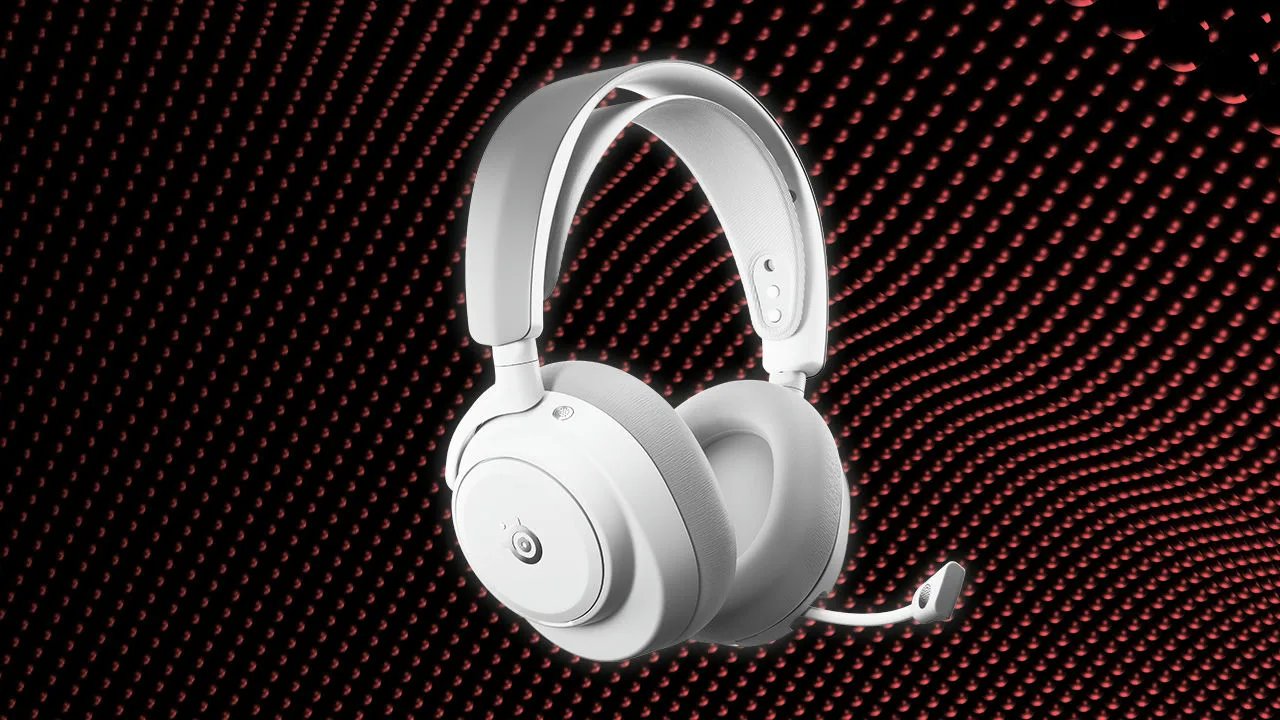
Among the many gaming headset manufacturers out there, few are doing it as well as SteelSeries; and the new Arctis Nova Pro Omni is further proof. It’s a new entry into the Arctis Nova line, in addition to the Arctis Nova Pro, which has been one of our top headset recommendations for years here at IGN. And while the improvements on this new model are somewhat incremental, it’s still a fantastic headset that packs features you simply can’t find elsewhere.
I recently praised SteelSeries’ offering at the budget-level with the Arctis Nova 1, and it has options up the chain for every price range, all the way through the super-expensive but state-of-the-art Nova Elite. At $400, the Nova Pro Omni wedges itself a notch below that luxury tier – it’s still a hefty price tag, but between the sound quality, long-term comfort, and versatility that few others can offer, SteelSeries has another certified winner in its catalog.
Arctis Nova Pro Omni – Design and Comfort
If it ain’t broke, don’t fix it, right? The Nova Pro Omni sports a nearly identical design to the Nova Pro (and the rest of the Arctis Nova roster, really). It’s a fairly slim physical design in the realm of gaming headsets with a low-profile frame and SteelSeries’ signature elastic headband that hooks onto notches for fitment and provides some comfort atop your head. The telescoping arms slide continuously and feel secure once they’re adjusted. And don’t let the relatively thin profile of the headset fool you, it’s both flexible and durable enough to handle with confidence.
The earcups are lined with deep foam padding and premium-feeling leatherette – it gets a little hot, which comes with the territory for leatherette, although it creates a better seal than velour or sports mesh. While the Nova Pro Omni has a slightly tighter clamp force than what I’m used to, I had the headset on without issues for sessions up to five hours because of the comfortable earpads. They finely ride the line between firm and soft, and they sink around my ears nicely.

I appreciate that SteelSeries keeps its onboard controls simple; aside from the Bluetooth toggle, all controls are relegated to the left earcup with the power button, microphone mute toggle, and volume wheel. Alongside them is the 3.5mm audio jack for aux inputs and the retractable built-in microphone that conveniently tucks into the headset to sit flush along the earcup when you’re not using it.
You may be wondering; where’s the USB-C port? It’s hidden away behind the magnetic cap on the outside of the left earcup (which is easily removed by wedging your finger into the notch underneath the cap). It may seem odd at first, but other than a quick firmware update, you never have to really plug it in through USB-C. That’s because SteelSeries’ unique swappable battery system returns in the Nova Pro Omni. The battery is located within the right earcup, which you can access by removing its magnetic cap. This was a key feature of the original Nova Pro, and even in the years since, it’s still an innovative design that beats simply having a longer lasting battery.
Arctis Nova Pro Omni – Features and Software
If you’re not familiar, the headset comes with two distinct battery packs – one for the headset itself and another to insert into the base station to stay charged. This way, you always have one battery ready to go, creating this infinite loop of battery life. It takes maybe 10 seconds to swap them, and if done fast enough, the headset will just stay powered on. The individual batteries themselves can last around 25 hours depending on the features you have active (such as active noise cancellation), and that’s plenty of juice for a handful of sessions before having to actually switch them out.
The base station is the key to making the Nova Pro Omni stand out, not just because of the battery system, but also for the versatility it offers. It has line-in and line-out for wired connections – a boon for those who also run external speakers in their setup – as well as three USB-C ports to bring wireless connectivity to three separate devices. In what may be a big deal to some, you’ll no longer have to pick out the right model for your Xbox console (since all Nova Pro Omni base stations include Xbox’s proprietary wireless protocol). This means you can keep a PC, PS5, Xbox, and an aux source all connected at the same time, and Bluetooth, and you can swap between them (or even run multiple simultaneously) through the base station.
This does mean you have to use this base station in lieu of having a small USB dongle for 2.4GHz wireless, which could be cumbersome depending on your situation, but the advantages it brings are well worth the trade-off. It’s especially convenient for desktop PC setups because the base station can control a few of the headset’s features through the large tactile volume dial and the touch button alongside the monochrome LED screen. You just need to press and hold the dial inward for a few seconds to access the wide menu of options that you can adjust on the fly. But you can get more granular in the SteelSeries GG software suite.
Off the bat, you can tinker with basic functions and settings like custom EQ, ANC, noise gate and sidetone on the microphone, among other things. It’s straightforward and intuitive with tooltips that explain each feature, and it doesn’t feel bloated like other apps. But if you want to get in the weeds, enabling Sonar in the SteelSeries app adds an extra layer of customization and the ability to assign up to nine custom profiles for certain types of media. Here, you can access much finer tuning of the EQ band and even dial in how spatial audio behaves (changing how it reproduces certain sound effects with “performance” for competitive scenarios and “immersion” for cinematic-style experiences). Although I’m generally not a huge fan of virtual surround for spatial audio because of how artificial it can sound at times, this allows for a level of control that you rarely see. The software has more knobs and sliders than most would typically have to worry about, but they’re there for those who want to get more from a high-end headset and create a precise kind of audio experience.
Arctis Nova Pro Omni – Sound Quality and Microphone
I wasn’t exactly surprised during my testing process to find that the Nova Pro Omni’s out-of-the-box sound quality is fantastic. Clean and detailed are the easiest ways to describe its audio profile, with all frequencies coming out clearly even at much louder volumes; solid bass at the low-end and minimal (if any) distortion at the higher pitch. Considering this sits as a tier above the praiseworthy Nova Pro, that’s the expectation with headsets of this caliber, and it’s great to hear SteelSeries clear that bar once again.
You get the kind of positional audio required to be competitive at high levels, of course. I ran my usual rounds of ranked matches in Counter-Strike 2 to get a sense of the headset’s performance and it checked all the boxes wonderfully. With sound cues like footsteps, reloading, and gunfire coming through detailed in both direction and distance, it provides the kind of advantage you’d want sonically.
Playing through the new Patch 7.5 content in Final Fantasy XIV, I got to enjoy how the Nova Pro Omni sorts through the MMO’s busy soundscape. Having the great soundtrack playing, spells firing off, enemy attacks hitting, and the party banter all at the same time – it can be a lot for lesser headsets to handle. But the way it all comes through distinctly and elegantly is another example of why you’d ball out for a headset of this quality.
I spared one of those USB ports on the base station for my PlayStation 5 Pro, and gave Saros another whirl since that game has wonderful sound design. Everything just had an impactful punch to it, but it’s the subtle sound cues from enemy attacks that were more important – paying attention to those audio cues help you anticipate what’s coming and react accordingly in life-and-death situations because this game is a tough test of your reflexes.
A chunk of my in-game test sessions were conducted using the default EQ settings, but tweaking your audio profiles can help you get more out of the headset. For example, messing with spatial audio balance did make Resident Evil Requiem sound more full without losing much of the detail I needed for survival. And the hundreds of built-in profiles for specific games in Sonar give a little extra fine-tuning without having to fiddle with much yourself, which works great for Counter-Strike 2, though your mileage may vary as I feel the FFXIV profile wasn’t quite as drastic of a change. Although the Nova Pro Omni isn’t exactly tuned to be bass-heavy, the audio drivers responded well to something as small as boosting bass a touch to help round out some of the music I listen to.
Hi-res audio is a tricky thing to test because of how subtle the difference can be, depending on how you’re sourcing your audio and how that audio itself is recorded. I went with the Spotify Premium lossless quality and set the Nova Pro Omni to do 96kHz / 24-bit audio in my Windows 11 settings. While outputting proper hi-res audio is one of this headset’s key features, it won’t be as strong as a selling point unless you’re a serious audiophile who wants their gaming headset to do it all. There are nuances to pick up on, but as someone who has one foot in the audiophile world, the best I can say is that the difference is minimal, although it is nice to have (if anything, for the peace of mind knowing you have the best sound capabilities possible all in one device).
Lastly, I must mention that the Nova Pro Omni’s microphone is super-impressive – it’s probably the biggest singular improvement from the original Pro. My voice came through incredibly clear, just shy of using a decent standalone mic and just a notch below the all-timer on the high-end wired Beyerdynamic MMX 300/330 Pro. It doesn’t pick up much background noise even with minimal noise gating, and setting the ClearCast AI noise cancellation to medium-low does the trick for isolating my voice. It does so without sounding compressed or digitized much at all, and you can further tweak your output in the mic’s EQ settings. And one final nice touch, the mic now automatically mutes when it’s retracted into the headset, much as how flip-to-mute works on headsets with that style of mic.