dailynewsnblog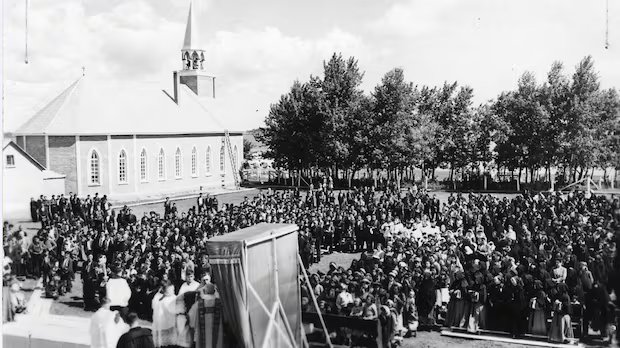
WARNING: This article contains some details of abuse.
First- and second-generation survivors of the Île-à-la-Crosse Boarding School are reflecting on last week’s historic legal decision.
A Saskatchewan judge certified their class action lawsuit and approved settlement agreements reached last year with Canada and the province of Saskatchewan.
Survivors say it’s time to focus on the long road to healing, but last week’s victory is bittersweet.
The win has been years in the making — years marked with urgency. Survivors of the school, many of whom experienced serious physical or sexual abuse, have fought tooth and nail since 2019 for recognition and compensation for their cultural loss and abuses they suffered there.
Many didn’t live to see the settlement agreements approved.
“[We’re] thinking of those loved ones that have passed on that have waited for this day for a lifetime,” said second-generation survivor Brennan Merasty, who is the Métis Nation—Saskatchewan (MN—S) minister responsible for self-determination, self-government and justice.

First- and second-generation survivors of the Île-à-la-Crosse Boarding School are reflecting on last week’s historic legal decision. A Saskatchewan judge certified their class action and approved settlement agreements reached last year with Canada and the province. But the victory is bittersweet.
“And it is finally here for those that are still standing and are excited, and emotions are high because we’ve lost so many through this fight.”
The MN—S represents the province’s Métis citizens.
“You know, it’s unfortunate that it took this long, but it is a great day. It is a win for our survivors,” he said.

Class actions were proposed because the Île-à-la-Crosse school was not included in the 2005 Indian Residential Schools Settlement Agreement due to the fact that it predated the federal residential school system.
Merasty said he’s watched many elder survivors work tirelessly to get to this point.
“I think about the late Bridgette Morin. She fought as long as she could and said that she can’t die until the agreement comes, until their day comes. Unfortunately she passed a week before settlement agreements were agreed to in principle,” he said.

Language and culture stripped away
Louis Gardiner, 70, was only five years old when he first attended the school in 1961. He spent nine years there and was stripped of his language and culture, he said.
“They didn’t call you by your name. You had a number. And if you look at today, the only places that they have numbers is in prison,” Gardiner said.
“And the strap and sexual abuse was their main weapon.”
Gardiner’s siblings and parents also attended. The shadow of what they all experienced at the residential school hung heavy on their lives, and still does.
“My parents never really told their story. I think they took their story to their grave. And I know that they turned to alcohol,” Gardiner said.
Merasty also experienced this in his household. His late father, Allan McCallum, who died in 2013, never spoke about his time at Île-à-la-Crosse residential school.
“It’s a story that me and my brothers were not privy to. We didn’t understand a lot of his choices in life until after his passing when his siblings shared his experiences with us,” Merasty said. “Very disturbing, unsettling. But it helped part of my healing journey to generate some type of understanding.”

Merasty said he makes sure his children always hear and know that they are loved.
Gardiner said he does the same with his children and grandchildren. That means a lot of hugs.
“It never happened with my parents. And sometimes my parents would, when they turned to alcohol, that’s the only time they would say ‘I love you.’ But no hug,” Gardiner said.
Even though the survivors of the school have finally achieved recognition of the abuse inflicted on them, the road to healing will be long, and survivors of all generations need to lead themselves with support from different levels of government, he said.
“It’s not anybody coming into our community to, you know, to heal us. We say no. We know our own people better. We can do it. Just give us the tools. We can do it.”

Next steps
MN-S vice president Michelle LeClair said survivors are now moving into the compensatory phase of the settlement. Even though healing will take a long time, the court victory has brought a piece of the closure that was needed for that journey to advance, she said.
“There weren’t very many objectors to the settlement with Canada. And of course then Saskatchewan came in,” LeClair said of the legal battle.
“I was at the approval application to the Court of King’s Bench and felt that it was going to go well. But, you know, you don’t know until you actually get the decision. And so we’re very, very pleased for the survivors.”
Survivors or their families are to receive a combined $27.3 million in experience payments. The settlement also includes a $10-million legacy fund for the community. Applications for experience payments will be accepted beginning June 1.
A national 24-hour Indian Residential School Crisis Line is available at 1-866-925-4419 for emotional and crisis referral services for survivors and those affected.
Mental health counselling and crisis support are also available 24 hours a day, seven days a week through the Hope for Wellness hotline at 1-855-242-3310 or by online chat.