dailynewsnblog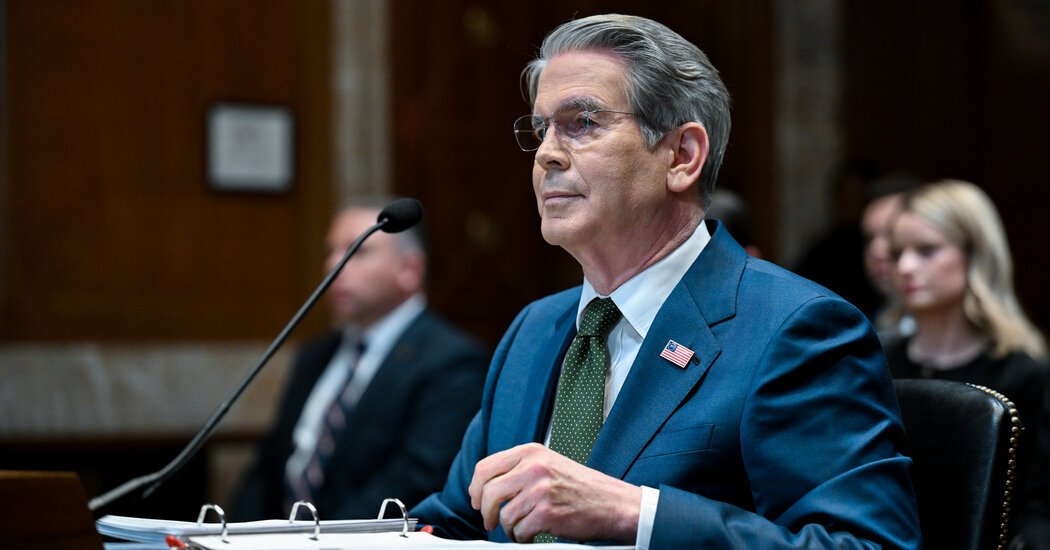
The United States on Monday urged China to push Iran to open the Strait of Hormuz and said that its purchases of Iranian oil amounted to funding global terrorism, delivering a stern rebuke ahead of President Trump’s meeting in Beijing this month with the Chinese leader, Xi Jinping.
The warning came from Treasury Secretary Scott Bessent, who will be participating in the high-stakes meetings. Mr. Bessent has been leading an aggressive campaign to cripple Iran’s economy with a blitz of new sanctions. He has also been working to devise ways to increase oil supplies around the world to blunt the impact of soaring energy prices. Gasoline hit an average of $4.45 per gallon on Monday.
“Let’s see if China — let’s see them step up with some diplomacy and get the Iranians to open the strait,” Mr. Bessent said on Fox News on Monday. “Iran is the largest state sponsor of terrorism, and China has been buying 90 percent of their energy, so they are funding the largest state sponsor of terrorism.”
Tension between the United States and China has eased since a year ago, when the Trump administration triggered a trade war by hiking tariffs on Chinese imports and China retaliated with export controls on critical minerals. But the Iran war has opened a new front in their rivalry, as Chinese purchases of Iranian oil keep Iran’s economy afloat.
In recent weeks, the Treasury Department has intensified economic pressure on China. It has specifically been targeting China’s independent “teapot” refineries with sanctions and warning financial institutions that they will face penalties for facilitating oil sales between Iran and China.
The Treasury Department on April 24 imposed sanctions on an independent Chinese refinery, Hengli Petrochemical Refinery, which is one of Iran’s largest customers for crude oil and other petroleum products. Hengli has purchased billions of dollars’ worth of Iranian crude from the Revolutionary Guards Corps, which wields military, political and economic clout throughout Iran.
But China responded this past weekend, ordering its companies not to comply with the U.S. sanctions. China’s Ministry of Commerce invoked a 2021 “blocking measure” that protects its firms from foreign laws that the Chinese government believes violate international norms and unfairly restrict trade.
U.S. sanctions are far-reaching economic tools that can block transactions and freeze the international assets of companies around the world, essentially cutting them off from Western financial services providers. China’s order to disregard the sanctions will create a new point of tension between the world’s two largest economies and could set the stage for additional decoupling of their financial systems.
China has been making other provocative moves ahead of the meeting between the two leaders.
Last Monday, the Chinese government said it would require the unwinding of Meta’s acquisition of Manus, a Singapore-based artificial intelligence company with Chinese founders, in a move that could chill other Chinese entrepreneurs from seeking alliances with foreign partners.
Mr. Bessent suggested that Iran would be high on the agenda when Mr. Trump meets with Mr. Xi.
“The threat of attacks from Iran has closed the strait — we are reopening it,” Mr. Bessent said. “So I would urge the Chinese to join us in supporting this international operation.”