dailynewsnblog
As the federal government embarks on launching a national sovereign wealth fund, Ottawa could seek lessons from the handling of Alberta’s fund to help ensure it becomes a success.
Alberta launched its sovereign wealth fund decades ago, but provincial governments regularly dipped their hands into the account, which is why the bank balance failed to meaningfully grow.
The new Canada Strong Fund will have an initial $25-billion contribution from the federal government and will allow Canadians to individually contribute with all the funds earmarked to help build major projects in the country, while turning a profit too, the government claims.
At this point, the fund is merely a proposal, void of many details for how it would be designed and structured.
Generally, experts support the idea of a sovereign wealth fund, but they have questions about this one, including how it would generate revenue, what projects it would support, and how it differs from a host of other federal agencies and banks.
“The devil is in the details,” said Charles St-Arnaud, chief economist with Servus Credit Union. “The idea of having a fund that invests in our infrastructure and all that is not a bad idea.”
The main difficulty for St-Arnaud is understanding how the fund will accumulate new investment and revenue in the future.
“It’s not clear exactly what’s the intention and what will be the outcome of it,” he said.
Alberta’s example shows how tempting it can be to politicians to repeatedly use the fund for short-term needs — especially when facing a deficit budget — sacrificing the opportunity of long-term growth.
What is a sovereign wealth fund?
There are more than 100 sovereign wealth funds around the world setup by governments with the aim of building wealth and often funded with money generated from a depleting resource or industry, such as oil and gas.
They vary in size from Norway’s massive $2-trillion US fund to much smaller accounts setup by U.S. states and some Canadian First Nations.

Canada’s fund will invest in energy, infrastructure, mining, agriculture and technology, and the federal government will borrow the money to get it started.
“For the Government of Canada to borrow a 30-year bond right now, 3.9 per cent is the interest rate. Well, some of these projects are getting returns of 10 to 15 per cent,” said Calgary Liberal MP Corey Hogan on CBC Radio’s The Calgary Eyeopener.
“That can be an incredible return for Canadians and it’s a way for all of us to benefit from the major nation building that’s going on,”
Build Canada, a think-tank focused on growing the national economy, has advocated for a federal sovereign wealth fund, but isn’t sure about what Ottawa is currently proposing.
“It’s a sovereign wealth fund in name only,” said chief executive Lucy Hargreaves.
“If you look at other established sovereign wealth funds around the world, they’re funded by surpluses, not debt.”
She compares the federal government’s proposed fund to resemble something closer to a war bond, since it encourages Canadians to buy equity to support projects that the government is trying to get off the ground.
“It is a misnomer to call it a sovereign wealth fund because it is just simply not the way sovereign wealth funds operate,” said Hargreaves. Build Canada had proposed a model that accumulates wealth from a variety of federal revenue sources such as resource royalties, carbon taxes, windfall taxes and the option for provincial contributions.

Alberta’s decades-old fund
There were high hopes when the Alberta government launched the Heritage Savings Trust Fund in 1976 to collect a portion of revenue from the oilpatch to save for future generations.
Alberta’s fund began with an initial payment of $1.5 billion and a commitment to deposit 30 per cent of resource revenue.
During periods of high commodity prices, it was easy to stash away the bounty of oil cash, but in dire years when oil prices crashed, the political commitment to save quickly disappeared.

Since the 1980s until recent years, the fund barely grew. Withdrawals were plentiful, deposits were rare.
The Heritage fund had a clear vision and purpose, said Gary Mar, a former longtime provincial cabinet minister, but over time the money generated from the fund ended up in general government revenue to help pay for departments such as health and education.
“A loss of the fiscal discipline and that’s probably the most important lesson,” said Mar. “That’s where the Heritage Savings Trust Fund started to lose some of its public support.”
“I recognize the political difficulty in doing so when you’ve got so many challenges with fiscal demands on all kinds of other areas of that are supported by public funding,” he said.
Over the decades, governments have used the fund and its investment income to pay for nearly $45-billion worth of programs, services and infrastructure — including building the Kananaskis Country Golf Course in the Rocky Mountains, west of Calgary.
For Mar, the federal government would be wise to ensure its fund is professionally managed, arms-length, and not used as a slush fund.

Lessons learned
Transparency will be key too, he said, since the federal government has so many other agencies aimed at helping build big projects and the economy, such as the Major Projects Office, the Canadian Infrastructure Bank, Export Development Canada, Business Development Bank and the new sovereign wealth fund.
“It’ll be easy for Canadians to lose track of where their money is going,” he said.
If Alberta would have kept saving as the Heritage fund was first proposed by Premier Peter Lougheed, it would be worth hundreds of billions of dollars.

The Alberta government has begun saving again, which is why the Heritage fund has risen from about $19-billion to $32-billion over the last three years by making deposits and re-investing the income it generates.
The Heritage fund invests in Alberta, but also within Canada and internationally.
The specific focus of the Canada Strong Fund to support major projects within the country doesn’t fit the traditional model of a sovereign wealth fund, experts say, and could limit the fund’s growth because of its limited focus.
“They primarily invest globally because they are intended to optimize and maximize growth of the fund, so citizens can get dividends,” said Hargreaves, with Build Canada.
Norway’s giant fund specifically invests outside of the country. Since the first deposit of cash 30 years ago, the fund has grown to be worth more than $2-trillion US by collecting revenue from its oil and gas industry and generating returns from its arms-length management and investment team.
The wealth is also shared by a relatively low population of about 5.5 million.
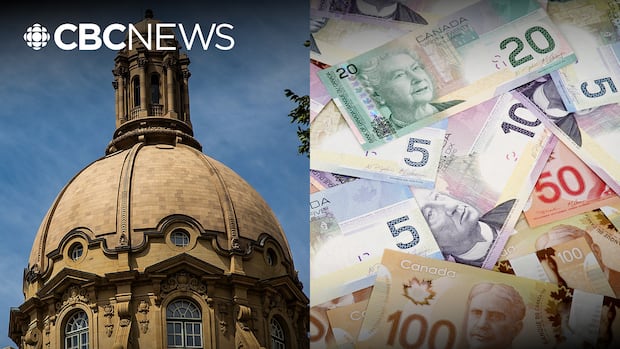
Alberta’s finance minister says $2.8 million from the province’s surplus is going into the Heritage Savings Trust Fund to help meet its 2050 savings goal. What needs to happen to save $250 billion in 25 years?