dailynewsnblog
DOI: Physics of Fluids, 2026. 10.1103/tnxb-ckr5 (About DOIs).
Tracking Roman shipwreck repairs
Credit:
Adriboats © L. Damelet, CNRS/CCJ
Credit:
Adriboats © L. Damelet, CNRS/CCJ
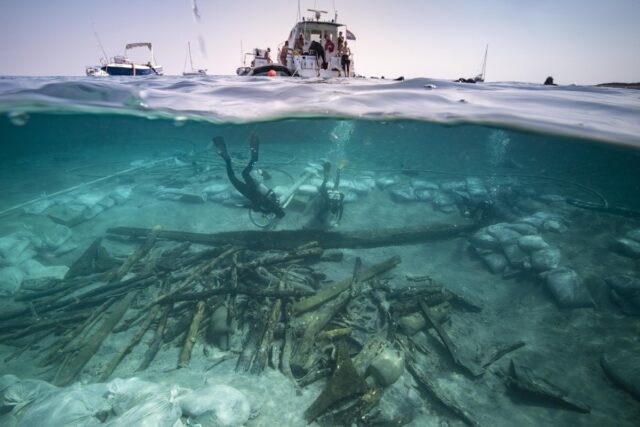
Back in 2016, archaeologists discovered a shipwreck from the Roman Republic, the Ilovik–Paržine 1. The wreck has been the subject of much study of the actual ship, enabling scientists to determine it was constructed in what is now Brindisi on Italy’s south-eastern coast. Most recently, analysis of pollen trapped in the ship’s waterproofing layers have yielded insight into repairs made successively in other locations throughout the Adriatic Sea, according to a paper published in the journal Frontiers in Materials.
Per the authors, prior research had largely ignored studying non-wooden materials like seawater-resistant coatings, so they used mass spectrometry and similar methods to examine the molecular makeup of ten coating samples. The results showed that pine tree resin or tar (pitch) was the main component. But one sample was a combination of beeswax and tar, a mixture unique to Greek shipbuilders known as zopissa. The combination makes the coating easier to apply when heated and also makes the pitch adhesive more flexible.
Because pitch’s adhesive nature easily traps and preserve pollen, the researchers were also able to identify which plants had been present when the coating was applied, so they could in turn identify the regions where the pitch had been produced. They found pollen from a wide range of environments, such as forests of holly oak, pine, and matorral, all typical of the Mediterranean and Adriatic coastal regions. Other samples contained alder and ash, more common to rivers, as well as fir and beech more typical of the mountain regions of Istria and Dalmatia. This provides concrete proof of mid-voyage repairs to the ship.
DOI: Frontiers in Materials, 2026. 10.3389/fmats.2026.1758862 (About DOIs).
Crushing soda cans for science
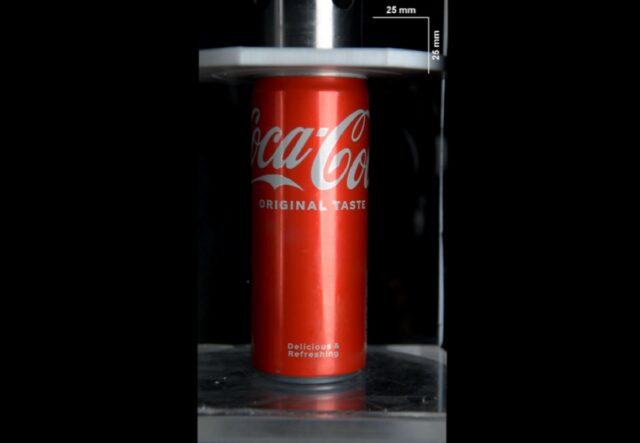
Who doesn’t love to watch those YouTube videos of people using hydraulics to crush a variety of objects? That includes physicists at the University of Manchester, who were intrigued by the difference between crushing an empty soda can versus one that is full of liquid. An empty can collapsed immediately; a full can collapses gradually in a series of circular rings. The Manchester physicists wanted to know why a full can behaves this way. They investigated via a combination of mathematical modeling and laboratory crushing experiments, describing their findings in a paper published in the journal Communications Physics.