dailynewsnblog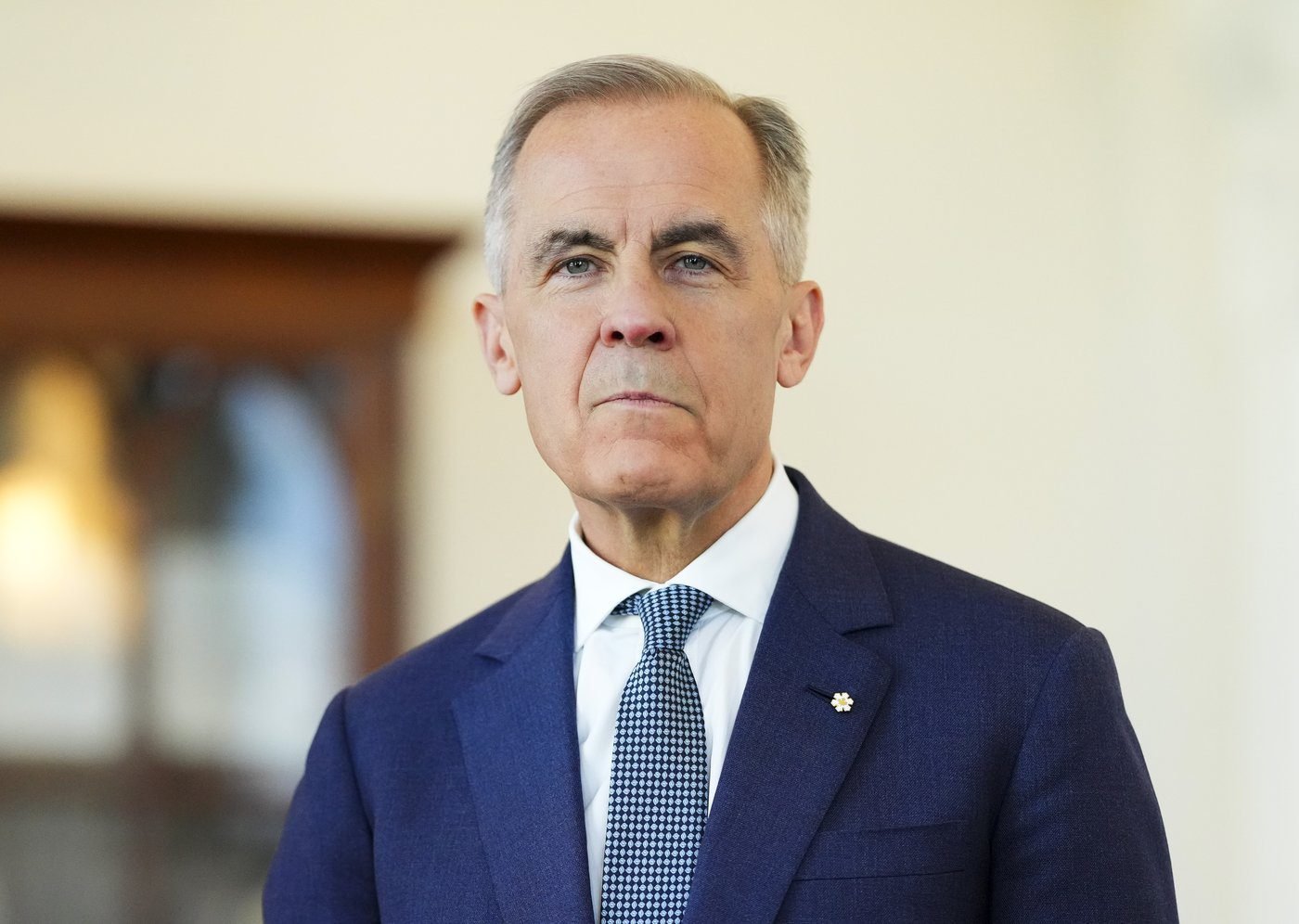
OTTAWA — Prime Minister Mark Carney is headed to Armenia on Saturday for a visit his office says is framed around Ukraine’s defence and drumming up more trade and investment in Europe.
Jean-François Ratelle, an international studies professor at the University of Ottawa who specializes in the Caucasus region, said it’s disappointing that the visit doesn’t seem to be aimed at continuing Canada’s years of advocacy for democracy and peace in Armenia.
“We are witnessing a complete change of our foreign policy and what are our general interests,” Ratelle told The Canadian Press.
“It’s looking for our own interests and our own opportunities, and not playing that leading role in norms, and what used to define Canada.”
The prime minister will be in the Armenian capital Yerevan from Saturday until Monday for the European Political Community summit touching on strategic co-operation in politics, security and infrastructure.
Canada is the first non-European country to attend these meetings, which have taken place twice a year since they began after Russia’s full-scale invasion of Ukraine in 2022. The meetings include EU countries and others, such as Iceland, Turkey and Ukraine itself.
“It’s really mainly an attempt to create a forum to talk to each other,” said Achim Hurrelmann, co-director of the Centre for European Studies at Carleton University. He said Carney seems to be attending to advance defence procurement deals with Europe.
“My guess is that he is primarily interested in the opportunity to meet EU leaders, and leaders from especially Ukraine and the U.K. all at once, to try to move toward implementing some of the common initiatives that have been launched with the European Union.”
Hurrelmann said it’s possible the trip could help Carney identify projects his government could pursue after repeated high-level statements about defence co-operation.
“What has actually proven to be more difficult is to create joint projects (and) find the private investment that is necessary for that,” he said.
The prime minister’s news release announcing the trip did not touch on the recent history of the Caucasus region. The previous Trudeau government weighed in multiple times on ethnic conflict in the region and often expressed support for the Armenian diaspora in Canada.
Since the collapse of the Soviet Union, Armenia and Azerbaijan have fought for control of the region of Nagorno-Karabakh. Canada and other countries recognize the region as part of Azerbaijan, despite its population being largely ethnic Armenians.
The conflict has flared up at various points, particularly when Russian peacekeepers thinned out after Moscow launched its full-scale invasion of Ukraine in 2022.
Azerbaijan restricted access to the region and eventually launched a military campaign against separatist groups that caused more than 100,000 people to evacuate in 2023, just as Canada opened an embassy in Yerevan.
Canada has spoken out against Azerbaijan’s actions, joined an EU security mission and at one point halted military exports to Turkey over concerns that country was sending Canadian components to its ally Azerbaijan to be used in Nagorno-Karabakh.
Ottawa also sought to support what it called “fragile” democracies in former Soviet states such as Armenia through, among other things, efforts to counter misinformation.
Ratelle said that work has largely stopped since Carney took office and there has not been much visible work by the embassy in Yerevan on advancing democracy.
“We virtue-signalled with regard to ethnic cleansing, with regard to the importance of democratization, but we didn’t really walk the walk after that,” he said.
“In a sea of authoritarianism and backsliding countries, Armenia is really the one that has more hope of developing a better agenda for democratization and human rights. At the same time, Canada was never really involved a lot in trade or economic relations with Armenia.”
That transition away from authoritarianism is far from complete. Freedom House noted in its 2025 report that in Armenia, “the courts face systemic political influence, and judicial institutions are undermined by corruption.”
Ratelle said the region is taking on increasing geopolitical importance, with Armenia and Azerbaijan both share borders with Iran. Both are welcoming American investors as part of a U.S. initiative to broker peace between the two countries through shared economic and infrastructure links that would bolster trade between Asia and Europe.
Those efforts could yield “tremendous opportunities,” Ratelle said, but only if the geopolitical situation remains relatively stable for 10 to 15 years. Armenia and Azerbaijan still have disputes over borders, prisoners of war and Azerbaijan’s recent destruction of Armenian cultural heritage sites.
Ratelle added that Armenia feels it lacks international support in the ongoing “slippery peace process” with Azerbaijan, a country that Turkey supports heavily.
The disappointment was compounded last June, Ratelle said, when Carney hosted the G7 summit and did not list Caucasus issues among Canada’s geopolitical priorities for discussion with U.S. President Donald Trump and other leaders.
“It speaks, I think, volumes of the current administration that the priority is more about economic trade … than upholding international law,” he said.
He said Armenia likely invited Canada in an effort to forge stronger relations with middle powers.
Carney said Wednesday he had never been to Armenia before. The last prime minister to visit was Justin Trudeau at the Francophonie summit in 2018.
This weekend’s visit comes as Canada works to build trade ties with countries such as Turkey, where Carney is expected to visit for the NATO summit in July.
Ahead of that trip, Foreign Affairs Minister Anita Anand and others took part in events marking the Armenian genocide, a term rejected by the Turkish government.
This report by The Canadian Press was first published May 2, 2026.
— With files from Alessia Passafiume.
Dylan Robertson, The Canadian Press