dailynewsnblog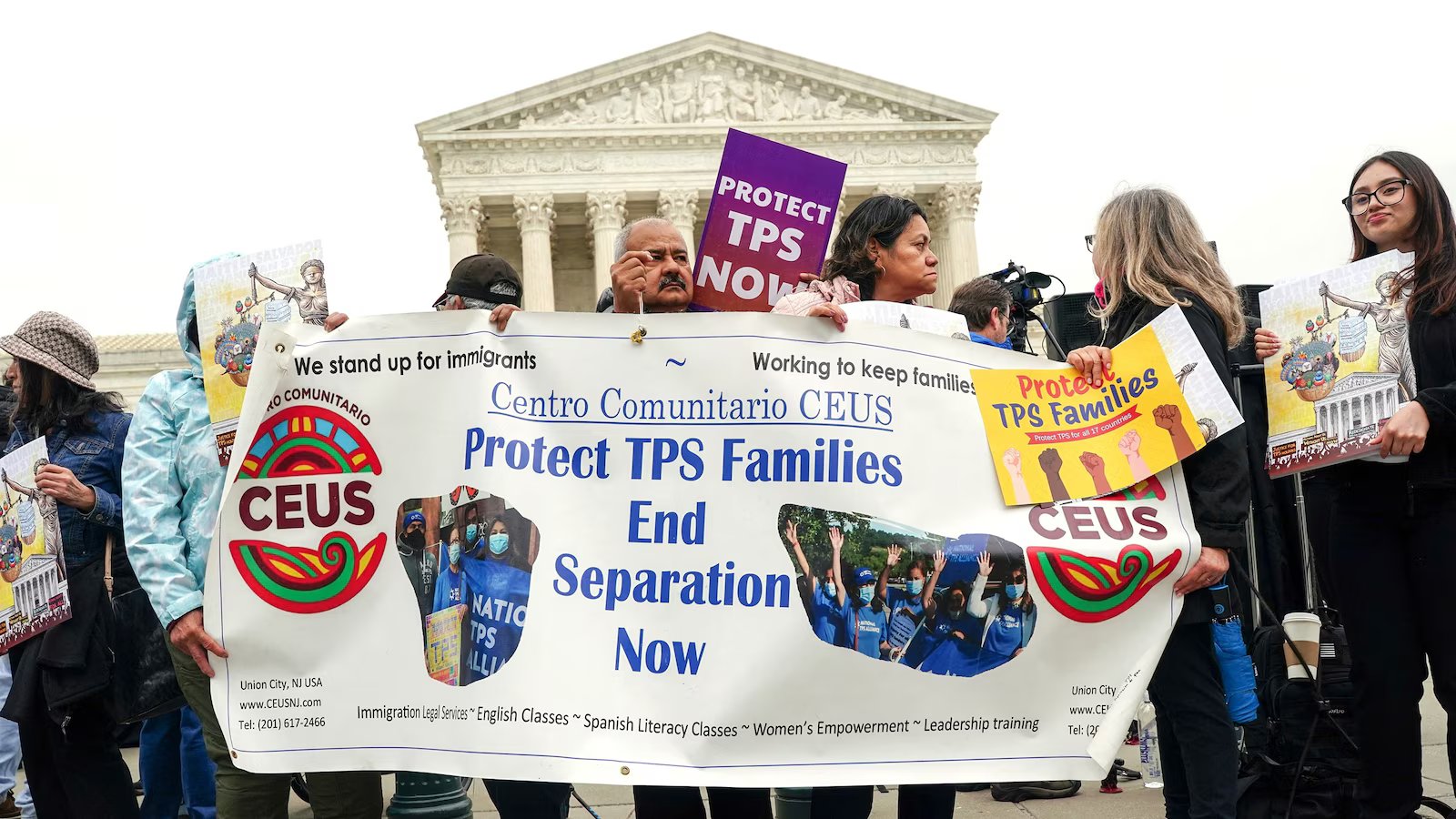
Days after the Supreme Court heard arguments challenging the Trump administration’s termination of Temporary Protected Status for migrants from Haiti and Syria, a federal judge in New York on Friday blocked the administration from ending TPS for those from Yemen.
It was the latest in a series of rulings forestalling the administration’s attempts to eliminate TPS protections, which grant recipients the ability to temporarily live in the U.S. in order to escape unsafe conditions in their home country.
Yemen’s Temporary Protected Status had been due to expire at midnight May 4. Instead, the judge sided with 16 plaintiffs who have lived and worked in the United States, some for decades, who are among the nearly 3,000 Yemeni nationals who hold such status.
Fourteen of the plaintiffs are current TPS holders, while two are first-time TPS applicants.
U.S. District Judge Dale Ho decided the Department of Homeland Security, under then-Secretary Kristi Noem, terminated Temporary Protected Status for Yemen “in clear disregard” of the procedure Congress established.
“This Court does not write on a blank slate,” the judge wrote. “Defendants have terminated TPS for more than half a dozen countries in the last six months, under circumstances nearly indistinguishable from those here. And every district court that has considered the principal argument raised by the Plaintiffs here has granted a motion to postpone and/or vacate a termination of TPS for failing to comply with the requisite procedures for doing so established by Congress.”
A DHS spokesperson, responding to the ruling, said, “After reviewing conditions in the country and consulting with appropriate U.S. government agencies, the Homeland Security Secretary determined that Yemen no longer meets the law’s requirements to be designated for Temporary Protected Status.”
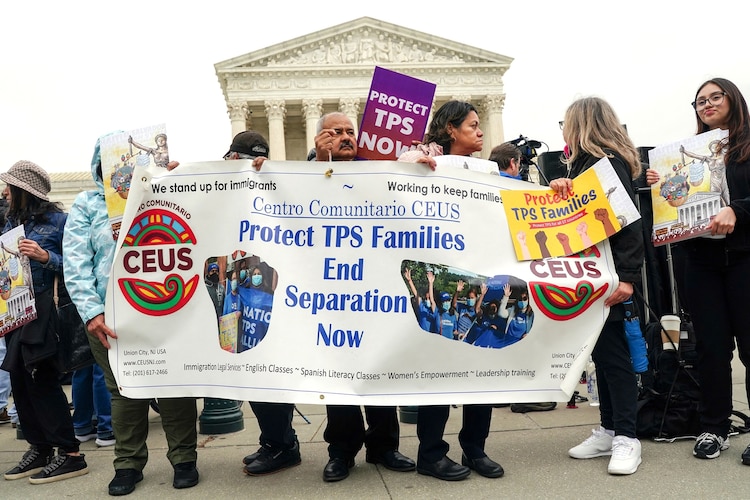
People hold a banner and placards as immigrants’ rights activists and demonstrators attend a rally outside the U.S. Supreme Court, as justices were scheduled to hear arguments on whether the administration of President Donald Trump can end the Temporary Protected Status (TPS) of Syrian and Haitian nationals, in Washington, D.C., April 29, 2026.
Nathan Howard/Reuters
“Allowing TPS Yemen beneficiaries to remain temporarily in the United States is contrary to our national interest. TPS was designed to be temporary, and this administration is returning TPS to its original temporary intent. We are prioritizing our national security interests and putting America first,” the spokesperson said.
Yemenis have enjoyed temporary protected status in the United States since 2015, when the government found that, amid a civil war, “requiring Yemeni nationals to return would pose a serious threat to their personal safety.” It has been renewed six times.
When then-Secretary Noem ended TPS for Yemen she said, “Allowing TPS Yemen beneficiaries to remain temporarily in the United States is contrary to our national interest. TPS was designed to be temporary, and this administration is returning TPS to its original temporary intent. We are prioritizing our national security interests and putting America first.”
Judge Ho noted in his opinion that Yemeni nationals operate about half of New York City’s 15,000 family-owned convenience stores, and that the TPS holders among them “form an integral part of business networks that employ and serve millions of people in the United States.”
The plaintiffs include a pregnant 33-year-old woman in Detroit due to give birth this month, whose unborn child has a congenital heart condition that she says is not treatable in Yemen; a 50-year old former human rights worker in Brooklyn who is a target of Houthi-aligned militias in Yemen; and a 36-year-old medical clinician in Houston working on cancer research.
“The decision to halt the termination of TPS is a lifeline for my family; it is the moment we finally breathed a sigh of relief after months of existential anxiety,” said plaintiff Hadeel Doe, whose court filing was made under a pseudonym out of concern for her safety.
“This decision means that my children, who are U.S. citizens, will not be forced back into an environment that threatens them with violence or forced recruitment. It means my unborn child, who suffers from heart complications, will receive the specialized medical attention and care he needs here in America,” she said.
ABC News’ Armando Garcia contributed to this report.