dailynewsnblog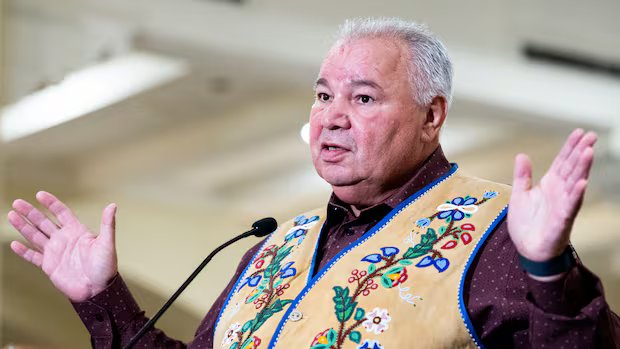

Listen to this article
Estimated 5 minutes
The audio version of this article is generated by AI-based technology. Mispronunciations can occur. We are working with our partners to continually review and improve the results.
First Nations and Métis leaders are criticizing the federal government’s spring economic update for a lack of distinctions-based funding for Indigenous communities in its multi-billion “Canada Strong” plan.
The federal government released its spring economic update on Tuesday, promising about $2.1 billion in new spending on essential services for Indigenous people on top of roughly $2.2 billion for essential services announced by Indigenous Services Canada earlier this year.
However, there is criticism for a lack of “distinctions-based” funding — few specific carve-outs for First Nations, Métis or Inuit communities.
Assembly of First Nations (AFN) National Chief Cindy Woodhouse Nepinak wrote in a statement Tuesday evening calling the lack of distinctions-based funding for First Nations infrastructure, housing and clean water “deeply disappointing.”
“First Nations have repeatedly called for sustained and adequate investments to close the First Nations infrastructure gap, not just for our communities, but for the benefit of all Canadians,” the statement said.
Of the $2.1 billion in new money announced, $601 million will support education on reserves, $700 million for implementing child and family services legislation and $764 million for the Non-Insured Health Benefits (NIHB) program for First Nations and Inuit.
The national chief called the money for NIHB and $630 million over two years for mental wellness services previously announced in March “important investments.”
However, Woodhouse Nepinak said “there is no additional funding announced for the First Nations Child and Family Services Program and previously announced funding for Jordan’s Principle remains insufficient.”
MMF hopes more money to come on child welfare
The Manitoba Métis Federation (MMF) also expressed concern over the lack of distinctions-based funding in the fiscal update.
“[Distinctions-based funding is] the only way you can truly measure everybody’s use of resources to see if there’s actually making true change in their community,” MMF President David Chartrand said.
Chartrand said he hopes the $700 million for the implementation of legislation on child and family services is just an “initial commitment.” He said MMF has estimated it would take between $1.3 and $1.6 billion over five years to administer the necessary changes for the 1,000 children in their care.
Chartrand said he has to trust the federal government will fulfil its obligations to Métis people, especially given the ongoing global crises and trade war with the United States, which were emphasized as major economic factors in the fiscal update.

“The government’s got to be very clear to us, ‘This is what we’re doing, this is how we’re doing, but we can’t forget to include you.’ That’s the key for me,” he said.
“You’ve got to show us, without doubt, that we’re part of the plan.”
Indigenous Services Minister Mandy Gull-Masty told CBC Indigenous she has had conversations with leaders across the country since the fiscal update was released and said “we are always going to need more resources.”
“The needs are huge in Canada. Being able to come up with a strategy to efficiently process and address those needs is part of the work that I’m doing as a new minister,” Gull-Masty said.

She urged people to stop “flipping to the Indigenous-only section and thinking those are the only dollars we can access,” adding the fiscal update “includes everyone.”
“This is Canada. You have access to everything that’s in there, and to me, there’s huge wins in there,” she said.
Gull-Masty said the federal government is looking to roll out dollars already in reserve, such as the $4 billion dedicated to the Urban, Rural and Northern Indigenous Housing Strategy, in order to “have more space” in the next budget.

The Carney government’s spring spending update pledges $2.1 billion for key Indigenous programs. That money comes after several essential services were omitted from last fall’s federal budget, prompting Indigenous organizations to voice major concerns about potential spending cuts.
The National Association of Friendship Centres released a statement Wednesday welcoming the spring economic update and the inclusion of friendship centres in it.
In March, Gull-Masty announced $168 million over five years to support urban programming for Indigenous people.
“Being named in the Spring Economic Update reinforces NAFC’s role as a trusted and essential partner in delivering Indigenous-led services rooted in community, culture, and lived experience,” chief executive officer Jennifer Rankin stated in the release.
The Native Women’s Association of Canada released a statement Wednesday that while it is still reviewing the fiscal update, there is an “absence of a clear commitment to sustained engagement with Indigenous women’s organizations in efforts to “build Canada strong.”
It also stated “more clarity is needed on how new and existing measures will address ongoing disparities and systemic barriers.”