dailynewsnblog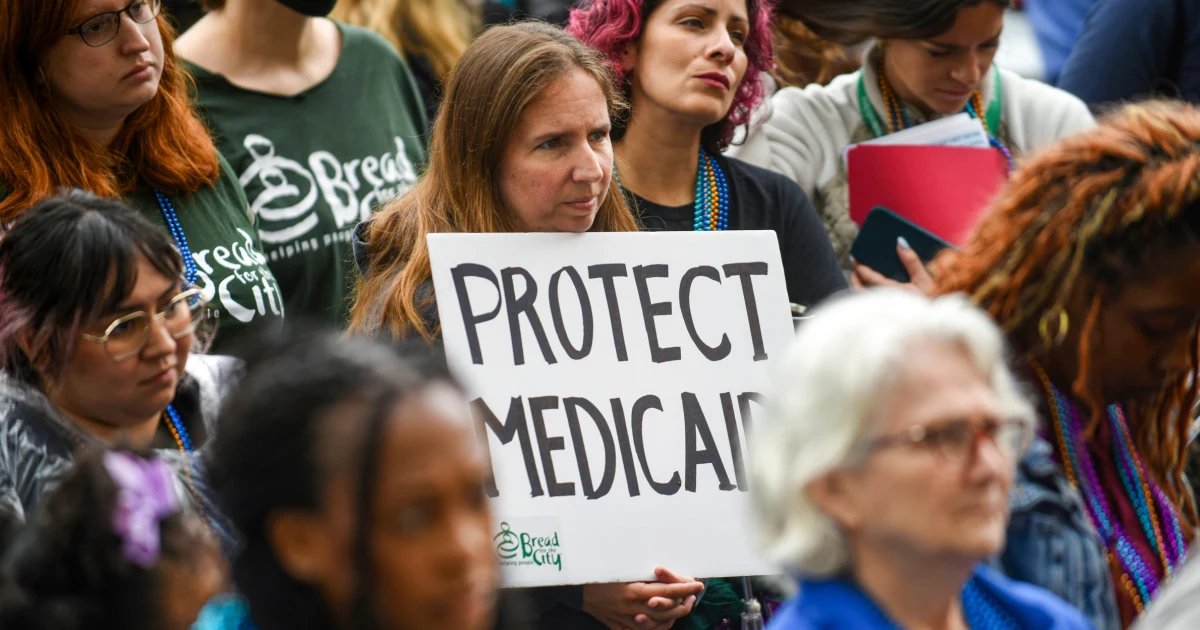
Nebraska on Friday became the first state to implement Medicaid work requirements, eight months ahead of the federal deadline mandated in President Donald Trump’s “big, beautiful bill.”
Subscribe to read this story ad-free
Get unlimited access to ad-free articles and exclusive content.

The move is expected to strip coverage from around 25,000 residents who qualified for the program under the Affordable Care Act’s Medicaid expansion, according to the Urban Institute, a nonpartisan research group. An estimated 72,000 Nebraskans will be subject to the policy, which applies to “able-bodied” adults ages 19 to 64.
States are not required to implement the work requirements until Jan. 1, 2027, and the Trump administration isn’t expected to release official guidance on how states should do so until June. Advocates for Medicaid say the rollout is unnecessarily rushed.
“Eighteen months to implement such a massive undertaking of all these new eligibility and requirements is bad enough, but it’s even worse that for no reason at all, Nebraska has decided to start this process eight months early,” Anthony Wright, executive director of Families USA, a healthcare advocacy group, said on a call Wednesday ahead of the rollout.
Beginning Friday, new Medicaid enrollees will need to submit proof that they’ve worked the required number of hours or that they qualify for an exemption. People already on Medicaid will have until at least the end of July to do the same. According to the Nebraska health department, people who don’t submit their information within a month of being notified may be denied or lose their coverage.
State officials say the requirements are intended to get more people into the workforce.
In December, Nebraska Gov. Jim Pillen, a Republican, alongside Centers for Medicare and Medicaid Services administrator Dr. Mehmet Oz, announced the state’s intent to implement the work requirements in May, saying the new rules “will help Nebraskans achieve greater self-sufficiency through employment and other meaningful activities.” (Nebraska’s unemployment rate was 3.1% in February, one of the lowest rates in the country.)
Jeff Powell, a spokesperson for the state health department, said that the state didn’t have an estimate of how many people would ultimately lose coverage once the policy is implemented. However, Powell said an estimated 60% to 72% of people enrolled in Medicaid expansion meet the work requirements or qualify for an exemption.
Medicaid advocates say that many eligible people could lose coverage, contending that Nebraska officials haven’t given enrollees enough advance notice or clear guidance on how the process works.
“A vast majority of Nebraskans are working, or would be an exemption, but it is the red tape. That’s what causes the problems,” Sarah Maresh, healthcare access program director for Nebraska Appleseed, a nonprofit advocacy group, said on the call.
To keep coverage, people must provide proof that they work, volunteer or do community service at least 80 hours a month, or be enrolled in school or an apprenticeship at least half the time. Beginning next year, the state will review eligibility every six months, up from once a year.
Certain groups — including pregnant women, parents of young children and people with disabilities — are exempt from the work requirements.
People are also exempt if they’ve been diagnosed with certain medical conditions. In late April, the state released a list of diagnoses that would qualify a person as “medically frail” and make them eligible for an exemption. The list spans nearly 300 pages, relies on thousands of medical codes and lists conditions in highly technical language (“acute myocardial infarction, unspecified” refers to a heart attack, for example).
“It’s not super straightforward,” said Allie Gardner, a senior policy analyst on the health policy team at the Center on Budget and Policy Priorities, a nonpartisan research group. “If you’re an enrollee, you’re trying to parse together all these 295 pages of code to figure out if you have a condition that would qualify for an exemption.”
Gardner worries that people who have a qualifying medical condition may inadvertently not be granted an exemption.
The state’s website says health officials will review available medical claims data about 90 days before the end of an enrollee’s eligibility period. If that person has a qualifying medical condition, they will be treated as exempt “without needing to take additional action.”
But state claims data can sometimes lag, Gardner noted, and the data may not show up when the state attempts to automatically exempt people. In those cases, people would have to file their own form declaring they have one of the state’s listed conditions.
“And specific conditions are not explicitly listed on the individual declaration form where somebody can potentially understand, ‘Oh, I do qualify for this exemption known as medically frail,’” she said. “I think there’s going to be a lot of confusion.”
Dr. Adam Gaffney, a critical care physician and assistant professor at Harvard Medical School, said the burdensome documentation requirements will invariably mean that Medicaid enrollees — many of whom are disabled — will fall through the cracks.
“It is not easy being sick, and it’s especially hard to navigate bureaucracies and document exemptions like chronic illness,” Gaffney said.
The rushed rollout, he said, is likely to cause large-scale disruptions to patient care. People may not realize they’ve lost their coverage until they go to the doctor.
“Even short lapses in coverage can translate into dangerous, even deadly interruptions in medical care,” he said. “A patient with high blood pressure who goes without care, for instance, will face increased risk of suffering a heart attack or stroke.”
Powell, of the state health department, said the state began notifying Medicaid enrollees in December, followed by texts and emails. The state also had an outreach campaign on TV, radio and online.
He said Nebraska implemented the work requirements ahead of the federal deadline because “it was operationally ready.”
“Nebraska’s implementation reflects a deliberate, phased approach focused on protecting eligible members,” he said.