dailynewsnblog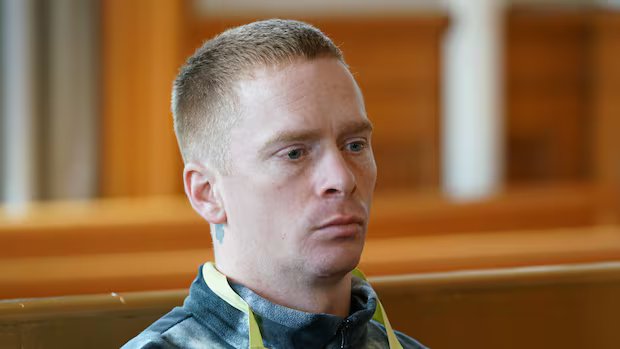

Listen to this article
Estimated 4 minutes
The audio version of this article is generated by AI-based technology. Mispronunciations can occur. We are working with our partners to continually review and improve the results.
A St. John’s man has been sentenced to five years in prison for a fatal attack on his grandmother during a state of confusion following a cocaine-induced seizure.
Justice Peter O’Flaherty rendered his decision in the case of Brandon Tobin on Thursday, calling the death of 82-year-old Mildred “Millie” Brake a “profound tragedy.”
Tobin pleaded guilty to manslaughter by criminal negligence.
“The offender must live the rest of his life knowing that this decision has ultimately led to the commission of this horrific crime, and forever changed the trajectory of so many lives,” O’Flaherty said in Supreme Court.
The decision comes with an important distinction.
Brandon Tobin isn’t going to prison for the act of attacking his grandmother, but rather for the decision to consume drugs while knowing it could lead to violence and place her at risk.
He knew his grandmother was home. He knew injecting cocaine caused his seizures. He knew those seizures could make him violent towards his loved ones.
But he did it anyways.

Brake came home from a St. Patrick’s Day dance on March 16, 2022, to the house she shared with her grandson.
At 10:35 p.m., Brake called her daughter — Tobin’s mother — to say Tobin was having a seizure.
He’d suffered a head injury the previous summer, when his dirt bike collided with a car. In the wake of the accident, Tobin began having seizures — which were more prevalent when he was using cocaine intravenously.
Tobin could be aggressive when he was coming out of the seizures, according to an agreed statement of facts in the case, and had recently assaulted his girlfriend in a state of post-seizure aggression.
Tobin’s mother arrived at the house at 10:49 p.m., and found Brake lying on the floor, bleeding from her ear and nose. Tobin was nowhere to be found.
Denise Brake picked up the phone and dialled 911, telling the operator her son had a seizure and attacked his grandmother.
Tobin returned home while she was still speaking to the operator, according to a transcript of the call entered in as an exhibit in court.
“Mom!” he yelled.
“What, Brandon? Nan is hurt. You hurt Nan,” she responded. “You must of hurt her, Brandon. You had a seizure. You had a seizure, honey.”

Brandon Tobin has been sentenced to five years in prison, minus 672 days already served, after pleading guilty to manslaughter by criminal negligence. Tobin attacked and killed his loving grandmother in 2022 in a daze following a cocaine-induced seizure. The CBC’s Ryan Cooke explains the complex case that led to the sentence.
Tobin left the house and was tracked down later that night by the Royal Newfoundland Constabulary.
According to the agreed statement of facts, Tobin told the officers: “It can’t be homicide. I don’t remember. My f–king nan. I don’t remember. I had seizures for the past month, since my accident. I can’t remember.”
Violent criminal record plays a role in sentencing
Tobin, 30, has a criminal record dating back to when he was 19 years old.
Tobin was convicted of aggravated assault after attacking a man with a baseball bat in 2014, and given a four-year prison sentence.
His grandmother sat behind him in court, supporting him throughout the process.
“To put it simply, he’s a violent man,” O’Flaherty said in his decision on Thursday.

In putting forward sentencing submissions, lawyers for the Crown and defence submit similar cases from around the country to support their recommendations. This time around, O’Flaherty acknowledged the facts of the case were so unique that there really weren’t any cases that mirrored them closely.
Judges also look at aggravating and mitigating factors in sentencing.
In this case, Tobin’s guilty plea, remorse, supportive mother and engagement in prison programming were all considered mitigating factors.
On the aggravating side, the judge considered the vulnerability of the victim, the violent nature of the crime, Tobin’s criminal record and the significant impact on Brake’s family.
Tobin will receive 672 days of credit for time spent in pretrial custody.
O’Flaherty cautioned him to spend the remainder of his time in prison wisely.
“Your mother has expressed her willingness to support your rehabilitation,” O’Flaherty said. “You owe it to her to use your time in custody constructively.”
Download our free CBC News app to sign up for push alerts for CBC Newfoundland and Labrador. Sign up for our daily headlines newsletter here. Click here to visit our landing page.