dailynewsnblog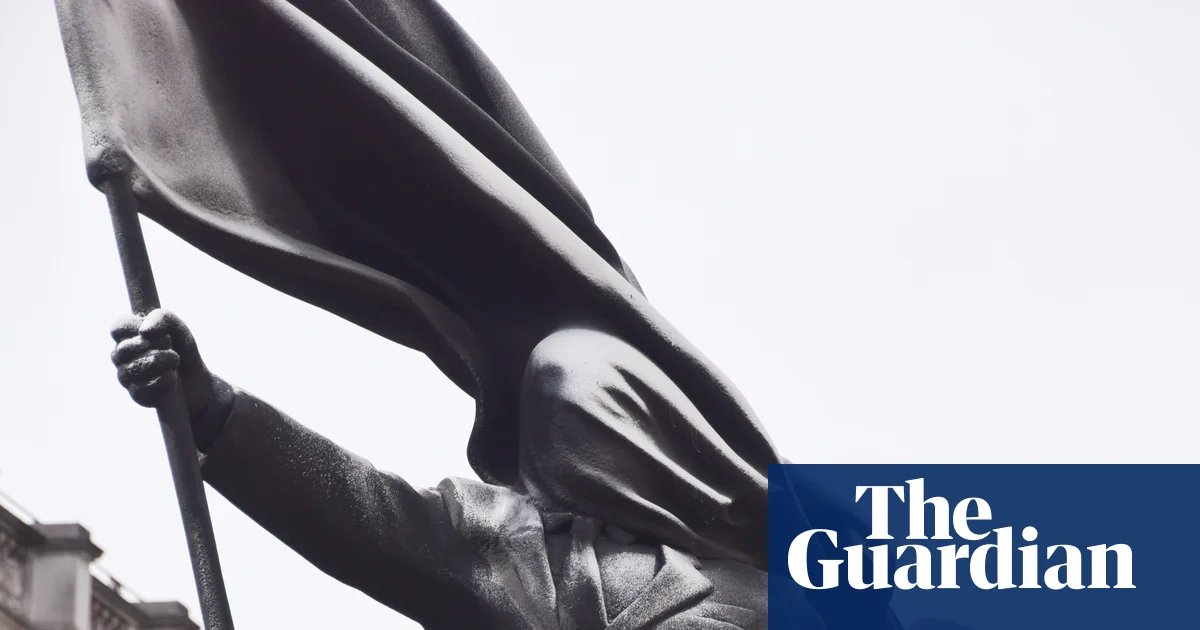
A new Banksy statue, featuring a man with his face covered by a flag, was this week erected in the dead of night in central London.
His new work of art was first spotted on Wednesday, and the artist’s signature was scrawled at the base of the statue’s plinth.
The elusive artist, known for his provocative works of graffiti, posted on Instagram on Thursday afternoon confirming the work was by him.
The sculpture depicts a man marching forward off a plinth while carrying a large, billowing flag that obscures his face.
A video Banksy posted on social media shows the statue being towed to Westminster in the dead of night, alongside shots of the nearby statue of Winston Churchill. In the clip, a man is asked his view of the statue and he says “no, I don’t like it”. The video juxtaposes the statue with British flags, a Beefeater soldier and a black cab.
The statue is situated in Waterloo Place in the St James’s area of Westminster, near statues of Edward VII and Florence Nightingale and the Crimean war memorial.
Though he is best known for his graffiti, Banksy has made statues before, including one named The Drinker, which he installed on Shaftesbury Avenue in London’s West End in 2004. It was a take on Rodin’s The Thinker and was removed shortly after being erected.
Banksy’s most recent confirmed work in London came in December when he said he was behind a mural that showed two children lying down and looking at the sky. It appeared to be a statement on homelessness as the children seemed to be pointing at the Centre Point Tower, which has long been a symbol of the homelessness crisis.
In September outside the Royal Courts of Justice he created a mural of a judge using a gavel to beat a helpless protester. This was during a period where many people were being arrested for holding signs related to the proscribed group Palestine Action. The artwork has since been removed and the court service said it was legally obliged to maintain the character of the building because of its listed status.
The news organisation Reuters recently claimed to have unmasked the artist as Bristol-based Robin Gunningham, apparently confirming the findings of a similar investigation conducted by the Mail on Sunday in 2008. Gunningham has denied this.
Banksy’s lawyer Mark Stephens told Reuters that the artist “does not accept that many of the details contained within your inquiry are correct” and said Banksy’s anonymity was critical as he had been “subjected to fixated, threatening and extremist behaviour”.