dailynewsnblog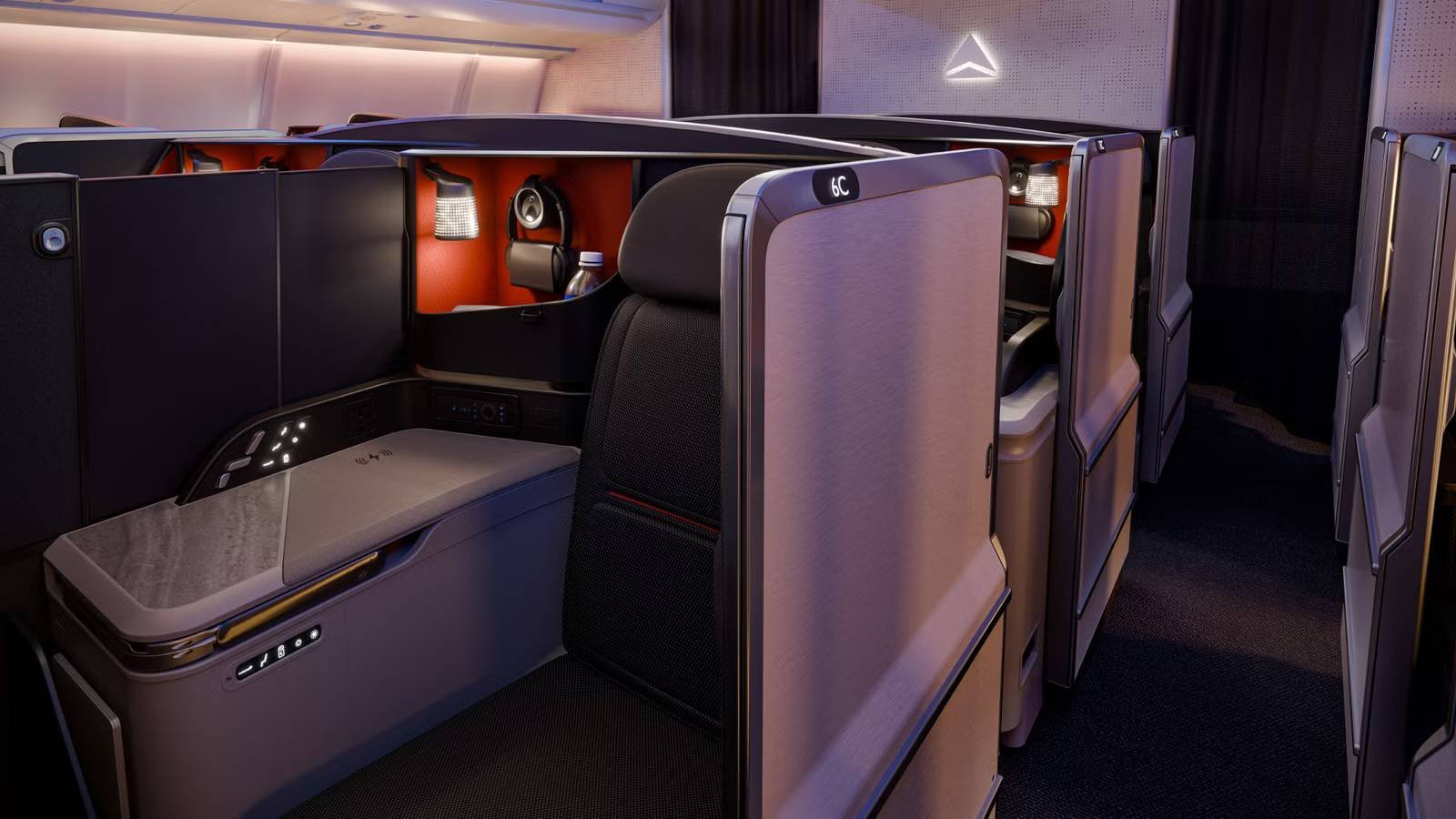
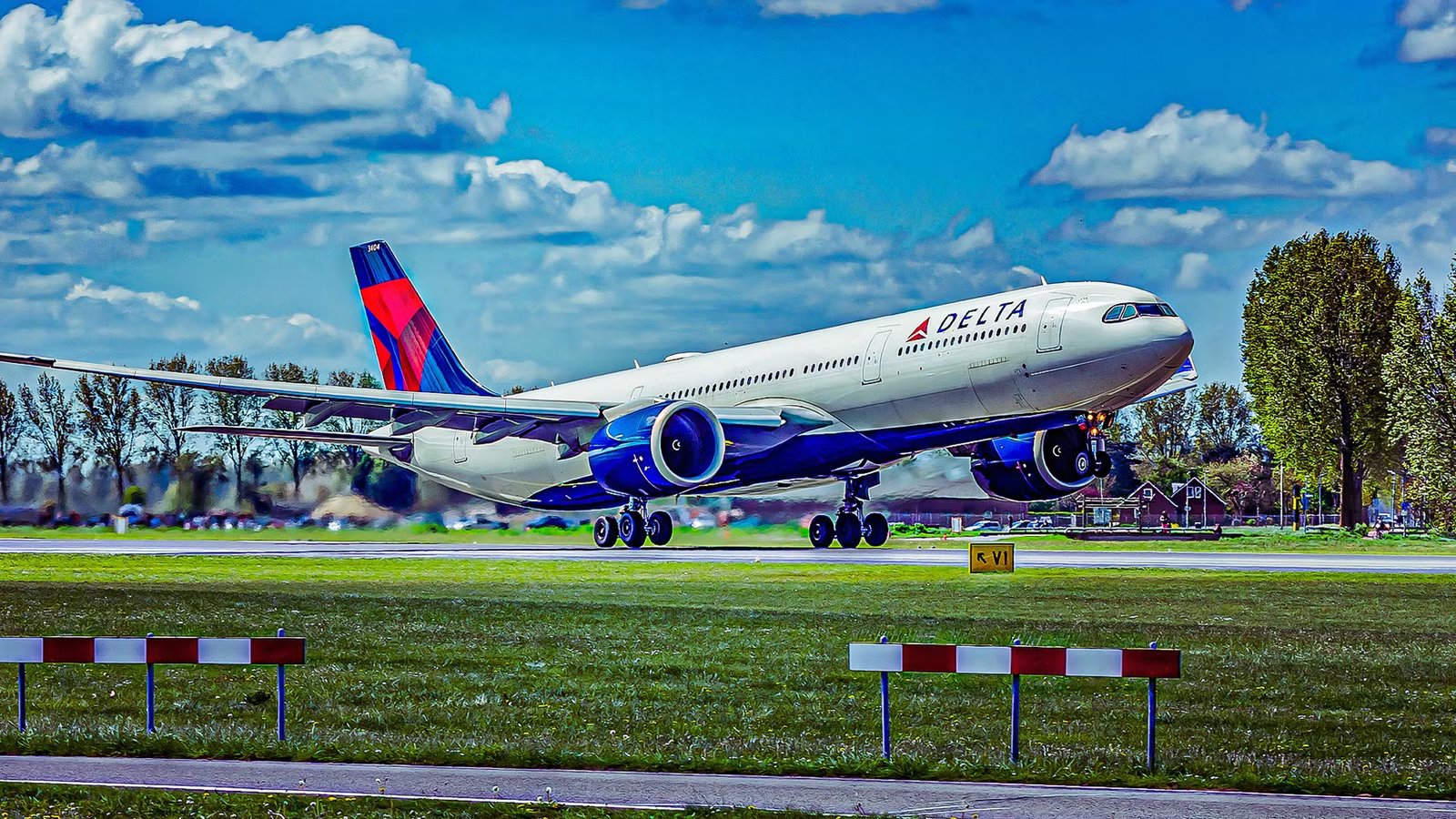
In the first quarter of 2026,  Delta Air Lines reported that premium revenue grew 14% year-over-year. At just $41 million shy of main cabin revenue, premium is on the verge of overtaking the economy for the first time in the airline’s 100-year history. The Airbus A350-1000, due to enter service in early 2027, is the airline’s biggest bet yet that the trend will continue.
But not all premium is the same. The A350-1000 will carry two very different products under the same roof: Delta One and Delta Premium Select. For passengers choosing between the two, the price difference can be significant. So can the difference in experience. This article looks at exactly what sets them apart on the A350-1000 and why that gap matters on routes that can stretch beyond 14 hours.
Delta Is Getting a New Flagship – And It’s Coming With a $1 Billion Price Tag

Delta Air Lines is preparing to take delivery of its most premium widebody jet yet. On January 12, 2024, the carrier ordered 20 Airbus A350-1000 aircraft, with deliveries beginning in early 2027. The jet will be powered by Rolls-Royce Trent XWB-97 engines and will burn more than 20% less fuel per available seat mile than the aircraft it replaces – making it both a commercial and environmental upgrade for the airline’s long-haul network.
What makes this order particularly significant is how Delta intends to configure the aircraft. As Simple Flying has reported, the A350-1000 will feature roughly 15% more premium seating than the jets it is set to replace. The confirmed layout includes 53 Delta One suites and 48 Premium Select seats – meaning 101 of the aircraft’s seats are premium before a single economy passenger boards. That is nearly half the entire aircraft dedicated to higher-yield cabins.
But the A350-1000 order is only part of the story. Alongside the new flagship’s arrival, Delta announced a fleet upgrade investment totaling more than $1 billion. As Delta reported in April 2026, this investment includes a nose-to-tail refresh of the airline’s existing Airbus A330-200 and A330-300 fleet. The goal is to create a consistent premium experience across the entire long-haul fleet, not just on the newest plane.
What Exactly Is Delta One on the A350-1000 – And What’s New About It?

Delta One has been the airline’s flagship business class product since 2017, when Delta became the first US carrier to introduce an all-suite business class cabin. The version coming to the A350-1000 is a significant step forward from what exists today. According to Delta, the new suite was developed over two years in partnership with Thompson Aero Seating. The result is a product designed from the ground up rather than simply updated.
The most tangible upgrade is the bed. Delta confirms the new suite features a flat-bed more than 3 inches longer than the current A350-900 version, extending to 83 inches (211 centimeters) – giving passengers just over six and a half feet of sleeping space. On top of that, the seat adds a new pillow-top cushion layered over the existing memory foam, plus Missoni-designed bedding. Delta says 97% of Delta customers cite the flat-bed as the primary reason they choose the cabin, which explains why so much of the redesign focused on sleep quality. Storage has also been rethought, with a dedicated shoe cubby, an amenity tray within reach of the flat-bed, and a hook for eyeglasses.
On the technology side, each suite comes with a 24-inch (61-centimeter) 4K QLED screen – Delta’s largest seatback screen ever – along with Bluetooth connectivity, wireless charging built into the console, and USB-C and universal AC power outlets. As Simple Flying has reported, the suites are arranged in a reverse-herringbone configuration, with window-facing outer seats and a sliding privacy window between center suites for passengers traveling together. Every seat in the cabin has a full-height sliding privacy door. For the first time on a Delta aircraft, the A350-1000 will also feature a dedicated walk-up refreshment station exclusively for Delta One passengers, available at any time during the flight.

Delta’s New “Suite Spot”: A350-1000 Debut Signals Premium Power Play
Delta’s A350-1000 launch signals a broader push to standardize and elevate premium flying.
Premium Select: The Middle Ground That’s Getting More Competitive

Delta Premium Select sits between Delta One and the main cabin. It is a premium economy cabin, but Delta positions it closer to a proper upgraded experience than a simple seat-pitch improvement. On the current A350-900, as Delta’s own product page confirms, Premium Select seats come with a fold-out adjustable footrest and leg rest, noise-canceling headphones, an elevated dining menu with complimentary wine, beer and spirits, a premium amenity kit, and Sky Priority check-in and boarding. Passengers also get access to Delta Studio entertainment on a dedicated seatback screen.
On the Airbus A350-900, Premium Select features a dedicated cabin with wider seats and greater legroom compared to the Main Cabin. These figures are confirmed by NerdWallet’s detailed guide to the product. The A350-1000 will feature a Premium Select cabin, though Delta has yet to officially confirm whether it will retain the 48-seat, 2-4-2 layout found on the A350-900. What changes on the new aircraft is the technology package. According to Delta, every seat across all cabins on the A350-1000, including Premium Select, will feature Delta’s largest seatback screens ever, with cinema-quality 4K resolution, Bluetooth connectivity, USB-C and universal AC power outlets, and memory foam cushions. That is a notable upgrade from the 13.3-inch screens currently found in Premium Select on the A350-900.
Financially, Premium Select has become central to how Delta thinks about its long-haul revenue. As Simple Flying has reported, Delta has shifted to a business model in which premium cabins account for more than half of total revenue – and Premium Select is playing a significant role in that equation. It captures passengers who want more comfort than economy but are unwilling or unable to pay for Delta One.
The Seat-by-Seat Differences That Actually Matter to Passengers

The most fundamental difference between Delta One and Premium Select is one that no number of amenities can bridge: the bed. Delta One on the A350-1000 reclines into a fully flat surface measuring 83 inches (211 centimeters) in length, which is more than six and a half feet. Premium Select does not lie flat at all. It reclines to a deeper angle than a standard economy seat and features a fold-out leg rest and footrest, but passengers remain in a seated position throughout the flight. On a transatlantic hop of seven or eight hours, that distinction is manageable. But on a 13-hour transpacific crossing to Tokyo or Seoul, it is the difference between arriving rested and arriving exhausted.
The privacy gap is just as significant. According to Delta, every Delta One suite on the A350-1000 comes with a full-height sliding privacy door, in-suite mood lighting, wireless charging, a dedicated shoe cubby, and a stone inlay console. The suite is genuinely enclosed, so passengers can shut the door, dim the lights, and have no interaction with the rest of the cabin. Premium Select, by contrast, is an open cabin. Seats are wider and more comfortable than in economy, but there are no dividers, doors, or suite structure. As Simple Flying has noted, Delta has deliberately chosen to keep the Delta One experience uniform across all 53 suites. Every passenger in that cabin gets the same product, the same screen size, and the same door. Premium Select passengers get a significantly improved seat, but they are sharing an open cabin with 47 other people.
The screen sizes also diverge. Delta One suites on the A350-1000 feature a 24-inch (61-centimeter) 4K QLED display – the largest seatback screen Delta has ever installed on any aircraft. As Delta confirmed, all cabins on the A350-1000 will receive upgraded screens with cinema-quality resolution, a step forward for Premium Select as well. But the suite screen remains significantly larger than what Premium Select passengers will have access to. Add to that the wireless charging, the Missoni bedding, the dedicated refreshment station exclusively for Delta One customers, and the walk-up snack access at any hour, and the two products, while sitting on the same aircraft, are designed to deliver meaningfully different experiences.

What Can You Experience On Delta Premium Select?
Delta’s Premium Select cabin is located between Delta One and Economy cabins.
How the A350-1000’s Cabin Mix Compares to What Delta Flies Today

On the standard A350-900 – Delta’s existing long-haul workhorse – Simple Flying’s seat map data shows a configuration of 32 Delta One suites, 48 Premium Select seats, and 226 seats across the main cabin, for a total of 306 passengers. The A350-1000 will carry 53 Delta One suites and 48 Premium Select seats, meaning Delta One alone grows by 21 seats compared to the current flagship configuration. The total premium seat count rises from 80 to 100, before a single economy seat is counted.
That shift is significant because it changes the entire revenue profile of each departure. As Simple Flying has reported, the A350-1000 will feature roughly 15% more premium seating than the aircraft it replaces – and that increase is concentrated almost entirely in Delta One. The A350-1000 features 48 Premium Select seats, with the cabin’s expansion primarily concentrated at the top end.
The contrast with the current fleet also extends to technology and consistency. On the existing A350-900, as Simple Flying’s best seats guide notes, Delta flies multiple interior configurations under the same aircraft designation – including ex-LATAM subfleet jets that in some cases lack Premium Select entirely and feature an older 2-2-2 business class layout without suite doors. The A350-1000 introduces a clean slate – a single, unified configuration with next-generation suites across all 53 Delta One seats and a consistent Premium Select cabin behind it.
Where These Jets Will Fly – And Why the Routes Matter

According to Delta, the A350-1000 aircraft is designed for long-haul international and hub-to-hub missions, powered by Rolls-Royce Trent XWB-97 engines that give it the range to operate routes exceeding 15 hours without payload restrictions. The transpacific market is the most obvious target. As Simple Flying has reported, Delta’s A350-1000 will be particularly focused on routes out of Los Angeles, where demand for premium seats on flights to Tokyo, Seoul, and potentially Singapore and Sydney is consistently strong.
The aircraft’s premium-heavy configuration also makes it well-suited to Delta’s joint venture with Korean Air, which gives the airline a significant presence at Seoul Incheon International Airport (ICN). Simple Flying has noted that Delta’s foothold at Tokyo Haneda – one of the most slot-constrained and high-yield airports in Asia – is another natural fit for the A350-1000.
Deliveries are scheduled to begin in early 2027, with the A350-1000 gradually taking over the most demanding routes in Delta’s network. For passengers choosing between Delta One and Premium Select on these new jets, the decision comes down to one simple question: How important is a flat bed and a door? On a flight to Tokyo, most people who have tried both already know the answer.