dailynewsnblog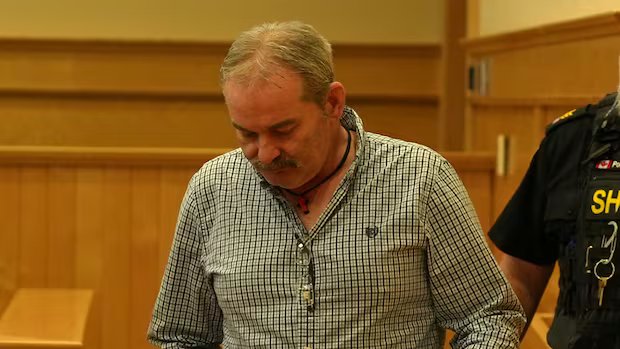
Jennifer Hillier-Penney’s DNA was present in Dean Penney’s St. Anthony, N.L., garage, but the presence of blood wasn’t confirmed.
That’s according to a report from the RCMP written in the months following a 2023 examination.
Laurie Karchewski, a forensics specialist at the RCMP’s national lab in Ottawa, testified on Wednesday that a stain containing DNA was found near the ceiling on a wall above the freezer in the garage.
“The DNA evidence is 1.9 quintillion times more likely to be observed [that] it originated from Hillier-Penney, rather than if it originated from an unknown, unrelated individual selected at random,” Karchewski said.
“That number provides very strong support … that that DNA evidence matches the profile to Hillier-Penney.
The details of seven forensic analysis reports Karchewski authored between March 2017 and November 2024 were explored at Supreme Court in Corner Brook on Wednesday.
Karchewski told the court that the DNA profile used to identify Hillier-Penney, who has been missing since Nov. 30, 2016, was created using her toothbrush.
Dean Penney, Hillier-Penney’s estranged husband, is charged with first-degree murder in her death and disappearance. He has pleaded not guilty, and her body has never been found.

But although DNA was found in one spot, Karchewski said testing identified no other locations in the garage that had Hillier-Penney’s DNA.
Forensic analysts also tested 93 exhibits taken from the garage. The court saw photos taken before and after on-site forensic screening tests in December 2023. They showed the presence of iron — found in hemoglobin in the blood — along parts of the garage floor, stairs and Penney’s gun safe.
According to a confession Dean Penney gave to an undercover officer, Hillier-Penney hit her head on the safe when he allegedly pushed her down the stairs on Nov. 30, 2016.
Lawyers have argued he was pressured into making the confession.
Karchewski said that although the samples showed presumptive positive results for the presence of blood at on-site testing, confirmatory tests in a lab either came back negative or weren’t done at all to prioritize DNA testing.
Blood vs. DNA
DNA testing is a way to uniquely identify a person in cases like this one, but it can also come at the cost of not testing for the presence of blood on a piece of evidence.
Karchewski said that in some cases, a recorded sample is so small that both DNA and blood testing can’t be completed. DNA testing takes priority because of its ability to more strongly identify a person, which means testing for blood isn’t always done.
During her testimony, Karchewski told Crown attorney Kate Ashton that DNA can remain present in an area like Penney’s garage years after it ends up there. However, cleaning the area could alter its ability to be found.

In the recorded confession Penney gave to the undercover RCMP officer posing as a crime boss in the weeks before the forensic examination, Penney spoke of cleaning the garage with bleach after the fight.
He told the crime boss Hillier-Penney was bleeding from her head and ears after falling down the set of stairs. On Dec. 8, 2023, he told the officer a “big splatter” came from Hillier-Penney’s head after he hit her with a small hammer at the bottom of the stairs.
“If you use bleach … it will disrupt the cells that contain DNA, or it will also wash away the components of the biological stain and cause it all to degrade to the point where it can’t be detected,” Karchewski said.
She added that bleach can also give presumptive screening tests a false positive for the presence of blood, and that even something like water could wash away a biological stain.

Dean Penney’s first-degree murder trial continued in Corner Brook on Wednesday, with DNA experts and nearly 700 pages of text messages between Penney and Jennifer Hillier-Penney explored in court. The CBC’s Colleen Connors was there and has this report.
In his cross-examination, defence lawyer Jeff Brace limited questions around DNA — instead focusing on the lack of confirmation of blood at the scene.
He did, however, tell the court that the finding of DNA shouldn’t be surprising as a whole due to the fact that Hillier-Penney was living in the house.
Jury begins reading husband and wife’s texts
Wednesday afternoon began with the testimony of Craig Collins, a civilian member of the RCMP who was working with the digital forensics section in December 2016.
Collins pulled data, including text messages, phone call data, GPS locations and more, from Hillier-Penney’s phone — which was left behind following her disappearance.
The data includes several months of texts between Penney and Hillier-Penney. The last recorded message was sent on Nov. 30, 2016, at 7:17 p.m. NT.
The data was extracted from Hillier-Penney’s about a week later, Collins said.
The jury was presented with a binder of the text messages the estranged couple shared between Sept. 17 and Nov. 30, 2016 — totaling 670 pages.

Speaking to the jury while court was in session, Justice Vikas Khaladkar said the court went back and forth as to the best way to present the text messages to the jury.
An audio recording was considered, but Khaladkar said he was worried a re-enactment would include vocal tone and inflection not seen in the messages.
As a result, lawyers removed their belongings from the tables at the centre of the courtroom to make way for jurors. Jurors began reading the text messages to themselves shortly after 2:30 p.m. NT on Wednesday.
In his testimony, Collins said he reviewed the messages over the course of a week leading up to his appearance in court. He believed reading the messages could take an entire day.
Penney is required to be in the courtroom for the entire reading process. Brace was also present, as were the lawyers representing the Crown.
The trial will resume on Thursday.
Download our free CBC News app to sign up for push alerts for CBC Newfoundland and Labrador. Sign up for our daily headlines newsletter here. Click here to visit our landing page.