dailynewsnblog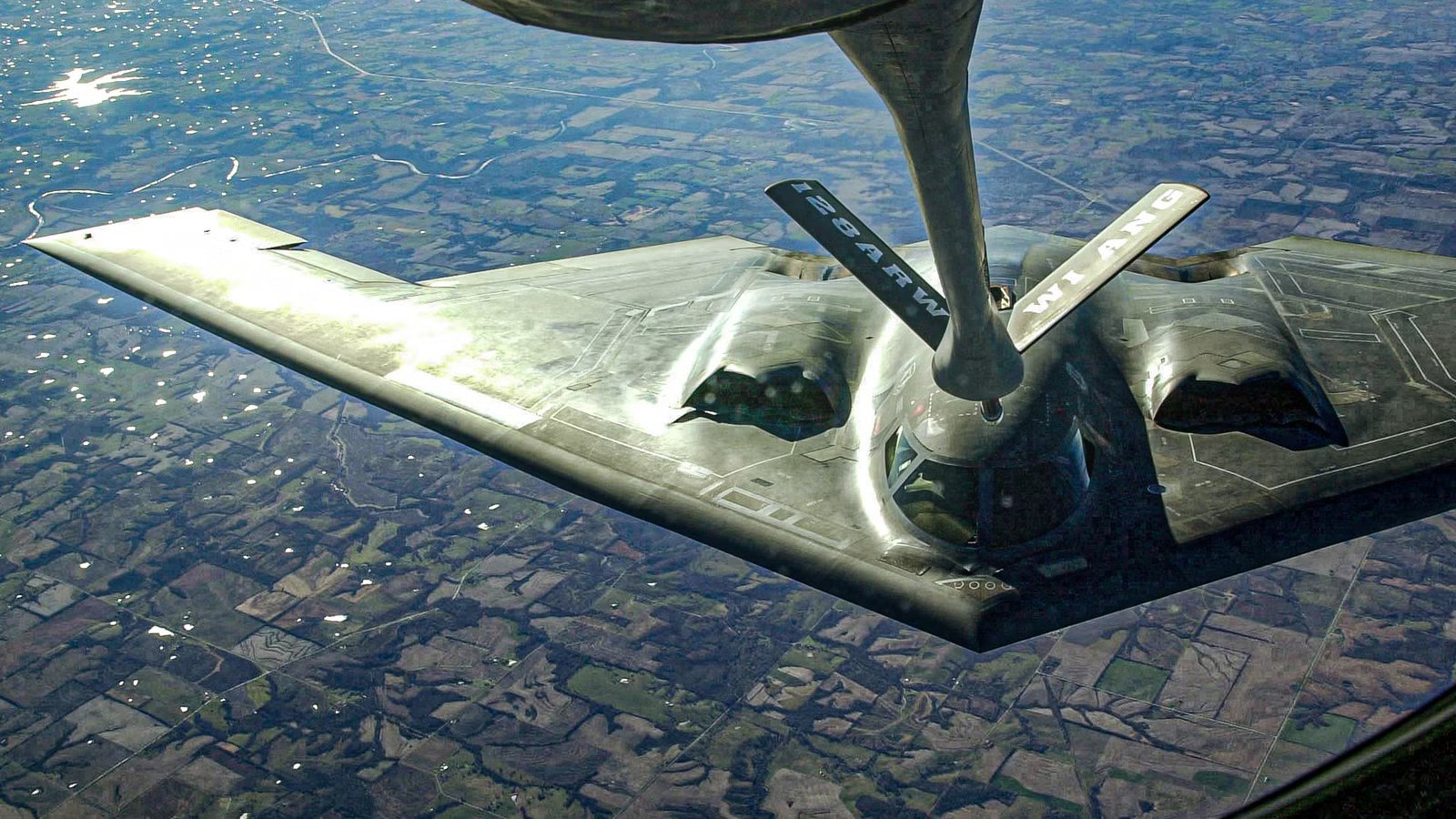
The advantages of the Northrop B-2 Spirit for long-range stealth strategic bombing missions are such that it is currently the only aircraft in service in the world able to carry them out. At least that is true until the B-21 Raider comes into service in 2027. All the world’s other strategic bombers, including the B-1 Lancer, the B-52 Stratofortress, the Chinese J-6, the Russian Tu-95, the Russian Tu-160, and the Russian Tu-22 (not really a strategic bomber), are not stealthy.
Of these, the Rockwell B-1 Lancer has a significantly lower radar cross-section, but that doesn’t make it a stealth bomber. All of these bombers can only be used as stand-off missile trucks for missions where enemy air defense is intact. They can only carry out true bombing runs after enemy air defense has been destroyed, otherwise they will likely be lost in unacceptable numbers. Here are some things that make the B-2 well-suited to stealth bombing missions, and why it’s in need of replacement.
Reduced Radar Cross-Section
Reported RCS of 0.0001 square meters

The most obvious factor is the B-2’s reduced radar cross-section. GlobalSecurity.org gives the frontal radar cross-section for the Spirit as around 0.0001 square meters. This is the lowest value of any aircraft on the list. However, this number should be taken with a pinch of salt. The radar cross-section of aircraft like the B-2 is classified, and so these values are educated guesses. Another factor is that the RCS can change over time with upgrades, including by applying more advanced radar-absorbent coatings like those the F-35 has received.
Also vitally important is the angle from which the aircraft is being observed. Even if the radar return from the front is too small for a radar to detect and track, that doesn’t mean the radar return from the aircraft’s side or rear is small. In the case of the B-2, its front and sides tend to be better optimized, but not so much the back. Yet another important factor is that there are multiple frequencies that aircraft can be optimized for. Just because it is extremely hard to detect in one frequency band, it doesn’t mean it isn’t visible in another.
The B-2 is designed to be a broadband stealth platform, reducing its radar returns across a wide spectrum of radar frequencies. It is known to be particularly effective against high-frequency bands like the X, Ku, and K Bands. At the same time, its shape and advanced radar-absorbent materials (RAM) allow it to absorb electromagnetic waves across the 2–18 GHz range.
Broadly Low-Observable
17,300 lbf per engine

While a reduced RCS from its platform alignment, curvature, S-duct intakes, and radar-absorbent material is the most famous and important factor in being a low-observable bomber, it is far from the only one. Other important ways in which it reduces its signature are with thermal/infrared (IR) management, electronic emissions (LPI), and by reducing visual and acoustic signatures. To reduce its infrared signature, the B-2 uses a top-side exhaust, and it uses flat and wide exhaust ports that help spread the hot air out over a larger surface area.
This allows the hot and cold air to mix faster. Behind the exhaust on the aft-deck are also heat-resistant tiles. The four engines are mounted inside the wing. Being “buried” allows the aircraft to reduce direct exposure of hot engine components. Having buried engines also helps to mask some mechanical noise and therefore reduces the acoustic signature of the aircraft. Having a smoother airflow over the airframe also reduces noise, as does flying at a much higher altitude than the B-1.
While reducing electronic emissions is not part of the B-2’s aerodynamic advantages, they are vitally important to reducing its detectability. The aircraft uses Low Probability of Intercept (LPI) by using passive sensors and its AN/APQ-181 radar, which allows it to frequency hop over a broad spectrum. But while the B-2 includes a range of factors to reduce detectability, the B-21 is poised to take this into overdrive with its all-aspect stealth and countermeasures.

This Is How Powerful The B-2 Spirit Bomber Is
The B-2 is famous for its stealth, but how much punch does it pack? Let’s find out.
Longer Range From Flying Wing Design
Approx. 6,000 nautical miles unrefueled range

One of the limitations of aircraft is how far they can fly without needing to be refueled. Aerial tankers are an Achilles heel of combat aircraft as they are generally easy to see and easy to target. This is something similar to a gas-hungry main battle tank; the tank may be heavily armored and difficult to destroy, but the diesel truck is another matter entirely. The B-2’s flying wing is designed not only to aid in stealth, but it also makes it extremely efficient aerodynamically.
This comes at the expense of maneuverability and stability, but the B-2 doesn’t need extreme maneuverability, and advanced fly-by-wire controls compensate for stability. The B-2 blends most of the aircraft into one lifting body/wing, allowing more of the aircraft’s surface to contribute lift, boosting its lift-to-drag ratio. The result is that the B-2 can fly with low drag and achieve an efficient high-subsonic cruise.
One of the leading reasons why flying wing designs are attractive for long-range bombers is the lift-to-drag ratio. By eliminating the vertical tail and a separate wing attached to the body, B-2s offer minimal interference drag between the wing and the fuselage, as well as no drag from tail surfaces. Being fuel-efficient in the military isn’t about being “green” or saving money. It’s about increasing range, decreasing reliance on tankers, and having the option to carry more munitions instead of fuel.
Carries Munitions Internally
Publicly disclosed 40,000 lbs payload

One of the most significant aerodynamic features of the B-2 Spirit is that it carries its munitions internally. Carrying munitions externally produces major radar reflections, adds drag leading to higher fuel burn, contributes to turbulence, and reduces the aircraft’s range. The B-2 has large internal weapons bays in its center section, which can be configured with rotary launchers or racks, depending on its mission. It can carry a combination of precision-guided bombs, gravity bombs, standoff weapons, and nuclear weapons.
However, this comes at some cost. Notably, internal bays limit the size and quantity of the munitions. Developing high-end munitions to fit into these bays can be extremely expensive and can take a long time. This is why the B-2 (and B-21) are better for high-value precision strikes, and older bombers like the B-1 and B-52 can bring the needed mass of munitions once conditions become permissive. Of the three bombers, the B-2 has the lowest payload capacity at officially 40,000 lbs, although this is an understatement as it can carry two 30,000 GBU-57 bunker busters with less internal fuel.
The B-21 will also carry its munitions internally and will have a reduced publicly disclosed payload of up to 30,000 lbs. For comparison, the B-1 Lancer can carry up to 75,000 lbs in payload. The air defense environment is now such that the B-21 can’t operate as the B-1 was designed and envisioned to operate. Carrying munitions internally is no longer a luxury; it is an imperative for high-end penetrator combat aircraft. All other stealth aircraft, like the F-22, F-35, J-20, and others, carry their munitions internally. The Korean KF-21 will also carry munitions internally with planned block upgrades, while the Su-57 will do the same when Russia can get the internal bays to work properly.

Here’s Why The Northrop Grumman B-21 Raider Is Replacing The B-2 Spirit
As the B-2 is aging, out of production, and not available in sufficient numbers, the Air Force needs a fresh next-generation replacement bomber.
Tube-And-Wing Designs Now Obsolete
19 operational B-2 airframes remaining

The B-52 is the last of the line of WWII tube-and-wing bombers that includes the B-17, B-29, and B-36. The advantage of these aircraft is that they are relatively simple and have plenty of flight hours, as fatigue is less. However, they also have the radar return of an apartment block and practically zero maneuverability. This limits them to operating outside of contested airspace with expensive stand-off munitions, at least until enemy air defense is comprehensively degraded.
Even the mid-to-late Cold War variable geometry bombers like the B-1 Lancer, Tu-22M3, and Tu-160 are vulnerable to the point of being obsolete in highly contested airspace. While these aircraft are capable of supersonic dashes, that is no longer the advantage it once was, and there are no reports that they have flown supersonic speeds on missions in Ukraine and Iran. The low-altitude flying of the B-1 has also worn out the airframes, and the rickety old fleet is in need of replacement. As the USAF plans to retire its remaining 48 B-1s by around 2032, Russia is putting its large Tu-160 into production.
For Russia, the Tu-160 is a prestige aircraft that it thinks it needs to continue to have a seat at the table of great powers. Making stealth flying wing bombers is hard. But while Russia is forced to look back to the outdated, status-symbol Tu-160, more technologically advanced countries are looking to replicate the success of the B-2’s aerodynamic advantages for their next generation of strategic bombers. The US Air Force is now flying (test flying) the B-21, which is a generational upgrade on the B-2, while China is working to develop its Xi’an H-20 bomber that also follows the lead set by the B-2.