dailynewsnblog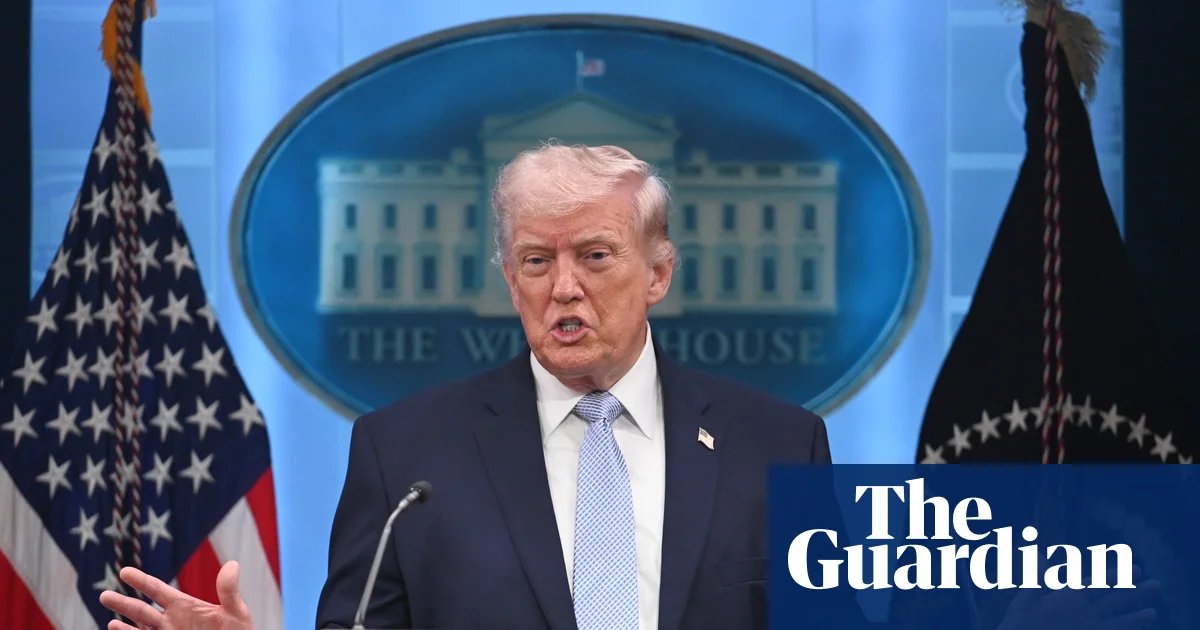
Donald Trump is learning first-hand about the perils of mission creep.
The US-Israel war in Iran has just passed its eighth week – twice as long as the president predicted it would take when US warplanes launched their joint attack with Israeli forces to decapitate the Iranian leadership and paralyse its military. The military attacks were successful. The predictions about the political cause-and-effect to follow were not.
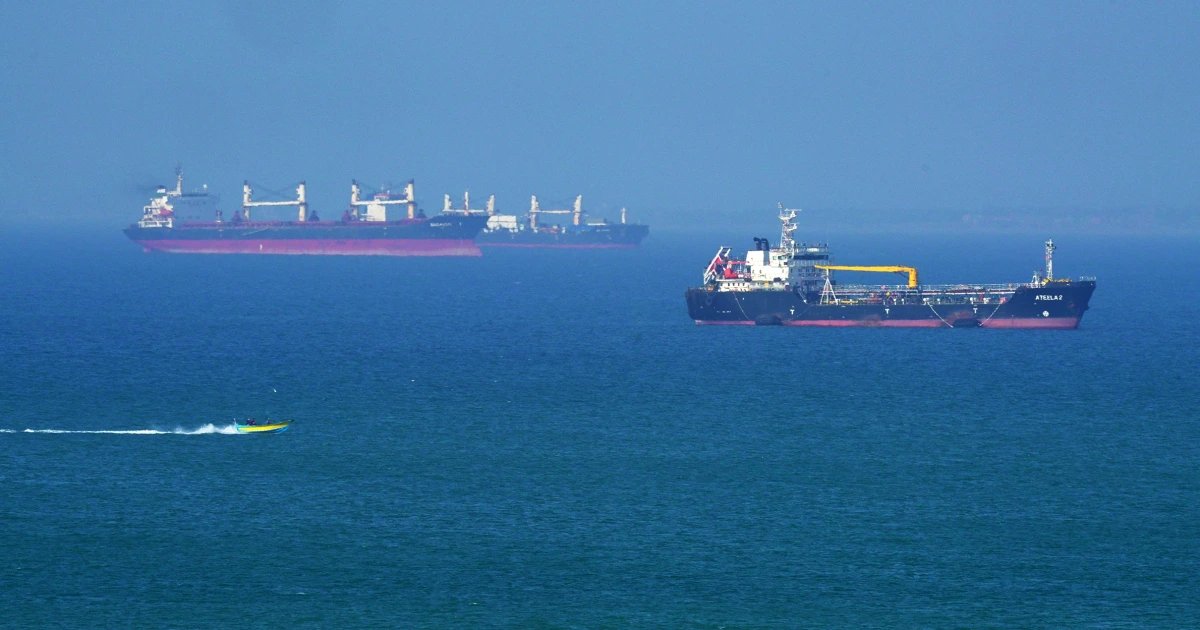
Iran has survived the initial strikes and remains defiant, closing the strait of Hormuz in a move that has blocked off a fifth of the global oil trade. The US has responded with its own blockade to lock in Iranian oil, inflicting losses of an estimated $500m daily on Tehran and threatening the country’s long-term energy production – but negotiations have stalled and it is not clear if the White House is willing to withstand the pain of a sustained economic war or the risk of a military operation to open the strait.
“This has gone from being a war of choice to a war of necessity,” said Aaron David Miller, an analyst at the Carnegie Endowment and a former US diplomat and Middle East negotiator.
The war had transformed from a conflict involving Iran, the US and Israel to a “global economic crisis which shows no signs of abating”. Just this week, petrol prices in the US approached a four-year high, and they are expected to continue to rise before a crucial midterm election that could allow the Democrats to retake congress.
“The status quo is not tolerable … there has to be a fix to it,” Miller said. “It strikes me that the administration is in a very tough spot.”
But the solution remains elusive. One option would be to negotiate a temporary reopening of the strait of Hormuz but to delay nuclear talks on the fate of the more than 400kg of highly enriched uranium (HEU) – as well as the country’s right to enrich uranium in the future.
But the New York Times has reported that Trump is “unsatisfied” with Iran’s most recent proposals to open the strait of Hormuz to tanker traffic: Tehran has indicated it is unwilling to negotiate on its nuclear programme and is ready to reopen the waterway only if it is paid for transit – a concession that could set an unwelcome precedent at key conduits for shipping freight around the world.
Trump has remained bullish in public, claiming on social media on Tuesday that Iran admitted to being in a “state of collapse” and that “they want us to ‘Open the Hormuz Strait,’ as soon as possible, as they try to figure out their leadership situation (Which I believe they will be able to do!).” But previous rounds of negotiations have ended inconclusively, and the latest attempts to dispatch his Middle East envoys, Steve Witkoff and Jared Kushner, were cut off abruptly by the president.
At heart, the Trump administration wants to avoid signing a deal that would lay bare the fact that the White House has fallen short of its goals in Iran – a measure that could be made clear by comparisons to the Joint Comprehensive Plan of Action (JCPOA), an Obama-era deal signed in 2015 that limited but did not eliminate Iran’s right to enrich uranium. Trump pulled the US out of the deal in 2018.
Former negotiators of the JCPOA have told the Guardian that Iran’s closure of the strait of Hormuz, a line it was not previously willing to cross, had fundamentally altered the negotiations: Iran now has a weapon that one said was far more convenient than a nuclear weapon itself.
Trump’s other options are equally unsavoury. One is to escalate with a mission to open the strait militarily. That would probably be far more difficult than the escort operations during the tanker war of the mid-1980s, when US warships convoyed with neutral shipping to run a gauntlet of Iranian and Iraqi attacks that killed more than 440 sailors, as well as dozens of US service members, and damaged 400 ships.
Dennis Blair, a former head of US Pacific Command and director of national intelligence, argued in a recent article that opening the strait would be possible by placing detachments of sailors onboard an initial convoy of about 20 oil tankers, then deploying six to 10 destroyers to intercept small boats, missiles and drones, other ships and submarines to disable mines and then jets, attack helicopters, and raiding parties to counterattack against IRGC firing positions.
A “small number of the weapons fired by IRGC forces would penetrate the layered convoy defenses, inflicting damage and some casualties,” he wrote. “But the navy combatants are tough, with good damage-control capabilities, and many of the tankers are huge, up to four times the size of an aircraft carrier. They do not sink from a few missiles, drones, and mines.”
The other, even less palatable option is a full assault on Iran’s civilian infrastructure or an invasion force, but there are no guarantees that would coerce the government into bending to Trump’s will.
The vacuum of leadership in Iran is a problem largely of the US and Israel’s own making. The targeted strikes that killed Ali Khamenei – and injured his son, the new supreme leader Mojtaba Khamenei – removed a leader who was capable of uniting the clerical, political and military circles, including the IRGC. In a recent Truth Social post, Trump admitted as much, saying: “Iran is having a very hard time figuring out who their leader is! They just don’t know!”
“The infighting is between the ‘Hardliners,’ who have been losing BADLY on the battlefield, and the ‘Moderates,’ who are not very moderate at all (but gaining respect!), is CRAZY!”
But Trump has his own advisers taking a hard line on Iran – and he has also shown that he is ready to follow Benjamin Netanyahu’s lead on Iran policy. As they push increasingly for Iran to agree to no nuclear enrichment and to open the strait of Hormuz, the Iranian position appears to be hardening as well.
And voices of criticism on the left and right are growing louder, especially as the war exacerbates the US’s affordability crisis just months before the midterms.
“This is the outcome that Trump and Netanyahu have created,” said Matt Duss, the executive vice-president at the Center for International Policy and a former foreign policy adviser to Bernie Sanders.
“Many of us warned about exactly this, but these people have this kind of weird, completely unjustified religious belief in the capacity of military force to produce magical outcomes. And once again, they’ve been shown to be completely full of crap.”