dailynewsnblog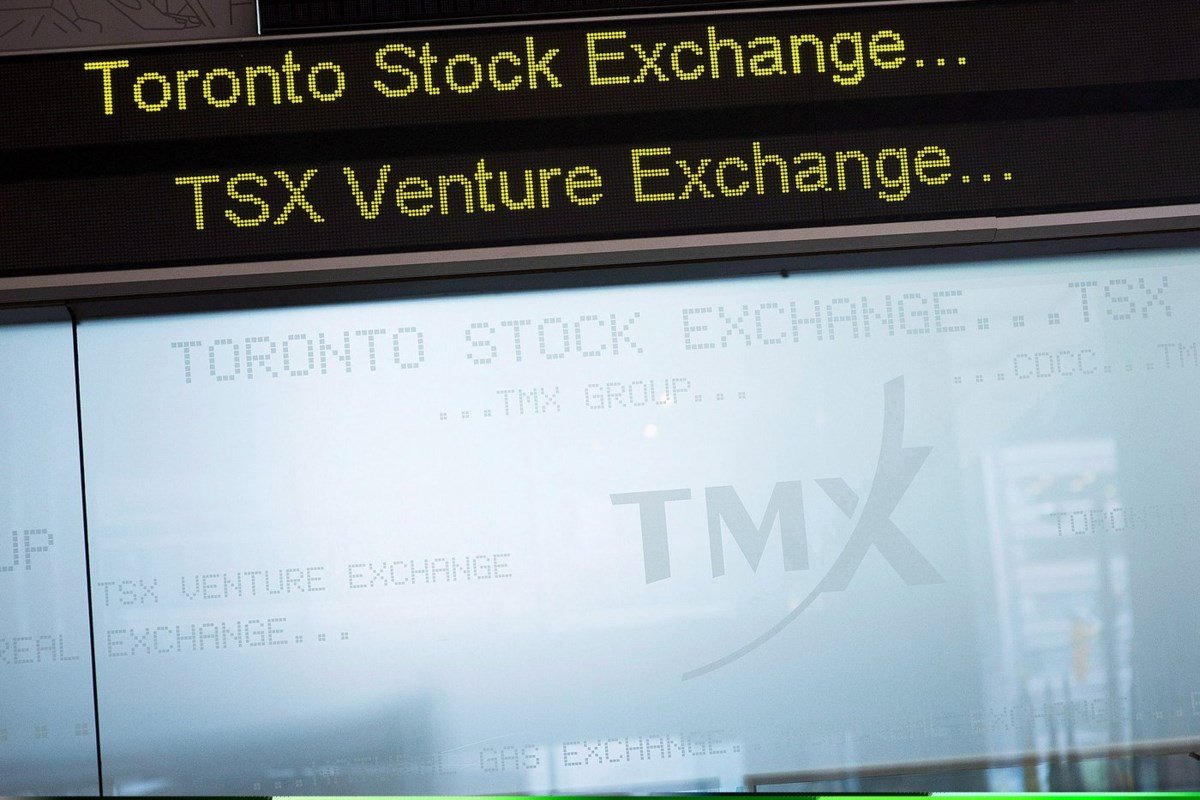

TORONTO — Stock markets in Canada and the U.S. moved lower on Tuesday amid losses in tech stocks and rising oil prices due to the Middle East conflict.
TORONTO — Stock markets in Canada and the U.S. moved lower on Tuesday amid losses in tech stocks and rising oil prices due to the Middle East conflict.
“I think this has been the theme for the last little while — when oil’s up, everything else goes down, and today, oil’s up and everything else is down,” said Brian Madden, chief investment officer with First Avenue Investment Counsel.
“You see pockets of strength on the TSX in oil particularly, but the U.S. markets are trading lower ahead of the big hyperscaler earnings in the next few days.”
The S&P/TSX composite index was down 233.85 points at 33,584.34.
In New York, the Dow Jones industrial average was down 25.86 points at 49,141.93. The S&P 500 index was down 35.11 points at 7,138.80, while the Nasdaq composite was down 223.30 points at 24,663.80.
In the U.S. market, stocks in the artificial-intelligence industry led the way lower. Chip company Broadcom was the heaviest weight on the S&P 500 after sinking 4.4 per cent. Drops of 1.6 per cent for Nvidia and 3.9 per cent for Micron Technology also undercut the market.
The weakness came after a report in The Wall Street Journal said some leaders at OpenAI are concerned about whether it can support its massive spending on data centers after missing targets for new users and revenue.
If the maker of ChatGPT pulls back on its investments, it could bolster criticism that the entire AI industry is in a bubble of over-the-top spending that may not produce the profits and productivity that would make it all worth it.
Also weighing on the stock market was another rise for oil prices on continued uncertainty about what will happen with the Iran war.
The June crude oil contract was up US$3.56 at US$99.93 per barrel.
The price for a barrel of Brent crude oil to be delivered in June climbed 2.8 per cent to settle at US$111.26.
The focus is on the Strait of Hormuz, whose effective closure is keeping oil tankers stuck in the Persian Gulf instead of heading to customers worldwide. The Trump administration seemed unlikely Tuesday to accept Iran’s offer to reopen the strait if the U.S. lifts its blockade on the country.
The proposal would postpone discussions on the Islamic Republic’s nuclear program, something that U.S. Secretary of State Marco Rubio appeared to rule out in a Fox News interview Monday.
“It’s sort of a frozen conflict. I guess you have a tentative ceasefire, but not a full peace treaty and the germane part of that for the oil market is that nothing much is flowing through the Strait of Hormuz yet,” Madden said.
On Wednesday, the Bank of Canada and the U.S. Federal Reserve are scheduled to make interest rate announcements. Both central banks are expected to hold rates steady.
Madden said investors will be watching for commentary from both central banks, which are unlikely to “tip their hand” regarding the path of interest rates.
The June gold contract was down US$85.30 at US$4,608.40 an ounce.
The Canadian dollar traded for 73.07 cents US, according to XE.com, compared with 73.45 cents US on Monday.
This report by The Canadian Press was first published April 28, 2026.
Companies in this story: (TSX:GSPTSE, TSX:CADUSD, TSX:CLS)
— with files from The Associated Press
Daniel Johnson, The Canadian Press