dailynewsnblog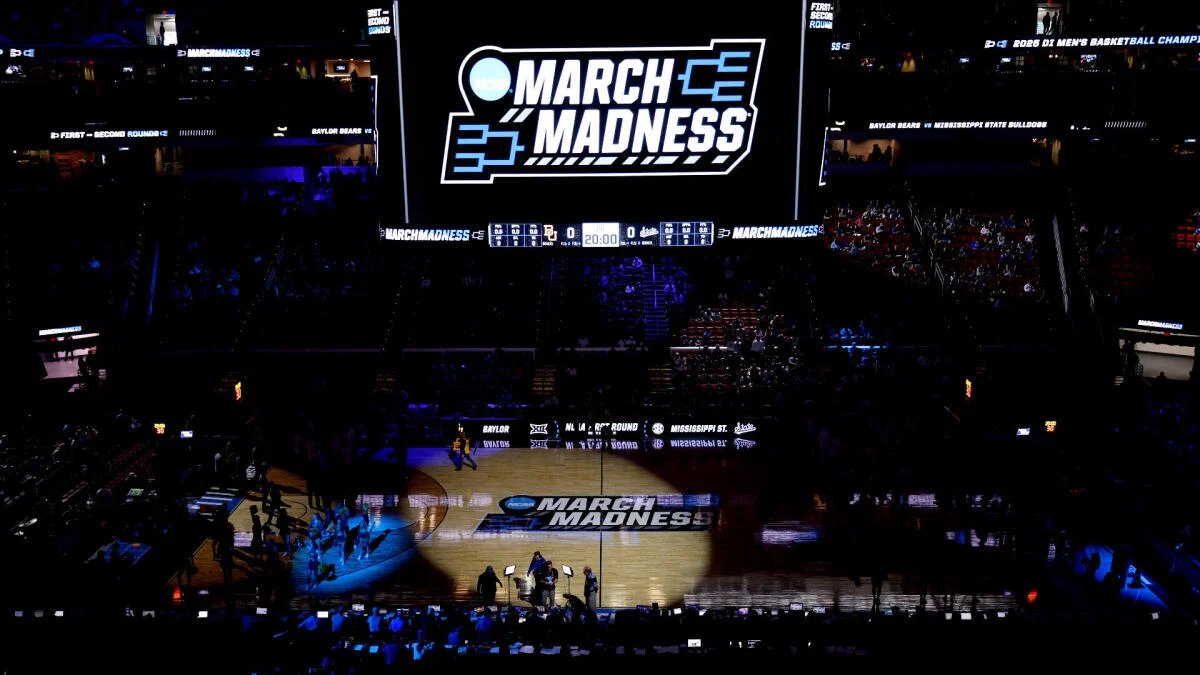
The long-awaited inevitability is nearly a reality. Both the men’s and women’s NCAA basketball tournaments are expected to expand to 76 teams, effective next year, sources told CBS Sports on Tuesday.
A formal announcement by the NCAA is expected in May, after every necessary committee officially ratifies the change in the near future.
Expansion has been discussed and debated at the NCAA level for four years. Proponents — particularly conference commissioners, head coaches and NCAA president Charlie Baker — have celebrated the idea of more access. Inversely, adversaries insisted it would lessen the significance of the regular season, deteriorate the quality of March Madness and be a net-negative for the sport. In the end, the argument for a bigger tournament that will eventually generate additional revenue apparently won out.
Although a decision has not formally been voted on yet, one source said it’s a “very, very small chance” that any reversal would happen in the next week. A slew of NCAA groups, including the men’s and women’s oversight committees, the men’s and women’s basketball selection committees, the Division I cabinet and the Board of Governors all need, and are expected to, approve the move in the short-term.
ESPN first reported the development Tuesday evening. In response to that story and this one, the NCAA put out a statement: “Expanding the basketball tournaments would require approval from multiple NCAA committees, including the men’s and women’s basketball committees, and no final recommendations or decisions have been made at this time.”
This will be the first expansion of the NCAA Tournament since it went from 65 to 68 teams in 2011. In 2001 the tournament moved from its platonic ideal of 64 to an additional 65th team after the Mountain West’s creation. The die was cast then for NCAA leaders who opted to expand the tournament as opposed to eliminating one at-large bid and staying firm at 64.
Baker and NCAA senior vice president of basketball Dan Gavitt met in New York City last week with television partners to advance the issue and determine the next steps of expansion, sources said. Those meetings are crucial to the next steps of tournament expansion, as TV partners have to know the format in order to prepare for how to broadcast and market March Madness well in advance of the next tournament being staged.
Baker, who took over as NCAA president in 2022, has been a long-time advocate for tournament expansion and was publicly and privately confident for the better part of a year that it would happen.
“I think there’s some very good reasons to expand the tournament, so I would like to see it expand,” Baker told reporters at the NCAA’s mock tournament selection seminar in February “For now, we’re still talking to the various players in this one. You have to remember that some of the folks we’re talking to are going through some pretty interesting corporate conversations of their own. And I think for us, we accept and acknowledge that, but we’re still talking.”
Michigan just won the title … so why doesn’t it feel like it? Why portal pressures spoil the shining moments
Matt Norlander

How a 76-team bracket would work
Get ready for a different-looking NCAA Tournament. By going from 68 to 76 teams, the very nature of how the bracket is constructed and presented will have to change. By bloating the field, the visual presentation of the tournament will take on an odd shape.
The move will create eight additional at-large bids, all of them to worse teams (per the cut line’s standard) than those that have qualified for every previous NCAA Tournament. Per sources, the NCAA will be adopting an expanded model for its opening-round games that matches what it had been doing with the First Four. The move to 76 will mean 52 teams auto-slot into the main bracket (first round starting on Thursday and Friday), with the 24 leftover teams filling up 12 game slots for that Tuesday and Wednesday immediately after Selection Sunday.
How that all fits on a single piece of paper and in an easily understandable format for the average sports fan remains to be seen. What’s undeniable is that the NCAA, by choosing to go to 76, is making the process more complicated for the American sports public that, for decades, has mostly paid attention to a 64-team tournament.
‘The First Four’ is dead
Instead of four games with eight teams in Dayton for the men’s tournament, there will be 12 games with 24 teams at two sites. That will initiate the start of March Madness. Dayton will stay on as one of the sites, but the second hasn’t been determined yet for the men’s tournament. The sites for the women’s opening round also remain unclear. One source told CBS Sports that it will for sure be in either the Central, Mountain or Pacific time zones and that a decision won’t happen until either this summer or in the early fall.
The First Four in both branding and format is dead, one source said. The 12 games for the 24 teams in the expanded NCAA Tournament will be labeled “the opening round.”
The expanded opening round will be split between at-large teams and teams that have won automatic bids by winning their conference tournaments. All No. 16 seeds and half the No. 15 seeds will slot into those play-in games on Tuesday and Wednesday of the opening round. The other half of the games will be a mix, depending on team quality, comprised of No. 11 seeds, all No. 12 seeds and potentially a game that will feed into the No. 13 line for the first round that Thursday or Friday.
This would also mean a new TV lineup. While exact tip times and format for the opening round on Tuesday and Wednesday have not yet been determined, the broad template will be to have the first games tip in the late afternoon on the East Coast, sources said, and to stagger the tip times in a tripleheader format on multiple networks. The first window would be somewhere in the 4 p.m. ET slot, then the second closer to 7 p.m. ET, the third pair of tip times slated between 9 and 10 p.m. ET.
Who will pay the bills?
The NCAA, in a necessary change to try and make up for the millions in additional travel and execution costs by expanding both tournaments, has relaxed some of its longstanding prohibitions on certain companies being able to advertise and endorse the March Madness, sources said. The expectation is that the beer/alcohol-based companies will buy in big and become a critical corporate partner in the years ahead — essentially being the linchpin that makes expansion a financially solvent endeavor. Any and all gambling-related advertisements in relation to the broadcast and distribution of the NCAA Tournament will still be prohibited, one source added.
“Because of lawsuits and settlements, the NCAA is strapped for cash,” one source said. “People saying it’s a money grab are probably not wrong. [The NCAA] needs more money and this is probably how we’re going to get it.”
At this year’s Final Four, the NCAA eliminated dozens of media seats in one end zone and swapped in luxury boxes that sold for tens of thousands of dollars. The organization has also taken on lawsuits that have cost the organization hundreds of millions of dollars in the past decade. Because the College Football Playoff is not run by the NCAA, March Madness (only on the men’s side; the women’s tournament annually loses millions) is the one and only thing that keeps the NCAA afloat as an organization.
Money, as is so often the case, is the driving force for change. And, in this instance is leading to a controversial makeover to one of the most beloved events in American sports.
How we got from eight to 76
Here’s how many teams in the NCAA Tournament through the years:
| Years | Number of teams |
|---|---|
| 1939-50 | 8 |
| 1951-52 | 16 |
| 1953 | 22 |
| 1954-55 | 24 |
| 1956 | 25 |
| 1957 | 23 |
| 1958 | 24 |
| 1959 | 23 |
| 1960 | 25 |
| 1961 | 24 |
| 1962-64 | 25 |
| 1965 | 23 |
| 1966 | 22 |
| 1967-68 | 23 |
| 1969-74 | 25 |
| 1975-78 | 32 |
| 1979 | 40 |
| 1980-82 | 48 |
| 1983 | 52 |
| 1984 | 53 |
| 1985-2000 | 64 |
| 2001-2010 | 65 |
| 2011-2026 | 68 |