dailynewsnblog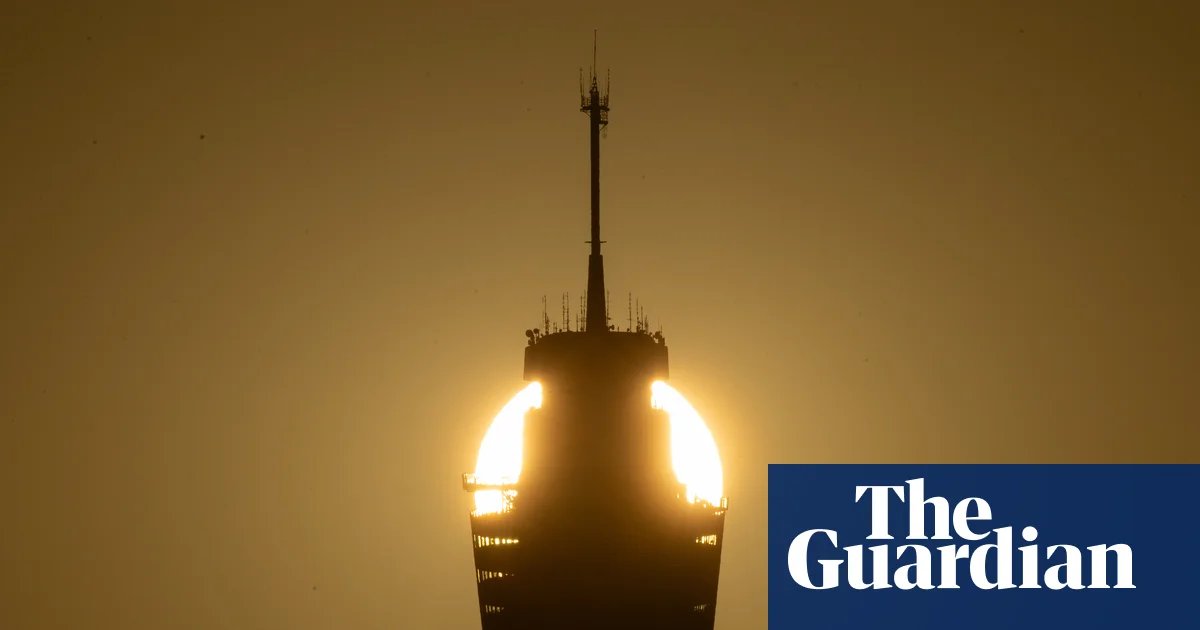
Large parts of south-east Australia look set for drier and hotter conditions over the next three months as a potential El Niño weather phenomenon takes shape in the Pacific Ocean.
Much of Queensland and New South Wales are forecast to have lower than usual rainfall in May, June and July, with almost the entire country likely to experience hotter than average maximum temperatures.
The World Meteorological Organization said last week there was an increasing chance of an El Niño developing in the Pacific – a phenomenon that historically has increased the chances of hotter and drier conditions for Australia’s east.
El Niño events also tend to push up global temperatures, with some climate experts saying an event later this year could help set global heat records in 2027.
El Niño is characterised by warmer than usual ocean waters in the tropical Pacific and a weakening or reversal of easterly trade winds which can both keep cloud and rain away from Australia’s east.
The Bureau of Meteorology has said there is still disagreement among weather models, but most show sea surface temperatures consistent with an El Niño could be in place by July.
Caitlin Minney, a climatologist at the Bureau of Meteorology, said a developing El Niño was likely one of the factors behind the dry forecast.
“May to July looks like rainfall will likely be below average for much of eastern Australia,” she said.
While the drier conditions are expected to be concentrated in NSW and Queensland, the forecast also suggests parts of northern and western Victoria, southern parts of South Australia and the south-west of Western Australia could also be dry.
The bureau is also watching conditions in the Indian Ocean where some models are suggesting ocean temperatures to Australia’s north-west could cool – another phenomenon that can lower the chance of rainfall over the continent.
Dr Peter van Rensch, a climate scientist at Monash University, led a study last year into the affects of the cycle of warming and cooling in the Pacific – known as the El Niño-Southern Oscillation – on Australian rainfall.
He said El Niño’s influence on Australian rainfall has historically been at its greatest in the months of June and July and October and November.
“The pattern of the rainfall [in the bureau’s forecast] does look similar to what we would expect from the historical relationship with El Niño.
“A lot of the models are showing this [El Niño] will be strong, but there’s a lot that can happen in Pacific that could change that,” he said.
While there has been some commentary that a so-called “super El Niño” could develop, the bureau warned last week forecasts at this time of year tended to be less reliable.
The bureau also said the strength of an El Niño did not necessarily mean the impacts of an event on Australia’s rainfall would also be strong.
Van Rensch said the impacts of El Niño on Australia can also be influenced by the location of the warmest waters in the Pacific. El Niños that were concentrated in the central Pacific, as opposed to further east, tended to have the strongest affects on Australia.
The bureau’s long-range forecast is also showing the bottom two-thirds of Australia has an increased chance of unusually high maximum temperatures from May to July.
“The climate change signal is coming through very strongly in our temperature forecasts,” said Minney.
Global heating, caused by the burning of fossil fuels and deforestation, has warmed Australia by about 1.5C since 1910.