dailynewsnblog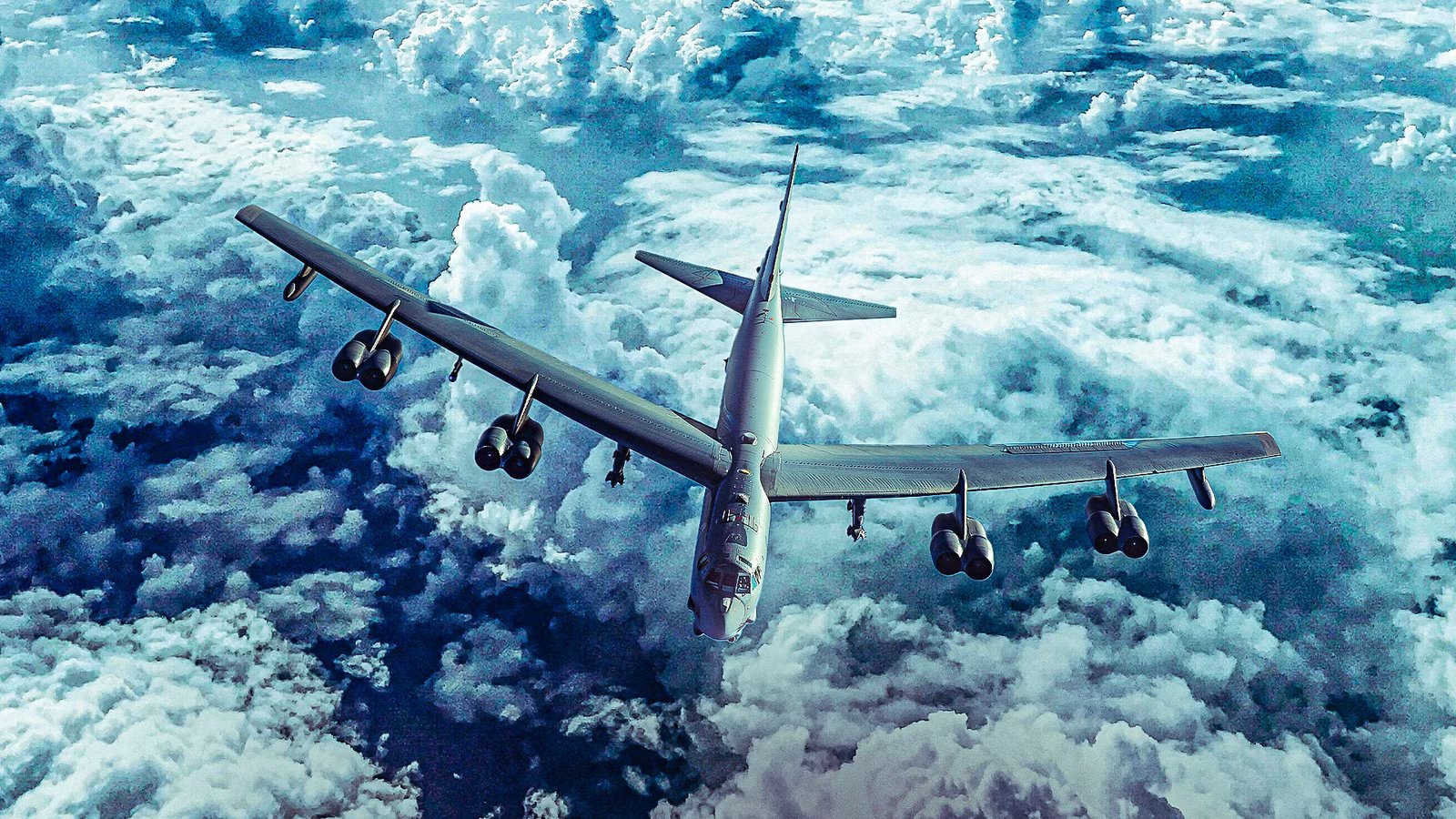
Recent footage posted on Reddit presents a pure spectacle: a  Boeing B-52 Stratofortress, a bomber with a 185-foot wingspan, rolling into a steep turn while physically connected to a KC-135 Stratotanker. Most people watching it focus on the visual shock. Two large heavies, aggressive maneuvers, and midair refueling. It feels like something that shouldn’t be possible, let alone intentional
However, the real story isn’t necessarily the maneuver itself. Rather, it’s the fact that the US Air Force deliberately trained pilots to do exactly this, not as a stunt, not as a combat tactic, but as a structured exercise. What looks like a daring stunt is actually a carefully designed lesson in aircraft limits, pilot confidence, and a now largely vanished philosophy of airmanship.
Understanding that changes everything, as, once you look past the wow factor, the clip reveals something far more interesting: a bomber built in the 1950s that can handle far more than it appears to. It also shows a training system that once demanded pilots prove it to themselves in the most direct way possible.
The 70-Degree Bank That Shouldn’t Work

At first glance, a heavy bomber banking to 70 degrees while refueling seems to violate basic flight principles. In most large aircraft, standard operating bank angles stay around 25 to 35 degrees, with anything beyond 45 degrees considered aggressive. By 60 degrees, the aircraft is already pulling about 2G, meaning the wings must support twice the aircraft’s weight. At 70 degrees, that load factor climbs to nearly 3G, a massive increase in aerodynamic and structural demand.
For an airframe like the B-52, which can weigh up to 488,000 pounds (approximately 220,000 kilograms) at maximum takeoff weight, those forces are enormous. The wings must generate enough lift to support not just the aircraft’s mass, but multiple times that mass under load. At the same time, stall margins shrink, control inputs become more sensitive, and the margin for error narrows significantly. With aerial refueling, maintaining contact with a tanker requires holding position within just a few feet in all directions.
The boom is a rigid, actively controlled structure operated by a boom operator, and both aircraft are expected to remain stable to avoid disconnects or damage. The KC-135 itself is about 136 feet and three inches (41.5 m) long, with a wingspan of 130 feet and ten inches (39.9 m) and a maximum takeoff weight of roughly 322,500 lb (146,000 kg). Despite its size, it must maintain a tight formation while transferring fuel. In this case, both aircraft are operating in a dynamic regime of steep banking and altitude changes while maintaining continuous contact.
The Whifferdill Maneuver Wasn’t What People Think

The maneuver is often called a ‘Whifferdill,’ but that label can be misleading without context. While the term traditionally refers to a multi-axis maneuver used to reverse direction efficiently, the version performed by B-52 crews during refueling had a very different purpose. It was not a combat tactic or a routine operational procedure: instead, it was a confidence-building exercise used in the Central Flight Instructor Course under Strategic Air Command.
Here, instructor pilot candidates were required to push the aircraft into extreme attitudes while maintaining precise control. This included steep bank angles, continuous climbs and descents, and sustained contact with the tanker throughout the maneuver.
The aircraft would move through a block altitude, gaining and losing height rather than maintaining level flight. The objective wasn’t to teach a maneuver pilots would later use: rather, it was to demonstrate, in the most direct way possible, that the aircraft could safely operate far beyond what most assumed. As such, it forced pilots to confront and recalibrate their understanding of the B-52’s limits.

How Many B-52 Stratofortresses Are Left In 2026?
A closer look at the last ‘BUFFs’ still standing.
Flying Off the Tanker: A Radical Training Concept

One of the most unusual aspects of the exercise was the instruction to treat the tanker as the primary attitude reference. In normal flight, pilots rely heavily on instruments like the attitude director indicator to determine orientation. This is especially critical in large aircraft, where visual cues can be misleading or insufficient.
However, CFIC training flipped that logic. During the maneuver, pilots were taught to fly visually off the tanker, using it as a real-world reference for pitch, bank, and position. If they could maintain proper alignment with the tanker, then by definition, the aircraft was in the correct attitude, regardless of what the instruments said.
This required an extraordinary level of precision. After all, the B-52 had to remain aligned with the boom while banking steeply and changing altitude, often within a tolerance of just a few feet, so any deviation had to be corrected immediately and smoothly. The result was a training experience that forced pilots to develop an intuitive, almost physical understanding of the aircraft’s behavior.
The Hidden Genius Of The B-52’s Wing

During high-G maneuvers such as a 70-degree bank approaching 3G, this flexibility reduces peak stress and helps prevent structural overload. That flexibility also changes how the aircraft behaves in the air. Rather than feeling like a rigid frame resisting every input, the wing acts more like a spring, smoothing turbulence and moderating control forces.
|
Specifications |
Value |
|---|---|
|
Wingspan |
185 feet (56.4 m) |
|
Length |
159 feet and four inches (48.5 m) |
|
Max Takeoff Weight |
488,000 lb (220,000 kg) |
|
Cruise Speed |
Mach 0.8 (525 mph/845 km/h) |
|
Service Ceiling |
50,000 ft (15,200 m) |
|
Range (unrefueled) |
8,800 miles (14,200 km) |
|
Engines |
Eight turbofans |
|
Entry Into Service |
1955 |
Combined with its large wing area and relatively low wing loading, the aircraft can generate substantial lift without requiring extreme speed, maintaining controllability even as lift is redirected in steep banks. This balance of strength, flexibility, and efficiency is a key reason the B-52 can remain stable and responsive in conditions that would look far beyond its expected operating envelope.
The bomber also benefits from relatively low wing loading, meaning it has a large wing area relative to its weight. This allows it to generate sufficient lift even at lower speeds and higher bank angles. Combined with its stable handling characteristics, the B-52 can sustain controlled, high-load maneuvers that would seem improbable for an aircraft of its size.

How US Air Force Global Strike Command Gets Aircrew Fit To Fly B-52s For 33 Hours
New methods keep B-52 flight crews alert during 30+ hour missions, merging physical stamina with mental strength for global readiness.
Why Controlled Aggression Disappeared

To understand why the Air Force ever allowed something like a 70-degree bank during refueling, you have to look at the mindset of Strategic Air Command during the Cold War. The SAC assumed crews might face extreme conditions where hesitation could be costly, so knowing the true limits of an aircraft was essential. The answer was ‘controlled aggression,’ training that deliberately pushed pilots toward the edge of the flight envelope under supervision.
In exercises like the Whifferdill, instructor candidates held precise control at up to ~70 degrees of bank and nearly 3G, turning theoretical limits into direct experience. This produced instructors with unusually deep confidence in the aircraft. They didn’t just know the procedures: rather, they felt how the jet behaved under stress, how much margin existed, and how it responded at the edge. That experience was carried into the wider force, creating crews who were both disciplined and comfortable operating near limits when necessary.
That philosophy faded after 1992, when Strategic Air Command was dissolved, and its responsibilities were split between Air Combat Command and the newly created US Strategic Command. Training moved toward risk reduction and standardization, while advanced simulators replaced some real-world exposure to extremes. The Whifferdill disappeared because it had no direct operational need, taking with it a hands-on way of understanding just how far a B-52 could really be pushed.
A Bomber That Still Has Surprises Left

What makes this story especially striking is that the B-52 Stratofortress is not a museum piece: rather, it’s still in active service, with projections to extend its life beyond 2040 and potentially to nearly 100 years of continuous operation. First entering service in the 1950s, it has outlasted multiple generations of aircraft thanks to ongoing upgrades, from avionics to weapons systems. Even today, it remains a central part of the US strategic bomber force, capable of delivering both conventional and nuclear payloads across intercontinental distances.
That longevity is rooted in how the aircraft was originally designed. Built for high-altitude, long-range missions, the B-52 typically cruises around Mach 0.8 and can operate up to 50,000 feet (about 15,200 meters). To meet those demands, engineers gave it a highly efficient, flexible wing and significant structural margins. Those same characteristics, especially the ability to absorb and redistribute stress, are what made extreme training maneuvers like the Whifferdill possible in the first place, even if they were never part of its intended mission set.
What the viral clip ultimately reveals is a gap between perception and reality. The B-52 looks like a slow, rigid heavyweight, but in reality, it’s stable, forgiving, and capable of more aggressive maneuvering than most would expect when handled correctly. While modern training no longer explores those limits in the same way, the underlying capability hasn’t gone anywhere. The aircraft still carries that hidden depth, proof that even after decades of service, it can continue to surprise.