dailynewsnblog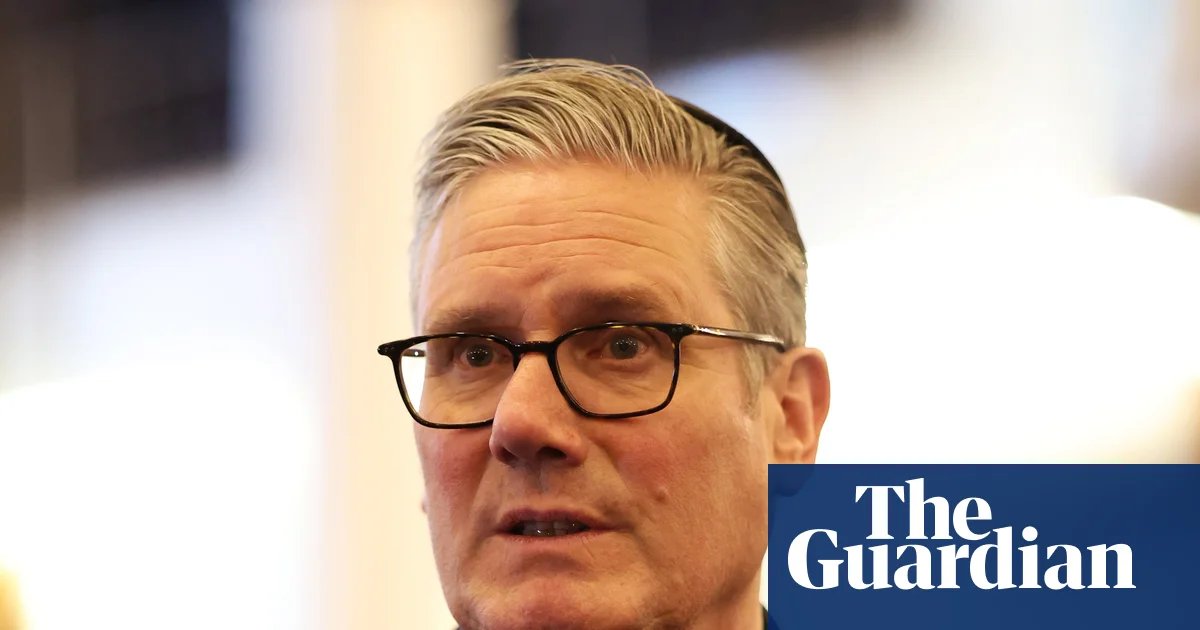
Keir Starmer has said he will lead Labour into the next general election, as his Downing Street allies denied claims of any wrongdoing over the appointment and vetting of Peter Mandelson as US ambassador.
It has been a bruising week for the prime minister after the Guardian revealed that he appointed the former Labour grandee despite vetting officials recommending that he be denied security clearance. His handling of the row was called into question, including his swift decision to sack the Foreign Office chief Olly Robbins.
Darren Jones, the chief secretary to the prime minister, told Sky News’s Trevor Phillips on Sunday show: “No wrongdoing by the prime minister has been proven in relation to Lord Mandelson’s appointment,” adding: “The whole situation is regrettable.”
Jones said: “Of course these particular questions of whether the prime minister had lied or misled the house, or had done any wrongdoing here, that’s all been shown not to be the case.”
On Saturday night, Starmer attempted to brush off mounting unrest inside his party and shut down questions about the future of his leadership in an interview with the Sunday Times. Asked directly if his prime ministership was over, Starmer told the newspaper: “No”.
Pushed on whether he could continue, he replied: “Of course. We didn’t wait 14 years to get elected, we didn’t change the Labour party, we didn’t do all that it entailed to win the election and the mandate for change, not to deliver on it.”
Asked if he would lead Labour into the next election, Starmer said: “Yes”.
Allies of the prime minister have already planned his response to what are expected to be a difficult set of Scottish, Welsh and local English elections on 7 May for Labour, and which could once again throw his leadership into peril.
After the results roll in, they expect the prime minister’s initial reaction to be one of humility. “We know that voters are sending us a message: we need to acknowledge that we’ve heard it,” one source said.
“Think of Obama’s ‘shellacking’ moment after the US midterms [in 2010] when the Dems took a heavy beating. Keir needs a similarly realistic and humble response.”
Downing Street also wants to “inject some hope” into the government’s narrative, one senior figure said, pointing to the king’s speech the following week as an opportunity to do so.
But they added: “We know that won’t be easy. We haven’t done a good enough job telling voters about all the big things we’ve done – and we’re too good at creating our own bad headlines. It’s not just down to Keir though, we all need to do better.”
The prime minister hopes to bolster the political side of his No 10 operation, after the departures in recent months of his former chief of staff, Morgan McSweeney, and director of strategy, Paul Ovenden, with the recruitment of a heavyweight political strategist.
“We know that people won’t be jumping to join us this side of the May elections, but we hope that once things settle down, it might be a more attractive option,” one insider said.
The Conservatives have sought to corner the prime minister over the row, highlighting inconsistencies between Starmer’s previous claim that “no pressure whatsoever” was applied to Robbins, and the former senior civil servant’s describing “an atmosphere of pressure” and “constant chasing” from Downing Street while Mandelson’s vetting was taking place during an interview with the foreign affairs committee.
Starmer rejected the claims, saying “no pressure existed whatsoever”. He added: “There’s pressure – ‘can we get this done quickly?’ – which is not an unusual pressure. That is the everyday pressure of government.”
Starmer also rejected suggestions he should have been more inquisitive and curious about Mandelson’s clearance. “When I’m told there’s security clearance, should I go back and quiz officials and say ‘are you telling me the truth?’” he said.
The Conservatives are pushing for Starmer to face the Commons privileges committee over allegations that he misled parliament.
The revelation that Starmer appointed Mandelson despite officials recommending he be denied security clearance came about because of a process started by Kemi Badenoch, the Conservative leader.
Chris Philp, the shadow home secretary, told the BBC’s Sunday with Laura Kuenssberg show: “Now we need the privileges committee to investigate whether Keir Starmer misled parliament, which he appears to have done. Frankly, Keir Starmer should resign because he appointed Mandelson in the first place, which is a terrible, terrible misjudgment – a man with links to Russia and China and Jeffrey Epstein.”
However, the former Tory attorney general Dominic Grieve accused the party of “political games” by seeking a vote on launching a privileges committee investigation. Grieve said: “The appointment of Peter Mandelson is currently being properly scrutinised as part of the humble address process and the work and hearings being conducted by the foreign affairs committee.
“Seeing that this appointment is being explored during these processes and all the evidence is not yet considered, it is impossible to see how starting a reference to the privileges committee is either useful or indeed ‘due process’. Ensuring that ministers do not mislead parliament is of great importance, but it should not just be turned into political games.”
Harriet Harman, who chaired the privileges committee investigation into Boris Johnson, said it would be a “complete duplication” of the work being done already by the foreign affairs committee.
Questions over Mandelson’s vetting will continue this week, with Starmer’s former chief of staff McSweeney due to appear before the committee.