dailynewsnblog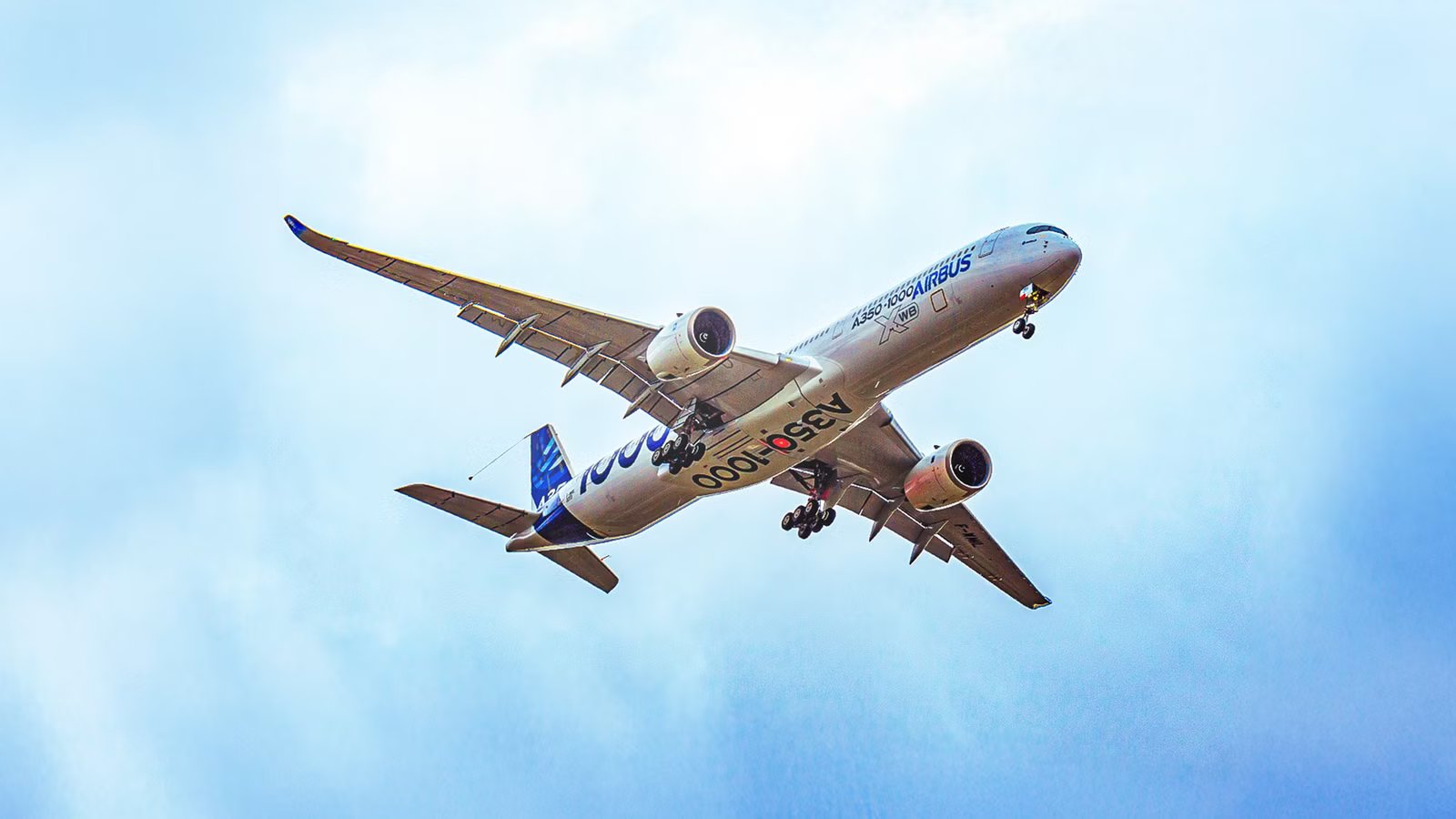
When a video of a Cathay Pacific Airbus A350-1000 touching down at  London Heathrow went viral recently, the aviation community erupted into a familiar debate. To the untrained eye, the jet appeared to slam into the runway, its wings oscillating and its 12 main tires puffing smoke in a way that looked like a mechanical failure in progress. However, this guide will pull back the curtain on why these dramatic moments are actually a testament to one of the most resilient engineering feats in modern transport: a landing gear system built to turn a violent impact into a manageable thermal event.
Aviation forums are naturally filled with dissecting hard landing videos frame by frame, but nobody walks viewers through the three interconnected engineering systems that make these touchdowns look far more violent than they actually are. The A350-1000 is a truly massive aircraft, often arriving at the runway weighing over 520,000 lbs (236 tons). Managing that energy requires a sophisticated coordination between the oleo-pneumatic struts, the flexible carbon-fiber wing structure, and a specific bogie geometry that ensures the aircraft settles safely even when the descent rate is higher than ideal.
No Need To Panic

The recent Reddit fascination with firm landings at London Heathrow highlights a common misconception about how large widebodies interact with the ground. In the case of the A350-1000, a landing that looks punishing from the terminal window is often exactly what the pilot intended to prevent hydroplaning or to counter a tricky crosswind. The aircraft is designed to handle a sink rate, the speed at which it descends vertically, of up to 600 feet (183 meters) per minute at maximum landing weight without requiring a structural inspection.
This resilience is not a license for reckless piloting but a built-in safety margin for the unexpected. When the A350-1000 makes contact with the asphalt at roughly 170 mph (150 knots), the airframe must immediately manage a huge surge of kinetic energy. If the landing gear were rigid, the force of the impact would shatter the wing spars and cause catastrophic structural failure; instead, the gear acts as the first line of defense in a multi-stage energy absorption sequence.
A ‘hard’ landing, by technical definition, is only one that exceeds the manufacturer’s certified G-load limits, which for the A350 is a rare occurrence. Most viral hard landings are actually firm touchdowns where the landing gear’s compression is visually dramatic but well within its mechanical envelope. Understanding that the gear is designed to move, flex, and heat up, we can see these landings more as signs of the hardware performing exactly as the engineers at Airbus and Collins Aerospace intended.
The Engineering Behind The Landing

At the heart of the A350-1000’s 12-wheel system is the oleo-pneumatic shock absorber, a sophisticated hydraulic strut that supports the aircraft upon touchdown. Unlike the simple springs in a car suspension, these struts use a combination of compressed nitrogen gas and hydraulic oil stored in a telescoping cylinder. When the wheels hit the runway, the oil is forced through a tiny orifice, creating substantial friction that converts the kinetic energy of the falling aircraft into heat. At the same time, the nitrogen acts as a progressive spring to cushion the final stop.
This conversion process is vital because the A350-1000’s maximum takeoff weight (MTOW) can reach 710,000 lbs (322 tons), meaning the gear must be ready for high-energy scenarios like an immediate return after takeoff. During a particularly firm touchdown, the temperature within these struts can spike significantly as they digest the energy of the descent. The nitrogen and oil work in tandem to ensure the aircraft doesn’t bounce back into the air, providing a dead response that keeps the tires glued to the pavement.
|
Component |
Specification |
Function |
|
Main Gear Configuration |
12 Wheels (Six-wheel bogie per leg) |
Weight distribution – braking surface area |
|
Typical Landing Weight |
~551,000 lbs (250 tons) |
Average mass at the end of a long-haul sector |
|
Strut Type |
Oleo-Pneumatic (Nitrogen + Oil) |
High-energy shock absorption – damping |
|
Tire Pressure |
~200 psi (13.8 bar) |
Optimal footprint for heavy runway contact |
The complexity of this system is further managed by the aircraft’s onboard sensors, which monitor the ‘H’ dimension, or the extension of the strut, to ensure it is properly pressurized for the current weight. If the gas-to-oil ratio is even slightly off, the landing experience can shift from a smooth transition to a jarring thump. This is why ground crews spend a significant amount of time during turnarounds checking for leaks or pressure changes, as these struts are the only things standing between a smooth arrival and a multi-million-dollar repair bill, as well as a stern talking to for the pilots.

Why The Airbus A350-900’s Main Landing Gear Has Fewer Tires Than The A350-1000
The Airbus A350-1000’s 6-wheel main landing gear is a mechanical necessity driven by weight, physics, and airport infrastructure.
The Role The Wings Play

The landing gear is the primary actor in a touchdown, but the Airbus A350-1000’s wings play a silent but crucial role in cushioning the blow. Built largely from carbon fiber reinforced polymer (CFRP), these wings are not the rigid, unyielding structures characteristic of the older aluminum era. Instead, they are engineered to flex significantly, acting as a giant leaf spring that distributes vertical loads across the entire airframe rather than concentrating the force solely at the wing root.
During a particularly firm touchdown, the wingtips can deflect upwards by several feet, a visual that often alarms passengers but is entirely within the design envelope. This flexibility allows the wing to absorb the residual jolt that the hydraulic struts might not fully dissipate. The CFRP construction provides an incredible strength-to-weight ratio, meaning the wing can bend repeatedly without the risk of metal fatigue. What this does is increase the duration of the impact, spreading the force over a longer period and reducing the peak G-load experienced by the passengers in the cabin.
The A350 wing is one of the most advanced aerodynamic structures in commercial aviation by a lot. It features a span of 212.5 feet (64.75 meters) and is designed to endure loads that far exceed typical operational stresses. In stress testing, Airbus demonstrated that these wings could survive a deflection of more than 17 feet (5.2 meters) before reaching their breaking point. This significant buffer ensures that even if a pilot encounters sudden wind shear or a heavy sink rate at the moment of contact, the wings will soak up the excess energy, protecting the integrity of the fuel tanks and the critical engine mounts.
Coordinated Balance Of The Wheels

Each of the two main landing gear legs features a six-wheel bogie arranged in three rows of two, and when the aircraft is in its final approach, these bogies do not hang flat. Instead, they are engineered with a specific tilt that allows the rear pair of wheels to make contact with the runway first. This initial contact provides the first hint of resistance and starts the rotation of the bogie beam before the remaining ten tires settle onto the asphalt.
This staggered touchdown is critical for stabilizing the aircraft’s pitch. If all 12 wheels hit the ground simultaneously, the sudden massive increase in drag and friction would cause the nose of the aircraft to slam down violently. By sequencing the touchdown, the rear wheels begin the deceleration process and trigger the ground spoilers, while the hydraulic pitch trimmer actuators within the gear leg ensure the rest of the wheels settle in a controlled, fluid motion. This mechanical choreography is what prevents the bucking sensation often felt in older, less sophisticated widebodies.
|
Phase |
Mechanical Action |
Impact on Stability |
|
Initial Contact |
Rear axle makes first contact |
Stabilizes lateral drift and starts wheel spin-up |
|
Bogie Rotation |
Beam pivots to bring middle and front axles down |
Dampens the initial vertical “thump” for passengers |
|
Full Compression |
All 12 tires make contact – struts compress |
Maximum energy absorption via oleo-pneumatic system |
|
Derotation |
The nose gear is lowered to the runway |
Transition from aerodynamic lift to mechanical braking |
As well as stability, this geometry is a safeguard for the tires themselves. Accelerating a stationary tire to 170 mph (274 km/h) in a fraction of a second generates immense friction and heat, so having the wheels touch down in pairs, the spin-up loads are distributed. This reduces the risk of tire bursts and minimizes the amount of rubber left on the runway, a major concern for high-frequency hubs like London Heathrow, where rubber scrubbing maintenance can shut down a runway for hours.

Safe Than Sorry: British Airways Airbus A380 Lands Too Late, Performs Touch & Go In London
The incident is certainly rather unusual.
No Escaping A Landing Mistake

How hard is too hard for the A350-1000? This is the central question that keeps aviation enthusiasts engaged in endless debates on platforms like Reddit, particularly when witnessing the dramatic oscillations of a heavy jet in crosswinds. A smooth greaser landing is the goal for passenger comfort, but bear in mind that the aircraft’s structural integrity is actually measured by a vertical descent speed, or sink rate, that would feel like a minor earthquake to those in the back.
The technical threshold for a maintenance inspection on the A350-1000 is typically triggered when the aircraft exceeds a sink rate of approximately 10 feet per second (three meters per second) at touchdown. At this point, the onboard sensors, part of a sophisticated High-Quality Assessment (HQA) system, will automatically flag the event for the ground crew. The system ensures that even if a pilot doesn’t report a firm landing, the aircraft’s health monitoring system identifies the potential stress on the landing gear and airframe components.
During the certification phase, Airbus engineers subjected the A350-1000 to drop tests that simulate these extreme limits, ensuring the gear can survive loads well beyond 2.5G. These tests prove that even if a viral video might show the gear compressing to its limits, the mechanical system is still operating within its safe structural margins. It is a calculated buffer that allows the aircraft to remain in service for decades, even after thousands of high-energy cycles at busy international hubs.
Just Another Landing

The true capability of the A350-1000 landing gear is most evident not during a vertical slam, but during the horizontal struggle of a crosswind landing. On a windy day, pilots often perform a crabbed approach, where the nose is pointed into the wind while the aircraft travels straight down the runway centerline. The moment of touchdown requires the landing gear to absorb not just vertical energy, but a massive lateral force as the tires are forced to align with the direction of travel.
This is where the 12-wheel configuration provides a distinct advantage over smaller aircraft. The sheer amount of rubber in contact with the runway offers immense mechanical grip, allowing the fly-by-wire system to maintain directional stability even on contaminated or wet surfaces. The landing gear’s wide footprint acts like a stabilizing anchor, preventing the long fuselage of the -1000 from swaying or fishtailing during the high-speed rollout.
With the arrival of even heavier variants like the A350F freighter, the lessons learned from the A350-1000’s landing gear performance will remain the baseline for future enhancements. Future iterations may include even more advanced fiber-optic sensors within the struts to provide real-time stress data, potentially allowing the aircraft to self-diagnose after every touchdown. In all, this means that even the most dramatic-looking landing is just another day at work for one of the most capable machines ever built.