dailynewsnblog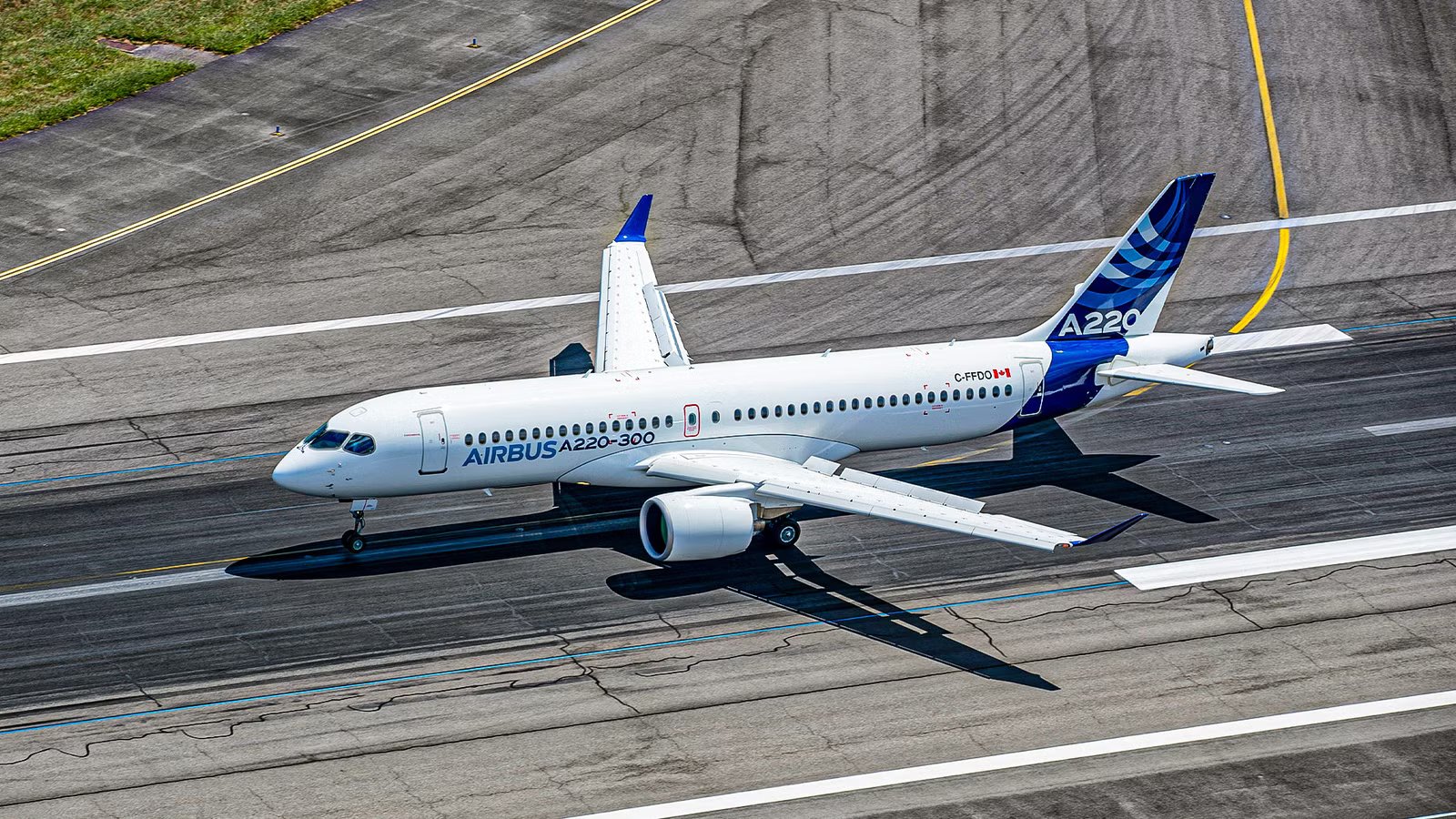
The narrowbody aircraft market in the United States is undergoing a structural shift as airlines reassess fleet composition in response to changing economics, network strategies, and passenger expectations. At the center of this transition is the Airbus A220, a relatively new entrant that is rapidly gaining favor among major and emerging carriers alike. Originally developed as the Bombardier CSeries, the aircraft has evolved into a highly competitive platform that occupies a unique niche in the 100 to 150-seat segment.
Airlines in the US are increasingly drawn to the A220 because it addresses multiple operational challenges simultaneously. It delivers strong fuel efficiency, supports new route development, and offers a passenger experience that is notably superior to older narrowbody aircraft. At the same time, it provides a practical replacement path for aging fleets such as the Boeing 737-700 and the Airbus A319, both of which are becoming less economical to operate in today’s environment. As airlines pursue profitability on thinner routes while maintaining customer satisfaction, the A220’s combination of performance and flexibility is becoming difficult to ignore. Its rise is not based on a single advantage, but rather on a convergence of economic, operational, and competitive factors that align closely with the evolving priorities of US carriers.
A Compelling Economic Advantage

Airline profitability is heavily influenced by operating costs, with fuel representing one of the largest variables. Especially in recent weeks, the variable nature of fuel costs has become an increasingly important factor in airline operations. The A220 has established itself as a leader in efficiency within its size category, offering approximately 20 percent lower fuel burn per seat compared with older A319ceo aircraft and earlier 737 variants. This improvement is largely driven by advanced aerodynamics, lightweight materials, and Pratt and Whitney geared turbofan engines.
For US airlines, this translates into immediate and measurable cost savings. Lower fuel consumption reduces direct operating expenses and improves margins, particularly on short and medium-haul routes where cost sensitivity is highest. The A220 also benefits from lower maintenance costs thanks to its newer design and systems, further enhancing its economic appeal compared to aging fleets. These advantages become particularly relevant as airlines seek to replace older aircraft like the 737-700 and A319, which were once workhorses of domestic networks but are now less competitive. Rising fuel prices and increasing maintenance requirements have made these older jets more expensive to operate. The A220 provides a modern alternative that not only reduces costs but also extends operational viability for another generation.
In a market where even marginal gains in efficiency can significantly impact profitability, the A220’s economic profile positions it as a highly attractive option. Its ability to deliver lower per-seat costs without sacrificing performance gives airlines a strong incentive to integrate it into their fleets.
Unlocking New Route Opportunities

One of the most significant contributions of the A220 is its ability to enable routes that were previously unfeasible. Traditionally, airlines faced a gap between regional jets and larger narrowbodies. Aircraft like the Embraer E175 were limited in range and capacity, while larger jets such as the 737 or A320 required higher demand to operate profitably. The A220 effectively bridges this gap. With its range and capacity, it allows airlines to serve routes that are too long for regional aircraft but too thin for larger narrowbodies. This capability has opened new point-to-point opportunities, particularly in secondary markets and underserved city pairs.
US carriers such as  Delta Air Lines, JetBlue Airways, and Breeze Airways have already leveraged this flexibility to expand their networks. In fact, the top ten longest A220 flights from 2025 each highlight this flexibility, with each flight spanning the entire country. In most cases, one or both of the cities connected are secondary markets that would otherwise not meet the demand for traditional transcontinental service. With the A220, airlines can economically operate these routes.
|
Top Ten Longest A220 Flights in 2025 |
||
|---|---|---|
|
Route |
Airline |
Distance (miles) |
|
Boston – Sacramento |
JetBlue |
2,636 |
|
LAX – Providence, RI |
Breeze |
2,592 |
|
Boston – Portland, OR |
JetBlue |
2,537 |
|
Burbank, CA – JFK |
JetBlue |
2,465 |
|
Richmond, VA – SFO |
Breeze |
2,449 |
|
JFK – Reno, NV |
JetBlue |
2,411 |
|
JFK – Palm Springs, CA |
Delta |
2,378 |
|
LAX – Norfolk, VA |
Breeze |
2,371 |
|
San Diego – Norfolk |
Breeze |
2,330 |
|
Washington Dulles – Seattle |
Delta |
2,306 |
Additionally, the aircraft’s performance characteristics allow it to operate from airports with shorter runways or operational limitations, further expanding network possibilities. This is particularly valuable in regions where infrastructure constraints limit the use of larger aircraft. The ability to deploy capacity more precisely is a critical advantage in today’s dynamic market. Airlines are increasingly focused on matching aircraft size to demand, and the A220 offers the flexibility to support this strategy. By enabling more efficient route planning and expanding the range of viable destinations, this aircraft plays a key role in modern network optimization.

How The Airbus A220’s Engine Efficiency Is Changing Regional Travel
The aircraft has seen decent sales.
A Superior Passenger Experience

While economic and operational factors are central to airline decision-making, passenger experience has become an increasingly important differentiator. The A220 stands out in this regard, offering a cabin environment that is widely regarded as one of the best in its class. The aircraft features a two-three seating configuration, which results in fewer middle seats compared with traditional narrowbody layouts. This alone enhances passenger comfort and appeal. In addition, the A220 offers the widest economy seats in its category, measuring approximately 18.6 inches. This is a noticeable improvement over many competing aircraft and contributes to a more comfortable travel experience.
Other design elements further enhance the cabin environment. Large windows provide more natural light, while a higher ceiling creates a sense of spaciousness. Overhead bins are designed to accommodate more carry-on luggage, addressing a common pain point for passengers. The aircraft also benefits from modern lighting and quieter engines, which reduce cabin noise and improve overall comfort.
For airlines, these features translate into tangible benefits. A better passenger experience can drive higher customer satisfaction, strengthen brand perception, and support premium pricing strategies. In a competitive market where customer loyalty is increasingly important, the A220 offers a clear advantage. JetBlue, for instance, has emphasized the passenger experience as a key component of its A220 strategy, using the aircraft to enhance its product offering on both domestic and transcontinental routes. This aligns with a broader industry trend in which airlines seek to differentiate themselves not only by price but also through quality of service.
Strong Market Momentum And Competitive Positioning

The A220’s growing appeal is reflected in its order book and market adoption. The Airbus A220-300 variant has accumulated a substantial number of orders, significantly outpacing its closest competitor, the Boeing 737 MAX 7. This disparity highlights a broader shift in airline preferences within the 100 to 150-seat segment. In the United States, several major carriers have committed to the A220. Delta leads with a large order book, followed by JetBlue Airways and Breeze Airways. These airlines have recognized the aircraft’s potential to enhance both efficiency and network flexibility, making it a cornerstone of their fleet strategies.
By contrast, the 737 MAX 7 has struggled to gain similar traction. Delays in certification and a less compelling economic proposition have limited its adoption. While the MAX family remains a key part of many airline fleets, the MAX 7 variant has not achieved the same level of market success as the A220 in this specific segment. The A220’s competitive positioning is further strengthened by its unique design. Unlike derivatives of older aircraft families, it was developed specifically for the 100 to 150-seat market. This allows it to optimize performance in ways that modified designs cannot fully replicate.
As airlines evaluate long-term fleet investments, this differentiation becomes increasingly important. The A220 is not simply a replacement for older aircraft, but a purpose-built solution that aligns with current and future market needs. With nearly 1,000 total orders, its strong order momentum reflects confidence in its long-term viability and underscores its growing influence in the industry.

Milestone 220: Airbus Celebrates 500 Deliveries Of Its “Game-Changing” A220
Airbus has reached 500 A220 deliveries, but challenges still loom.
A Strategic Replacement For Aging Fleets

Fleet renewal is a critical priority for US airlines, many of which operate aging narrowbody aircraft that are becoming less efficient and more costly to maintain. The A220 offers a compelling replacement option for these fleets. Southwest Airlines, for example, operates many 737-700s that will eventually need to be replaced. While the airline has traditionally relied exclusively on Boeing aircraft, the A220 presents a potential alternative that could offer significant efficiency gains. Although a shift in fleet strategy would be complex, the economic advantages of the A220 make it a viable candidate for consideration.
Similarly, American Airlines, United Airlines, and Delta Air Lines operate A319 fleets that are approaching the later stages of their service lives. Replacing these aircraft with A220s would provide immediate improvements in fuel efficiency, maintenance costs, and passenger experience. Delta has already moved in this direction, integrating the A220 into its fleet as part of a broader modernization strategy. Other airlines may follow a similar path as they evaluate long-term fleet requirements.
The transition to newer aircraft is not only about cost savings but also about aligning with broader industry trends. Environmental considerations, including emissions reduction, are becoming increasingly important. The A220’s efficiency reduces carbon emissions per seat, supporting sustainability goals and regulatory compliance. In this context, the A220 represents more than just a replacement aircraft. It is a strategic asset that allows airlines to modernize their fleets while enhancing operational performance and environmental sustainability.
Final Thoughts

The A220 is becoming increasingly attractive to US airlines because it addresses multiple critical needs on a single platform. Its strong fuel efficiency and lower operating costs provide a clear economic advantage, while its ability to open new routes enhances network flexibility. At the same time, it delivers a superior passenger experience that supports competitive differentiation in a crowded market.
The aircraft’s growing adoption and strong order book reflect its success in meeting the evolving demands of the airline industry. As carriers continue to retire older aircraft and seek more efficient solutions, the A220 is well-positioned to play a central role in fleet modernization efforts. In an environment where airlines must balance cost efficiency with service quality and operational agility, the Airbus A220 offers a rare combination of strengths. This balance is precisely why it is gaining traction across the United States and why its influence is likely to continue growing in the years ahead.