dailynewsnblog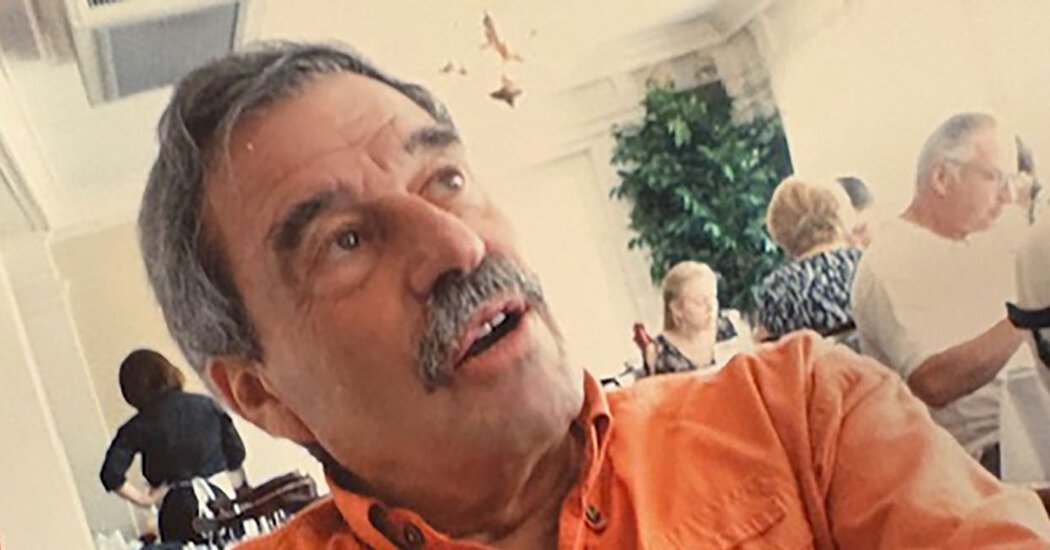
Lionel A. Rosenblatt, a U.S. Foreign Service officer who helped roughly 200 South Vietnamese citizens evacuate Saigon days before it fell in 1975 with a daring and unauthorized mission that prefaced a career advocating for refugees in Southeast Asia and other global hot spots, died on April 11 at his home in Washington, D.C. He was 82.
The cause was leukemia, his wife, Ann Rosenblatt, said.
On April 20, 1975, Mr. Rosenblatt, then 31, flew out of Washington bound for Saigon, the South Vietnamese capital, which would be captured by the North Vietnamese Army and the Viet Cong on April 30 and renamed Ho Chi Minh City.
Traveling with him was a colleague, Larry Craig Johnstone. They belonged to a small group of Foreign Service officers who met daily over lunch in Washington, concerned about the fate of the Vietnamese who had worked with the United States during the war, tens of thousands of whom could be vulnerable to retribution by the communist North Vietnamese regime.
When Graham Martin, the U.S. ambassador to South Vietnam, suggested that most Vietnamese refugees should head to coastal points, where American ships would attempt to pick them up, Mr. Rosenblatt and Mr. Johnstone, both of whom had served in diplomatic postings in Vietnam, grew alarmed at his seeming indifference toward the Vietnamese who were not high-ranking officials. So they secretly devised their own evacuation plan to assist former colleagues and their families.
“These were people we had worked with hand in glove,” Mr. Johnstone said in an interview. “Our lives depended on their ability to help us. To up and leave them was unthinkable.”
The two Americans arrived on April 22 amid chaos at Tan Son Nhat International Airport in Saigon, aboard one of the last scheduled Pan Am flights into the country. From a colleague at the American Embassy, they learned that their mission had been discovered by higher-ups, and that they were to be sent home.
Fearing arrest, Mr. Rosenblatt said in a 2013 oral history, he and Mr. Johnstone “ran away as fast as we could” and went underground.
Mr. Rosenblatt shaved his bushy mustache and wore a hat to disguise himself. Also concerned with being detected by the South Vietnamese police, they used false IDs and drove a 30-year-old Citroën, and other cars that friends had abandoned upon leaving Saigon, to rendezvous with Vietnamese colleagues. Both spoke Vietnamese, and Mr. Rosenblatt was fluent in French.
“Everybody thought we were Corsican gangsters,” he said in the oral history, for the Vietnamese in the Diaspora Digital Archive. “So nobody messed with us.”
Operating out of two apartments, Mr. Rosenblatt and Mr. Johnstone phoned their network of former colleagues, seeking to reach and evacuate 400 to 500 of them. Some could not be contacted, while some others declined to leave.
They scheduled meet-ups in Saigon on street corners, in a pho restaurant, at a cathedral and on the veranda of the Hotel Continental. They could help provide transportation out of Vietnam, the two Americans told their friends, but the plan was risky and decisions had to be made quickly.
The manager of Continental Air Services, a C.I.A. contractor that often transported American soldiers and government officials, lent them a van and a driver to help ferry evacuees. He also provided shoe boxes filled with Vietnamese currency, soon to be worthless, to bribe Vietnamese soldiers and police guarding the airport, according to “Refugee Workers in the Indochina Exodus, 1975-82,” a 2010 book by Larry Clinton Thompson, a former Foreign Service officer.
To prepare documents for Vietnamese colleagues to leave aboard U.S. military aircraft, Mr. Johnstone found a typewriter in a friend’s apartment. He and Mr. Rosenblatt also obtained departure forms, stamps and consular seals from sympathetic embassy colleagues.
The two men set up in a bowling alley on the military side of the airport to complete the departure process, then shepherded their Vietnamese friends to planes bound for Guam and the Philippines and eventual travel to the United States. After five tense days with little food or sleep, the two Americans left Saigon. On April 30, the last American helicopter made a rooftop departure.
Once home, Mr. Rosenblatt and Mr. Johnstone met with Secretary of State Henry A. Kissinger to face possible discipline or even to be fired. Mr. Kissinger scolded but did not punish them, and even said that they had done a “wonderful, heroic job,” Mr. Rosenblatt recalled in the oral history, adding that Mr. Kissinger also told them, “We left Vietnam without much honor, but you two guys acted honorably.”
Later that year, Mr. Rosenblatt and Mr. Johnstone received the American Foreign Service Association Constructive Dissent Award, which honors principled challenges to existing policies.
Mr. Rosenblatt’s father told The Washington Post in 1979, “My son must be guided by the Talmudic teaching: ‘He who saves a human life is as if he saved the whole world.’”
Lionel Alexander Rosenblatt was born on Dec. 10, 1943, in Manhattan. The family moved frequently before settling in Bellport, N.Y., on Long Island. His father, David Rosenblatt, was a nuclear physicist. His mother, Carol (Blumenthal) Rosenblatt, ran the household.
At Harvard, he enrolled in an R.O.T.C. flight training program and received a bachelor’s degree in government in 1965. He then spent a restive year at Stanford Law School before joining the Foreign Service in 1966.
He served in Vietnam from 1967 to 1969, becoming passionately loyal to the people he worked alongside. He recalled in the oral history being saved one night by his guards, who were part of the indigenous Montagnard tribe. They shot an intruder, who was carrying explosives, as he tried to attack Mr. Rosenblatt’s compound at a highlands supply base, where he was investigating corruption.
After South Vietnam’s defeat, Mr. Rosenblatt devoted his career to the plight of refugees. He worked on a government task force that helped resettle the initial wave of 130,000 Vietnamese refugees in the United States and, from 1976 to 1981, served as the refugee coordinator at the U.S. Embassy in Bangkok.
Among other activities in Thailand, he pushed the U.S. government to admit more Hmong people, who had been recruited by the C.I.A. to fight a clandestine proxy war against communists in Laos.
In his 1998 book “To End a War,” Richard C. Holbrooke, the troubleshooting U.S. diplomat, called him “the most dynamic person I knew in the refugee field.” He described Mr. Rosenblatt’s style as “pressuring — or not to put too fine a point on it, harassing — governments around the world into doing more for their unwanted refugee populations.”
In 1971, he married Ann Grosvenor. In addition to his wife, Mr. Rosenblatt is survived by a sister, Sarah Rosenblatt Jackson, and two brothers, Josiah and Nathaniel.
Mr. Rosenblatt left the State Department in 1988 and served from 1990 to 2001 as president of Refugees International, an advocacy group, bearing witness to international conflicts like the Rwandan genocide and the war in Bosnia after the fracturing of Yugoslavia.
On Dec. 31, 1992, using a ploy that echoed his 1975 trip to Saigon, Mr. Rosenblatt forged a United Nations ID card for Mr. Holbrooke, then a private citizen, using a cigarette lighter to seal the plastic badge, so that he could travel through Serbian-controlled checkpoints into besieged Sarajevo, the Bosnian capital.
Visiting the shattered city was clarifying for Mr. Holbrooke, who became the chief architect of the 1995 Dayton peace accords that ended the war in Bosnia. “I returned to New York,” he wrote in “To End a War,” realizing “that something had to be done rapidly.”