dailynewsnblog
This is Part 3 of 20 Years in Isolation, a four-part investigation into the use of psychiatric seclusion at Waypoint Centre for Mental Health Care. In Part 1, the Star told the story of Camelott Hamblett, who may be the person who has spent the most time in psychiatric seclusion in any Ontario hospital. In Part 2, we offered a deeper dive into the “abusive” use of seclusion at Waypoint.
Every year, a panel of the Ontario Review Board meets to consider whether Camelott Hamblett should remain detained in hospital; his sister can’t shake the feeling that they’ve already made up their minds before the hearing has even started.
The independent body responsible for deciding the fate of people found not criminally responsible (NCR) or unfit to stand trial has always concluded that Hamblett should remain in the custody of Waypoint Centre for Mental Health Care.
It’s in this high-secure forensic facility next to Georgian Bay in Penetanguishene, Ont., where the 43-year-old Toronto man with treatment-resistant schizophrenia has spent nearly every day of the past 20 years locked in isolation — known in the medical world as seclusion — due to aggressive behaviour caused by persistent hallucinations.
Psychiatrists agree that seclusion should be the option of last resort — its use measured in minutes or hours, not years — due to its detrimental effect on a person’s mental health. But the Star’s investigation into nearly 20 years’ worth of Ontario Review Board (ORB) decisions reveals the board rarely inquired about Hamblett’s living conditions or expressed any major concerns, other than noting that Hamblett remained in seclusion.
It all started in 2005, when Hamblett arrived at what is now Waypoint after being arrested for a sexual assault. He had followed a woman he didn’t know, exposed himself, and, before fleeing, declared they were going to have sex. He was ultimately found not criminally responsible.
Every year since then, the board’s decision has been the same.
The board again ordered Hamblett’s ongoing detention at his latest hearing in May 2025, and declined to order an independent assessment, finding there was no treatment impasse in his case.
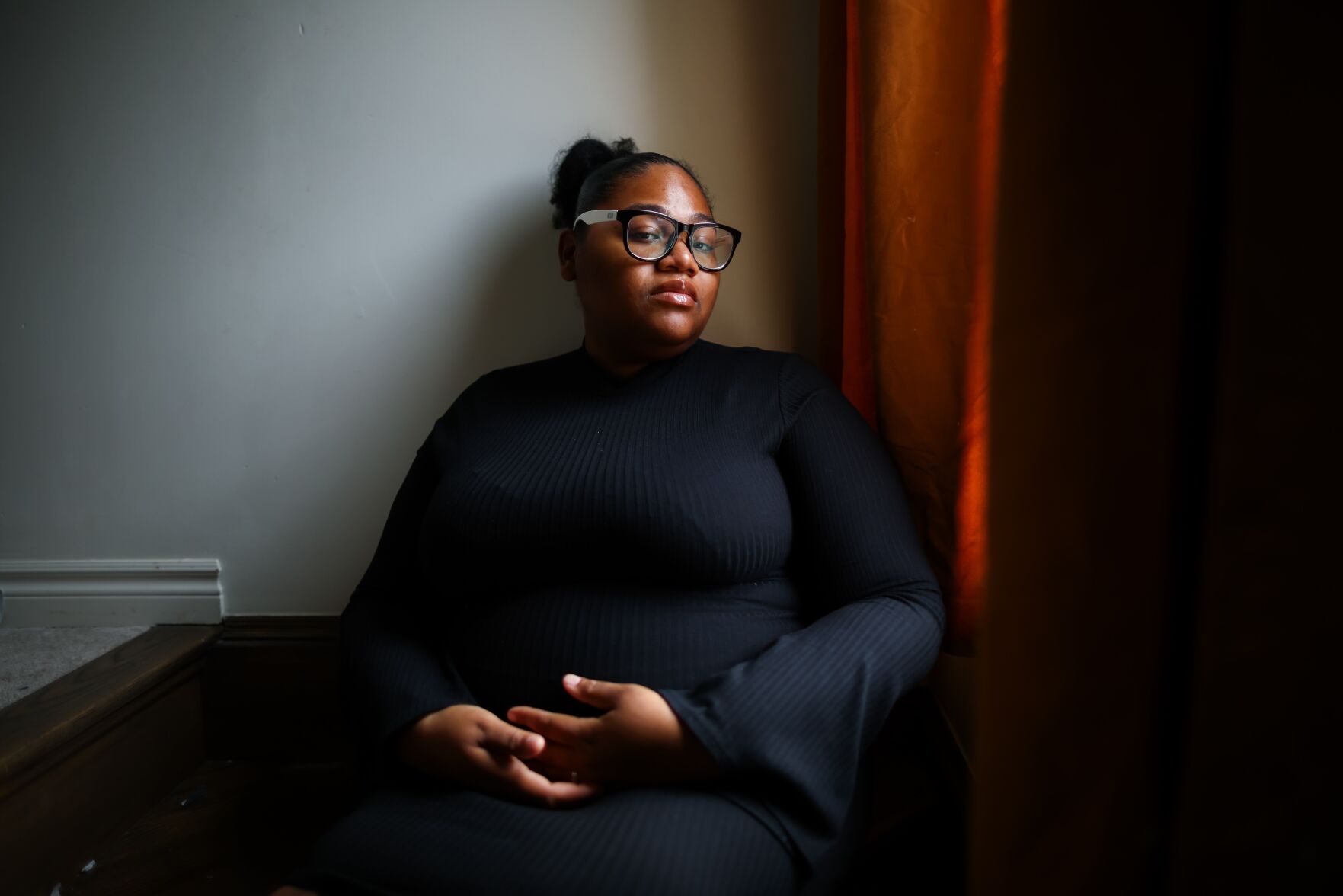
Camelott Hamblett’s sister, Cheyenne Phillip, photographed at her Ajax home
Cole Burston for the Toronto Star
“At the end of the day, I always say they make their decision before we even get there,” said Hamblett’s sister, Cheyenne Phillip, who is also one of his substitute decision-makers and who has attended a few of his ORB hearings along with their mother and other relatives.
“I’ve never once heard them open their mouths and say, ‘OK, what can be done to help Mr. Hamblett come out of seclusion?’” Phillip said in an interview.
“I want the board to say to Waypoint: ‘What are the pros and cons of him being in seclusion?’ I want the ORB to see how seclusion has negatively impacted him over the years.”
The story of Camelott Hamblett has cast doubt on whether the Ontario Review Board is upholding its duty to ensure accused individuals are treated in a fair and humane manner — and in a way that can ultimately lead to their reintegration into society — while also protecting the public.
Given that the Supreme Court of Canada has made clear that review boards have the power to supervise an accused person’s treatment and to require hospitals to consider alternatives, Hamblett’s case raises an obvious question: Why didn’t the board do anything to try to get Hamblett out of long-term isolation?
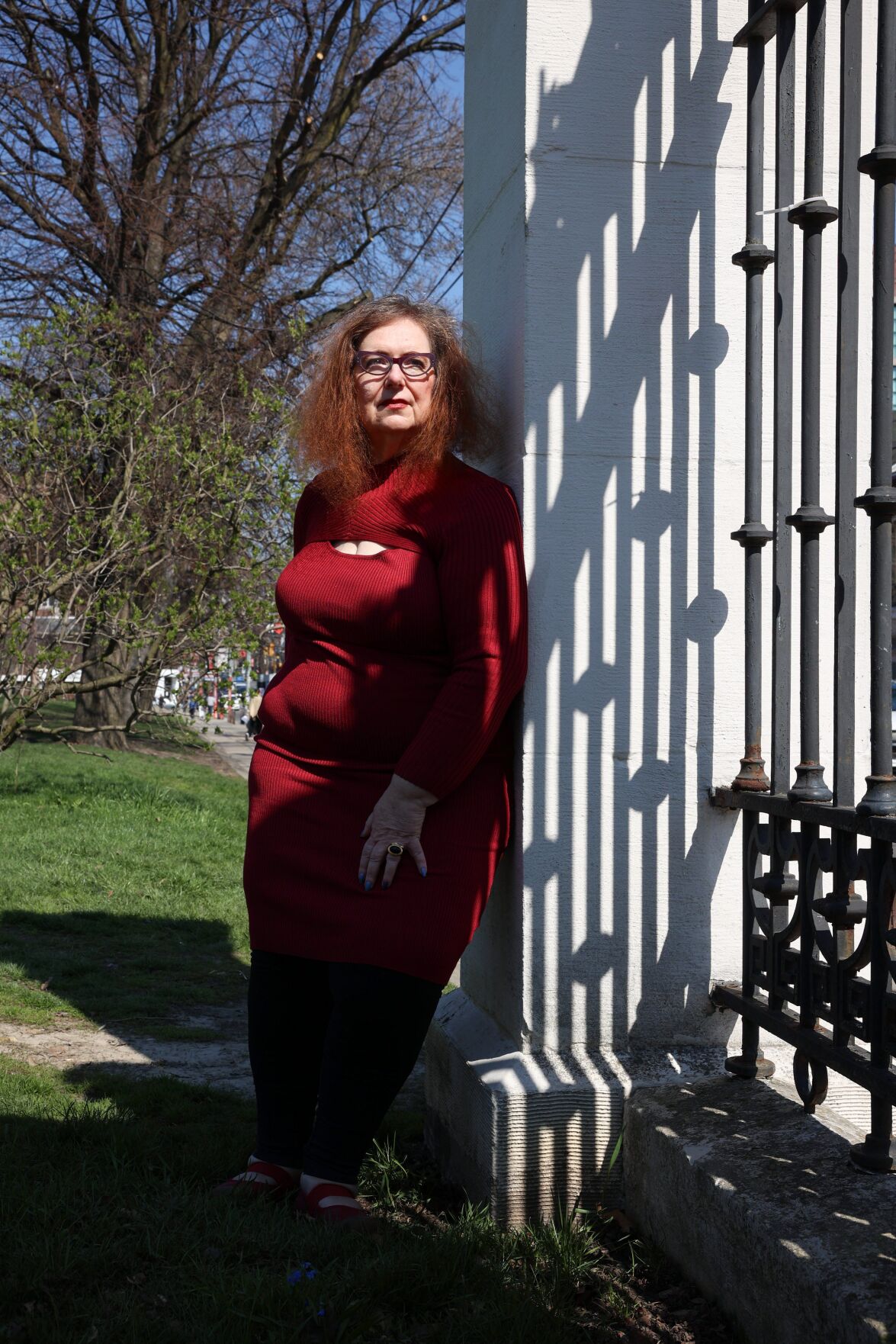
Lawyer Anita Szigeti is fighting to get Camelott Hamblett out of seclusion.
Sophie Bouquillon/Toronto Star
“It was incumbent on the board to notice that this is the most severe deprivation of liberty imaginable, that it’s ongoing, that it’s long-term and that there didn’t seem to be any reasonable prospect of resolution on the horizon,” said Anita Szigeti, an expert on mental health law who became Hamblett’s lawyer in the last two years.
Outside health-care professionals have described the use of prolonged seclusion at Waypoint as “egregious,” “abusive,” and unlike other North American facilities. A forensic psychiatrist who once worked at the facility described patients being confined for lengthy periods of time “in horrific conditions, the likes of which I have never seen in any other psychiatric hospital in Ontario.”
Yet if ORB panels dealing with Hamblett’s case inquired at all during annual hearings over the past 20 years about his seclusion status, they never made any substantial findings about it in their decisions maintaining his detention.
Gavin MacKenzie, the ORB’s general counsel, said the board does not comment about specific cases beyond what is set out in its decisions.

20 years in isolation: Part 1

20 years in isolation: Part 2
ORB panels were silent on Hamblett remaining in seclusion
The ORB is made up of former judges, lawyers, doctors and laypersons, who generally sit in panels of five when reviewing an individual’s case. Just like with every other matter falling under the ORB’s jurisdiction, the panels hearing Hamblett’s case were comprised of different board members each year.
At a typical hearing, the hospital will file a report on the patient’s treatment in the past year, and their psychiatrist will testify. The hospital, Crown attorney and lawyer for the patient then make arguments about what should happen next: Should the accused remain detained in the hospital? Should they be transferred? Or perhaps released, with or without conditions?
As required by law, the board has to come up with the least onerous and least restrictive decision for the accused individual, under the circumstances.
While the board can’t order specific medication or forms of therapy, it can do what is necessary to break a treatment impasse — a designation that means no progress has been made or is likely to be made in the patient’s treatment.
For instance, the board can order an independent assessment by an external expert — although an impasse isn’t required for this — and it can recommend that hospitals re-evaluate treatment plans and explore other avenues.
When Hamblett came before the board each year, his previous longtime lawyer almost always made the same request, acting on the family’s instructions: that Hamblett be transferred to a facility closer to home in the Greater Toronto Area. The board always denied the request and maintained Hamblett’s detention at Waypoint, and those decisions were never appealed. When Szigeti’s firm came on board, it began raising concerns about Hamblett remaining in seclusion and requested the independent assessment.

Camelott Hamblett as a young boy
But even if a lawyer doesn’t raise a concern about their client spending all of their time in isolation, that isn’t supposed to be the end of the matter. The board has the power — and, in fact, the duty — to inquire into all aspects of a patient’s care.
The ORB said in a statement to the Star that its “inquisitorial duty” requires it to gather and consider all evidence relating to four factors, regardless of whether an issue is raised by the accused’s lawyer. Those factors are: public protection, the mental condition of the accused, the reintegration of the accused into society, and the other needs of the accused.
This duty includes looking into “an accused’s living conditions or treatment decisions,” the board said.
The board is “recognized as an expert panel, and so one would expect the board to see issues whether or not they’re raised and argued by the parties,” said Richard Schneider, a clinical psychologist and semi-retired judge of the Ontario Court of Justice who chaired the review board from 2012 to 2023. (Schneider, who never sat on a panel dealing with Hamblett’s case, was speaking generally to the Star, and not about Hamblett in particular.)
“It may be that because they’re not raised and argued by the parties that they can be disposed of rather quickly, but the board has an obligation to look at anything that’s relevant to the accused’s situation,” he said.
The Supreme Court of Canada has found that review boards can subpoena records and witnesses, “including experts to study the case and provide the information they require.” In the 2018 case Mazzei v. British Columbia, the top court said it is “necessary and essential” that a review board form its own independent opinion of an accused’s treatment plan and their progress, along with their risk to public safety and prospects for reintegration into society.
“This justifies a board’s power to supervise the medical treatment provided thus far, and to suggest or explore alternative approaches where necessary,” the Supreme Court said. “Review boards may therefore validly require hospital staff to re-examine a diagnosis or a treatment plan, and to consider alternatives.”
No explanation has been offered as to why the ORB’s panels never flagged Hamblett’s long-term seclusion as a serious problem, and only occasionally encouraged the hospital to explore other ways of helping him.

Waypoint Centre for Mental Health Care in Penetanguishene, Ont.
Sophie Bouquillon for the Toronto Star.
‘There shouldn’t be simple rubber-stamping’
Stephen Hebscher, a criminal defence lawyer who was a member of the board from 2016 to 2020 but never sat on a panel dealing with Hamblett, said it’s possible panel members may have discussed issues that aren’t reflected in the ultimate decision. Those decisions are often written by one of the legal members on the panel, who will circulate it to the others to ask if there’s anything they want to add or remove before it’s released. A panel member can also write a dissenting opinion. (None were written in Hamblett’s case.)
But Schneider, the former ORB chair, said if a panel probed an accused’s living conditions, he would expect to see that in the decision.
“One would expect that seclusion that exceeds normally accepted boundaries would trigger some kind of inquiry,” he said. “If indeed it had been covered by the hearing, one wouldn’t want to leave the reader thinking on the basis of the incomplete reasons that no one had turned their minds to it.”
Camelott Hamblett has spent the last 20 years of his life living in isolation at Waypoint hospital in Penetanguishene, Ontario.
If it’s not mentioned in the decision, Schneider said, “you could safely infer” it wasn’t probed at the hearing.
Szigeti, Hamblett’s lawyer, believes the reason the status quo has been maintained for so long is twofold: one, that people working in the system have become desensitized to the plight of people like Hamblett.
“They can no longer step back and see what is obvious to the rest of the world, which is that there is something terribly wrong,” she told the Star.
“And two, it’s the dehumanization of the individual, who is ultimately seen as this dangerous, mentally ill offender who just has to be locked away from everybody.”
A transcript of Hamblett’s latest hearing shows the panel members didn’t ask any questions about Hamblett still being in seclusion and the impact on him, though they did hear about its general effect from his psychiatrist when she was asked about it by Asad Rai, a lawyer from Szigeti’s firm.
“There is evidence to suggest that there are negative effects of long-term seclusion more generally,” Dr. Stephanie Bouskill acknowledged, saying she couldn’t accurately speak to its specific effect on Hamblett.
Nevertheless, the panel declined to order an independent assessment and found that Hamblett should remain detained, knowing he would still be kept in seclusion: “There is a difference between a treatment impasse and a case that is difficult to treat,” the board said in its decision.
Phillip expressed frustration that the Crown always seems to side with the hospital’s recommendation at the ORB hearings, and that the board then goes with that recommendation, no matter what the patient or their family has argued.
“It should be the board asking the questions,” she said. “It should be the board saying, ‘Is there a reason why Camelott needs to be in seclusion? And how can we take him out of it?”
Schneider explained that the board isn’t in the business of rubber-stamping the hospital’s recommendation, but pointed out that at the vast majority of hearings, the hospital’s report and testimony from the treating psychiatrist are the only evidence put before the panel.
“There should be checks and balances put on the evidence put up by the hospital; there shouldn’t be simple rubber-stamping,” he said. “That’s not to say that some panels might be overly deferential, but in my experience that’s not the case … The board can be quite active in challenging the evidence and cross-examining the doctor even if counsel are sitting there doing nothing.”
Part of the ORB’s job is also to “supervise and ensure that the conditions of detention are such that the person is able to progress in future,” said Mercedes Perez, a lawyer who frequently appears before the board.
“What is very shocking to me is that there doesn’t seem to be very much inquiry, if any at all, into the negative impacts of the seclusion itself,” she continued, speaking about both the board and psychiatrists with patients in long-term seclusion.
“It would be the first question I would want to ask: This person has been in seclusion for five years, and you have your reasons for doing that, but what is the impact of the seclusion? How is that healthy?”
Little to no followup
While many of the ORB decisions on Hamblett make but a passing reference to his seclusion, some stand out for going a bit further.
The panel presiding at Hamblett’s hearing in 2010 recalled his then-treating psychiatrist to testify about his living conditions. The doctor explained that Hamblett has reading materials, throws a ball against the wall, sleeps on a mattress on the floor and eats in the room.
The board decided to maintain Hamblett’s detention — which meant he would remain in seclusion — but encouraged the hospital to consult with external health care professionals regarding “behaviour modification.”
According to the following year’s decision, Hamblett’s new treating psychiatrist said that an external consultation “was on the agenda.” In the decision the year after that, when Hamblett had yet another new psychiatrist, there’s no mention of an external consultation.
Hebscher, the former board member, said this is part of the problem: there’s little to no followup.
“I was always concerned about nothing happening in that one-year period if the board recommended something and nothing was done,” he said, noting that the panels are comprised of different members each year, some of whom may not have read up on the previous decisions.
Hospitals should have the responsibility to carry out the board’s recommendations, Hebscher said, and there “should be some mechanism so that these things can be followed up on and be addressed at the review board hearing every year.”
In decisions from other years, the board said they believed Hamblett had more freedom at Waypoint than he would have at other facilities, as Waypoint has enough trained staff to take him out of his room for regular seclusion relief — typically no more than two hours a day, and usually in restraints.
In 2021, Hamblett’s then-treating psychiatrist told the board that his “need for socialization is met by staff talking to him at his door and through the regular use of seclusion relief.” The board that year “exhorted” the hospital to carry out a review of Hamblett’s medication, saying he was “in great need of whatever form of intervention will help inform effective modifications to his treatment regimen.”
Hospitals are also supposed to notify the board if they’ve increased restrictions on a person’s liberty for longer than seven days; the board then has to hold a restriction of liberty hearing to consider whether the hospital’s decision was warranted.
Hamblett has never had such a hearing because he has been in seclusion since his arrival at Waypoint in 2005.
MacKenzie, the review board’s general counsel, explained it this way, speaking generally: “If the accused were to be removed from seclusion such that their liberty norm became something other than seclusion, and the accused were later placed back into seclusion, that change would constitute a deviation from the liberty norm,” and a hearing would then be required.
Szigeti argues her client should have had a hearing when he was first placed in seclusion all those years ago.
The Court of Appeal overturns the ORB
In January, Ontario’s top court overturned the board’s latest decision in Hamblett’s case. In doing so, three judges of the Ontario Court of Appeal ordered an independent assessment, while expressing shock at Hamblett’s living situation.
“It was incumbent on the board to address the clear lack of progress in treating the appellant and to seek out more effective treatment opportunities,” Justice Grant Huscroft wrote in a decision on behalf of the panel. “Something must be done: the appellant cannot continue to languish in seclusion with no real prospect for improvement.”
The board should have acknowledged “the emergency, the inhumanity of the situation,” Szigeti argued during the appeal hearing.
“And they didn’t say anything.”
Justice Sally Gomery said during the hearing that what bothered her about the board’s decision was its focus on whether Hamblett’s latest treatment plan from his psychiatrist was reasonable. “The question,” Gomery said, “is stepping back and seeing that this guy has been incarcerated in these conditions for 20 years, whether that’s reasonable.”

“I’ve never once heard them open their mouths and say, ‘OK, what can be done to help Mr. Hamblett come out of seclusion?’” Cheyenne Phillip says.
Cole Burston for the Toronto Star
The independent assessment is expected to happen in the coming months. Hamblett’s family is hoping that it will ultimately lead to him being released from seclusion and that, one day, he’ll be well enough to be transferred to a facility closer to home.
Phillip, Hamblett’s sister, said she’s hoping the assessment will also lay bare to the board and hospital how “their choices” have worsened her brother’s illness — “How the decisions you’ve made year after year have negatively impacted him.”
She spoke up at her brother’s recent board hearing, after their mother, Audrey Watson-Pinnock, interjected to say she fears her son will die inside Waypoint.
“I would just like to see more options available for him because at the end of the day, if he has more options and more opinions from different doctors, who knows what can become of the situation,” Phillip told the board.
“That’s my only opinion as his sister, who is here to support him, and wants to see him get better.”
In Part 4 of 20 Years in Isolation, coming soon: The story of Andrew Azevedo, who has been held in seclusion at Waypoint for almost five years and still hasn’t been found fit to stand trial for assault.