dailynewsnblog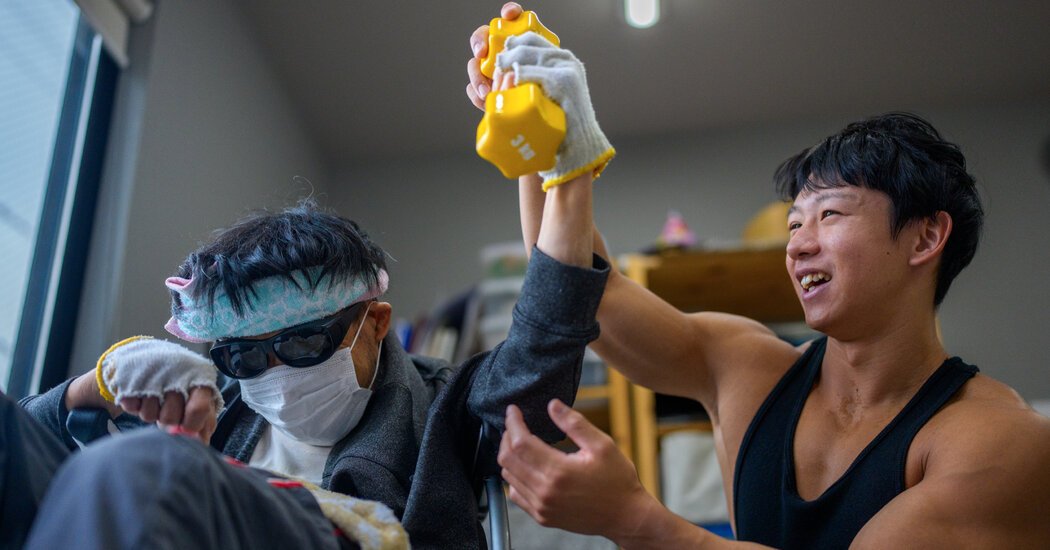
Japan’s nursing homes and care centers face a daunting crisis: an ongoing influx of elderly patients and a dearth of workers to care for them.
Some are turning to an unconventional solution, recruiting bodybuilders, mixed martial arts fighters and sumo wrestlers to take on roles as caregivers in an industry where men have long been scarce.
The unusual arrangement has given steady work to athletes, who typically have short careers and struggle to find high-paying jobs. They also get perks like free housing, gym memberships and protein supplements.
Their involvement has helped spice up life at care centers. At one facility, bodybuilders in tank tops help patients brush their teeth and work out. At another, M.M.A. fighters take turns cooking for residents and helping them bathe. At another, retired sumo wrestlers help care for men rejected from other facilities because of their weight.
Here’s how athletes at three centers are changing perceptions of caregiving in Japan.
The Bodybuilders
On a recent morning at a care center in the central Japanese city of Ichinomiya, a group of men and women with disabilities were playing games and listening to the radio.
In walked the day’s on-duty caregivers: a group of young bodybuilders with gleaming smiles. They receive an entry-level salary of more than $1,600 per month in exchange for working six hours a day at care centers. They also get paid for working out at the gym for two hours each day.
“I feel that what I like to do can be useful for society,” said Hokuto Tatsumi, 27, who has worked at the center in Ichinomiya for more than two years. “My muscles are helping put patients at ease.”
Takuya Usui, 26, a colleague, lifted a patient, Madoka Yamaguchi, out of her wheelchair.
“You got this!” he said. “Let’s go!”
Ms. Yamaguchi laughed. “He’s got a pretty face, but he’s very strict,” she said.
She teased Mr. Usui. “Macho guys,” she said, looking over his muscles, “aren’t my type.”
The bodybuilders were recruited by Visionary, one of several Japanese companies that targets athletes with the hope of channeling their strength and stamina into caregiving roles. Yusuke Niwa, 41, Visionary’s chief executive, now employs more than 30 bodybuilders who work shifts at 25 facilities.
“We need to change this outdated image,” he said. “That’s why I brought in bodybuilders — they are very strong, they look cool and they can help shake up this perception.”
As the bodybuilders gain experience in the industry, they have learned to cope with the unavoidable realities of the job, like death. After having a series of health setbacks, Ms. Yamaguchi died in February at 65.
Mr. Usui said he wished he had gotten to spend more time with her. He recalled how she knitted coasters for staff members; she used her mouth because her hands were paralyzed.
“I thought that if I had gone to see her sooner, I could have talked to her,” he said. “I realized that I need to live each day to the fullest.”
The M.M.A. Fighters
At a nursing home in Kochi Prefecture, in southern Japan, some young men lead double lives as caregivers and M.M.A. fighters, working during the day and training at night.
Mamiya Matsuura, 36, who started the program in 2022, said that the arrival of elite athletes — some with tattoos, others with dyed hair — has brought vitality and excitement. The nursing home, which his family has operated for years, currently has about 50 residents and employs 10 fighters, who live and train at the facility.
Japan’s rapidly aging population has put strains on nursing homes like the one in Kochi. There has been a sharp rise in the number of elderly patients in recent years. One in six people in Japan are now 75 or older. At the same time, there is a shortage of workers, and Japan, which has strict limits on immigration, has long resisted recruiting large numbers of caregivers from overseas.
Men have traditionally resisted caregiving roles — more than 70 percent of care workers are women, according to government data. In Kochi, the fighters are defying stereotypes.
“There’s a lot of testosterone in the room,” Mr. Matsuura said. “But when it comes to taking care of the elderly, the fighters are very tender and very caring.”
The residents have begun to treat the fighters like grandchildren, he said.
“There’s a sparkle in their eyes,” he said.
The Sumo Wrestlers
Not far from the national sumo ring in Tokyo, a crew of retired sumo wrestlers cares for residents at Day Service Hanasaki. The wrestlers are able to swiftly lift residents out of wheelchairs and into beds and nimbly move them around.
The wrestlers learned in the sumo ring to be “very quick to anticipate what’s coming next,” said Shuji Nakaita, 44, who works at the facility. The same skill is important in care centers, he said. A heightened sensitivity helps the wrestlers anticipate the needs of patients and respond quickly.
While the caregiving roles are seen as grueling work in Japan, he said he found it rewarding.
“Here,” he said, “we are like family.”