dailynewsnblog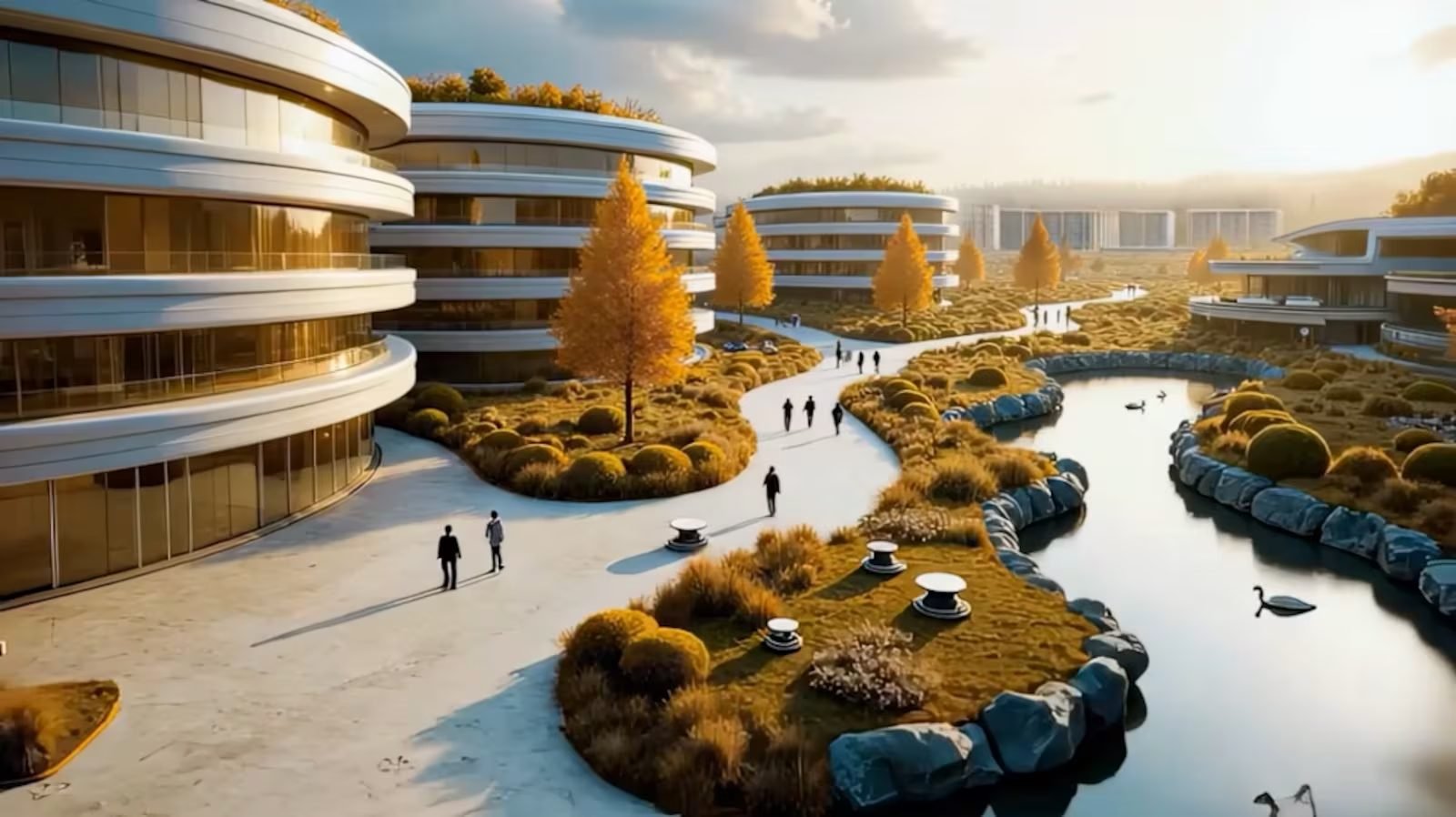
In this week’s edition of Adjournment Proceedings, we look at how Alberta’s natural gas reserves are set to provide the power needed for large-scale AI infrastructure.
Welcome back to Adjournment Proceedings, our weekly long read series. We publish a new edition every Friday. In this week’s edition, we look at how Alberta successfully caught the eye of AI infrastructure investors, and the dilemmas it now faces to power their ambitions.
Missed a week? Take a look through our archives here.
Alberta’s pitch to lure in AI data centre projects with cheap natural gas and a ‘business-friendly’ regulatory environment has worked almost too well.
“Alberta has never seen this level and volume of load connection requests,” said Aaron Engen, CEO of the province’s energy regulator, in a 2025 announcement that temporarily capped the amount of power going to AI data centers to 1,200 megawatts.
That was only enough to power two Edmonton-area proposals.
The other dozens of developers hoping to connect to the grid were left in limbo, and face three options to keep their projects going.
One, wait for Alberta’s grid to catch up to demand, which could take several years.
Two, add onsite power generation as part of the request to connect to the grid, in a bid to have the application prioritized by the regulator.
Or three, design a completely off-grid project.
The province is pushing developers towards the second option through legislation encouraging projects to “bring their own power.”
This effectively amounts to building one’s own private power plant, thanks to Alberta’s deregulated electricity system.

“Alberta has essentially limitless natural gas that provides a reliable source of power for these data centres, which require 99.9 percent reliability,” a spokesperson for Alberta’s Ministry of Innovation tells iPolitics.
Some of the most high-profile pitches in the province, including the $70B Wonder Valley project near Grande Prairie and the $10B Synapse Data Centers in Olds, plan to fully or partially draw their power from onsite natural gas facilities.
And with dozens of data centre proposals totalling billions in potential investment now on the table, the province faces a difficult balancing act: doubling down on natural gas to fuel the boom, all while negotiating a new carbon pricing agreement with Ottawa.
Alberta matches global trends
Natural gas was always a pillar of Alberta’s strategy to attract AI investors, with the province stating one of its main goals is to “utilize Alberta’s vast natural gas reserves and integrate renewable energy sources and carbon capture technology where feasible.”
This focus, combined with restrictions on solar and wind projects in the province and high capital costs for nuclear, have made natural gas very appealing to data centre projects looking to build in places that could sustain a rapid scale up in years to come.
Unlike nuclear power, which can take years to develop, natural gas offers a relatively quick and cheap way to satisfy power hungry facilities.
This is a trend on full display globally.
The International Energy Agency projects massive growth in global electricity generation to supply data centres in the next decade.
Renewables are set to meet half of the additional demand over the next five years, followed by natural gas and coal.
Currently, natural gas is the third-largest source of power for data centers, meeting 26 per cent of demand, according to the agency.
In the U.S., Microsoft recently unveiled plants for a 5 gigawatts natural gas power plant in West Texas, just as Google confirmed its own pivot to fossil fuels with a 933 MW gas-fired facility in the same state.
Other tech giants, like Meta, have been eyeing AI infrastructure opportunities in Alberta.
Facebook’s lobbyists registered meetings with top provincial officials in late January.
Ottawa’s position on gas-powered data centers is unclear
In Canada, the federal government is planning on releasing its AI and electricity strategy at some point this year.
Details have so far been kept under wraps.
But the department of Innovation, Science and Economic Development offered some details as to what kind of AI data centre projects Ottawa is ready to support in a call for proposals earlier this year.
The federal government said it was looking to sign “memorandums of understanding” with developers of AI infrastructure projects, in a bid to “identify mechanisms” that would help build large-scale commercial AI data centres with over 100 megawatts of capacity.
The request for proposals says the selection criteria will look at “energy considerations” but did not explicitly rule out the use of gas-fired plants.
READ MORE: Prime Minister Mark Carney’s promised electricity strategy still hasn’t landed. What’s behind the delay?
Asked by iPolitics if Ottawa would exclude proposals involving fossil fuels, Energy Minister Tim Hodgson said the focus is “on getting to our climate goals, and we will do that with renewable energy.”
“Where we use natural gas we will, to the extent possible, use abated natural gas,” he added.
A source tells iPolitics staff with the Major Projects Office have been present in some of the meetings between Ottawa and some of the developers of various AI infrastructure proposals.
iPolitics is not naming them as they were not authorized to speak publicly.
‘Everything is connected’: Carney
Last fall’s energy deal between Ottawa and Alberta contained language about increasing electrical generation for people and industry, including AI data centers, all while reaching net zero emissions for the electricity sector by 2050.
It talked about the construction of thousands of megawatts of AI computing power, with a large portion dedicated to sovereign cloud computing.
The agreement also includes a promise that federal clean energy regulations will not apply in Alberta if the province agrees to a carbon pricing system that ramps up the effective minimum carbon price to $130 per tonne.
Natural gas plants that support data centers of more than 30 megawatts – which are most of the proposals currently in the province – are subject to Alberta’s carbon pricing system.
This means that, should Alberta and Ottawa soon agree on a carbon pricing system, the cost of powering an AI data centre with natural gas in Alberta could change.
This will, of course, depend on how much the price escalates and when.

Speaking to reporters this week, Carney said the timeline for ramping up the carbon price in Alberta is an important part of the ongoing negotiations with the province.
“Everything is connected… The key is, from our perspective, to have an effective functioning carbon market with respect to the competitiveness of our oil and gas sector.”
The role of natural gas in net zero
A strong carbon price would push gas-fired plants to invest in carbon capture technologies, and would incentivize AI data center developers to look at other sources of energy.
According to Canadian Climate Institute modeling, the policy package resulting from the MOU could swing 2050 emissions levels by over 80 million tonnes.
Alison Bailie, a researcher with the Institute’s 440 megatonnes team, tells iPolitics that without a strong carbon market, the emissions intensity of Alberta’s electricity grid will worsen and gas-power will be locked in for longer.
“Emissions could double from 2035 to 2050, nearly erasing 15 years of grid decarbonization,” she said.
Bailie adds that renewable energy could easily compete with natural gas for electricity generation in Alberta, if there were more support and fewer barriers to implementing the technology.
Asked how carbon pricing could shape Alberta’s AI ambitions, the province’s Ministry of Technology and Innovation did not answer directly, but indicated that it believes there is a way to have it all.
“Alberta remains committed to both data centre attraction and achieving net-zero sector emissions by 2050,” reads a statement to iPolitics.
“That includes exploring … technologies like nuclear energy, carbon capture, energy storage that, along with natural gas, could help meet the energy needs of data centres in the long run, while reducing emissions.”