dailynewsnblog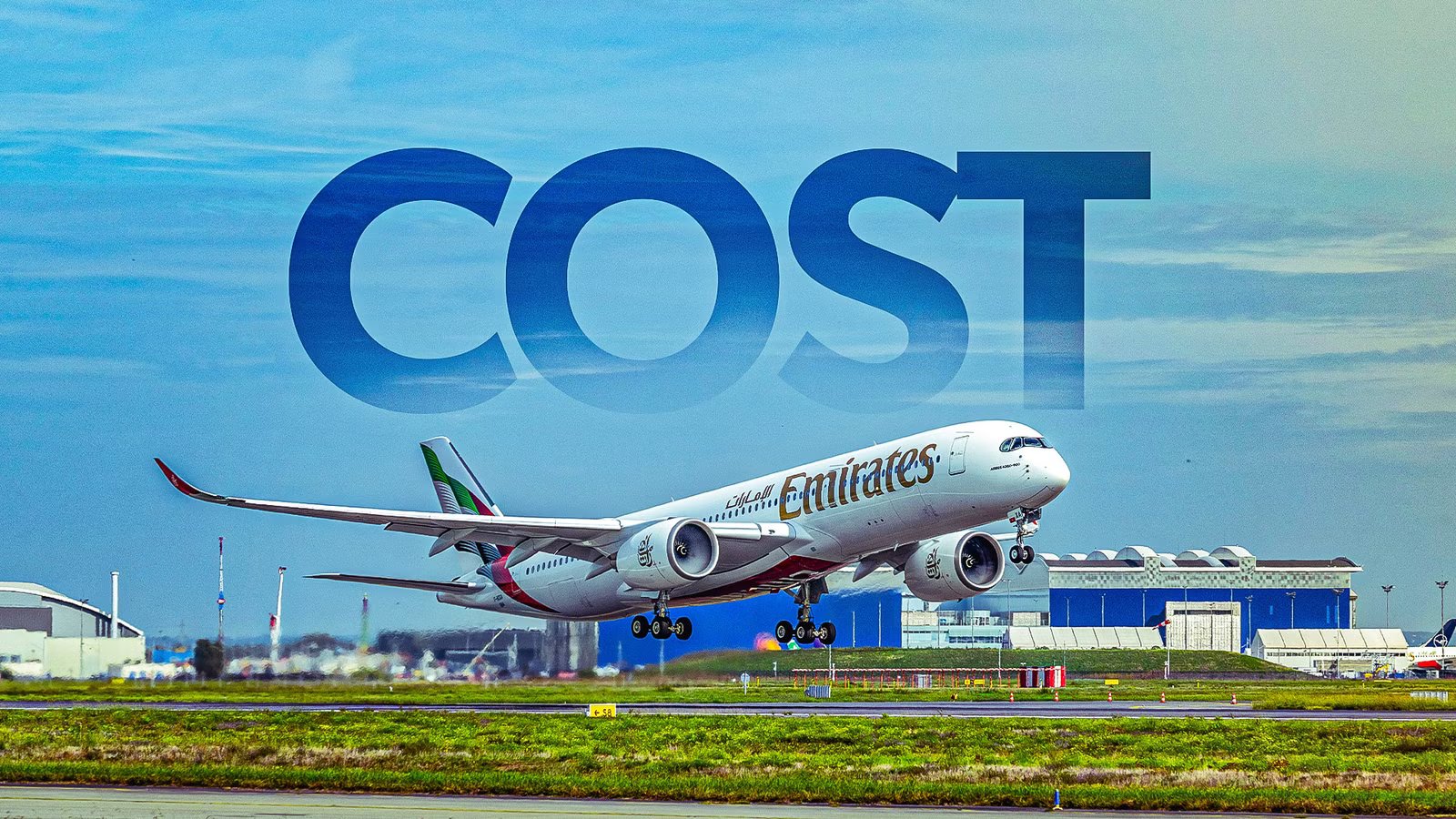
As the largest aircraft currently in production by Europe’s legendary plane maker, Airbus, the A350-1000 is a colossal airliner. Especially since the jet only has two engines, it is a remarkable sight to witness taking off. The two enormous Rolls-Royce XWB-97 turbofans put out 97,000 pounds of thrust in order to get the 300+ ton twin jet into the air every time it departs from the tarmac. The price of all that power is 125% fuel burn compared to when it is flying a cruise profile.
It is estimated that an A350-1000 costs just over $5,000 per flight hour, with fuel accounting for a little over half of that total operating cost. In just the first few minutes of flight, including takeoff, this enormous airliner can burn between 2.5 and 3 tons of jet fuel. That total takeoff burn is equal to about 10 minutes of flight at cruising altitude. Accounting for just a few hundred kilograms of fuel required to accelerate as the plane becomes airborne, that price can be estimated at between $500 when normal prices prevail or over $1,000 now with the current market rates.
Airbus’ Biggest Bird: The A350-1000 Advantage

That high fuel burn comes with a strategic trade-off. The plane consumes a disproportionate amount of gas to get off the ground, like every other aircraft. Once in the air, it makes up for that by cruising with very high efficiency. In fact, the plane is less costly per seat than other twinjet airliners in its class because it has a very large payload capacity.
It is true that the initial client base of flying has a very high rate of fuel consumption, estimated to be over 1,000 kilograms per minute. That normally comes out to at least $500 to $1,000 per minute, or, with the current oil crisis, double that amount. Despite the high takeoff burn, the A350-1000’s use of carbon-fiber composites and advanced Rolls-Royce Trent XWB engines makes it 25% more efficient than previous-generation widebodies.
In a cruise profile, the A350-1000 has an estimated fuel burn of 100 kg per minute or slightly higher. That is about a tenth of the rate of consumption required to take off and climb up to altitude. As an ultra-long-haul aircraft, this is by design.
Airbus and Rolls-Royce optimize the aircraft for operation at high altitude because that is where the jet spends most of its time in the air. At the same time, it was given the ability to ‘crank it up to 11.’ That is so the plane can safely produce very high power on the tarmac and take off from ‘hot and high’ airports where conditions degrade performance and reduce payloads for operators.
Head To Head: How The A350-1000 Stacks Up

The A350-1000 has stiff competition from both the legacy Boeing 777 and the next generation 787 Dreamliner which inspired Airbus to begin its own clean sheet program that resulted in the A350 family. The A350-900 extra-widebody also has a better range and more efficient gross fuel consumption rate; however, the A350-1000 can beat it when you compare the total payload transported for the same amount of fuel.
Similarly, compared to the older Boeing 777 and the newer 787, which is smaller, the A350-1000 distinguishes itself for its unique performance qualities. The A350-1000 sets itself apart during the takeoff sequence by balancing immense thrust with a surprisingly agile runway footprint. Despite being significantly larger and heavier than the 787-10, the largest of the three Dreamliner variants, the A350-1000 consistently uses less runway.
The A350-1000 and its sibling, the A350-900, use their oversized, advanced composite wings to generate massive lift early. While the Boeing 777-300ER uses brute force from its GE90 engines, which were the most powerful turbofan jet engines ever made until the GE9X debuted with the upcoming Boeing 777X. Because the ‘triple seven’ has a predominantly aluminum construction and an older generation of engines, it consumes far more fuel than the A350-1000 during takeoff and initial climb.

The 6 Airliners With The Longest Flying Ranges Today
A closer look at some of the world’s ultimate ultra-long-haul jetliners.
The Nitty Gritty: Why It Takes So Much Power To Lift Off

Aircraft like the Airbus A350-1000 burn a disproportionate amount of fuel during the takeoff roll and initial climb because they must overcome inertia and gravity simultaneously while operating in the thickest, most resistant part of the atmosphere. Launching a 322 ton jet plane into the air requires it to accelerate up to a takeoff speed of around 186 mph (300 km/h). That is no small task for any machine.
In order for the A350-1000 to make it into the sky, the colossal Rolls-Royce turbofan engine needs to operate at near maximum thrust output. Once the pilots are given approval to begin their takeoff roll, those first minutes of hard burning consume hundreds of kilograms of aviation-grade jet fuel solely for the purpose of achieving liftoff. Then, once the plane is airborne, it must continue climbing thousands of feet to the upper atmosphere.
Fuel burn actually increases after liftoff during the initial climb, reaching 1,200 to 1,500 kilograms per minute as the plane fights to reach thinner air where it can cruise more efficiently. During takeoff and initial climb, aircraft use flaps and slats to increase lift. While necessary to stay airborne at lower speeds, these surfaces significantly increase aerodynamic drag, requiring even more fuel to maintain speed.
Moving a massive airframe through dense low-altitude air requires significantly more power than moving through the thin air at 35,000 feet. At full takeoff power, engines run at their highest internal temperatures and pressures, which is less fuel-efficient than the steady-state “sweet spot” used during cruise. That means the thrust specific fuel consumption, or the amount of fuel needed to produce one unit of thrust, is generally poorer at low-altitude, high-power settings than at high-altitude cruise settings.

Here’s How Far The Ultra-Long-Range Airbus A350s Can Fly
Find out the exact ranges for each A350 variant. You can then learn more about how advanced materials and design decisions facilitate the range.
The Ultimate Ultra Long Hauler: Project Sunrise

Because the A350-1000 is currently the largest twinjet, twin aisle, widebody commercial aircraft in production, it is also the top contender for the ultimate civil flying missions. Singapore Airlines famously flies a small fleet of A350-900 ultra-long-range variants that were modified to complete the world’s longest commercial itinerary, for now. Airbus is currently working with Qantas on what has been dubbed ‘Project Sunrise’ to modify an A350-1000 to fly even further.
Maximizing the qualities of the enormous Airbus wide body to fly the longest in commercial aviation is the most ideal use of the specific technology in the A350-1000. The aircraft may burn a significant amount of fuel during its brief period of ascent from the ground to cruising altitude, but once it’s there, there are few aircraft in the world that can compete with it in terms of fuel efficiency. Optimizing the plane for missions that will have it soaring at the upper levels of the atmosphere for 20 hours will push fuel efficiency numbers higher than ever seen in commercial flying.
Project Sunrise is the code name for Qantas’ ambitious plan to operate the world’s longest non-stop commercial flights, connecting the east coast of Australia, Sydney and Melbourne, directly to London and New York. These flights will last up to 22 hours, saving passengers up to four hours of travel time by eliminating current stopovers in cities like Singapore or Los Angeles. To make these 10,000-mile journeys possible, Qantas ordered 12 specially modified Airbus A350-1000ULR.

Here’s How Much More The Airbus A350-1000 Costs Compared To The A350-900
The price difference between the two variants.
What’s Inside: The Most Fuel-Efficient A350-1000 Yet

The A350-1000ULR will feature an additional 20,000-liter rear-center fuel tank, allowing it to carry the massive fuel load required for nearly a full day of flying. To offset the fuel weight, the cabin has a significantly reduced seat count at just 238 passengers compared to the standard 350 to 410. It also features reinforced landing gear for a 319-ton maximum takeoff weight.
Following manufacturing and certification delays, the first aircraft is now expected to be delivered in late 2026, with commercial service starting in early 2027. Because the flights are essentially endurance tests for every flyer aboard, the cabin has been designed from the ground up for passenger wellness, too.
The ‘Wellbeing Zone’ is a world-first dedicated space between Premium Economy and Economy where all passengers can stand, stretch using integrated handles, and access a self-serve hydration station. Twelve custom lighting scenes have also been engineered to help flyers adjust, as developed by sleep scientists to mimic circadian rhythms and reduce jet lag.
The spacious cabin configuration features six private suites in first class with separate reclining chairs as well as full 2 meter long flat beds. Business class is limited to 52 suites, each with sliding privacy doors and direct aisle access at every seat. Economy class is also much more generous than the average airliner. The uniquely modified aircraft has a 33-inch seat pitch, which is the most legroom of any plane in the Qantas fleet, to provide extra comfort for the long journey.

![Australia-Middle East Routes: Massive 23 Daily Nonstop Flights In 2026 [List]](https://dailynewsnblog.com/wp-content/uploads/2026/04/632-emirates-airbus-a380-toni-m-_-shutterstock.jpg)