dailynewsnblog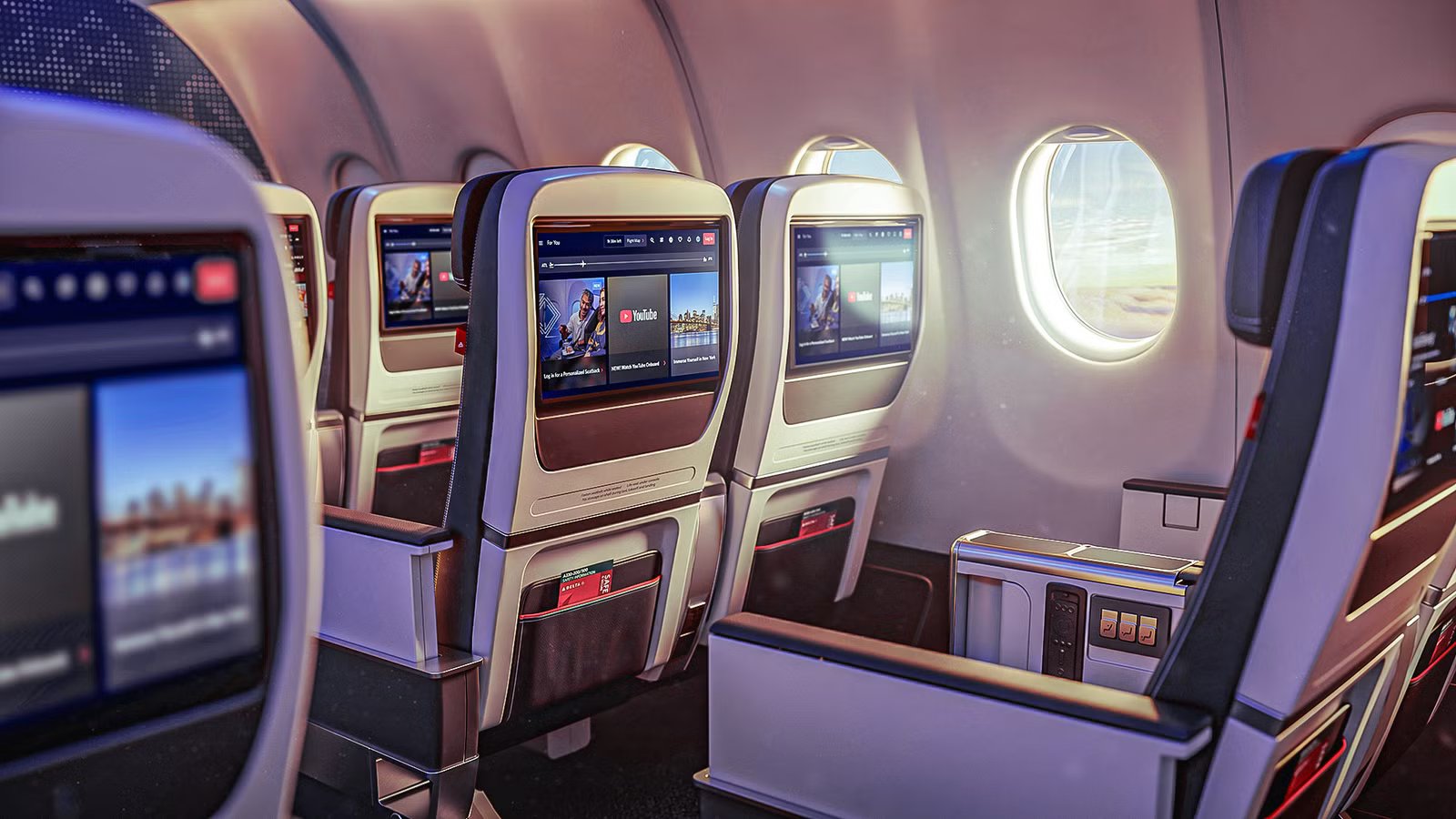
US-based legacy carrier  Delta Air Lines has announced that it will be introducing the Airbus A350-1000 to service. That aircraft, the largest variant in the A350 family, will enter service as the next step in the airline’s long-haul fleet and premium-cabin strategy. According to materials published by Delta, deliveries are set to begin in early 2027, making that the key date to watch for the aircraft’s debut in the airline’s overall network. As for Delta, the A350-1000 is not just a larger airplane than the A350-900; it is already in service with other carriers. The plane is being positioned as a flagship international model built around high-paying demand, operational efficiency, and a much more standardized onboard product.
The airline says that the jet will be used on long-haul international and hub-to-hub missions. The plane will arrive with a heavy emphasis on higher-end seating, including updated next-generation Delta One Suites and a roughly 50% premium seat mix. Delta is also going to be using the launch to showcase broader cabin upgrades, ranging from larger seatback screens and Bluetooth connectivity to fast and free inflight WiFi, something which frames the jet as part of a wider multibillion-dollar push to modernize the customer experience across its entire fleet. In other words, the A350-1000’s debut is shaping up as both a fleet milestone and a statement about where Delta sees the most value in global flying over the next several years.
A Brief Overview Of The Airbus A350-1000

The Airbus A350-1000 is the largest individual member of the A350 family, and it is designed as a high-capacity, long-range widebody for major intercontinental markets. In Airbus’s standard three-class layout, it typically seats about 375 to 400 passengers, with room for significantly more luxury seating than the smaller A350-900. When introducing the type, Airbus was aiming to serve a specific kind of customer that wanted a larger and more capable widebody model. Airbus has consistently pitched the type as a step up from previous-generation large twin-aisle jets, pairing added capacity with lower fuel burn and overall emissions.
The aircraft itself is powered by Rolls-Royce Trent XWB-97 engines and offers an impressive range, allowing it to serve pretty much all kinds of destinations. Airlines that are looking for a flexible aircraft are big fans of the A350-1000, as it can be used on dense long-haul routes where both seat count and network reach matter. Beyond the raw numbers, the A350-1000 is built around the modern Airbus widebody formula, which includes a quieter cabin, higher ceilings, improved air quality, and a layout intended to directly support more premium-heavy interiors.
This makes the plane quite attractive to airlines seeking a flagship aircraft without moving into the even larger, more expensive end of the market. When it comes to Delta, that matters because the plane is not just bigger than the A350-900s already in service. Rather, it is also well suited to the airline’s push toward higher-margin international flying and even more high-end cabin real estate being occupied.
An Overview Of Delta’s Widebody Strategy

The Delta Air Lines widebody strategy is currently centered on renewal and international growth rather than just the addition of some more seats. The airline has been clear that its next generation of long-haul planes is meant to replace older, less efficient widebodies while also giving it better economics and a more consistent onboard product across the board. That is ultimately why Delta has been doubling down on newer Airbus widebodies, ordering additional A330-900s and A350-900s while also adding the Boeing 787-10 to its order book.
The operational logic here is quite straightforward. Delta wants a fleet that can support more long-haul flying, improve fuel efficiency, and carry a larger mix of premium passengers. The carrier has explicitly tied those aircraft orders to international footprint growth, improved margins, and expanded luxury offerings. This all falls in line with the airline’s objective of continuing to serve as a leader in high-end travel, a move that has allowed it to charge impressively high prices.
At the same time, the airline is not focusing only on new deliveries. The carrier is also investing more than $1 billion in onboard upgrades, including refreshed A330-200 and A330-300 models with Delta One Suites, larger screens, upgraded power options, and a more standardized interior design. In other words, Delta’s strategy is to modernize both the fleet itself and the customer experience across that fleet, so newer jets and upgraded legacy aircraft work together rather than as separate products.

Delta Air Lines’ Widebody Strategy: Why The Airbus A350 & A330 Work Together
A new era for the iconic carrier.
Where Does The A350-1000 Fit Into Delta’s Widebody Strategy?

The A350-1000, upon entering commercial service, will immediately sit at the top end of Delta’s widebody fleet strategy. It will immediately enter service as the airline’s flagship for long-haul international and heavy hub-to-hub services. Delta has indicated its expectation that deliveries of the type will begin in early 2027, and the plane is being positioned not just as another A350, but as the airline’s newest and largest aircraft with a roughly 50% premium seat mix.
This ultimately makes its role pretty clear. The A350-1000 is meant to concentrate Delta’s strategy of flying bigger, more premium-heavy, more efficient jets in markets where demand and margins justify it. It also helps explain why Delta is introducing its next-generation Delta One Suite on this model first. The airline will use the A350-1000 to showcase its latest high-end products, while retrofitting older A330-200s and A330-300s to move the broader widebody fleet toward a more uniform luxury standard.
From a strategic perspective, that places the A350-1000 above the refreshed legacy widebodies and alongside the growing A350-900 fleet as a core long-haul growth tool. The  Boeing 787-10, by contrast, is being aimed more at transatlantic and South American flying from 2031 onward, which means the A350-1000 appears set to anchor Delta’s highest-profile, longest-haul, and most premium-intensive missions earlier in the rollout cycle.
What Cabins Will Delta Air Lines Offer On The Airbus A350?

On Delta’s incoming Airbus A350-1000, the airline is planning on offering four cabins. These include Delta One Suites, Delta Premium Select seats, Delta Comfort seats, and Delta Main cabin economy seats. The headline product is the next-generation Delta One Suite, which Delta is using this aircraft to introduce first.
That cabin will feature sliding privacy doors, a flat bed that Delta says is a bit longer than before, new pillow-top cushioning, and improved personal storage, underscoring the airline’s push to make the A350-1000 a flagship for high-end long-haul travel. Below that, Delta Premium Select will serve as the premium economy option, while Delta Comfort fills the extra-legroom economy role and Delta Main anchors the standard economy cabin.
Delta is also emphasizing that the overall experience will not be limited to the front of the plane. Every cabin on the A350-1000 is set to get the airline’s largest-ever seatback screens, Bluetooth connectivity, USB-C and universal AC power, memory foam cushions and, of course, fast and free Wi-Fi. That reflects Delta’s broader effort to make the A350-1000 a luxury showcase, and a more consistent product across all fare classes.

Why In The World Did Delta Air Lines Order The Largest Airbus A350 Variant?
Dive into the story behind Delta opting in to Airbus and out of Boeing.
Which Routes Are We Likely To See The A350-1000 On?

Delta Air Lines | Simple Flying
Delta has yet to announce a specific inaugural route for the A350-1000. Based on information already provided by the carrier, the most likely candidates are Delta’s premium-heavy long-haul markets that already lean on the A350 family or have been identified as growth markets for the type. Delta says that the A350-1000 is intended for long-haul international and hub-to-hub missions.
In its broader fleet update, the carrier tied the type specifically to growth in Asia, Africa, the Middle East and the South Pacific, citing Taipei, Melbourne, Hong Kong, and Riyadh as primary examples. That makes routes like Seattle to Taipei, Los Angeles to Melbourne, Los Angeles to Hong Kong, and Atlanta to Riyadh all plausible fits.
Existing A350 strongholds like Atlanta-Seoul and Salt Lake City-Seoul also look like strong contenders, since Delta already uses the type on high-profile transpacific services. Delta will likely debut the type on a flagship Asia-Pacific route or briefly on a domestic hub-to-hub service for crew familiarization.
What Is Our Bottom Line?

At the end of the day, the Airbus A350-1000 will not fundamentally change Delta’s fleet and operational strategy. However, it will add another valuable tool for the carrier, especially as it looks to improve service, operations, and capabilities on ultra-long-haul routes in and out of major destinations.
The airline’s second primary expansion focus has been improving its premium product offerings across the board. The carrier’s ability to serve more routes with more high-end seats is a critical piece of its profitability puzzle, and its long-term goals undeniably include remaining as the go-to leader in premium operations in both the Atlantic and Pacific markets.
The average customer will likely notice relatively little when getting onboard their first Delta A350-1000 flight. The aircraft will pretty much feel identical to any other widebody in the airline’s fleet and is not revolutionary by any stretch of the imagination. Nonetheless, the plane will still help the airline on the margins and improve overall operational efficiency.