dailynewsnblog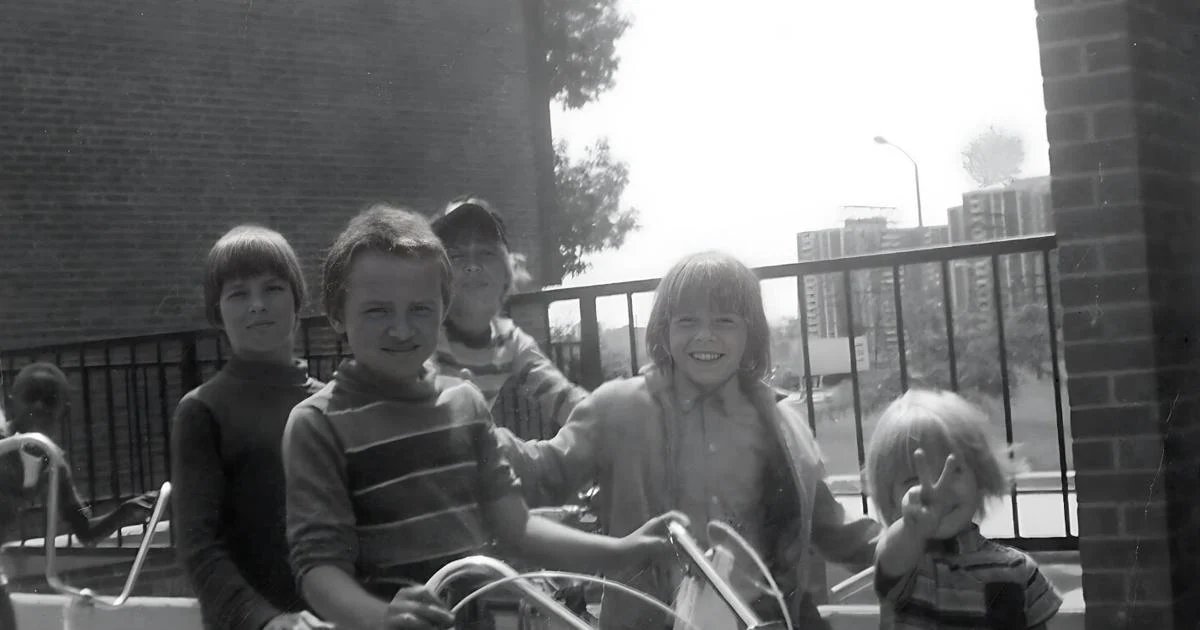
As Toronto’s Golden Mile neighbourhood project stalls — just one of countless local construction projects wrong-footed by the times — it’s worth remembering that these things used to go more smoothly on occasion.
If Flemingdon Park were a person, it would be reaching retirement age, but the original municipally planned “apartment city” remains a vital part of the city’s present and future; in fact, it’ll have its own stop on the Ontario Line, someday (probably). In his new book celebrating the community’s 65th anniversary, “Flemingdon Park: No Mean Neighbourhood,” writer Edward Brown draws from the historical record, engages in some creative imagining and brings its story to life, starting with the ribbon cutting.
Flemingdon Park, billed as a garden estate in a parkland setting, officially opened on a June afternoon in 1961, just 18 months after construction crews broke ground.
A ribbon-cutting ceremony on June 21 marked the completion of phase one of construction. The event occurred in the dusty gravel parking lot outside the rental office of Webin Community Consultants (WCC), landlord of the emerging neighbourhood.
WCC staff operated out of an office about the size of a double-wide construction trailer located south of Eglinton Avenue East, east of Don Mills Road, on the current apartment building site at 200 Gateway Boulevard. After a visit to the rental office, potential renters were encouraged to peruse the furnished model suites. There were 14 floor plans to choose from. Once they selected, tenants paid their rent here, where a detailed scale model of the completed community was displayed.
In the first phase of construction, 500 units were completed, and 200 remained under construction. Housing options were limited to four addresses. Since the beginning of April, families had been renting garden homes at 61 and 58 Grenoble Drive, maisonettes at 1 Vendome Place, and apartments at 1 Deauville Lane.

“Flemingdon Park: No Mean Neighbourhood”
Edward Brown
Friesen Press
234 pages
$30.99
Edward Brown photo
Residents were a diverse socioeconomic group. School teachers, engineers, doctors, stockbrokers, lawyers, and chemists next door to truck drivers, printers, artists, writers, and retired folks. Rents range from $110 a month to close to $160. In the waning days of the postwar baby boom, youngsters make up a noticeable proportion of the population.
The midday sun hid behind grey clouds, and rain threatened. The temperature hovered around a cool 59 degrees Fahrenheit (15 C), making it feel more like mid-April than the first day of summer.
Lousy weather could not dampen the spirits of the dignitaries waiting for the ceremony to commence. Chairs were arranged left and right of a podium at the centre of a temporary platform. William Zeckendorf Jr., developer Alex Rubin, architect Irving Grossman, and urban planner Macklin Hancock were already seated. Metro chairman Frederick Gardiner and civic leaders from the Township of North York and Metropolitan Toronto were present, along with a representative from a provincial government ministry.
American business tycoon Zeckendorf, 56, owner of the world’s largest real estate company, would cut the white ribbon between two chrome stanchions on the platform.
WCC staffers had canvassed the neighbourhood earlier, enticing tenants to turn out with a promise of light refreshments. A clown with a large, coiled brass bicycle horn slung over his shoulder, wearing bright overalls and enormous red shoes to match his bulbous foam nose, handed out helium-filled balloons. Turnout, better than expected, consisted mainly of housewives, young mothers, youngsters, and a scattering of senior citizens.
A friendly policeman with dark eyes and a prominent chin leaned on the hood of his scout car, keeping an eye on things. He folded his arms across his brawny chest, nodding at pretty young mothers. Dignitaries chatted with one another, ignoring a Globe reporter badgering them with questions. The frustrated reporter gave up, snaking through the crowd to the periphery, where he jotted notes on his writing pad.

New York mayor Ed Koch, right, and real estate developer William Zeckendorf Jr. look over a model of a development proposed for midtown Manhattan in 1985.
Mario Cabrera THE ASSOCIATED PRESS
Before the ceremony’s scheduled start time, bulldozer operators grading roadways turned their machines off as instructed. Diesel-powered engines sputtered and went silent. Men in shiny hard hats climbed off their rigs, dusted themselves off, and slowly walked toward the gathering. Dump trucks and cement mixers rumbled to a stop. Operators in soiled clothing left their vehicles and sauntered over. Clusters of sun-browned construction workers, plumbers, bricklayers, electricians, carpenters, and gasfitters stood around impatiently, smoking unfiltered cigarettes and jawing with one another in their mother tongues.
The breeze lifted. A horse neighed near the frog pond under the power lines on Earl Magee’s farm. A noticeable portion of Flemingdon Park remained rural. Until recently, plowed-under meadows had been cultivated farm fields. Thickets of trees rimmed the mile-long ravine that bisected the burgeoning community where a creek flowed a mile south into the east branch of the Don River.
A woman with a beehive hairdo, pushing an infant in a perambulator, stopped to take in the crowd. She asked the Globe man, “What’s this about?”
Glancing over the top of his black-rimmed glasses, he replied flatly, “Ribbon cutting.”
“The neighbourhood. Zeckendorf flew in from New York just to be here.”
The Globe man directed his gaze at a four-door, chauffeur-driven, black Lincoln Continental. “Him.”
Huddled in the rear of the idling luxury car, William Zeckendorf engaged in an animated conversation on a boxy car phone. Beside him, his young, perky personal secretary frantically took notes.
This could take a while. Nobody rushed the millionaire developer. His company, Webb & Knapp, was footing the bill for the construction of Flemingdon Park, which was estimated at a staggering $104 million.

Author Edward Brown at Flemingdon Park.
Edward Brown photo
Zeckendorf’s schedule was packed. He was reputed to take up to 30 business calls in an hour and had a reputation as a flamboyant wheeler-dealer. The high-energy, hefty six-footer remained an anomaly. By all appearances, he was a glad-handing extrovert, but Zeckendorf preferred to keep his own company. Close acquaintances describe him as something of a loner.
The high-school dropout was born into wealth. As a boy, he didn’t have much use for school, routinely skipping class to tramp the fields of his semirural neighbourhood on the outskirts of New York City, alone except for his dog, a mutt named Mickey. While more academic boys his age were in class, he and Mickey escaped to the marshlands of Jamaica Bay with a fishing pole, the vibrato of harvest flies the soundtrack of his idle boyhood. A teenage Zeckendorf routinely snuck to Ebbets Field in Brooklyn to see Dodgers games.
Times change. By 1961, Zeckendorf’s name adorns hotels, plazas, and industrial complexes throughout the continent. Before the Dodgers left Brooklyn for greener pastures in California, he came this close to purchasing the team. He owned the Chrysler Building. He constructed the world’s largest shopping mall. Mutts like Mickey were long gone. Photographers frequently captured Zeckendorf leading thoroughbred Weimaraners, obedient and loyal show dogs, around on 10-carat gold leashes bedazzled with diamond-and-sapphire-encrusted collars.
Zeckendorf had touched down at Toronto International Airport in Malton aboard a company plane a few hours earlier. Following today’s event, he would jet to Philadelphia for a late-afternoon meeting, then a flight home to his mansion in Greenwich, Conn.
A WCC staffer growing antsy by the prospect of rain, flitted about with a clipboard. Some in the crowd contemplate leaving. Businessmen and government officials glanced anxiously at their wristwatches but remained seated. Directly or indirectly, they were all caught in Zeckendorf’s web of big-money financing. Webb & Knapp had financial interests in Alex Rubin’s firm, Toronto Industrial Leaseholds Co. (TIL). WCC, a subsidiary of TIL, paid architect Irving Grossman and urban planner Macklin Hancock. Politicos were entangled in Zeckendorf’s interests, too.
At last, Zeckendorf emerged from the Lincoln. He smiled a big, greasy smile, clapped his meaty palms, and wrung his hands. In the booming voice of a circus carny, he exclaimed, “So, where’s that ribbon?”
From here on, it was the usual fare. Politicians took turns at the podium, congratulating themselves. Grossman the architect told the gathering about Flemingdon Park’s unique form and function. Hancock the urban planner discussed the promise of things to come. Praise for Zeckendorf was unanimous.
The WCC staffer with the clipboard presented Zeckendorf with oversized gold scissors when a cicada-like clicking interrupted the moment. The crowd spilling onto the roadway parted to allow a swarm of boys on bikes with playing cards rat-a-tatting in their spokes to cruise past, indifferent to the goings-on.
For an instant, the crowd was awed by their tremendous red, persimmon-orange, and jungle-green bikes. Highrise handlebars. Chrome fenders. Yellow banana seats with chrome crash rails. Three-speed stick shifters on cerulean-blue crossbars. Big back wheels. Small front wheels. Miles of whitewalls. The police officer moved to block their route. He spread his arms, creating an imaginary net to scoop them up. Bikes flowed around him with the ease of water.
Zeckendorf gripped the comically large scissors. A little girl with pigtails wearing shiny brown saddle shoes released her red balloon. She watched it soar higher and higher. The clown squeezed the rubber bulb of the bicycle horn slung over his shoulder.
Some in the crowd laughed.
Zeckendorf cut the ribbon.
The ceremony ended. The crowd dispersed.