dailynewsnblog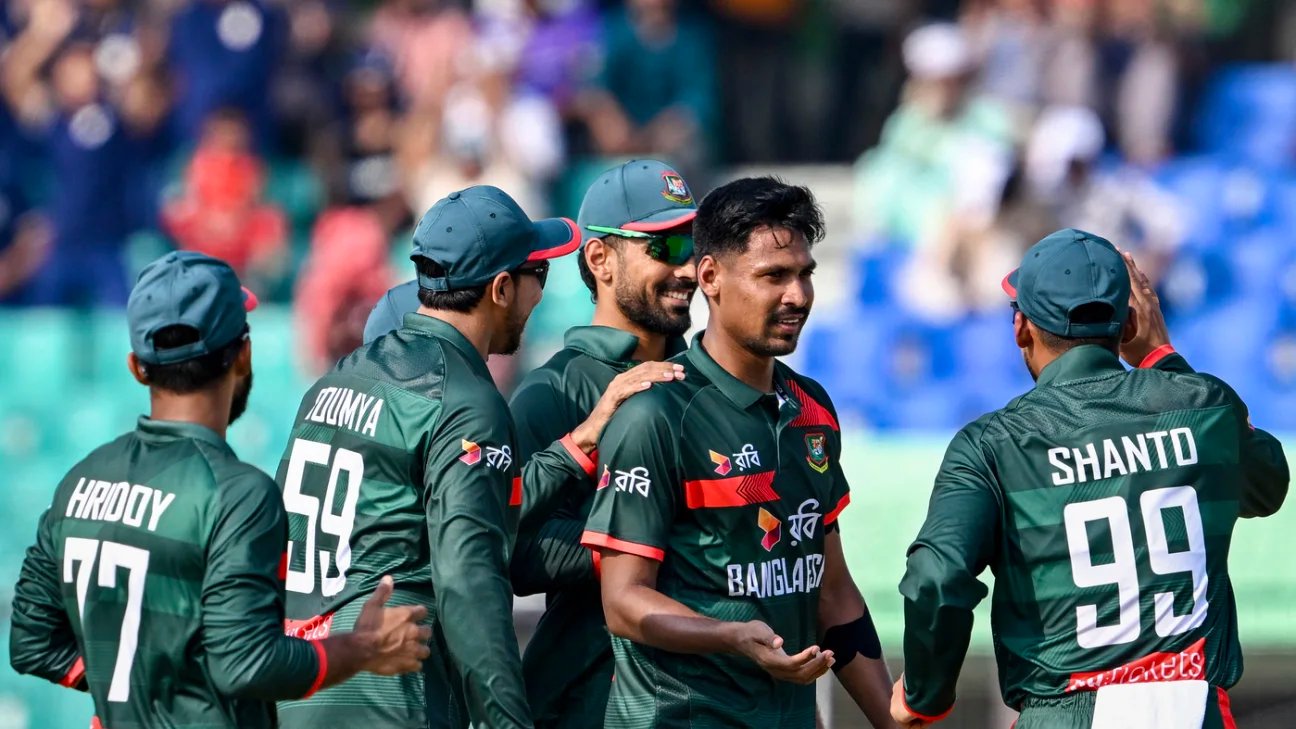
Their combined 22 wickets in the series is now the most by Bangladesh’s fast bowlers in a bilateral ODI series. The interesting part is how it was spread out: Rana took eight, Mustafizur and Shoriful five each, Taskin three, and part-timer Soumya Sarkar one. That beat the 21 taken by the quicks in the 2015 series against India. Mustafizur had dominated that series with a six-for and a five-for in a dream debut.
Eleven years later, Mustafizur starred with the ball after he was just about cleared to play the third game of this series after a knee injury.
“He had an extraordinary performance today. Mustafiz is a great bowler who wins us many matches from difficult situations,” Mehidy said. “Having such a player helps the team in any tough situation. I have been seeing him for the last ten years so I feel confident when I see the ball in his hand in crisis moments.”
“Our pace unit is bowling very well for a few years now,. They have been consistent over a long period of time. They have won us many matches both at home and abroad. I think if a team has a good pace unit, the momentum surely changes”
Mehidy Hasan Miraz
“Nahid Rana is definitely a big asset for the Bangladesh team,” Mehidy said. “We will all try to take care of him, but the big advantage is how he is maintaining himself. The way he has bowled in the last two series, he gives the team great momentum. I think he can win many more matches for Bangladesh if he continues to bowl this way.”
He said that Rana bowling at above 145kph for most of his ten-over spells has been taking the pressure off the team, and putting it on the opponents. “I think it is a blessing that he regularly hits the 145-150kph mark. It puts a lot of extra pressure on the opposition,” Mehidy said. “It is tough to handle his pace if you are looking to score quickly, while also trying not to get out. He bowls at high speeds from the beginning of his spell to the end. It is a great achievement. The most important thing is that he is very confident on the field. Whenever I tell him to bowl, he tells me that he will do well. This is a huge relief as a captain.”
Shoriful wasn’t even in the original playing XI for the first game, and was only drafted in at the last second – coach Phil Simmons handed Mehidy the new team sheet ahead of the first ODI when Mustafizur had to be withdrawn because of his knee injury, delaying the toss in the process.
“It is very difficult for a player to play an international match after a long break,” Mehidy said. “Shoriful was playing after more than a year when Mustafiz got injured in the first match. Actually the toss nearly took place but we had the opportunity to pick him. It could be so difficult for a player in that situation, to play all of a sudden.
“But the way he adjusted and bowled well in that match, it was very impressive. He went on to bowl well in all three matches. If everyone keeps performing like this and if everyone has that desire to perform, I think it is very good for the team.”
Bangladesh’s pace-bowling unit doing well isn’t news anymore. The fact that the team management still doesn’t believe the quicks are the team’s strength, and that pitches should be made at home to suit them, is the issue.
“Our pace unit is bowling very well for a few years now,” Mehidy said. “They have been consistent over a long period of time. They have won us many matches both at home and abroad. The pace bowlers helped us beat South Africa in their backyard (in 2022). I think if a team has a good pace unit, the momentum changes.”
Mohammad Isam is ESPNcricinfo’s Bangladesh correspondent. @isam84