dailynewsnblog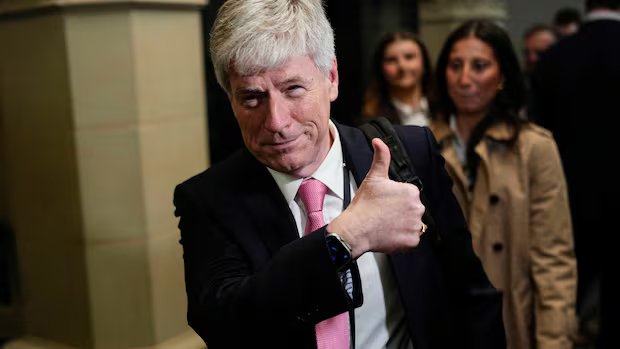

Listen to this article
Estimated 3 minutes
The audio version of this article is generated by AI-based technology. Mispronunciations can occur. We are working with our partners to continually review and improve the results.
Canada’s Energy Minister says public dollars “could be used” for Alberta’s proposed bitumen pipeline to the Pacific Coast through the federal government’s Indigenous loan guarantee program.
“With respect to public money, I want to be clear what we have said is that we would support Indigenous equity ownership with the Indigenous loan guarantee program,” Energy Minister Tim Hodgson told the House of Commons natural resources parliamentary committee Thursday.
The Indigenous loan guarantee program is a $10-billion initiative aimed at facilitating Indigenous ownership in natural resource and energy projects.
“So there could be scenarios where public money could be used in a pipeline where it was supporting Indigenous ownership of the pipeline,” Hodgson said responding to a question from a Bloc Québécois MP.
Questions about money going into another pipeline have been raised as the federal and Alberta governments hammer out details contained in a memorandum of understanding, or MOU, signed by both parties in November.
Bloomberg reported that a deal on industrial carbon pricing is expected to be finalized in the next two weeks.
Citing sources, the Globe and Mail and the Toronto Star have also reported that the Carney government is considering a Pacific Coast pipeline that would run farther south than the northern route preferred by Alberta Premier Danielle Smith.
Hodgson’s comments are consistent with the language in the MOU.
The agreement states that the private sector would construct and finance the project with Indigenous ownership and economic benefits. But it also states that public dollars flowing through the Indigenous Loan Guarantee Corporation could be used “to help backstop Indigenous co-ownership.”
Although controversial to some, such a move likely would not violate federal guidelines aimed at phasing out inefficient fossil fuel subsidies. In a bid to foster self-determination, the rules say federal dollars can still flow to projects if they support Indigenous economic participation in fossil fuel activities.
But Environmental Defence says such a move would violate the spirit of those guidelines, which were meant to direct more federal dollars toward reducing the pollution fuelling climate change.
“Canadians have been clear they don’t want their tax dollars going to one of the wealthiest sectors on the planet,” said Julia Levin, the national climate associate director at Environmental Defence.
“Prime Minister Mark Carney’s government continues to undermine his own rules by funding projects that put our economy and current and future safety at risk.”