dailynewsnblog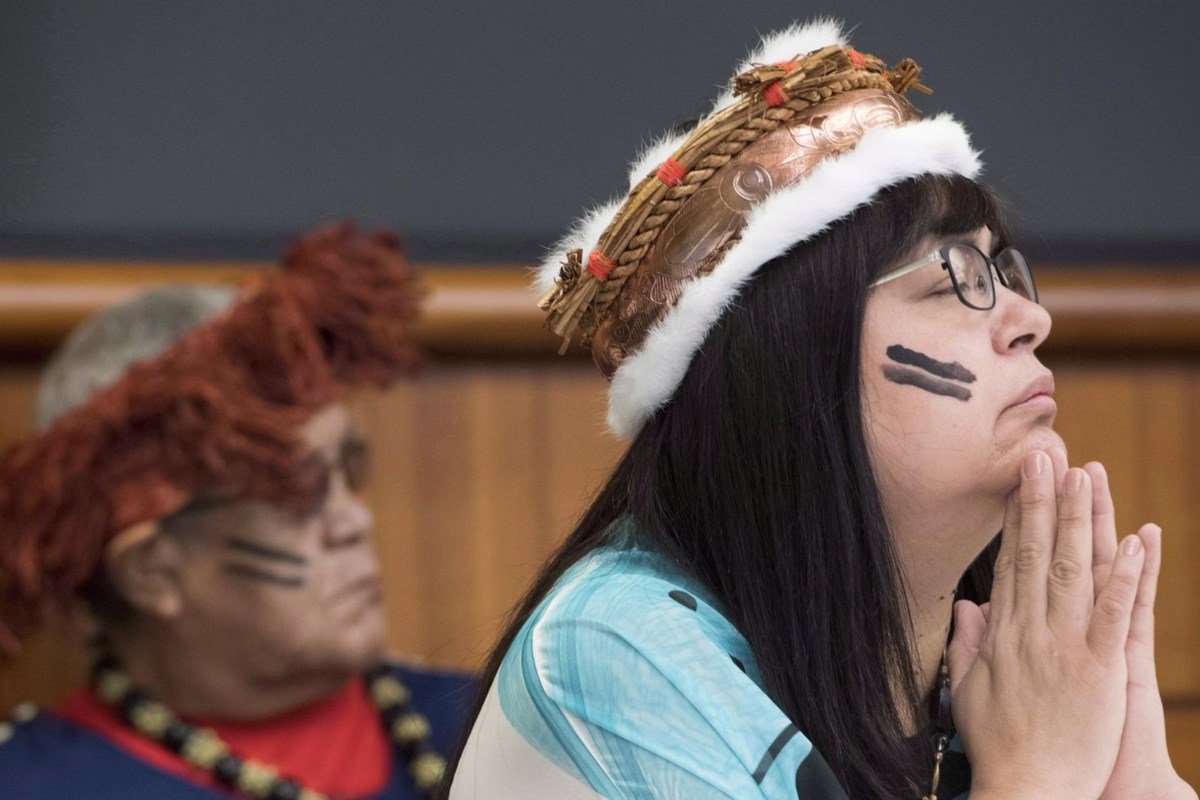

CALGARY — A delegation of First Nations leaders from British Columbia have come to Calgary to relay a message to pipeline executives face-to-face — steer clear of investing in a new bitumen pipeline to the northwest coast or risk a prolonged legal fi
CALGARY — A delegation of First Nations leaders from British Columbia have come to Calgary to relay a message to pipeline executives face-to-face — steer clear of investing in a new bitumen pipeline to the northwest coast or risk a prolonged legal fight.
Haida Nation President Jason Alsop, who also goes by Gaagwiis, said he and fellow community leaders are obliged to look after the ocean and the food security it provides. Crude tankers sailing northern B.C. waters would risk that, he said.
“We are prepared to use all the tools available to us to uphold that responsibility,” he said in an interview Wednesday.
“And that makes investment in a pipeline to the north coast a significant risk — legal risk, financial risk.”
Chief councillor Arnold Clifton of the Gitga’at First Nation recalled the “David and Goliath” fight northern B.C. communities won against Enbridge Inc., whose Northern Gateway proposal to Kitimat, B.C., was scrapped a decade ago amid fierce Indigenous opposition.
“I think it’s going be a lot stronger now if anything would come up because we’ll have everyone involved to fight,” he told The Canadian Press.
The delegation had meetings in a downtown Calgary hotel on Wednesday with senior leadership from Pembina Pipeline Corp. and Trans Mountain Corp.
Pembina Pipeline is mainly focused on shipping natural gas in western Canada and has partnered with the Haisla Nation on the Cedar LNG liquefied natural gas project currently under construction in Kitimat. Pembina has not expressed interest in pursuing a new bitumen pipeline.
Trans Mountain, a Crown corporation, operates a pipeline connecting Alberta crude to the Vancouver area. It is one of the companies advising the Alberta government on its early planning work on a new oil pipeline, but has been focused on expanding its existing infrastructure.
The province aims to submit a proposal to the new major projects office this summer for a new B.C. pipeline, looking to de-risk the project enough for a private-sector firm to take it over.
The First Nations delegation extended invitations to Enbridge as well as crude shipper South Bow Corp. and natural gas pipeline operator TC Energy, Alsop said. The group was unable to schedule meetings with those companies, but they delivered a letter advising them of the risks of backing a B.C. oil pipeline.
The Alberta and federal governments announced a sweeping energy accord late last year that lays out a path forward for a new B.C. pipeline, to be built in tandem with massive carbon capture and storage project in Alberta. The pipeline would require the lifting or changes to legislation that would bar a new oil tanker port on a stretch of the northern B.C. coast.
The Alberta government has expressed a preference for Prince Rupert, B.C., as the pipeline’s end point, given its deepwater port and shorter shipping distance to Asia. The Globe and Mail reported earlier this week that it’s considering a southern route to Vancouver that could face fewer environmental hurdles and less opposition.
“I think its better for us,” Clifton said of a plan that would avoid northern waters.
Hereditary Chief Darin Swanson of the Haida Nation, who also goes by Ginaawaan, said no amount of money would convince him to support a bitumen pipeline and tanker port.
“Our beaches are pristine. You could walk down the beach, you could pick up crab off the beach to eat. You can dig for clams. There’s halibut grounds right there, that rear their young,” he said.
“So any risk is not worth it. It doesn’t matter how much money or how many jobs.”
This report by The Canadian Press was first published April 22, 2026.
Companies in this story: (TSX:ENB) (TSX:PPL) (TSX:SOBO) (TSX:TRP)
Lauren Krugel, The Canadian Press