dailynewsnblog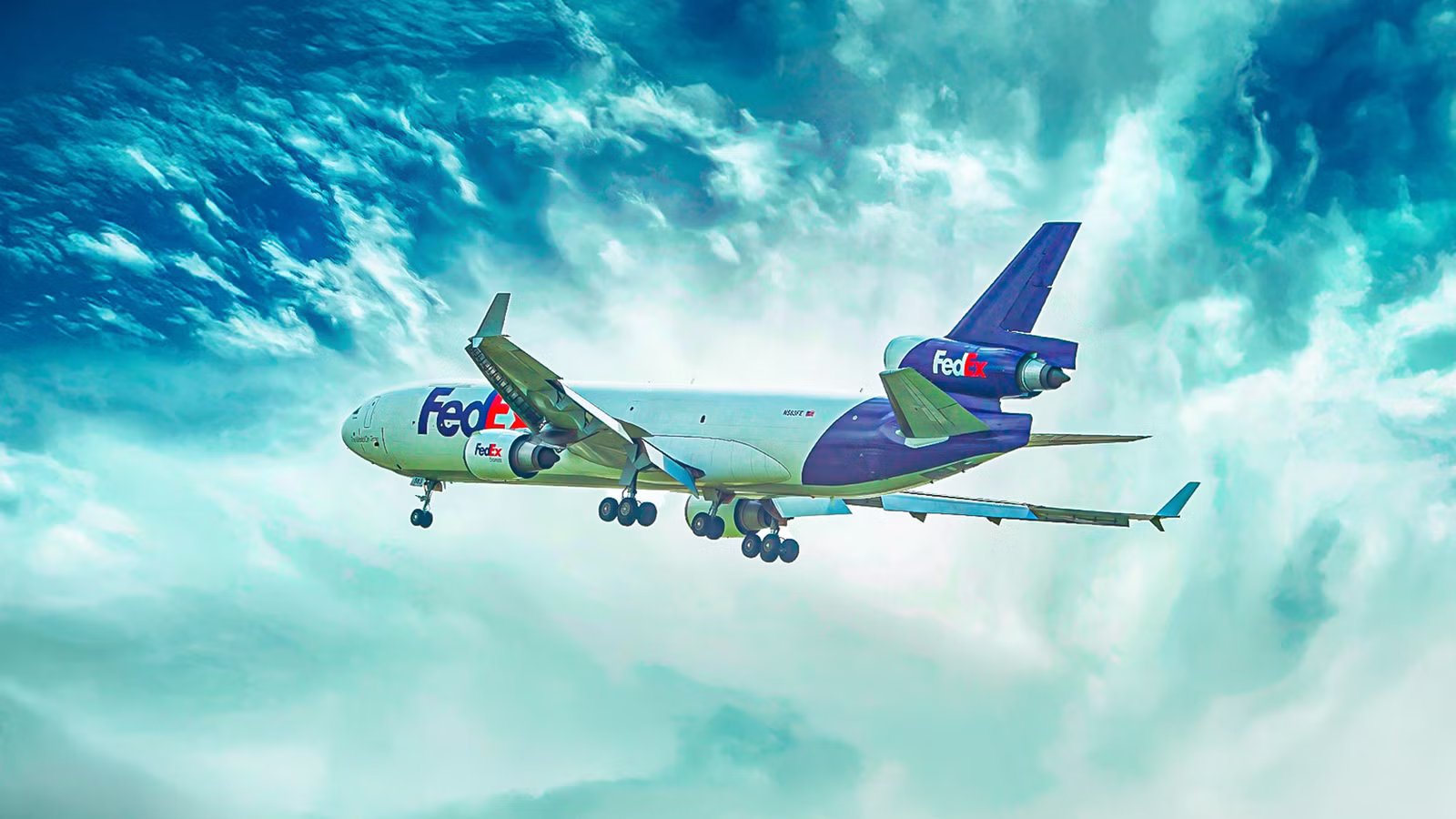
When a  UPS Airlines MD-11 freighter crashed at Louisville in November 2025, killing fourteen people and triggering an FAA Emergency Airworthiness Directive that grounded every MD-11 in existence, most of the aviation world assumed it was the end. The type was already aging out of service, production had stopped in 2000, and no passenger airline had flown one in years. UPS, which had been planning a phased retirement anyway, accelerated its timeline and walked away from all 27 of its MD-11s within weeks. The crash, it seemed, had simply hastened the inevitable.
Fedex Express reached a different conclusion. Rather than retire its fleet of approximately 28 MD-11 freighters, the company committed to bringing every one of them back, absorbing around $175 million in additional costs over five months to keep its network moving while the aircraft sat grounded. The target return date is May 31, 2026. That decision, to spend nine figures keeping alive an airframe that every other major operator has now abandoned, is not nostalgia. It is a precise reflection of what the MD-11 does inside FedEx’s network, what the widebody freighter market currently cannot offer as a replacement, and why an aircraft that entered service 35 years ago remains genuinely difficult to retire.
A Fatal Crash Grounds The Last MD-11s Flying

UPS / NTSB
On November 4, 2025, a UPS-operated McDonnell Douglas MD-11 freighter crashed shortly after takeoff from Louisville Muhammad Ali International Airport, killing fourteen people including all three crew members on board. UPS Flight 2976 never climbed higher than 30 feet before the left engine separated from the wing, and the aircraft went down. The accident drew immediate attention across the cargo industry, not just because of the death toll, but because of what it implied about the structural condition of a freighter type that two of the world’s largest integrators still depended on heavily.
The NTSB’s preliminary investigation found fatigue cracks in the bearing assembly of the left engine pylon, the structural section that attaches the engine to the wing. The FAA responded within days by issuing an Emergency Airworthiness Directive grounding all MD-11 and MD-11F aircraft worldwide until operators completed mandatory inspections and any required corrective work. Critically, Boeing had flagged the same component with concerns more than a decade earlier, issuing a service bulletin in 2011 that disclosed four prior failures of the pylon bearing assembly. At the time, Boeing determined the issue did not constitute a safety-of-flight risk, so no action was mandated.
The grounding brought the MD-11’s commercial career to a sudden stop. What had been a gradual, managed wind-down of the type across global fleets became an overnight halt, forcing operators to find replacement capacity and confront a question that had been building for years: how much longer could the industry sustain an airframe that entered service in 1990 and went out of production in 2000? For most operators, the answer came quickly. For FedEx, the calculus proved far more complicated.
UPS Walks Away, FedEx Writes A Nine-Figure Check To Come Back

UPS moved fast. Within weeks of the FAA directive, the carrier determined that the inspection and repair process would take too long and cost too much to justify keeping a fleet already on its way out. In late January 2026, UPS confirmed it had permanently retired all 27 of its MD-11 freighters, absorbing a one-time charge of approximately $137 million. The aircraft had an average age of around 32 years, and UPS had already been planning a phased exit. The crash accelerated that timeline by several years, with the carrier moving quickly to fill the gap using Boeing 767-300Fs already on order.
FedEx took a different view. Rather than treat the grounding as the end of the MD-11’s working life, the company committed to bringing its fleet back in coordination with Boeing and the FAA. That decision came at a steep price. The grounding cost FedEx $25 million in November alone before the full weight of the halt landed during peak shipping season. By December, with holiday freight volumes at their highest and outsourced lift expensive, costs surged sharply. In total, FedEx absorbed around $175 million in additional expenses, sourcing capacity from partner airlines and shifting domestic volume to trucking, with a $120 million hit to adjusted operating income in Q3 and a further $55 million headwind expected in Q4.
Part of what separated FedEx’s position from UPS came down to a decision made fifteen years earlier. When Boeing issued its 2011 service bulletin flagging the pylon bearing failures, FedEx proactively elected to modify its pylons despite no mandatory requirement to do so. UPS did not. That distinction likely made FedEx’s return-to-service process significantly more viable, and helps explain why two carriers operating the same aircraft, facing the same directive, reached such different conclusions about what to do next.

UPS MD-11 Crash: NTSB Releases Preliminary Report & New Images
Fatigue cracks and overstressing have been identified as contributing factors in the UPS MD-11 crash.
What Makes The MD-11 Genuinely Hard To Replace

To understand why FedEx is willing to absorb nine figures in losses rather than simply replace the MD-11, it helps to look at where the aircraft sits within a cargo network. The MD-11 can lift approximately 92 metric tonnes of freight, placing it just below the Boeing 777F’s 102-tonne capacity but nearly double that of a 767-300F. That positioning is not incidental. It means the MD-11 occupies a specific band of the payload-range spectrum that no current production freighter replicates exactly, sitting between the workhorse mid-size category and the true heavy-lift widebody tier. For FedEx, it is not a legacy relic kept around out of inertia. It is filling a functional gap.
The aircraft’s trijet configuration also gives it characteristics that matter in long-haul cargo operations. Three engines provide range flexibility that twin-engine freighters cannot always match on certain transoceanic routings where payload requirements are high, and fuel loads are significant. The MD-11’s main deck cargo door accommodates oversized industrial freight that many competing aircraft cannot handle as readily, which matters on manufacturing and industrial routes where cargo dimensions are as important as raw weight. FedEx has used the MD-11 extensively on the Asia-Pacific and Asia-Europe corridors, where its combination of capacity, range, and cargo accessibility gives it a utility with no clear substitute.
What makes the replacement problem particularly acute is not the aircraft’s specifications in isolation, but the absence of anything available to slot in at scale. Replacing the MD-11 with 767s is not a one-for-one swap. It requires more aircraft, more crews, and more cycles to move equivalent freight volumes. Until the widebody freighter supply chain catches up with demand, FedEx has no practical alternative that does what the MD-11 does on the routes it flies.
The Widebody Freighter Drought Forcing FedEx’s Hand

The supply chain crisis that followed the pandemic reshaped fleet planning across the industry, but its effects have been felt nowhere more acutely than in the widebody freighter market. Boeing and Airbus both continue to struggle with production rate recovery, driven by supplier bottlenecks, workforce constraints, and the compounding delays that follow when one part of a complex manufacturing chain falls behind. For cargo carriers, this means extended wait times for new freighter deliveries, with the most capable widebody types substantially oversubscribed. Airlines and integrators that might otherwise have used recent years to modernize aging fleets have instead found themselves managing aircraft they would have preferred to retire, because replacements have not arrived quickly enough.
For FedEx specifically, the constraints are evident in the available options. The 777F, the most natural long-term successor to the MD-11 in terms of payload and range, carries a delivery backlog that stretches years into the future. New aircraft are not arriving at a pace that would allow FedEx to absorb the MD-11’s retirement without a sustained reduction in heavy-lift capacity. The A350F, Airbus’s answer to the heavy freighter segment, is not yet delivering to cargo operators at a meaningful scale. For a carrier aggressively expanding on the Asia-Pacific and Asia-Europe trade lanes, accepting a capacity reduction in its most payload-intensive tier is not a viable operating position.
What the widebody shortage has effectively done is turn the MD-11’s age from a liability into a manageable cost. Under normal supply conditions, the calculus might favor retirement despite the transition expense. In the current environment, the alternative is years of outsourced lift and reduced international network coverage. The $175 million cost of five months without the MD-11 makes a compelling internal argument for whatever it takes to keep the fleet flying.

Boeing Tells All MD-11F Operators To Immediately Suspend Operations
The manufacturer has responded to the tragedy earlier this week.
Flying Into The 2030s: How Long Can The MD-11 Last?

FedEx has been clear that the MD-11 does not have an open-ended future. The company plans to retire the type in the early 2030s, a timeline already in place before the November crash and has not materially changed as a result of it. What the grounding has done is clarify just how central the aircraft remains to FedEx’s current operation, and how little margin the carrier has to accelerate that retirement without something credible to replace it. The early 2030s horizon is not sentiment. It is a function of what FedEx can realistically put in its place and when.
Between now and that retirement window, the MD-11 is likely to remain a workhorse on FedEx’s long-haul international network. The aircraft’s return to service by May 31 will restore capacity that FedEx has spent five months and $175 million trying to replicate through other means. Once flying again, the fleet is expected to resume operations on the Asia-Pacific and Asia-Europe corridors, where the MD-11’s payload and range are most difficult to substitute. FedEx has also ordered Boeing 777 freighters to begin building the replacement capacity it will eventually need, though delivery timelines mean the transition will be gradual rather than abrupt.
The MD-11 will likely enter the history books as one of the more striking examples of an aircraft outliving its expected commercial lifespan by sheer operational necessity. It entered passenger service in 1990, left production in 2000, was largely phased out of passenger fleets by the mid-2000s, and is now set to keep flying freight across the Pacific well into the next decade. For FedEx, it remains the most economical solution to a problem that newer, better aircraft have not yet arrived in sufficient numbers to solve.