dailynewsnblog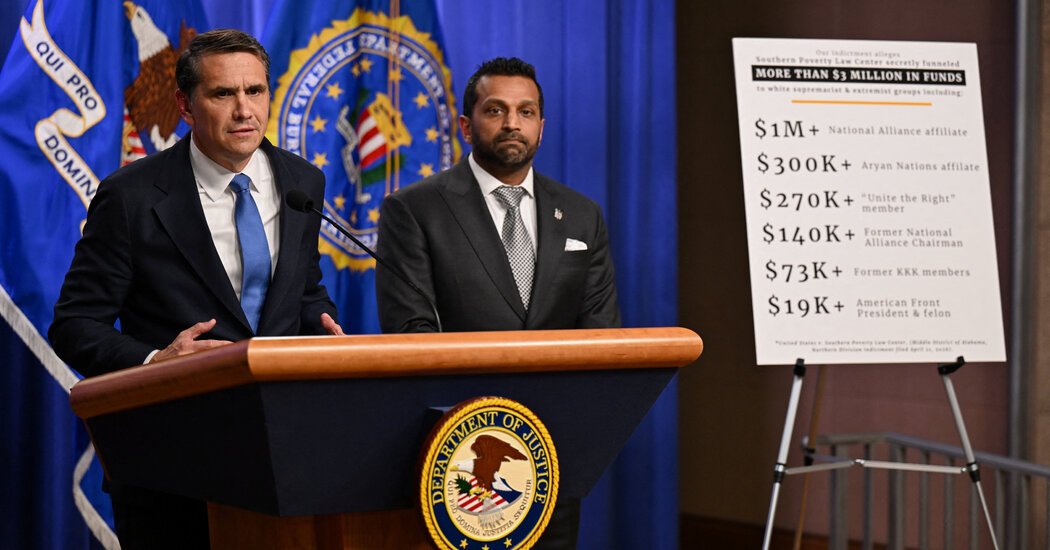
For much of the 21st century, the Southern Poverty Law Center has been at the center of a bitter partisan war in America over what constitutes hate.
The law center, which is based in Alabama, began in 1971, earning a reputation for battling the Ku Klux Klan in court and helping reporters and law enforcement keep tabs on far-right domestic extremists. More recently, however, the S.P.L.C. has earned the ire of conservatives by criticizing a number of organizations — including Moms For Liberty, the Family Research Council and Turning Point USA — that many on the right consider to be squarely within the American mainstream.
The conflict entered a new phase this week, when the Justice Department charged the S.P.L.C. with a number of financial crimes, including wire fraud and conspiracy to commit money laundering. The indictment focused on the law center’s past use of paid informants to infiltrate far-right groups. Todd Blanche, the acting attorney general, accused the group of “manufacturing racism to justify its existence.”
To some who have been criticized by the S.P.L.C., it was a moment to savor — a potential comeuppance for what they perceive to be a powerful, politically correct bully that has sought to shame and silence legitimate voices.
“Well, I mean, obviously I experienced a certain schadenfreude, because this couldn’t happen to a nicer bunch of creeps,” said Mark Krikorian, executive director of the Center for Immigration Studies, a group that supports immigration restrictions and has been on the S.P.L.C.’s influential list of hate groups for years.
The S.P.L.C. defines a hate group as an organization that “has beliefs or practices that attack or malign an entire class of people, typically for their immutable characteristics,” according to its website.
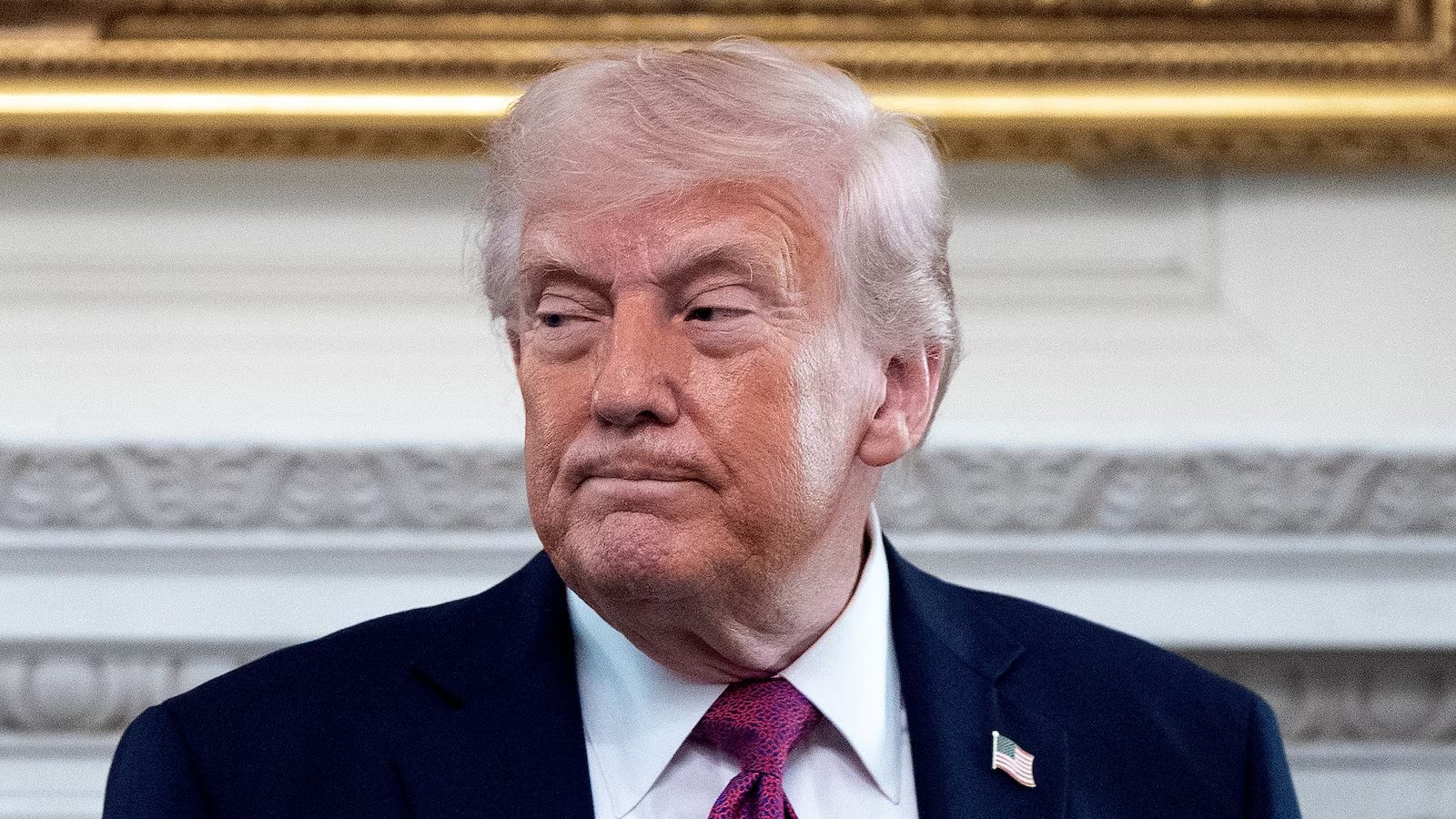
The indictment appears to fit within the Trump administration’s pattern of using the Justice Department to punish its political adversaries. The S.P.L.C. has certainly been adversarial toward the president: In an article last year, Margaret Huang, who was then the president and chief executive of the group, wrote that with President Trump’s second election, hard-right extremism now had “an ally in the highest office in the nation.”
Whether the federal charges will stick is unclear. The second Trump administration has failed to build winning cases against other political opponents, including Attorney General Letitia James of New York and James Comey, the former F.B.I. director.
But in the S.P.L.C., the administration has picked a formidable and deep-pocketed foe. Over decades, the group has been buffeted by scandal and scathing critiques from both the left and the right, yet has managed to thrive with its promise to be “a beacon of hope fighting white supremacy.”
The law center was founded by Morris Dees and Joe Levin, white Alabama lawyers intent on ensuring that the gains of the civil rights movement in the Deep South stuck. With Julian Bond, the African American activist, as its first president, the S.P.L.C. took to the courts, filing suit after suit attacking the remnants of the segregation system, reforming juvenile justice and addressing matters of concern to immigrant workers, women, gay and lesbian people, and others.
The work engendered significant good will among like-minded Southerners. Catherine Coleman Flowers, an African American environmental activist from the Black Belt, recalled in an interview that the S.P.L.C. bankrupted a group called the United Klans of America with a lawsuit after two members lynched a Black man named Michael Donald in 1981.
“A lot of the work they were doing early on, was work around insuring that marginalized communities were not terrorized,” Ms. Coleman Flowers said.
Rumblings of discontent came later. In 1994, The Montgomery Advertiser ran a series of articles in which Black employees of the S.P.L.C. raised concerns about racial discrimination inside the organization. (Mr. Dees denied the accusations.)
But the law center remained influential. In 2001, its multimillion-dollar headquarters — a daring contemporary building in the sleepy heart of Montgomery — was completed. Many national news outlets regularly turned to the group’s Year in Hate reports, relying on them to give a portrait of homegrown extremism around the country.
Even so, left-wing critics soon began accusing the group of hoarding millions of dollars and paying its leaders big salaries while soliciting donations from wealthy coastal liberals and exaggerating the grass-roots threat. In a column for The Nation in 2009, Alex Cockburn, the provocative leftist writer, called Mr. Dees, who had become the face of the organization, “the arch-salesman of hate-mongering.”
“Ever since 1971, U.S. Postal Service mailbags have bulged with his fund-raising letters, scaring dollars out of the pockets of trembling liberals aghast at his lurid depictions of a hate-sodden America in dire need of legal confrontation by the S.P.L.C,” wrote Mr. Cockburn, who died in 2012.
The rise of the so-called alt-right, and a deadly rally organized by white nationalists in Charlottesville, Va., in 2017, showed that racist extremism remained a tangible threat. But old concerns within the S.P.L.C. came to the fore again in 2019, when Mr. Dees was fired, and a number of top executives quit, amid allegations of sexual misconduct and racial discrimination within the organization. Mr. Dees denied wrongdoing, but acknowledged that a female employee had filed a complaint against him in 2017, stating that his actions had made her feel uncomfortable.
Conservatives took notice. For years they had bristled as the S.P.L.C. put groups that opposed L.G.B.T.Q. rights and immigration on its hate list. The Center for Immigration Studies earned a spot, the S.P.L.C. argued, as a result of its “repeated circulation of white nationalist and antisemitic writers in its weekly newsletter and the commissioning of a policy analyst who had previously been pushed out of the conservative Heritage Foundation for his embrace of racist pseudoscience.”
In 2019, the Center for Immigration Studies sued Richard Cohen, then the president of the S.P.L.C., in federal court, saying that the organization had violated civil racketeering statutes in trying to “destroy C.I.S. by ruining it financially.” The lawsuit was rejected by the courts.
That same year, Senator Tom Cotton wrote to the Internal Revenue Service, asking the agency to consider revoking the law center’s nonprofit status.
“Recent news reports have confirmed the long-established fact that the S.P.L.C. regularly engages in defamation of its political opponents,” Mr. Cotton wrote. “In fact, the S.P.L.C’s defining characteristic is to fund-raise off of defamation.”
The effort was unsuccessful, but the pressure from Republicans has only ramped up since Mr. Trump’s return to the White House. In October, Kash Patel, the F.B.I. director, announced that the bureau would no longer cooperate with the S.P.L.C., calling it a “partisan smear machine.”
That same month, Elon Musk posted on social media that the group was “guilty of incitement to murder Charlie Kirk,” the co-founder of Turning Point USA who had been killed a month earlier. Mr. Musk cited another post that noted that Mr. Kirk had recently been featured in the S.P.L.C.’s Hatewatch newsletter.
In December, a subcommittee of the Republican-controlled House held a hearing on the group. The chair, Representative Chip Roy, a Texas Republican, opened it by calling the S.P.L.C. “one of the most politically motivated, financially lucrative and ideologically extreme nonprofits in America,” and argued that it had been allowed to “wield extraordinary influence over federal civil rights policy, federal law enforcement training and the private sector mechanisms that increasingly dictate who is permitted to participate in civic life.”
But the Trump era appears to have been good for the group’s fund-raising. The S.P.L.C.’s latest federal tax documents on file with the government show that it had total assets of more than $822 million at the end of 2024 — more than double its total assets in 2016, the year of Mr. Trump’s first election.
In his news conference this week, Mr. Blanche said that from 2014 to 2023, the group made payments totaling more than $3 million to people who were affiliated with extremist organizations like the Ku Klux Klan and the National Socialist Party of America.
But there was little in the indictment that showed that the group had meant to help the extremist groups. In a video message just before the indictment was announced, Bryan Fair, interim president and chief executive of the S.P.L.C., said the group no longer used informants, but began working with them in the “shadow of the height of the civil rights movement,” when extremist violence was common.
“There is no question that what we learned from informants saved lives,” he said.
In a statement on Wednesday, Marc Morial, president and chief executive of the National Urban League, argued that the indictment was about “intimidation,” not accountability.
“It is about silencing organizations that have spent decades confronting hate, protecting vulnerable communities and advancing justice under the law,” he said.
A number of liberal commentators also noted this week that the use of informants was a common practice in the 1960s and 1970s. The strategy was perhaps most famously used by the F.B.I. — to infiltrate civil rights and other activist groups.
Audra D. S. Burch contributed reporting.