dailynewsnblog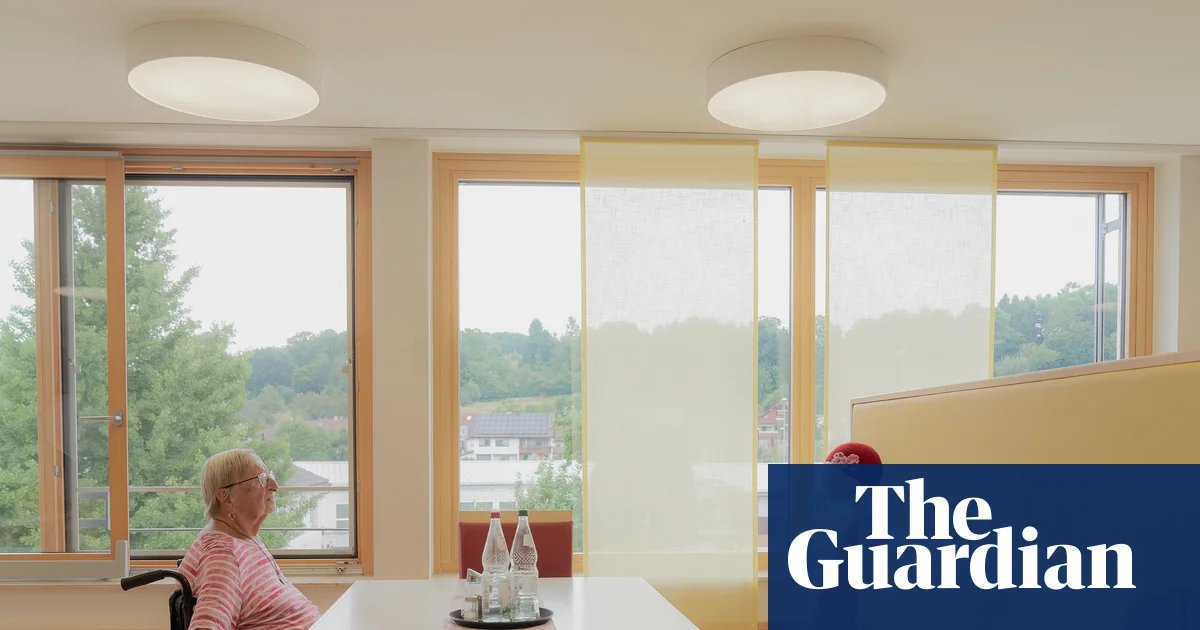
One morning in July 2025, I arrived in the small, quiet town of Albershausen in south-west Germany. It has only around 4,000 inhabitants. I went to visit a care home where they were piloting a social robot named Emma. A group of residents sat in a circle while Emma stood in the middle. She’s the height of a toddler, with big googly eyes, and was wearing a red hat knitted for her by one of the careworkers. The first resident she was introduced to was called Peter and, after he introduced himself, Emma assumed they were all called Peter, which everyone found hilarious. Then Emma broke down suddenly and the illusion was shattered.
Later on, Emma was working again, and I found her in the dining room with Waltraud, the resident in this photo. It was a calmer, more focused moment. I decided to sit them across from one another at eye level, Waltraud facing Emma. There was a soft light in the room and they both seemed very present with one another. There are also paradoxes in the picture: the large windows showing the landscape outside, contrasting with the inside, which is ordered and clinical. In the middle you have an encounter between an elderly woman and a machine designed for companionship. They began speaking about picking flowers, about their favourite flowers – Waltraud is passionate about them, and Emma has an endless amount of knowledge due to her artificial intelligence. She can remember past conversations and recognise faces, too.
The image is part of my photo essay Anthrobocene, exploring human-robot encounters in everyday life in Germany. I found out about pilot schemes – this was one of two robots being used in care homes, developed by a Munich-based startup. They are designed for where there is a lack of skilled workers, to encourage residents to engage in conversation. Life in care homes can be monotonous and this new technology can help.
Waltraud told me she was sceptical at first, as she had never seen or heard anything like this, but over time, she told me she had built a relationship with Emma, but one that was more for entertainment purposes – they can tell jokes too. Waltraud emphasised that she would still prefer human contact. “You wouldn’t believe how lonely people are in care homes,” she said, a remark that has stuck with me. So this image reflects a deeper social issue.
I began photographing robots after a hospital in my home town, where I and several members of my family had worked, started using robots to relieve staff. It was interesting to see this development, and it raises questions about how many robots are now out there. It’s been a quiet change, not one we notice. Yet many more people are becoming accustomed to using technology on a social and emotional level. So what happens when robots are not just a practical tool but a companion? What does it mean when robots get more human?
I visited many institutions, most shaped by staff shortages: a fire department, research centres, an inclusive theatre dance company using a robot performer in choreography, even a person who had dog robots at home. I learned that it’s really hard to build humanoid robots and, although AI is moving very fast, a robot takes time. Everyone I spoke to felt that robots should be an addition, not a replacement. Emma uses data and probability, and is always positive and attentive. It’s a convincing simulation of care – but she has no consciousness or lived experience behind what she’s saying. It’s interesting what this does to us.
I was surprised by how engaged the residents were with Emma and how open they were to the technology. Growing pressure on our overstretched care systems, exhausted workers and the loneliness epidemic may mean that robots could increasingly support and even take over certain tasks. I think this image reflects the reality of the care sector and how we want to address these issues. But in a broader sense, it also makes visual our own interactions with chatbots today.
Paula Hornickel’s CV
Born: Forst (Lausitz), Germany
High point: Being selected for this year’s World Press Photo award. After years of visiting the exhibition, it feels surreal to be represented there
Top tip: Photography is a great tool for starting conversations and opening doors to people and places beyond your usual surroundings